Introduction
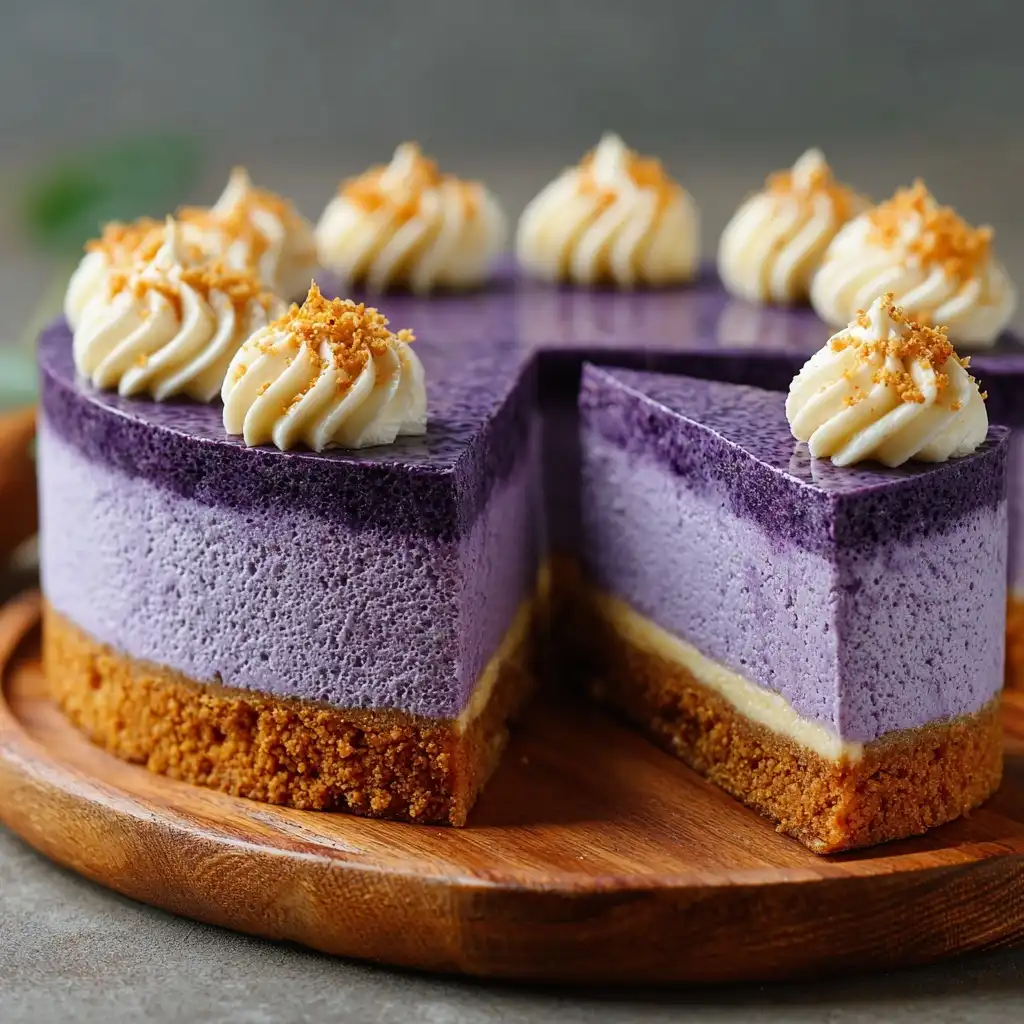
Ube Purple Yam Cheesecake is a breathtaking fusion of Filipino culinary heritage and classic American dessert artistry—a vibrant, velvety, deeply aromatic confection that has captivated palates across continents. Unlike ordinary cheesecakes, this dessert celebrates ube halaya—a traditional Filipino jam made from slow-cooked purple yam (Dioscorea alata)—infusing every bite with earthy-sweet, nutty, vanilla-tinged notes and its signature vivid lavender-magenta hue. More than just eye-catching, ube brings a subtle floral complexity and creamy density that elevates the rich tang of cream cheese into something uniquely soulful and culturally resonant. Whether served at family gatherings, festive celebrations like Christmas or Fiestas, or as an elegant centerpiece for modern patisseries, Ube Purple Yam Cheesecake stands as both a nostalgic comfort and a bold, contemporary expression of Filipino-American gastronomy.
The History
The origins of Ube Purple Yam Cheesecake trace back to the deep-rooted agricultural and culinary traditions of the Philippines, where purple yam—or ube—has been cultivated for over 10,000 years in the Bicol Region and other lowland provinces. Historically, ube was pounded into flour, steamed into cakes (ube kalamay), or simmered with coconut milk and sugar into ube halaya, a labor-intensive preserve traditionally stirred for hours over wood-fired stoves. With the American colonization of the Philippines (1898–1946), Western baking techniques—including cheesecake—began intermingling with native ingredients. However, it wasn’t until the late 20th and early 21st centuries—spurred by Filipino diaspora communities in California, Hawaii, and New Jersey—that enterprising home bakers and pastry chefs began experimenting with incorporating ube halaya into New York–style cheesecake. Early iterations appeared in Filipino bakeries like *Conching’s* in Los Angeles and *BreadTalk’s Ube Collection* in Singapore, gaining viral traction on food blogs and social media around 2013–2015. The dessert’s meteoric rise coincided with global interest in natural food colorants and “purple foods” rich in anthocyanins, further cementing ube cheesecake not only as a cultural emblem but also as a symbol of ingredient-driven innovation and cross-generational culinary pride.
Ingredients Breakdown
Every component of this cheesecake serves a precise functional and flavor purpose—no element is arbitrary. Below is a meticulous analysis of each ingredient’s role:
- Full-fat cream cheese (room temperature): The foundational base—provides structure, richness, acidity, and emulsification capacity. Must be softened properly to prevent lumps and ensure smooth incorporation.
- Granulated sugar: Not only sweetens but also tenderizes the curd by interfering with protein coagulation and aids in aeration during mixing.
- Sour cream & heavy cream: Sour cream adds tang and moisture while improving sliceability; heavy cream contributes fat and luxurious mouthfeel without thinning the batter excessively.
- Fresh egg yolks (not whole eggs): Yolks contain lecithin, which stabilizes the emulsion and yields a silkier, denser texture than whole eggs—critical for preventing cracks and achieving that sought-after custard-like center.
- Pure ube halaya (homemade preferred): The heart of the recipe—must be thick, deeply purple, and free of excess water or corn syrup. Provides natural sweetness, viscosity, starch content (which helps set the cake), and potent ube aroma. Store-bought versions vary widely; always check labels for real ube root, not just artificial coloring or flavoring.
- Ube powder (freeze-dried, not flavored): A concentrated, pigment-rich booster that intensifies both color and flavor without adding moisture. Used sparingly (¼–½ tsp) to avoid bitterness.
- Vanilla extract & ube extract (optional but recommended): Pure Madagascar bourbon vanilla complements ube’s floral notes; authentic ube extract (distilled from real yam, not synthetic) adds depth where halaya alone may fall short—especially important when using milder commercial halaya.
- Pinch of salt: Essential for balancing sweetness and enhancing all other flavors—particularly the earthy undertones of ube.
- Graham cracker crust (with brown sugar & melted butter): Brown sugar adds molasses warmth that harmonizes with ube’s caramelized notes; butter must be fully melted and evenly distributed to yield a crisp yet yielding base that won’t disintegrate under the dense filling.
- White vinegar or lemon juice (trace amount): An often-overlooked secret—it slightly lowers pH, helping proteins set more gently and minimizing surface cracking during baking and cooling.
Step-by-Step Recipe
- Prepare the Crust: Preheat oven to 325°F (163°C). Pulse 1 ½ cups graham cracker crumbs, ¼ cup brown sugar, and ¼ tsp salt in a food processor until uniform. Drizzle in 6 tbsp melted unsalted butter while pulsing until mixture resembles wet sand. Press firmly into the bottom and 1 inch up the sides of a 9-inch springform pan lined with parchment. Chill for at least 30 minutes (or freeze for 15) to solidify butter and prevent slippage during baking.
- Roast & Puree Fresh Ube (Optional but Highly Recommended): Scrub 1 lb fresh ube (skin-on), pierce with fork, and roast at 400°F for 60–75 mins until very tender. Cool, peel, and blend flesh with 1 tbsp coconut milk and pinch of salt until ultra-smooth. Simmer in a nonstick pan over medium-low heat, stirring constantly, until thickened to halaya consistency (~20–25 mins). Cool completely before use.
- Beat Cream Cheese Base: In a large bowl, beat 24 oz full-fat cream cheese (3 (8-oz) blocks) with paddle attachment on medium speed for 2 minutes until completely smooth and airy—scraping bowl thoroughly. Add 1 cup granulated sugar and beat 2 more minutes until fluffy and pale. Scrape down.
- Incorporate Wet Ingredients Gradually: Add ¾ cup sour cream, ¼ cup heavy cream, 1 tsp pure vanilla extract, ½ tsp ube extract (if using), and 1 tsp white vinegar. Mix on low just until combined—do not overbeat. Then add 4 large egg yolks, one at a time, mixing only until each disappears (5–8 seconds per yolk). Overmixing introduces air bubbles that expand and burst during baking, causing cracks.
- Integrate Ube Components: Fold in 1 cup cooled, thick ube halaya using a silicone spatula—gently but thoroughly, ensuring no streaks remain. Sift in ½ tsp high-quality ube powder and fold again until color is perfectly even and batter is deep violet-purple with no pale patches. Avoid vigorous stirring to preserve texture.
- Water Bath Setup (Crucial!): Wrap the *outside* of the springform pan tightly with two layers of heavy-duty aluminum foil, extending well above the rim to prevent leaks. Place pan inside a larger roasting pan. Carefully pour hot (not boiling) water into the outer pan until it reaches halfway up the springform sides (~1.5 inches).
- Bake Low & Slow: Bake at 325°F for 1 hour 15 minutes. The cake should look puffed and set at the edges but retain a 2-inch wobble in the center—like firm Jell-O. Do NOT open oven door before 70 minutes.
- Cool Gradually (Non-Negotiable): Turn off oven, crack door open 1 inch with a wooden spoon, and let cheesecake cool inside for 1 full hour. Remove from water bath, run a thin knife around inner edge to loosen, then cool on wire rack at room temperature for another 2 hours. Refrigerate uncovered for *at least 12 hours*, preferably 24–48, to fully hydrate starches, deepen flavor, and achieve ideal sliceable firmness.
- Finishing Touches: Before serving, dip springform knife in hot water and wipe dry for clean slices. Garnish with toasted ube crisps, coconut whip, edible violet petals, or a drizzle of ube caramel.
Tips
- Temperature is Everything: All dairy and eggs must be at true room temperature (68–72°F)—cold ingredients cause separation and lumps. Take cream cheese out 4+ hours ahead; store eggs in warm water for 10 minutes before use.
- Strain Your Halaya: If your ube halaya contains fibrous bits or grit (common with homemade versions), press it through a fine-mesh sieve before folding in—this guarantees glassy-smooth texture.
- No Substitutions for Full-Fat Dairy: Low-fat cream cheese yields a rubbery, chalky texture; reduced-fat sour cream lacks stabilizing proteins and causes weeping. This is not a candidate for “lightening up.”
- Why Egg Yolks Only? Whole eggs increase water content and protein load, raising risk of cracking and graininess. Yolks deliver richness without compromising integrity.
- Prevent Water Bath Leaks: Use foil *and* a slow cooker liner *and* a second springform pan if you’ve had failures before. Even 1 tsp of water intrusion ruins texture.
- Freeze for Longevity: Fully chilled cheesecake (wrapped in plastic + foil) freezes beautifully for up to 3 months. Thaw overnight in fridge—not at room temp—to preserve moisture.
- Fix a Cracked Surface: If cracks appear despite precautions, don’t panic—cover generously with ube whipped cream or a glossy ube glaze. Texture remains flawless underneath.
- Patience Pays Off: Skipping the 24-hour chill results in soft, smeary slices and muted flavor. The extended rest allows starch retrogradation and flavor melding—this is where magic happens.
Variations and Customizations
This recipe is a canvas for creativity—respecting tradition while inviting personalization:
- Ube-Choco Swirl: After pouring batter, dollop melted dark chocolate (70% cacao) mixed with 1 tsp coconut oil. Use a toothpick to marble gently—creates stunning violet-brown ribbons and balances ube’s sweetness.
- Coconut-Ube Layer Cake: Bake in three 6-inch round pans. Fill and frost with ube Swiss meringue buttercream and toasted coconut flakes. Ideal for birthdays and tiered displays.
- Vegan Ube Cheesecake: Substitute cashew-soaked cream cheese base (blended raw cashews, coconut cream, lemon juice, maple syrup, and ube halaya), set with agar-agar instead of eggs, and use coconut-oil-based graham crust.
- Ube Tres Leches Fusion: Poke baked-and-cooled cheesecake with skewer and soak lightly with ¼ cup mixture of evaporated milk, coconut milk, and condensed milk—adds decadent moisture without sogginess.
- Gluten-Free Adaptation: Swap graham crackers for gluten-free vanilla wafers or almond flour crust; verify all extracts and halaya are GF-certified (some brands use wheat-based thickeners).
- Mini Jar Cheesecakes: Portion into 4-oz mason jars, bake in water bath for 35–40 mins. Perfect for gifts, bridal showers, or portion-controlled indulgence.
- Ube-Lavender Infusion: Steep 1 tsp culinary lavender buds in warm heavy cream for 15 minutes, strain, and use infused cream in batter—adds delicate perfume without overpowering.
- Halibut-Smoked Salt Rim (Savory Twist): For adventurous palates: mix flaky sea salt with smoked paprika and a pinch of ube powder; rim serving plates before plating slices.
Health Considerations and Nutritional Value
While undeniably indulgent, Ube Purple Yam Cheesecake offers meaningful nutritional advantages over conventional versions—when prepared mindfully:
- Natural Antioxidant Powerhouse: Ube is exceptionally rich in anthocyanins—the same pigments found in blueberries and black rice—which demonstrate anti-inflammatory, neuroprotective, and cardiovascular-supportive properties in clinical studies. One slice (1/12 of cake) delivers ~12–15 mg anthocyanins—comparable to half a cup of fresh blueberries.
- Complex Carbohydrates & Fiber: Unlike refined sugar–dominant desserts, ube contributes resistant starch and dietary fiber (1.5–2g per ¼ cup halaya), supporting gut microbiota diversity and promoting slower glucose release.
- Vitamin & Mineral Density: Ube is naturally high in vitamin C, potassium, iron, and vitamin E—nutrients often depleted in highly processed sweets. Pairing with full-fat dairy also enhances fat-soluble vitamin absorption (A, D, E, K).
- Reduced Added Sugar Potential: Because ube halaya is inherently sweet (up to 12% natural sugars), many bakers reduce granulated sugar by 25% without sacrificing balance—especially when using ripe, starchy ube.
- Considerations for Special Diets: Naturally lactose-reduced due to fermentation in sour cream and aging of cream cheese; lower in sodium than many bakery desserts (avg. 180mg/slice); contains zero trans fats when made with real butter and unhydrogenated oils.
- Mindful Enjoyment Guidelines: Best savored in 3-oz portions (approx. 320–360 kcal), ideally paired with green tea (catechins enhance anthocyanin bioavailability) or a small side of grilled pineapple (bromelain aids digestion). Not recommended for those with severe dairy allergies or uncontrolled diabetes without medical guidance.
Ingredients
- For the Crust:
- 1 ½ cups graham cracker crumbs (about 12 full sheets)
- ¼ cup light brown sugar, packed
- ¼ tsp fine sea salt
- 6 tbsp unsalted butter, melted and cooled
- For the Filling:
- 24 oz full-fat cream cheese (three 8-oz blocks), at room temperature
- 1 cup granulated sugar
- ¾ cup full-fat sour cream, at room temperature
- ¼ cup heavy cream (36–40% fat), at room temperature
- 4 large egg yolks, at room temperature
- 1 cup high-quality ube halaya, cooled to room temperature (see note below)
- ½ tsp pure ube powder (freeze-dried, not artificial)
- 1 tsp pure Madagascar vanilla extract
- ½ tsp pure ube extract (optional but strongly recommended)
- 1 tsp distilled white vinegar or fresh lemon juice
- ¼ tsp fine sea salt
- For Serving (Optional but Traditional):
- Ube whipped cream (whipped heavy cream + 1 tbsp ube halaya + ½ tsp ube powder)
- Toasted coconut flakes
- Ube crisps or purple yam chips
- Edible violet or orchid blossoms
- Drizzle of ube caramel (simmered ube halaya + coconut milk + palm sugar)
Note on Ube Halaya: For best results, use homemade or trusted artisanal brands like *Lucky Me! Ube Halaya (original, not “lite”)* or *Conching’s Ube Jam*. Avoid versions listing “artificial color,” “corn syrup solids,” or “natural flavors” as top ingredients—these dilute authenticity and performance.
Directions
- Position oven rack in center position. Preheat oven to 325°F (163°C). Prepare a 9-inch springform pan: line bottom with parchment paper, then wrap exterior *thoroughly* with two overlapping layers of heavy-duty aluminum foil—ensure no gaps or seams near the base.
- In a food processor, combine graham cracker crumbs, brown sugar, and salt. Pulse until fine and uniform. Add melted butter and pulse until mixture resembles damp sand. Transfer to prepared pan and press firmly and evenly into bottom and 1 inch up sides using flat-bottomed measuring cup or glass. Chill in freezer for 15 minutes (or refrigerator for 30).
- While crust chills, prepare filling: In stand mixer fitted with paddle attachment, beat cream cheese on medium speed for 2 minutes until completely smooth, scraping bowl and beater frequently. Add sugar and beat 2 more minutes until pale and fluffy.
- Add sour cream, heavy cream, vanilla, ube extract (if using), vinegar, and salt. Mix on low just until incorporated—about 15 seconds. Scrape bowl.
- Add egg yolks one at a time, mixing on lowest speed just until each is fully absorbed (5–8 seconds). Do not overmix. Scrape bowl after each addition.
- Fold in cooled ube halaya with silicone spatula until no streaks remain. Sift in ube powder and fold until batter is uniformly deep violet—no pale swirls. Batter will be thick, glossy, and pourable but not runny.
- Remove crust from freezer. Pour batter evenly over crust. Tap pan sharply 3 times on counter to release air bubbles.
- Place springform pan inside larger roasting pan. Carefully pour hot (140°F) water into roasting pan until water reaches halfway up sides of springform pan.
- Transfer to preheated oven. Bake 1 hour 15 minutes—cake should be deeply golden at edges and slightly puffed, with firm perimeter and gentle 2-inch jiggle at center. Do not open oven during first 70 minutes.
- Turn oven OFF. Crack oven door open 1 inch using wooden spoon. Let cheesecake cool in oven for exactly 60 minutes.
- Remove from water bath. Run thin knife around inner edge to loosen. Cool on wire rack at room temperature for 2 hours.
- Refrigerate uncovered for minimum 12 hours—but ideally 24–48 hours—for optimal texture, flavor development, and clean slicing.
- To serve: Run warm knife under hot water, dry thoroughly, and slice cleanly. Wipe knife between cuts. Garnish as desired.
FAQ
- Can I use canned ube? Is it the same as ube halaya?
- No—canned ube is typically peeled, boiled yam in brine or syrup, not concentrated jam. It contains too much water and lacks the cooked-down sweetness and viscosity needed. Always use authentic ube halaya (jarred or homemade).
- Why does my cheesecake crack every time?
- Most commonly due to rapid temperature shifts (opening oven too soon), overmixing after adding eggs, insufficient cooling time, or inadequate water bath coverage. The vinegar/lemon juice tip and gradual oven-off cooling resolve >90% of cases.
- Can I make this without a springform pan?
- Not recommended. Springform pans allow clean removal without damaging the delicate crust or surface. Alternatives like pull-out bottom cake pans lack reliable seals for water baths and risk leakage.
- How do I store leftovers?
- Keep refrigerated in airtight container for up to 5 days. Cover surface directly with parchment to prevent drying. Freeze unfrosted slices wrapped individually in plastic + foil for up to 3 months.
- Is ube the same as taro or sweet potato?
- No. Ube (Dioscorea alata) is a distinct species—more starchy, floral, and vividly purple than taro (Colocasia esculenta) or orange-fleshed sweet potato. Its unique anthocyanin profile and mucilage content make it irreplaceable in this recipe.
- My batter looks grainy—can I save it?
- Yes—if caught before baking: strain entire batter through fine-mesh sieve into clean bowl, pressing with spatula. Discard any solids. Return to pan and continue as directed.
- Can I use ube extract instead of halaya?
- No. Extract provides aroma only—not body, color, sweetness, or starch. Halaya is structural; extract is accent. Using only extract yields flat, bland, pale, and unstable cheesecake.
- What’s the best way to get vibrant color without artificial dyes?
- Use freshly roasted, deeply purple ube (Bicol-grown preferred), high-pigment ube powder, and avoid overcooking halaya (which dulls color). A tiny drop of butterfly pea flower extract (natural blue) can subtly enhance violet tones—never red dye.
Summary
Ube Purple Yam Cheesecake is a masterful celebration of Filipino terroir and artisanal baking science—where ancient tuber meets modern technique to yield a dessert that is luxuriously creamy, profoundly aromatic, nutritionally resonant, and visually transcendent. With its velvety texture, complex sweet-earthiness, and stunning natural violet hue, it is far more than a trend—it is edible heritage, reimagined with reverence and precision for generations to come.