Introduction
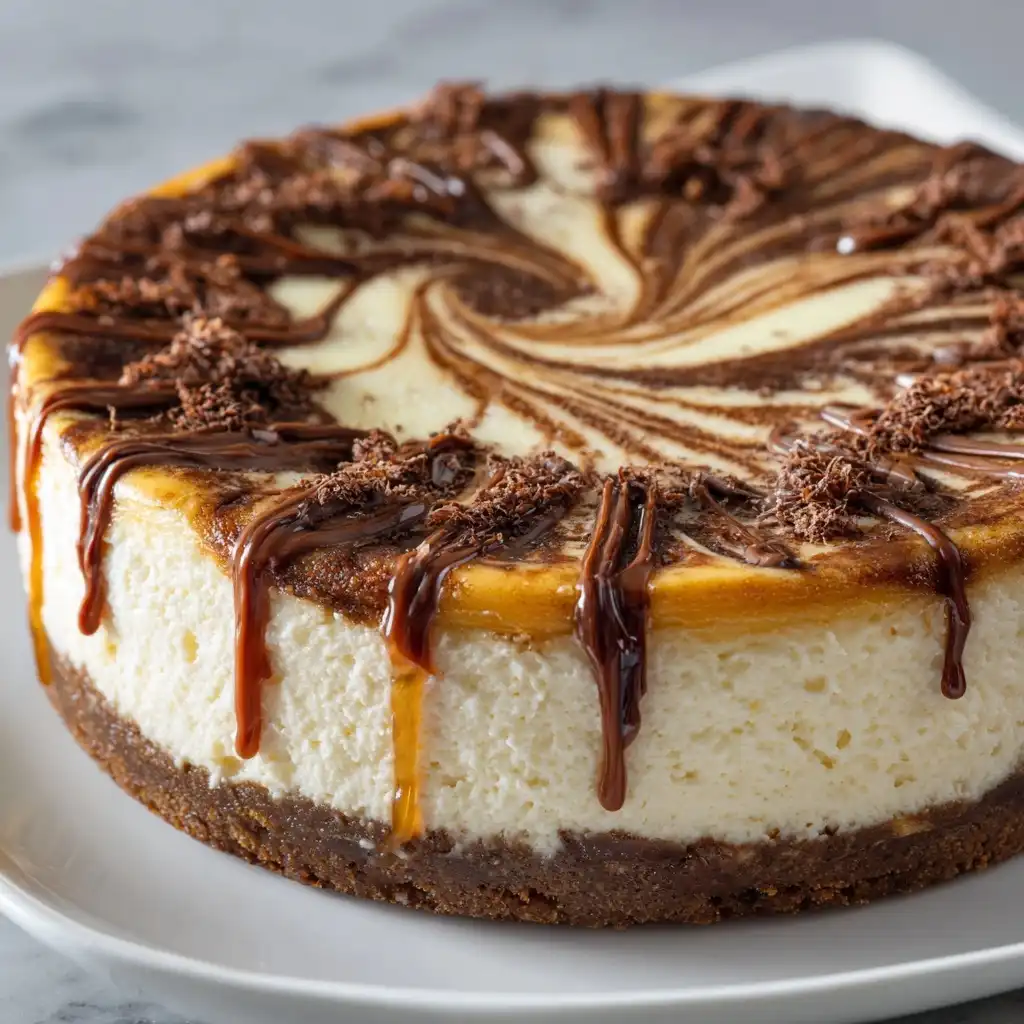
Espresso Swirl Cheesecake is a luxurious, velvety dessert that marries the rich decadence of classic New York–style cheesecake with the bold, aromatic depth of freshly brewed espresso. This isn’t just a coffee-flavored dessert—it’s an artful fusion where every bite delivers a sophisticated balance: creamy tang, buttery graham cracker crust, and the warm, slightly bitter elegance of espresso, swirled in dramatic ribbons for visual allure and layered flavor complexity. Whether served at an elegant dinner party, offered as a weekend indulgence, or gifted as a handcrafted treat, Espresso Swirl Cheesecake stands out for its refined simplicity, restrained sweetness, and unmistakable café-inspired sophistication.
The History
While cheesecake itself traces its origins to ancient Greece—where early versions were made with honey-sweetened cheese and flour—the modern baked American cheesecake evolved in the late 19th and early 20th centuries, particularly through the innovations of New York baker Arnold Reuben (often credited with popularizing the dense, cream-cheese-based version) and later, the legendary Lindy’s Restaurant and Junior’s in Brooklyn. Espresso, meanwhile, was perfected in early 20th-century Italy with the invention of the steam-driven espresso machine—but it wasn’t until the post–World War II era, especially during the 1950s and ’60s, that espresso culture began taking root in North America. The marriage of espresso and cheesecake emerged organically from two culinary movements: the rise of gourmet coffee bars in the 1980s and the artisanal dessert renaissance of the 1990s, when bakers began experimenting with coffee-infused pastries, tiramisu-inspired layers, and swirl techniques borrowed from marble cake and cheesecake riffs like chocolate or raspberry swirls. By the early 2000s, “espresso swirl” appeared in high-end bakery menus across Portland, Seattle, and Brooklyn—often using double-strength cold-brew concentrate or finely ground, dark-roast espresso dissolved in minimal hot water to preserve intensity without dilution. Today, Espresso Swirl Cheesecake symbolizes a convergence of craft baking, third-wave coffee appreciation, and mindful dessert design—where flavor clarity, textural contrast, and sensory harmony take center stage.
Ingredients Breakdown
Every ingredient in Espresso Swirl Cheesecake plays a precise functional and flavor role—nothing is arbitrary. Below is an in-depth analysis of each component:
- Graham Cracker Crust Base: Composed of finely crushed graham crackers (preferably honey-sweetened and cinnamon-spiced), unsalted butter (melted and clarified for richness and stability), and brown sugar (for caramel notes and moisture retention). A pinch of flaky sea salt enhances all other flavors and balances sweetness.
- Cream Cheese: Full-fat, brick-style, Philadelphia-brand or equivalent—must be at true room temperature (68–72°F) to ensure smooth incorporation without lumps or overmixing. Low-fat or whipped varieties destabilize structure and introduce air pockets.
- Sour Cream & Heavy Cream: Sour cream adds subtle acidity and tender crumb; heavy cream (not half-and-half or milk) contributes fat, silkiness, and thermal stability during baking—critical for preventing surface cracking.
- Granulated Sugar: Not merely sweetener—acts as a tenderizer by interfering with protein coagulation and aids in aeration during beating. Fine-grain dissolves more evenly than coarse.
- Eggs: Large, room-temperature eggs bind the batter and provide structural lift. Added one at a time to prevent curdling; overbeating introduces excess air, increasing crack risk.
- Vanilla Extract: Pure Madagascar bourbon vanilla—adds floral warmth and rounds out espresso’s bitterness. Alcohol content also helps emulsify fats.
- Freshly Brewed Espresso: The cornerstone of authenticity. Must be brewed strong (2 tbsp finely ground dark roast per ¼ cup hot water), cooled completely, and strained. Instant espresso powder lacks volatile aromatic compounds and yields flat, dusty notes. Cold-brew concentrate may be substituted but requires reduction to avoid excess liquid.
- Unsweetened Cocoa Powder (optional but recommended): Dutch-processed, for subtle chocolate nuance that deepens the espresso profile without adding sweetness or competing flavors. Not required—but elevates complexity.
- Heavy Cream for Swirl: Used *only* in the espresso mixture—not the base—to maintain viscosity contrast. Thicker swirls hold shape better during baking and create defined marbling.
Step-by-Step Recipe
- Prepare the Crust: Preheat oven to 350°F (175°C). Pulse 1 ½ cups graham cracker crumbs, ¼ cup packed light brown sugar, 6 tbsp melted unsalted butter, and ¼ tsp flaky sea salt in a food processor until moistened and clumping. Press firmly into bottom and 1 inch up sides of a 9-inch springform pan lined with parchment on the bottom. Chill 20 minutes, then bake 10 minutes until fragrant and set. Cool completely on wire rack.
- Brew & Cool Espresso: Prepare ¼ cup double-strength espresso (or 2 tsp ultra-fine espresso grounds + ¼ cup near-boiling water, steeped 4 min, pressed through fine-mesh sieve). Cool to room temperature—do not skip this step; warm espresso will cook eggs on contact.
- Make Espresso Swirl Mixture: In a small bowl, whisk together cooled espresso, 2 tbsp heavy cream, 1 tsp Dutch-process cocoa powder (if using), and 1 tbsp granulated sugar until fully dissolved and glossy. Set aside.
- Beat Cream Cheese Base: Using stand mixer fitted with paddle attachment, beat 24 oz full-fat cream cheese (room temp) on medium-low 2 minutes until creamy and lump-free. Scrape bowl. Add ¾ cup granulated sugar; beat 2 minutes until pale and fluffy. Scrape again. Add 1 cup sour cream, ½ cup heavy cream, 2 tsp pure vanilla, and 1 tsp lemon juice; mix 1 minute until homogenous.
- Incorporate Eggs: Reduce speed to low. Add 4 large room-temp eggs one at a time, mixing just until yolk disappears (≈15 sec per egg). Overmixing = cracks. Scrape bowl thoroughly after each addition.
- Combine & Swirl: Pour batter into cooled crust. Gently spoon espresso mixture in 6–8 dollops across surface. Use a thin skewer or toothpick to drag through batter in figure-eight and concentric circle motions—do not over-swirl; aim for loose, organic ribbons. Tap pan sharply 3x on counter to release air bubbles.
- Water Bath Setup: Wrap exterior of springform pan tightly in 3 layers of heavy-duty aluminum foil (to prevent leaks). Place in larger roasting pan. Pour hot (not boiling) water into roasting pan until halfway up springform sides (~1.5 inches).
- Bake Low & Slow: Reduce oven temp to 325°F (163°C). Bake 1 hour 20 minutes—center should jiggle slightly like gelatin, not ripple like liquid. Turn off oven, crack door 1 inch with wooden spoon, and let cool inside 1 hour.
- Chill & Set: Remove from water bath, discard foil, run thin knife around edge to loosen. Refrigerate uncovered 12 hours minimum—ideally 24–48 hours—for optimal texture, clean slicing, and flavor melding.
- Finish & Serve: Before serving, dip knife in hot water and wipe dry between cuts. Garnish with espresso-dusted whipped cream, chocolate curls, candied espresso beans, or a delicate drizzle of salted caramel.
Tips
- Temperature Discipline Is Non-Negotiable: All dairy and eggs must be truly room temperature (68–72°F)—leave out for 2–3 hours, not just 30 minutes. Cold ingredients cause separation and graininess.
- Strain Your Espresso: Even the finest grind leaves micro-sediment. A fine-mesh sieve ensures no gritty texture interrupts the silkiness.
- Don’t Skip the Water Bath: It regulates heat, prevents rapid expansion/cracking, and yields custard-like tenderness. No substitutions—steam is irreplaceable.
- Swirl Technique Matters: Too little = faint streaks; too much = muddy gray-brown uniformity. Practice on a plate first with chocolate syrup and yogurt to master motion and pressure.
- Cool Gradually: Sudden temperature shifts cause condensation, weeping, and cracks. The oven-off cooling phase is as vital as baking.
- Parchment Is Essential: Prevents sticking and enables clean bottom removal—even with perfect crust release, parchment ensures flawless presentation.
- Patience in Chilling Pays Off: Cheesecake continues to set and dehydrate slightly in the fridge. Under-chilled cake slumps, smears, and lacks clean edges.
- Use a Springform Pan With a Tight Seal: Leaks ruin water baths. Test yours beforehand with water—or line the bottom seam with extra foil tape.
- Room-Temp Sour Cream & Cream: These are often overlooked but critical—cold sour cream can cause batter to seize upon addition.
- Resist the Urge to Rush Demolding: Let sit at room temp 15–20 minutes before releasing springform—too cold, and the crust may crumble; too warm, and the cake may slump.
Variations and Customizations
This recipe is a canvas—thoughtfully adaptable for dietary needs, seasonal ingredients, and global flavor inspirations:
- Vegan Espresso Swirl Cheesecake: Substitute cashew-soaked cream cheese base (blended raw cashews, coconut cream, lemon juice, maple syrup), coconut oil–graham crust, and cold-brew espresso reduction. Set with agar-agar instead of eggs; chill 48+ hours.
- Gluten-Free Version: Use certified GF graham-style crackers or almond flour–cocoa crust (1 ¼ cups almond flour, ¼ cup cocoa, 3 tbsp maple syrup, 3 tbsp coconut oil, pinch salt). Ensure all extracts and espresso are GF-certified.
- Decaf Espresso Swirl: Ideal for evening service or sensitive palates—use high-quality Swiss-water processed decaf espresso to retain aromatic integrity.
- Orange-Espresso Fusion: Add 1 tbsp finely grated navel orange zest to batter + 1 tsp orange blossom water to espresso swirl. Garnish with candied orange peel.
- Smoked Espresso Swirl: Infuse heavy cream with applewood smoke (using a smoking gun) before mixing into espresso swirl—adds campfire nuance and umami depth.
- Spiced Variation: Fold ½ tsp cardamom + ¼ tsp ground cinnamon into crust; add 1 star anise pod (steeped & removed) to espresso brew.
- White Chocolate–Espresso Swirl: Melt 4 oz high-cocoa white chocolate, cool, and whisk into espresso swirl mixture for creamy sweetness and vanilla-marshmallow notes.
- Boozy Upgrade: Stir 1 tbsp Kahlúa or Licor 43 into espresso swirl; reduce sugar in swirl by ½ tsp to compensate.
- Mini Jar Versions: Scale down for 4-oz mason jars—bake in water bath 35–40 minutes at 325°F. Perfect for gifts or portion control.
- Matcha-Espresso Dual Swirl: Prepare separate matcha swirl (1 tsp ceremonial matcha + 1 tbsp hot water + 1 tbsp cream) and layer *alongside* espresso swirl for a vibrant green-brown marbled effect.
Health Considerations and Nutritional Value
While Espresso Swirl Cheesecake is inherently indulgent, thoughtful formulation can enhance its nutritional profile without sacrificing authenticity. Per standard slice (1/12 of 9-inch cake, ~220g), approximate values are:
- Calories: 420–460 kcal
- Total Fat: 31–34g (19–21g saturated)
- Carbohydrates: 32–36g (24–26g sugars)
- Protein: 7–9g
- Fiber: 0.5–0.8g (increases to 2–3g with whole-grain or oat-based crust)
- Sodium: 240–280mg
- Caffeine: 25–35mg per slice (equivalent to ¼ cup brewed coffee)—ideal for gentle alertness without jitters.
Functional Benefits: Raw espresso contains polyphenols (chlorogenic acids) linked to antioxidant activity and mild metabolic support. Full-fat dairy contributes conjugated linoleic acid (CLA) and fat-soluble vitamins (A, D, K2). The crust’s graham cracker base offers trace B-vitamins and minerals like selenium and magnesium—especially if using whole-grain or honey-sweetened versions. For mindful enjoyment: serve smaller portions (1/16th slice), pair with tart berry compote to lower glycemic impact, or enjoy mid-afternoon when cortisol levels naturally dip—aligning caffeine timing with circadian rhythm.
Dietary Notes: Contains gluten (unless adapted), dairy, and eggs. Not suitable for nut allergies unless vegan version uses seed-based alternatives (e.g., sunflower seed “cream cheese”). Low-FODMAP option possible using lactose-free sour cream and cream cheese and reducing garlic/onion in any added garnishes. Diabetics should consider sugar-reduced versions using erythritol-blend sweeteners (tested for stability) and monitor portion size closely.
Ingredients
- For the Crust:
- 1 ½ cups (150g) graham cracker crumbs (about 12 full sheets)
- ¼ cup (50g) packed light brown sugar
- 6 tablespoons (85g) unsalted butter, melted and clarified
- ¼ teaspoon flaky sea salt
- For the Cheesecake Filling:
- 24 ounces (680g) full-fat brick-style cream cheese, room temperature
- ¾ cup (150g) granulated sugar
- 1 cup (240g) full-fat sour cream, room temperature
- ½ cup (120ml) heavy cream (36–40% fat), room temperature
- 2 teaspoons pure Madagascar vanilla extract
- 1 teaspoon fresh lemon juice
- 4 large eggs, room temperature
- For the Espresso Swirl:
- ¼ cup (60ml) freshly brewed double-strength espresso, cooled to room temperature
- 2 tablespoons (30ml) heavy cream
- 1 teaspoon Dutch-process cocoa powder (optional but recommended)
- 1 tablespoon (12g) granulated sugar
- For Serving (Optional):
- Whipped cream infused with ½ tsp espresso powder
- Dark chocolate curls (70% cacao)
- Candied espresso beans
- Flaky sea salt
Directions
- Preheat oven to 350°F (175°C). Prepare springform pan: Lightly grease 9-inch springform pan, line bottom with parchment paper, and wrap exterior tightly in three overlapping layers of heavy-duty aluminum foil.
- Make crust: In food processor, pulse graham crackers into fine crumbs. Add brown sugar, melted butter, and salt; pulse until mixture resembles wet sand. Press firmly into bottom and 1 inch up sides of prepared pan. Chill 20 minutes, then bake 10 minutes. Cool completely on wire rack.
- Brew espresso: Prepare espresso using fine grind and near-boiling water. Steep 4 minutes, press through fine-mesh sieve, and cool completely.
- Prepare espresso swirl: Whisk cooled espresso, 2 tbsp heavy cream, cocoa powder (if using), and 1 tbsp sugar until smooth and glossy. Set aside.
- Make filling: In stand mixer with paddle attachment, beat cream cheese on medium-low 2 minutes until smooth. Add sugar; beat 2 minutes until light. Scrape bowl. Add sour cream, heavy cream, vanilla, and lemon juice; mix 1 minute. Reduce speed to low; add eggs one at a time, mixing just until incorporated. Scrape bowl thoroughly after each.
- Assemble & swirl: Pour batter into cooled crust. Spoon espresso mixture in 6–8 even dollops. Drag toothpick in figure-eights and gentle spirals—do not overmix. Tap pan firmly on counter 3 times.
- Water bath bake: Place springform pan inside larger roasting pan. Carefully pour hot water into roasting pan until halfway up springform sides. Bake at 325°F (163°C) for 1 hour 20 minutes—center should jiggle slightly. Turn off oven, crack door open 1 inch with wooden spoon, and let cool inside 1 hour.
- Chill: Remove from water bath, remove foil, run thin knife around edge. Refrigerate uncovered at least 12 hours—preferably 24–48 hours.
- Serve: Run warm knife under hot water, dry thoroughly, and cut cleanly. Wipe knife between slices. Garnish as desired.
FAQ
- Can I make this without a water bath?
- No—omitting the water bath significantly increases risk of cracking, uneven baking, and dry, crumbly texture. Steam provides gentle, even heat crucial for custard integrity. If concerned about leaks, double-wrap with foil and test pan seal beforehand.
- Why did my cheesecake crack?
- Most commonly due to: (1) overmixing batter after eggs are added, (2) cooling too quickly (skip oven-off resting), (3) cold ingredients causing separation, (4) opening oven door before 75-minute mark, or (5) overbaking—jiggle test is essential.
- Can I use instant espresso powder instead of brewed espresso?
- You may—but quality suffers. Use only ultra-fine, dark-roast instant espresso (not generic “coffee mix”) dissolved in minimal hot water and cooled. Expect less aromatic brightness and more bitterness. For best results, brew real espresso.
- How long does it keep?
- Refrigerated, covered loosely with parchment-lined plastic wrap: up to 5 days. Uncovered, it may absorb fridge odors. Freeze unfrosted, wrapped in parchment + foil: up to 3 months. Thaw overnight in fridge before serving.
- Can I add chocolate chips to the batter?
- Not recommended—they sink and create uneven texture. Instead, fold in ¼ cup finely chopped dark chocolate *just before pouring*, or swirl in a separate chocolate ganache layer beneath the espresso swirl.
- Is there a lower-sugar version?
- Yes—with caveats. Replace granulated sugar with ⅔ cup erythritol-monk fruit blend (tested for baking stability). Reduce crust sugar to 2 tbsp. Note: texture may be slightly drier; increase sour cream by 2 tbsp to compensate.
- Can I bake this in a regular cake pan?
- Not advised—springform is essential for clean release and water bath compatibility. If absolutely necessary, line a 9-inch round cake pan with 3-inch tall parchment collar, grease well, and invert cake onto serving plate after chilling—but expect higher risk of breakage.
- What if my espresso swirl disappeared during baking?
- Over-swirling, using too-thin espresso mixture (diluted with excess water), or swirling too deeply into batter causes diffusion. Use thicker swirl (heavy cream, not milk), looser motion, and stop while ribbons remain visible.
- Can I use Greek yogurt instead of sour cream?
- Only full-fat, plain Greek yogurt—and strain it 30 minutes in cheesecloth first to remove excess whey. Otherwise, acidity and water content differ, risking curdling and weeping.
- Why does the recipe call for lemon juice?
- Lemon juice provides balanced acidity that brightens richness, stabilizes proteins, and prevents cloying sweetness—without imparting detectable citrus flavor when used sparingly.
Summary
Espresso Swirl Cheesecake is a masterclass in contrast and harmony—creamy yet structured, bold yet balanced, rustic in appearance yet refined in execution. Its success hinges on precision: temperature control, proper hydration, gentle handling, and reverence for real espresso’s aromatic soul.
When made with care and served mindfully, it transcends dessert status to become a ritual—a moment of stillness, depth, and quiet celebration, where every swirl tells a story of craft, patience, and the enduring magic of coffee and cream united.