Introduction
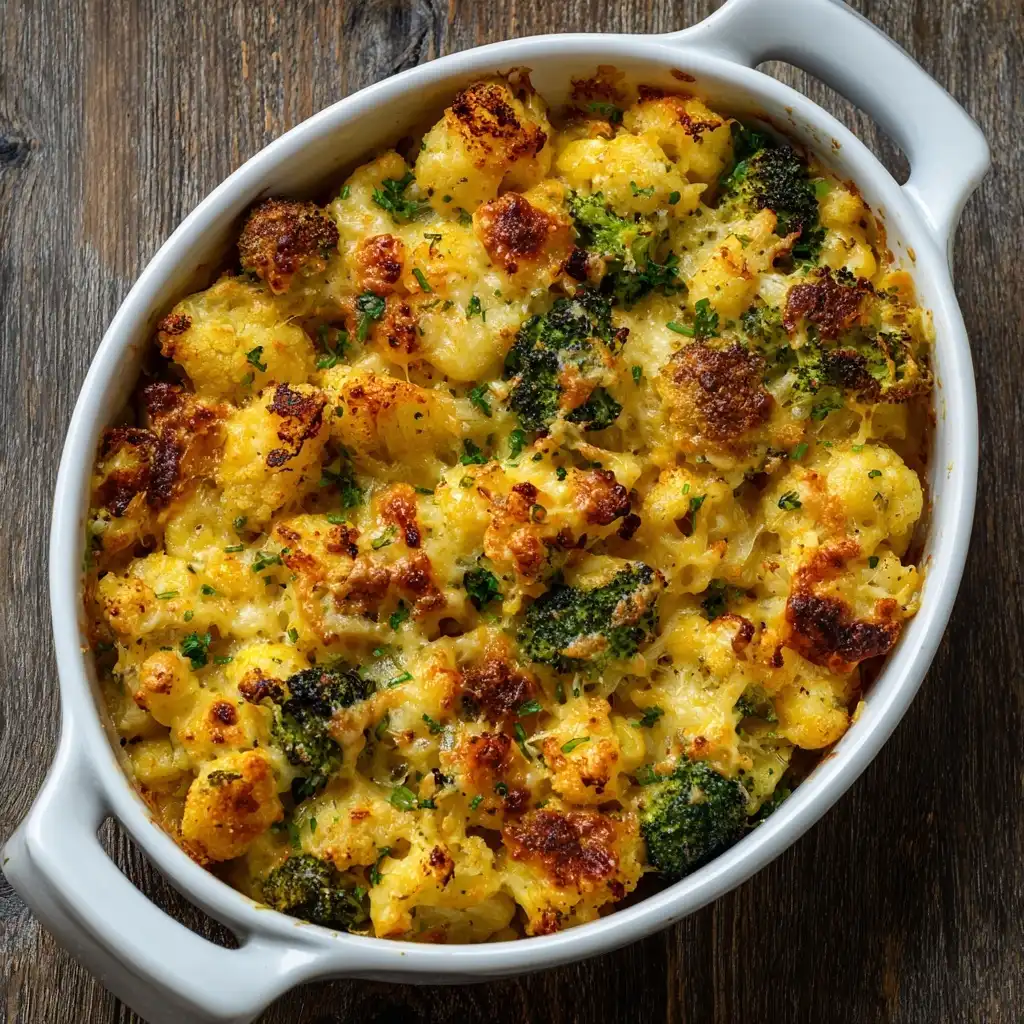
Welcome to a comforting, nutrient-dense, and deeply satisfying classic—Broccoli Cauliflower Cheese Casserole. This beloved baked dish marries the earthy sweetness of broccoli, the mild nuttiness of cauliflower, and the rich, velvety embrace of a golden, creamy cheese sauce—all crowned with a buttery, crisp breadcrumb or cracker crust. Far more than just a side dish, it’s a versatile centerpiece that bridges holiday feasts, weeknight family dinners, potluck contributions, and even make-ahead freezer meals. Whether you’re seeking a crowd-pleasing vegetarian main, a clever way to sneak cruciferous vegetables into picky eaters’ meals, or a nostalgic nod to mid-century American comfort cooking, this casserole delivers warmth, depth, and wholesome indulgence in every forkful.
The History
The origins of broccoli cauliflower cheese casserole are deeply rooted in the broader evolution of the “cheese casserole” tradition—a culinary phenomenon that flourished in the United States during the early-to-mid 20th century. While dishes featuring cheese and vegetables date back centuries across European cuisines (think French gratin dauphinois or British cauliflower cheese), the modern American casserole emerged as a practical response to post-war domestic life: economical, time-efficient, adaptable to pantry staples, and ideal for feeding large families or gatherings. The iconic 1950s–60s era saw the rise of convenience foods—canned soups, frozen vegetables, and processed cheeses—which helped standardize and popularize recipes like this one. Early versions often appeared in community cookbooks, women’s magazines like Good Housekeeping and Ladies’ Home Journal, and promotional materials from dairy boards and vegetable growers. Broccoli and cauliflower, once considered somewhat exotic or underutilized in mainstream American kitchens, gained traction in the 1970s and ’80s as nutrition science highlighted their antioxidant richness and fiber content—prompting home cooks to combine them intentionally for both flavor balance and health appeal. Today’s iterations honor that legacy while embracing whole-food upgrades: real cheese instead of Velveeta, homemade béchamel over canned soup, whole-grain breadcrumbs, and plant-forward enhancements—making this casserole not only timeless but continually evolving.
Ingredients Breakdown
Understanding each component is key to mastering texture, flavor harmony, and structural integrity:
- Broccoli & Cauliflower (Fresh or Frozen): A 1:1 ratio ensures balanced flavor and texture. Fresh florets offer superior crunch and vibrant color but require precise blanching; frozen works beautifully when properly thawed and well-drained (excess water = soggy casserole). Both are rich in sulforaphane (a potent phytonutrient), vitamin C, folate, potassium, and dietary fiber.
- Butter: Used in both the sauce and topping, it adds richness, mouthfeel, and browning capacity. Unsalted butter is preferred for sodium control and flavor clarity.
- All-Purpose Flour: Acts as the thickening agent in the roux-based cheese sauce. For gluten-free versions, a 1:1 certified GF flour blend or brown rice flour works reliably.
- Milk (Whole or 2% Recommended): Provides creaminess and helps emulsify the cheese. Lower-fat milks can yield a thinner sauce—consider adding a splash of heavy cream or evaporated milk for body if substituting.
- Cheeses (Triple-Layer Strategy):
- Base Melt (e.g., sharp cheddar): Offers bold flavor and reliable melting properties.
- Creamy Binder (e.g., Gruyère, fontina, or Monterey Jack): Adds silkiness and prevents graininess.
- Umami Finish (e.g., Parmesan, Asiago, or aged Gouda): Boosts savoriness and deepens complexity—best stirred in off-heat to preserve texture.
- Aromatics & Seasonings: Onion powder, garlic powder, dry mustard (a secret weapon—it enhances cheese solubility and adds subtle tang), freshly ground black pepper, and a pinch of nutmeg (which complements dairy and crucifers beautifully). Fresh minced garlic and sautéed shallots can elevate the base further.
- Topping: Buttered panko or crushed Ritz crackers deliver optimal crunch and golden color. Optional additions include toasted slivered almonds, crispy fried onions, or a sprinkle of smoked paprika for visual and flavor contrast.
Step-by-Step Recipe
- Prep the Vegetables: Cut 3 cups of fresh broccoli and 3 cups of fresh cauliflower into uniform 1–1.5-inch florets. Blanch in salted boiling water for 3 minutes until bright green and *just* tender-crisp. Drain thoroughly in a colander, then spread on clean kitchen towels or paper towels to air-dry for 10–15 minutes. (If using frozen, thaw completely and squeeze out *all* excess moisture using hands or a clean towel—this step cannot be rushed.)
- Preheat & Prep Dish: Preheat oven to 375°F (190°C). Lightly grease a 9×13-inch baking dish (or 3-quart casserole dish) with butter or nonstick spray.
- Make the Roux: In a heavy-bottomed saucepan over medium heat, melt 4 tablespoons unsalted butter. Whisk in ¼ cup all-purpose flour and cook, stirring constantly, for 1–2 minutes until fragrant and pale golden—do not let it brown. This removes raw flour taste and builds structure.
- Build the Béchamel: Gradually whisk in 2 cups whole milk (warm milk prevents lumps), ensuring no streaks remain. Bring to a gentle simmer, whisking continuously, until thickened enough to coat the back of a spoon (~5–7 minutes). Reduce heat to low.
- Incorporate Cheese: Remove saucepan from heat. Gradually whisk in 2 cups shredded sharp cheddar, 1 cup shredded Gruyère, and ½ cup grated Parmesan—adding in stages and stirring until fully melted and smooth before adding more. Stir in 1 tsp onion powder, 1 tsp garlic powder, ½ tsp dry mustard, ¼ tsp freshly grated nutmeg, ½ tsp black pepper, and 1 tsp kosher salt (adjust to taste). Avoid boiling after cheese is added to prevent separation.
- Combine & Layer: In a large bowl, gently fold the blanched, dried vegetables into the warm cheese sauce until evenly coated. Transfer mixture to the prepared baking dish, spreading evenly with a spatula.
- Add the Topping: In a small bowl, melt 2 tbsp butter and toss with 1 cup panko breadcrumbs (or crushed Ritz crackers) until uniformly moistened. Sprinkle evenly over the casserole surface. Optional: dot with tiny pats of butter or drizzle with truffle oil for extra luxury.
- Bake: Place dish on middle oven rack. Bake uncovered for 25–30 minutes, until bubbly at edges and golden brown on top. For deeper browning, broil on low for 1–2 minutes at the end—watch closely!
- Rest Before Serving: Let casserole rest for 10 minutes before cutting. This allows the sauce to re-emulsify and set slightly, yielding cleaner slices and preventing runny pooling.
Tips
- Dry Vegetables Are Non-Negotiable: Wet broccoli/cauliflower releases steam during baking, diluting the sauce and creating a watery layer at the bottom. Squeeze, pat, and air-dry—even if it feels excessive.
- Shred Your Own Cheese: Pre-shredded cheeses contain anti-caking agents (like cellulose) that impede smooth melting and can lead to grainy or greasy sauces. Freshly grated cheese melts evenly and delivers superior flavor.
- Warm the Milk: Cold milk hitting hot roux causes lumps. Heat milk gently in the microwave or on the stove before whisking in.
- Low-and-Slow Cheese Integration: Always remove the sauce from heat before adding cheese. High heat + prolonged cooking = broken sauce. Stir gently in one direction to encourage emulsification.
- Taste & Adjust Before Baking: Sauce should be boldly seasoned—remember flavors mellow during baking and are balanced by mild vegetables. Adjust salt, pepper, mustard, or acidity (a splash of lemon juice brightens richness).
- Don’t Overbake: The goal is bubbling edges and a set, creamy interior—not drying out. A toothpick inserted into the center should come out with moist, cohesive sauce—not liquid.
- Make-Ahead Friendly: Assemble up to 1 day ahead (without topping), cover tightly, and refrigerate. Add topping just before baking—add 5–10 extra minutes to bake time if going straight from fridge to oven.
- Freezer Instructions: Prepare fully (with topping), cool completely, wrap tightly in plastic + foil, and freeze up to 3 months. Thaw overnight in fridge, then bake as directed—may need +10–15 minutes.
Variations and Customizations
- Gluten-Free: Substitute GF all-purpose flour blend (like Bob’s Red Mill 1:1) and use GF breadcrumbs or crushed gluten-free crackers. Verify all cheese labels for hidden wheat derivatives.
- Lower-Carb/Keto: Replace flour with 1 tbsp xanthan gum or 2 tsp glucomannan powder whisked into cold milk before heating. Use full-fat dairy, increase high-fat cheeses (Gouda, Havarti), omit breadcrumbs, and top with crushed pork rinds or almond flour + butter.
- Vegan: Use plant-based butter, unsweetened oat or cashew milk, nutritional yeast (¼ cup) + 1 tbsp white miso + 1 tsp turmeric for “cheesy” depth, and a roux made with GF flour or cornstarch slurry. Top with toasted sunflower seeds or vegan buttered panko.
- Protein-Powered: Fold in 1½ cups cooked diced chicken breast, flaked salmon, or plant-based crumbles (lentils, tempeh bacon, or chickpeas). Add ½ tsp smoked paprika or Old Bay seasoning for synergy.
- Gourmet Upgrades: Infuse milk with thyme or bay leaf; stir in roasted garlic purée; top with caramelized onions or sautéed wild mushrooms; finish with microgreens or chive blossoms.
- Spicy Kick: Add ¼–½ tsp cayenne, chipotle powder, or a finely minced jalapeño (seeds removed) to the sauce. Garnish with pickled red onions.
- Herb-Forward: Stir 2 tbsp chopped fresh dill, tarragon, or chives into the sauce—or infuse the butter with rosemary before making roux.
- Root Vegetable Twist: Swap 1 cup of cauliflower with parsnips or turnips for earthy-sweet contrast (blanch separately, as they take longer).
Health Considerations and Nutritional Value
This casserole is a nutrient powerhouse disguised as comfort food—with intentional modifications, it supports diverse dietary goals:
- Cruciferous Powerhouse: Broccoli and cauliflower deliver glucosinolates (converted to cancer-fighting sulforaphane), vitamin K (for bone and vascular health), vitamin C (immune support and collagen synthesis), and soluble + insoluble fiber (gut microbiome diversity and satiety).
- Dairy Benefits: Real cheese contributes calcium, phosphorus, vitamin A, and bioactive peptides linked to blood pressure regulation. Choosing grass-fed or organic dairy increases omega-3s and CLA (conjugated linoleic acid).
- Smart Fat Profile: Butter provides fat-soluble vitamins (A, D, E, K2) and butyrate—a short-chain fatty acid shown to reduce intestinal inflammation. Pairing with fiber-rich veggies enhances fat absorption of carotenoids.
- Calorie & Sodium Awareness: A standard serving (1½ cups) contains ~380–450 kcal, 22–28g protein, 25–30g carbs (of which 5–7g fiber), and 22–26g fat. Sodium ranges from 550–750mg depending on cheese salt content and added salt—reduce by using low-sodium cheeses and limiting added salt.
- Dietary Adaptability: Naturally vegetarian and easily made vegan, GF, or keto-compliant. For heart health, opt for reduced-sodium cheeses and increase garlic/onion (natural vasodilators). For blood sugar balance, the high fiber and protein content yields a low glycemic load.
- Considerations: Those with lactose intolerance may tolerate aged cheeses (lower lactose); those with dairy allergies must use fortified plant alternatives. Moderation is wise for individuals managing saturated fat intake—but recent meta-analyses suggest full-fat dairy is not associated with increased cardiovascular risk when consumed as part of a balanced diet.
Ingredients
- 3 cups fresh broccoli florets (about 1 large head)
- 3 cups fresh cauliflower florets (about 1 medium head)
- 4 tablespoons unsalted butter, divided
- ¼ cup all-purpose flour (or GF 1:1 blend)
- 2 cups whole milk (warmed), or 1¾ cups milk + ¼ cup heavy cream
- 2 cups shredded sharp cheddar cheese (freshly grated)
- 1 cup shredded Gruyère or fontina cheese
- ½ cup finely grated Parmesan cheese
- 1 teaspoon onion powder
- 1 teaspoon garlic powder
- ½ teaspoon dry mustard powder
- ¼ teaspoon freshly grated nutmeg
- ½ teaspoon freshly ground black pepper
- 1 teaspoon kosher salt (plus more to taste)
- 1 cup panko breadcrumbs or crushed Ritz crackers
- Fresh chives or parsley, for garnish (optional)
Directions
- Bring a large pot of salted water to boil. Add broccoli and cauliflower florets; blanch for exactly 3 minutes. Drain immediately in a colander and spread on clean kitchen towels. Pat vigorously dry and let air-dry 10–15 minutes.
- Preheat oven to 375°F (190°C). Grease a 9×13-inch baking dish.
- In a medium saucepan, melt 4 tbsp butter over medium heat. Whisk in flour and cook 1–2 minutes until fragrant and pale golden.
- Gradually whisk in warm milk until smooth. Bring to gentle simmer, whisking constantly, until thickened to coat spoon (~5–7 min).
- Remove from heat. Gradually whisk in cheddar, Gruyère, and Parmesan until fully melted and glossy. Stir in onion powder, garlic powder, dry mustard, nutmeg, pepper, and salt.
- In large bowl, gently fold vegetables into cheese sauce until fully coated. Transfer to baking dish and smooth top.
- In small bowl, melt remaining 2 tbsp butter. Toss with panko until evenly coated. Sprinkle over casserole.
- Bake uncovered 25–30 minutes until golden, bubbling, and set. Optional: broil 1–2 min for extra crispness.
- Let rest 10 minutes before serving. Garnish with fresh herbs if desired.
FAQ
- Can I use frozen broccoli and cauliflower?
- Yes—but thaw completely in the refrigerator overnight, then drain in a colander for 10 minutes. Squeeze handfuls firmly in a clean towel to remove *all* moisture. Excess water will thin the sauce and create separation.
- Why does my cheese sauce break or become grainy?
- Three main causes: (1) Boiling the sauce after adding cheese—always remove from heat first; (2) Using pre-shredded cheese with anti-caking agents; (3) Adding cheese too quickly or stirring too vigorously. Solution: Low heat, fresh-grated cheese, gradual incorporation, and gentle folding.
- Can I make this ahead of time?
- Absolutely. Assemble completely (without topping), cover tightly, and refrigerate up to 24 hours. Add topping just before baking—and add 5–10 minutes to bake time if chilled.
- How do I reheat leftovers without drying them out?
- For best results: Cover with foil and bake at 325°F for 20–25 minutes until heated through. Alternatively, microwave individual portions at 50% power in 60-second intervals, covered with damp paper towel, stirring gently between bursts.
- What cheeses can I substitute if I don’t have Gruyère?
- Excellent alternatives include Swiss, Emmental, Jarlsberg, Monterey Jack, or even a mild provolone. Avoid very young mozzarella (too watery) or feta/goat cheese (too acidic and crumbly for this application).
- Is this casserole freezer-friendly?
- Yes! Cool completely, wrap tightly in plastic wrap + heavy-duty foil, label, and freeze up to 3 months. Thaw overnight in fridge, add topping, and bake as directed—adding 10–15 minutes if needed.
- Can I add other vegetables?
- Yes—steamed carrots, peas, asparagus tips, or spinach (well-wrung) integrate beautifully. Just ensure all additions are thoroughly drained and compatible in cook time.
- My casserole turned out watery—what went wrong?
- Nearly always due to insufficient vegetable drying. Also check: Was milk too cold? Was flour undercooked in roux? Was cheese added while sauce was still boiling? Each contributes to instability.
- How do I make it spicier?
- Stir in ¼ tsp cayenne, ½ tsp smoked paprika, or 1 minced serrano pepper (seeds removed) into the sauce. Or serve with harissa or chili crisp on the side.
- Is this suitable for kids?
- Extremely kid-friendly—especially when introduced early. The mild cauliflower balances broccoli’s slight bitterness, and the creamy cheese makes it approachable. Serve with apple slices or whole-grain rolls for balanced nutrition.
Summary
Broccoli Cauliflower Cheese Casserole is a timeless, adaptable, and nutritionally robust dish that transforms humble cruciferous vegetables into a luxurious, crowd-pleasing centerpiece—rich with protein, fiber, antioxidants, and gut-supportive compounds.
With its customizable ingredients, make-ahead flexibility, and endless variations—from gluten-free and vegan to keto and gourmet—it’s not just a recipe, but a foundational technique for wholesome, joyful, and resilient home cooking.