Introduction
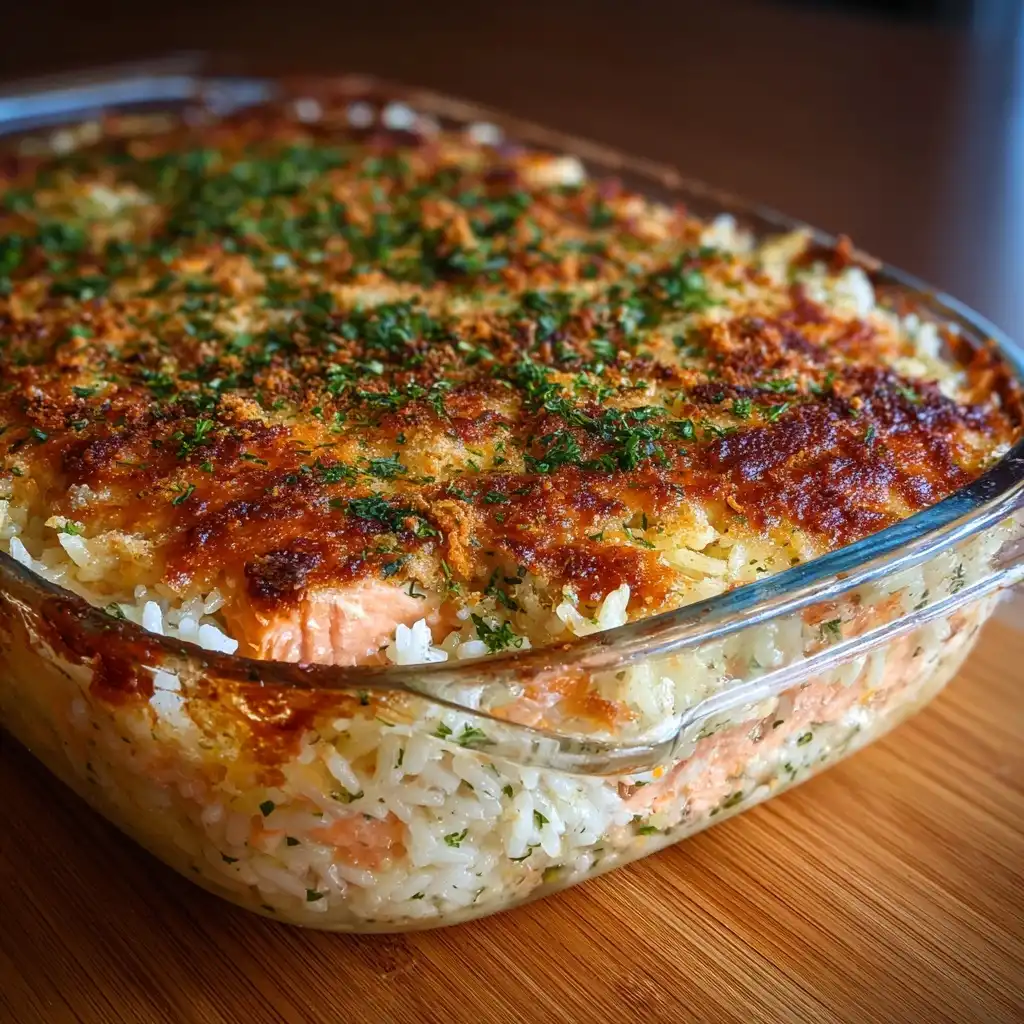
Baked Salmon and Rice Casserole is a harmonious fusion of elegance and everyday practicality — a one-dish wonder that transforms simple, wholesome ingredients into a nourishing, flavorful, and visually stunning centerpiece for weeknight dinners, Sunday suppers, or even casual entertaining. Unlike traditional casseroles laden with heavy cream sauces or processed cheeses, this modern interpretation celebrates the natural richness of wild-caught salmon, the comforting chew of aromatic rice, and the bright, herbaceous lift of fresh garnishes — all bound together with a velvety, lightly enriched custard base that bakes to golden perfection. It bridges culinary traditions: borrowing the structural integrity of French gratin, the grain-forward heartiness of Mediterranean pilafs, and the gentle poaching technique of Nordic seafood preparations — yet remains entirely approachable for home cooks of all skill levels. Whether you’re seeking a protein-packed family meal that minimizes cleanup, a gluten-free and dairy-light option for dietary inclusivity, or simply a way to elevate pantry staples into something extraordinary, this casserole delivers depth, balance, and quiet sophistication in every forkful.
The History
While no single “inventor” or documented origin story defines the Baked Salmon and Rice Casserole, its evolution reflects broader shifts in American and global home cooking over the past century. Its conceptual roots trace back to early 20th-century “convenience cuisine,” when canned salmon — first commercially packed in British Columbia in the 1870s and widely popularized in the U.S. by the 1920s — became a pantry staple for economical, shelf-stable protein. Cookbooks from the 1930s–1950s frequently featured “salmon loaves,” “salmon rice molds,” and baked “salmon pudding” recipes — often combining cooked rice, canned salmon, eggs, onions, and mild seasonings, then baked in loaf pans or buttered dishes. These were born of necessity: stretching limited proteins, using leftover rice, and accommodating electric oven technology that was becoming mainstream.
By the 1970s and ’80s, as health consciousness grew and fresh seafood access improved (especially with expanded frozen-at-sea supply chains), home cooks began substituting fresh or frozen salmon fillets for canned versions — leading to more delicate textures and nuanced flavor profiles. The rise of rice-based casseroles paralleled the popularity of rice pilafs and baked risottos in mid-century cookbooks like those by James Beard and Julia Child, who championed rice not just as filler, but as a textural counterpoint capable of absorbing complex broths and fats. In the 2000s, food blogs and wellness-focused publications reimagined the dish with whole grains (brown rice, farro, quinoa), reduced-sodium broths, Greek yogurt or crème fraîche substitutions, and vibrant vegetable additions — transforming it from a retro comfort dish into a nutrition-forward, globally inspired main course. Today’s version embodies a “new classic”: deeply rooted in thrift and tradition, yet continually refined through sustainability awareness (e.g., MSC-certified salmon), dietary customization, and a reverence for ingredient integrity.
Ingredients Breakdown
Every component in this casserole serves a distinct functional and sensory role — no element is merely decorative or filler. Understanding their contributions elevates both execution and appreciation:
- Salmon: Use skinless, boneless fillets (preferably center-cut) — wild Alaskan sockeye or coho offer intense flavor and firm texture; Atlantic salmon provides richer fat content ideal for moisture retention during baking. The salmon is gently poached *before* baking to ensure tenderness and prevent drying — a critical step distinguishing this from raw-fish casseroles that risk overcooking.
- Rice: Long-grain white rice (like jasmine or basmati) is preferred for its non-sticky, separate grains and floral aroma — crucial for textural contrast against the flaky fish. Day-old cooked rice works exceptionally well (less moisture = better absorption), but freshly cooked, properly rinsed and cooled rice is perfectly acceptable. Avoid short-grain or sticky rice varieties unless intentionally adapting for a creamier, more risotto-like result.
- Aromatics: Yellow onion and garlic form the foundational savory base; sautéing them until translucent (not browned) builds sweetness and depth without bitterness. A finely minced shallot added at the end offers a subtle, refined sharpness.
- Liquid Components: A blend of low-sodium seafood or vegetable broth (for umami depth) and dry white wine (such as Sauvignon Blanc or Pinot Grigio) adds acidity, brightness, and complexity. The wine’s alcohol fully evaporates during baking, leaving only its aromatic essence. Heavy cream or full-fat coconut milk contributes luxurious mouthfeel and helps emulsify the custard; for lighter versions, whole milk + a touch of Dijon mustard mimics richness and binding power.
- Eggs: Act as the primary binder and leavening agent — they set the custard matrix, giving the casserole its tender, sliceable structure without gumminess. Using room-temperature eggs ensures even incorporation and prevents curdling when mixed with warm liquids.
- Herbs & Citrus: Fresh dill is non-negotiable — its anise-tinged freshness complements salmon inherently. Flat-leaf parsley adds grassy vibrancy; lemon zest and juice cut through richness and brighten the entire profile. Dried dill lacks the volatile oils needed here — always use fresh.
- Umami Boosters: A small amount of Dijon mustard (for tang and emulsification), a splash of Worcestershire sauce (anchovy-based, deepening savoriness), and optional grated Parmesan rind simmered in the broth infuse layers of background complexity without overpowering the salmon.
- Fat & Finish: High-quality unsalted butter enriches the base and carries flavor; olive oil adds fruitiness. A final drizzle of extra-virgin olive oil and flaky sea salt just before serving enhances aroma and salinity.
Step-by-Step Recipe
- Prep & Poach the Salmon: Place 1 lb skinless, boneless salmon fillets in a shallow skillet. Add enough cold water to cover by ½ inch. Add 1 tbsp white vinegar, 1 tsp black peppercorns, 1 bay leaf, and 1 thin lemon slice. Bring to a *bare simmer* (small bubbles at edges, not boiling), reduce heat to lowest setting, cover, and poach gently for 8–10 minutes — until salmon flakes easily with a fork but remains moist. Remove with a slotted spoon; cool slightly, then flake into large, even pieces, discarding any remaining bones. Reserve ¼ cup poaching liquid.
- Toast & Sauté Aromatics: In a large, heavy-bottomed Dutch oven or oven-safe skillet, melt 2 tbsp unsalted butter over medium heat. Add 1 finely diced yellow onion and 3 minced garlic cloves; sauté 5–6 minutes until soft and translucent (do not brown). Stir in 1 tsp tomato paste and cook 1 minute until fragrant. Add 1½ cups rinsed long-grain rice; stir constantly for 2 minutes to lightly toast grains and coat in fat — this seals starch and prevents mushiness.
- Infuse Broth & Deglaze: Pour in 1½ cups low-sodium seafood or vegetable broth, ½ cup dry white wine, and the reserved ¼ cup salmon poaching liquid. Scrape up any browned bits. Add a 1-inch piece of Parmesan rind (optional but recommended), 1 tsp Dijon mustard, and 1 tsp Worcestershire sauce. Bring to a gentle simmer. Reduce heat to low, cover, and cook for 15 minutes — stirring once halfway — until rice is *almost* tender but still slightly firm (al dente), with most liquid absorbed.
- Prepare Custard Base: In a medium bowl, whisk together 3 large room-temperature eggs, ¾ cup heavy cream (or full-fat coconut milk), zest of 1 lemon, juice of ½ lemon, ¼ cup finely chopped fresh dill, 2 tbsp chopped flat-leaf parsley, ½ tsp freshly ground white pepper, and 1 tsp fine sea salt. Whisk vigorously until fully homogenized and slightly frothy.
- Combine & Layer: Remove rice mixture from heat. Discard Parmesan rind. Gently fold in flaked salmon, taking care not to break it further. Let cool 5 minutes (prevents eggs from scrambling). Slowly pour custard mixture over rice-salmon mixture while stirring gently in a figure-eight motion — avoid vigorous stirring to maintain flakiness. Taste and adjust seasoning (more lemon? more dill? a pinch of cayenne for warmth?). Transfer to a greased 9×13-inch ceramic or glass baking dish.
- Bake with Precision: Preheat oven to 350°F (175°C). Place casserole dish on a rimmed baking sheet (to catch spills). Bake uncovered for 35–42 minutes — until top is puffed and golden, edges are set, and center jiggles *slightly* (like Jell-O) when gently shaken. A toothpick inserted 1 inch from center should come out clean or with moist crumbs (not wet batter). Avoid overbaking — residual heat will finish cooking.
- Rest & Garnish: Remove from oven and let rest, undisturbed, for 15 full minutes. This allows custard to fully set, prevents collapse, and lets flavors meld. Just before serving, sprinkle generously with additional fresh dill, parsley, lemon zest, and flaky Maldon salt. Drizzle with high-quality extra-virgin olive oil.
Tips
- Salmon Selection Matters: Opt for sustainably sourced, wild-caught salmon whenever possible (look for MSC or Seafood Watch “Best Choice” ratings). Farmed salmon has higher fat content — delicious, but may release more oil during baking; pat fillets very dry before poaching to mitigate.
- Temperature Control is Key: Never boil the poaching liquid — simmering preserves delicate texture. For ultra-tender results, try “sous-vide style” poaching: seal salmon in a vacuum bag or sturdy zip-top bag (water displacement method), submerge in 120°F (49°C) water bath for 30–45 minutes. Then flake.
- Rice Texture Mastery: Rinsing rice removes excess surface starch, preventing gummy results. After toasting, the rice should smell nutty and appear slightly translucent at edges. If your rice absorbs liquid too quickly during stovetop phase, add 2–3 tbsp hot broth — never cold water.
- Custard Consistency Check: If custard looks overly thin after mixing, whisk in 1 tsp cornstarch slurry (1 tsp cornstarch + 1 tsp cold water). If too thick, loosen with 1 tbsp warm broth. The ideal consistency coats the back of a spoon lightly.
- Oven Variance Awareness: Convection ovens bake faster — reduce temp by 25°F and check at 30 minutes. Dark metal pans conduct heat more aggressively than ceramic/glass — if using, lower temp to 325°F and extend time by 5–7 minutes.
- No-Splatter Baking: Place a sheet of parchment paper directly on the casserole surface before covering loosely with foil for the first 25 minutes — prevents surface drying while allowing steam to escape gradually.
- Resting is Non-Negotiable: Cutting too soon releases steam and causes structural collapse. Set a timer — 15 minutes minimum. The casserole will continue to firm up beautifully during this time.
- Make-Ahead Magic: Assemble completely (through step 5), cover tightly, and refrigerate up to 24 hours before baking. Add 5–8 minutes to bake time if going straight from fridge to oven. For longer storage, freeze unbaked casserole for up to 3 months — thaw overnight in fridge before baking.
Variations and Customizations
This casserole is a masterclass in adaptability — designed to accommodate preferences, seasons, pantries, and dietary frameworks without sacrificing integrity:
- Grain Swaps: Substitute cooked farro (nutty, chewy), brown rice (earthy, fiber-rich), barley (mellow, slightly sweet), or quinoa (gluten-free, protein-dense). Adjust liquid ratios: farro needs +¼ cup broth; quinoa needs -2 tbsp. Toast grains as directed for maximum flavor.
- Seafood Alternatives: Replace salmon with poached cod, halibut, or Arctic char (similar flakiness). For shellfish lovers, fold in 1 cup cooked, chopped shrimp or scallops during assembly — add 1 tsp Old Bay seasoning to custard. Smoked salmon (½ cup, finely chopped) adds intense depth — reduce salt accordingly.
- Vegetable Integrations: Fold in 1 cup roasted asparagus tips, sautéed leeks, blanched green peas, caramelized fennel, or sun-dried tomatoes (oil-packed, drained and chopped). For hearty autumn versions, add ½ cup puréed roasted butternut squash to the custard.
- Dairy-Free/Vegan Adaptation: Use full-fat coconut milk + 1 tbsp nutritional yeast instead of cream/cheese; replace eggs with “flax eggs” (3 tbsp ground flax + 9 tbsp water, rested 10 mins) or commercial egg replacer. Use vegan butter and tamari instead of Worcestershire. Note: texture will be softer, more pudding-like — embrace it!
- Gluten-Free Assurance: Naturally GF if using certified GF broth and tamari (instead of Worcestershire, which often contains malt vinegar). Double-check all labels — especially Dijon mustard and wine (some fining agents aren’t GF).
- Low-Carb/Keto Version: Replace rice with 2 cups finely riced cauliflower (sautéed 5 mins to remove moisture) + ¼ cup almond flour. Increase eggs to 4 and cream to 1 cup. Bake 25–30 minutes. Top with crispy pancetta or smoked paprika.
- Global Twists: Mediterranean: Add kalamata olives, capers, and oregano; swap lemon for orange zest. Asian-Inspired: Use mirin + tamari + grated ginger + scallions; top with toasted sesame and nori strips. Scandinavian: Incorporate pickled herring (reduced quantity), dill, and boiled new potatoes folded in with rice.
- Breakfast-for-Dinner: Add ¼ cup crumbled feta and 2 extra eggs to custard; top with fried capers and chives. Serve with a soft-poached egg on the side.
Health Considerations and Nutritional Value
A single 1¼-cup serving (approx. 1/6th of recipe) delivers exceptional macro- and micronutrient density — making this casserole not just delicious, but functionally therapeutic:
- Omega-3 Powerhouse: Wild salmon provides ~1,700 mg EPA+DHA per 3-oz serving — supporting cardiovascular health, cognitive function, anti-inflammatory pathways, and mood regulation. Pairing with olive oil (rich in oleocanthal) creates synergistic anti-inflammatory effects.
- Complete Protein Profile: Salmon + eggs + rice provide all nine essential amino acids. With ~32g protein per serving, it promotes satiety, muscle maintenance, and metabolic efficiency — especially valuable for active individuals and aging populations.
- Fiber & Gut Health: Brown rice or farro versions offer 4–6g dietary fiber per serving — feeding beneficial gut microbiota and supporting digestive regularity and blood sugar stability. White rice versions remain easily digestible for sensitive systems.
- Vitamin & Mineral Synergy: Rich in vitamin D (critical for immune and bone health), selenium (potent antioxidant), B12 (nerve function), potassium (blood pressure regulation), and choline (liver and brain health). Lemon zest contributes bioavailable vitamin C, enhancing iron absorption from the salmon.
- Low Glycemic Impact: When prepared with minimal added sugars (none in original recipe), the dish maintains a low glycemic load — ideal for insulin sensitivity and metabolic health. The healthy fats and protein further blunt glucose spikes.
- Considerations for Specific Needs: Sodium-conscious eaters: Use no-salt-added broth, omit added salt, rely on herbs/citrus for flavor. Mercury concerns: Wild Alaskan salmon has among the lowest mercury levels of all seafood — safer for frequent consumption, including pregnancy (2–3 servings/week recommended). Lactose sensitivity: Heavy cream contains minimal lactose; most tolerate it well. For strict avoidance, use lactose-free cream or coconut milk.
- Portion Mindfulness: While nutrient-dense, the casserole is calorie-conscious (~420–480 kcal/serving depending on rice and cream choice). Pair with a large, lemon-dressed arugula salad or steamed broccoli to increase volume and micronutrient diversity without significant caloric addition.
Ingredients
- 1 pound skinless, boneless salmon fillets (wild Alaskan preferred)
- 2 tablespoons unsalted butter, plus extra for greasing dish
- 1 medium yellow onion, finely diced
- 3 garlic cloves, minced
- 1 teaspoon tomato paste
- 1½ cups long-grain white rice (jasmine or basmati), rinsed thoroughly
- 1½ cups low-sodium seafood or vegetable broth
- ½ cup dry white wine (Sauvignon Blanc or Pinot Grigio)
- ¼ cup reserved salmon poaching liquid (see Step 1)
- 1 (1-inch) piece Parmesan rind (optional but recommended)
- 1 teaspoon Dijon mustard
- 1 teaspoon Worcestershire sauce (ensure gluten-free if needed)
- 3 large eggs, room temperature
- ¾ cup heavy cream or full-fat coconut milk
- Zest and juice of 1 lemon (zest first, then juice)
- ¼ cup fresh dill, finely chopped (plus extra for garnish)
- 2 tablespoons fresh flat-leaf parsley, finely chopped (plus extra for garnish)
- ½ teaspoon freshly ground white pepper
- 1 teaspoon fine sea salt (adjust to taste)
- Flaky sea salt (Maldon or similar) and extra-virgin olive oil for finishing
Directions
- Bring a medium saucepan of water to a gentle simmer. Add salmon fillets, 1 tablespoon white vinegar, 1 teaspoon black peppercorns, 1 bay leaf, and 1 thin lemon slice. Maintain bare simmer (do not boil) for 8–10 minutes, until salmon flakes easily. Remove, cool slightly, and flake into large pieces. Reserve ¼ cup poaching liquid.
- Preheat oven to 350°F (175°C). Grease a 9×13-inch baking dish.
- In a large Dutch oven or oven-safe skillet, melt 2 tablespoons butter over medium heat. Sauté onion and garlic until soft (5–6 min). Stir in tomato paste; cook 1 minute. Add rice; toast 2 minutes, stirring constantly.
- Pour in broth, wine, reserved poaching liquid, Parmesan rind, Dijon, and Worcestershire. Bring to simmer. Reduce heat to low, cover, and cook 15 minutes, stirring once, until rice is al dente. Discard rind.
- In a bowl, whisk eggs, cream, lemon zest, lemon juice, dill, parsley, white pepper, and salt until frothy.
- Gently fold flaked salmon into rice mixture. Let cool 5 minutes. Slowly pour custard over rice-salmon, stirring gently in figure-eight motion until fully combined.
- Transfer to prepared baking dish. Bake uncovered 35–42 minutes, until puffed, golden, and center jiggles slightly.
- Rest 15 minutes. Garnish with extra dill, parsley, lemon zest, flaky salt, and olive oil before serving.
FAQ
- Can I use frozen salmon?
- Yes — thaw completely in refrigerator overnight, then pat *very* dry before poaching. Frozen salmon may release more moisture; consider reducing broth by 2 tbsp to compensate.
- Why poach the salmon first instead of baking it raw?
- Poaching ensures precise doneness and prevents drying or overcooking during the longer casserole bake. Raw salmon in custard risks becoming dense or rubbery. Poaching also yields flavorful liquid to enhance the rice.
- My casserole came out watery — what went wrong?
- Common causes: rice not toasted enough (releases starch prematurely), too much liquid added, custard poured over hot rice (causing separation), or underbaking. Next time, ensure rice is al dente before adding custard, and bake until center is *just* set — not liquid.
- Can I make this ahead for a dinner party?
- Absolutely. Assemble through step 6, cover tightly, and refrigerate up to 24 hours. Bake straight from fridge — add 5–8 minutes to bake time. Rest 15 minutes before serving for flawless presentation.
- Is there a way to make it crispier on top?
- For a golden crust, broil on low for 1–2 minutes after baking — watch closely! Alternatively, sprinkle with 2 tbsp panko or crushed crackers mixed with 1 tsp melted butter before final 5 minutes of baking.
- What sides pair best with this casserole?
- Its balanced richness pairs beautifully with acidic, crunchy, or bitter elements: lemon-dressed arugula or frisée salad, roasted asparagus with lemon zest, chilled cucumber-dill yogurt, or simple steamed green beans with toasted almonds.
- Can I double the recipe?
- Yes — use two 9×13-inch dishes or one large roasting pan (15x10x2 inches). Increase bake time by 5–10 minutes and rotate pans halfway through for even cooking. Check doneness with toothpick test.
- How do I store and reheat leftovers?
- Cool completely, then refrigerate in airtight container up to 4 days. Reheat gently in oven at 325°F covered with foil (15–20 mins) or in microwave at 50% power in 30-second intervals. Avoid overheating to preserve texture.
Summary
Baked Salmon and Rice Casserole is a masterfully balanced, nutritionally profound, and endlessly adaptable one-dish meal that honors tradition while embracing modern wellness and culinary creativity — where delicate poached salmon meets aromatic rice in a silken, herb-kissed custard, baked to golden perfection.
It’s simultaneously a weeknight lifesaver, a showstopping dinner party centerpiece, and a canvas for seasonal, cultural, and dietary expression — proving that simplicity, when executed with intention and quality ingredients, yields extraordinary depth and satisfaction.