Introduction
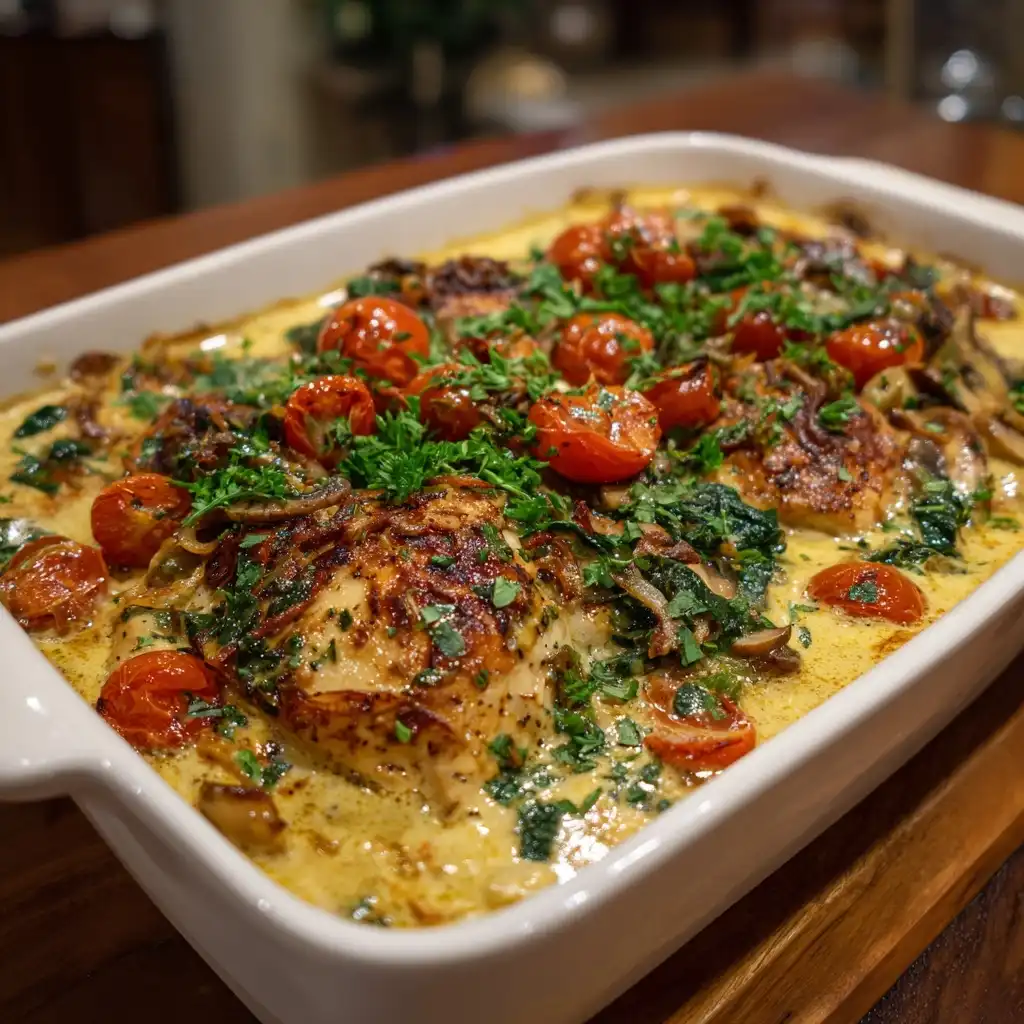
Welcome to the ultimate comfort food experience—Creamy Tuscan Chicken Casserole. This rich, soul-warming dish marries the rustic charm of Italian countryside cooking with the effortless elegance of modern weeknight dinners. Imagine tender chunks of chicken nestled in a velvety, herb-infused sauce studded with sun-dried tomatoes, baby spinach, creamy ricotta, and sharp Parmesan—all baked to golden perfection under a bubbling, cheesy crust. Whether you’re feeding a busy family, hosting a casual dinner party, or simply treating yourself after a long day, this casserole delivers restaurant-quality depth and satisfaction with pantry-friendly ingredients and minimal hands-on time. It’s not just a meal—it’s an invitation to slow down, savor, and celebrate the simple joy of well-layered flavor and comforting texture.
The History
The Creamy Tuscan Chicken Casserole is a contemporary American-Italian fusion dish rooted in both tradition and innovation. While classic Tuscan cuisine emphasizes simplicity—think extra virgin olive oil, garlic, rosemary, white beans, and seasonal vegetables—the “Tuscan” label in modern American cooking often evokes a richer, creamier profile inspired by regional interpretations and culinary adaptation. The use of heavy cream, ricotta, and Parmigiano-Reggiano reflects northern Italian dairy traditions, while sun-dried tomatoes and baby spinach nod to central Italy’s sun-ripened produce culture. Casserole-style baking itself has deep roots in mid-20th-century American home kitchens, where one-dish meals offered practicality and warmth during post-war domestic life. Over time, chefs and home cooks began marrying these concepts: taking Tuscan-inspired flavors—garlic, herbs, tomatoes, cheese—and transforming them into hearty, oven-baked formats ideal for sharing. Today’s version evolved through food blogs, cooking shows, and recipe developers seeking balance: luxurious without being heavy, flavorful without being fussy, and deeply satisfying without demanding hours of prep. It stands as a testament to how global inspiration, local ingredients, and evolving kitchen habits can converge into something timeless—and deliciously familiar.
Ingredients Breakdown
Every exceptional casserole begins with intentionality—each ingredient chosen not just for function but for layered contribution to aroma, texture, mouthfeel, and harmony. Here’s why each component matters:
- Chicken breasts or thighs (boneless, skinless): The protein foundation. Breasts offer lean tenderness; thighs provide juicier, more forgiving richness—especially important in baked applications where moisture retention is key. Uniform dicing ensures even cooking and integration into the creamy matrix.
- Olive oil (extra virgin): Used for sautéing aromatics and searing chicken, it imparts grassy, peppery notes that anchor the entire dish in Mediterranean authenticity. Its smoke point is ideal for medium-heat browning without bitterness.
- Yellow onion & garlic: The aromatic base. Onions lend sweetness when softened; garlic adds pungent depth that mellows into savory nuance during cooking—essential for building foundational flavor.
- Fresh spinach (baby or mature): Adds vibrant color, subtle earthiness, and nutritional density. Wilts beautifully into the sauce without overwhelming; its slight bitterness balances the cream’s richness.
- Sun-dried tomatoes (oil-packed, chopped): A concentrated burst of sweet-tart umami. Their chewy texture and intense tomato essence evoke sun-baked hillsides of Tuscany—and their oil infuses the entire dish with fruity, herbal notes.
- Dry white wine (e.g., Pinot Grigio or Sauvignon Blanc): Not optional—it deglazes the pan, lifts fond, and adds bright acidity that cuts through fat and prevents cloying heaviness. Alcohol evaporates, leaving only complexity and lift.
- Heavy cream (36–40% milk fat): The luxurious backbone of the sauce. Provides unctuous body, sheen, and a lush mouthfeel that binds all elements together. Lower-fat alternatives (half-and-half, whole milk) will thin the sauce and compromise stability.
- Ricotta cheese (whole-milk, fresh): Adds delicate sweetness, grainy-soft texture, and subtle tang. Unlike mozzarella or cheddar, ricotta contributes airy lightness *within* the creaminess—preventing monotony and offering textural contrast.
- Parmigiano-Reggiano (freshly grated): The umami powerhouse. Salty, nutty, crystalline—its enzymatic depth amplifies every other flavor. Pre-grated versions contain anti-caking agents that hinder melting and mute flavor; freshly grated is non-negotiable for integrity.
- Fresh herbs (rosemary, thyme, basil): Rosemary offers piney intensity; thyme brings floral-earthy warmth; basil lends summery sweetness. Using a combination creates a multi-dimensional herbal tapestry far beyond single-herb simplicity.
- Red pepper flakes (optional but recommended): A whisper of heat awakens the palate and enhances perception of other flavors—without dominating. Adjust to preference, but don’t omit entirely for balanced complexity.
- Salt and freshly ground black pepper: Not mere seasonings—they’re flavor conductors. Salt unlocks natural sweetness in tomatoes and onions; pepper adds aromatic spice and structural brightness.
- Additional Parmesan or Pecorino Romano for topping: Creates a crisp, golden, salty-crunchy crown that contrasts the creamy interior—a textural crescendo essential to the casserole experience.
Step-by-Step Recipe
- Preheat & Prep: Position oven rack in the center and preheat to 375°F (190°C). Lightly grease a 9×13-inch (or similarly sized 3-quart) baking dish with olive oil or butter. Chop chicken into 1-inch cubes; pat thoroughly dry with paper towels—this ensures proper searing, not steaming.
- Sear the Chicken: Heat 2 tbsp olive oil in a large, heavy-bottomed skillet (preferably stainless steel or cast iron) over medium-high heat until shimmering. Season chicken generously with salt and pepper. Working in batches to avoid crowding, add chicken and cook undisturbed for 2–3 minutes per side until golden brown and just cooked through (165°F internal temp). Transfer to a clean bowl and set aside. Do not rinse the skillet—those browned bits (fond) are flavor gold.
- Sauté Aromatics: Reduce heat to medium. Add remaining 1 tbsp olive oil to the same skillet. Add diced onion and sauté for 4–5 minutes until translucent and fragrant. Stir in minced garlic, crushed red pepper flakes, chopped rosemary, and thyme; cook 60–90 seconds until aromatic—but do not let garlic brown.
- Incorporate Vegetables & Tomatoes: Stir in chopped sun-dried tomatoes and cook for 1 minute to toast their oils and concentrate flavor. Add baby spinach in generous handfuls, stirring constantly until wilted (about 2 minutes total). If using frozen spinach, thaw completely and squeeze out *all* excess water first.
- Build the Sauce Base: Pour in ½ cup dry white wine, scraping vigorously with a wooden spoon to release all browned bits from the pan bottom. Simmer 2–3 minutes until reduced by half and alcohol smell dissipates. Reduce heat to low.
- Emulsify the Cream Mixture: Whisk in heavy cream, then gently fold in ricotta cheese until mostly smooth (small lumps are fine—they’ll melt further). Stir in ¾ cup freshly grated Parmigiano-Reggiano, reserving ¼ cup for topping. Season with additional salt and pepper to taste—remember, cheese adds salt, so taste before over-seasoning.
- Combine & Layer: Gently fold the seared chicken back into the creamy mixture. Stir just until evenly coated—avoid overmixing to preserve chicken tenderness. Taste and adjust seasoning: a splash of lemon juice here can brighten the entire dish if needed.
- Transfer & Top: Pour mixture evenly into the prepared baking dish. Smooth the top with a spatula. Sprinkle reserved ¼ cup Parmigiano-Reggiano evenly across the surface. For extra decadence, dot lightly with small pats of butter or drizzle with a teaspoon of olive oil—this encourages browning and adds sheen.
- Bake to Perfection: Place dish on a parchment- or foil-lined baking sheet (to catch any potential bubbling overflow). Bake uncovered for 25–30 minutes, or until the casserole is bubbling vigorously at the edges and the top is deeply golden with faint speckles of caramelization. Internal temperature should register at least 165°F when checked at the center.
- Rest & Finish: Remove from oven and let rest for 8–10 minutes before serving. This allows the sauce to settle, thicken slightly, and redistribute—ensuring clean scoops and cohesive texture. Just before serving, garnish generously with fresh chopped basil and an extra dusting of black pepper.
Tips
- Dry Your Chicken Religiously: Moisture is the enemy of browning. Patting chicken dry with paper towels—not just once, but twice—makes the difference between gray, steamed cubes and deeply caramelized, flavor-packed morsels.
- Don’t Skip the Wine Deglaze: Even if you don’t cook with wine regularly, this step is transformative. It lifts concentrated flavor from the pan, adds subtle acidity, and creates a seamless bridge between savory and creamy elements. Substitute with low-sodium chicken broth + 1 tsp lemon juice if absolutely necessary—but know you’re sacrificing nuance.
- Use Room-Temperature Ricotta: Cold ricotta can cause the hot cream to seize or curdle. Let it sit out for 15–20 minutes before folding in—or warm gently in the microwave for 10 seconds, stirring well.
- Grate Cheese Yourself: Pre-shredded cheeses contain cellulose and starches that inhibit melting and create graininess. Freshly grated Parmigiano-Reggiano melts smoothly, distributes evenly, and tastes exponentially brighter.
- Understand the “Bubbling” Cue: Don’t rely solely on time—look for vigorous, even bubbling around the perimeter and gentle roiling in the center. If it’s only bubbling at the edges, bake 3–5 minutes longer. Underbaking yields a loose, soupy casserole; overbaking dries out the chicken and dulls the cream.
- Rest Is Non-Negotiable: Cutting in too soon releases steam and causes the sauce to weep. That 8–10 minute rest lets proteins relax, starches (from natural tomato pectin and ricotta) set, and flavors harmonize.
- Layer Flavor in Stages: Season chicken *before* searing. Season aromatics *while* sautéing. Season sauce *before* combining. Season final dish *after* baking. Each layer builds dimension—you’re not salting once; you’re orchestrating salt.
- Prevent Spinach Waterlogging: If using frozen spinach, thaw overnight in the fridge, then press in a fine-mesh strainer or clean kitchen towel—wring until no moisture remains. Excess water dilutes flavor and makes the casserole soggy.
- Adjust Consistency Proactively: If your sauce seems too thin before baking, simmer 1–2 minutes longer to reduce. If too thick, stir in 1–2 tbsp warm broth or cream. Remember: it will thicken slightly in the oven.
- Make-Ahead Friendly: Assemble up to 1 day ahead—cover tightly and refrigerate unbaked. Add 5–8 minutes to bake time if going straight from fridge to oven. For freezer storage: cool completely, wrap double-layered in plastic + foil, freeze up to 3 months. Thaw overnight in fridge before baking.
Variations and Customizations
This casserole is gloriously adaptable—designed to reflect your pantry, dietary needs, seasonal availability, and personal cravings. Here are thoughtfully tested variations that maintain structural integrity and flavor balance:
- Gluten-Free Version: Naturally gluten-free—as written! Just verify that your wine, broth (if substituting), and cheese labels are certified GF (some aged cheeses may contain trace gluten from shared facilities).
- Dairy-Free / Vegan Adaptation: Replace heavy cream with full-fat coconut milk (light coconut milk lacks richness); swap ricotta for blended silken tofu + 1 tbsp nutritional yeast + pinch of turmeric for color; use vegan Parmesan (e.g., Violife or Follow Your Heart); omit butter topping. Note: flavor profile shifts toward tropical/earthy—complement with extra lemon zest and fresh oregano.
- Low-Carb / Keto-Friendly: Already compliant! With ~3g net carbs per serving (excluding optional crust), it’s ideal for keto. Boost fats by adding ¼ cup crumbled pancetta with the onions or stirring in 2 tbsp toasted pine nuts before baking.
- Vegetarian Option: Omit chicken and replace with 1½ cups roasted cauliflower florets + 1 cup sautéed cremini mushrooms (sliced thin, cooked until deeply browned). Add ½ cup cooked white beans (cannellini or Great Northern) for protein and creaminess. Increase herbs and lemon zest to compensate for umami loss.
- Spicy Arrabbiata Twist: Double the red pepper flakes, add 1 finely minced Calabrian chili or 1 tsp chili crisp, and stir in 2 tbsp tomato paste with the aromatics for deeper, smoky heat.
- Mediterranean-Inspired: Swap sun-dried tomatoes for ⅓ cup kalamata olives (pitted, chopped), add 2 tbsp capers, and finish with crumbled feta instead of Parmesan. Use oregano and mint instead of rosemary/thyme.
- Creamy Mushroom & Leek Variation: Replace sun-dried tomatoes with 2 cups sliced cremini and shiitake mushrooms, and substitute leeks (white/light green parts only, well-rinsed) for half the onion. Sauté mushrooms until deeply caramelized before adding leeks.
- Herb-Forward Spring Edition: Use asparagus tips (blanched 1 minute), fresh peas, and ramps or scallions. Replace rosemary/thyme with tarragon and chives. Finish with lemon zest and dill.
- Protein Swaps: Try boneless pork tenderloin (cut small, sear same as chicken), firm tofu (pressed & marinated in soy-ginger), or cooked shrimp (add in last 5 minutes of baking to avoid rubberiness).
- Crust Enhancements: For a crunchy crown, mix ½ cup panko breadcrumbs + 2 tbsp melted butter + 2 tbsp grated Parmesan + 1 tsp dried Italian herbs. Sprinkle over casserole in last 5 minutes of baking.
Health Considerations and Nutritional Value
Creamy Tuscan Chicken Casserole is inherently nutrient-dense when prepared mindfully—balancing indulgence with functional nourishment. A standard serving (1½ cups, approx. 320g) provides approximately:
- Calories: 480–520 kcal (varies by cheese/cream quantity and chicken cut)
- Protein: 38–42g (excellent complete protein from chicken + dairy; supports muscle maintenance, satiety, and metabolic health)
- Fat: 28–32g (predominantly unsaturated from olive oil and cheese; includes beneficial conjugated linoleic acid [CLA] from dairy)
- Carbohydrates: 6–9g net carbs (low glycemic impact; primarily from vegetables and tomatoes)
- Fiber: 2–3g (from spinach, sun-dried tomatoes, and herbs—supports gut motility and microbiome diversity)
- Vitamins & Minerals: Rich in vitamin A (spinach, cheese), B12 (chicken, dairy), calcium (ricotta, Parmesan), iron (spinach + chicken), and antioxidants (lycopene in tomatoes, polyphenols in olive oil and rosemary)
Key Health Notes:
- Heart-Healthy Fats: Extra virgin olive oil supplies monounsaturated fats and oleocanthal—an anti-inflammatory compound shown to mimic ibuprofen’s effects.
- Gut-Friendly Fermentation: Aged cheeses like Parmigiano-Reggiano contain beneficial bacteria and bioactive peptides linked to improved digestion and immune modulation.
- Natural Sodium Balance: While cheese contributes sodium, the dish contains zero added table salt beyond seasoning—and potassium-rich spinach helps counterbalance sodium’s vascular effects.
- No Refined Sugars or Additives: Authentic preparation avoids thickeners, stabilizers, or artificial flavors—making it suitable for clean-eating, Whole30 (minus cheese), or elimination diets with minor swaps.
- Modifications for Specific Needs: For lower saturated fat, use part-skim ricotta and reduce heavy cream to ⅓ cup + ⅓ cup whole milk. For higher fiber, stir in ¼ cup cooked quinoa or lentils before baking. For blood sugar management, pair with a side salad dressed in vinegar-based vinaigrette to further blunt glycemic response.
As always, portion awareness matters—this dish is rich and satisfying, so smaller servings paired with leafy greens or roasted vegetables enhance nutritional synergy without compromising enjoyment.
Ingredients
- 1½ lbs boneless, skinless chicken breasts or thighs, cut into 1-inch cubes
- 3 tbsp extra virgin olive oil, divided
- 1 medium yellow onion, finely diced
- 4 cloves garlic, minced
- 5 oz fresh baby spinach (about 5 loosely packed cups)
- ⅓ cup oil-packed sun-dried tomatoes, drained and finely chopped
- ½ cup dry white wine (e.g., Pinot Grigio or Sauvignon Blanc)
- 1 cup heavy cream (36–40% fat)
- 1 cup whole-milk ricotta cheese, room temperature
- 1 cup freshly grated Parmigiano-Reggiano cheese, divided (¾ cup for sauce, ¼ cup for topping)
- 1 tbsp fresh rosemary leaves, finely chopped
- 1 tsp fresh thyme leaves (or ½ tsp dried)
- ¼ tsp crushed red pepper flakes (adjust to taste)
- Kosher salt and freshly ground black pepper, to taste
- ¼ cup fresh basil leaves, chopped (for garnish)
- Lemon zest (optional, for finishing)
Directions
- Preheat oven to 375°F (190°C). Grease a 9×13-inch (3-quart) baking dish with olive oil.
- Pat chicken dry with paper towels. Season generously with salt and pepper.
- Heat 2 tbsp olive oil in a large skillet over medium-high heat. Sear chicken in batches until golden and cooked through (165°F), about 3–4 minutes per side. Transfer to a bowl; set aside.
- Reduce heat to medium. Add remaining 1 tbsp olive oil. Sauté onion 4–5 minutes until soft. Add garlic, red pepper flakes, rosemary, and thyme; cook 1 minute until fragrant.
- Add sun-dried tomatoes; cook 1 minute. Stir in spinach in batches until fully wilted (~2 minutes).
- Pour in wine, scraping pan to lift browned bits. Simmer 2–3 minutes until reduced by half.
- Reduce heat to low. Whisk in heavy cream, then gently fold in ricotta until combined. Stir in ¾ cup Parmigiano-Reggiano, salt, and pepper.
- Fold in cooked chicken until evenly coated. Taste and adjust seasoning.
- Transfer mixture to prepared baking dish. Smooth top. Sprinkle with reserved ¼ cup Parmigiano-Reggiano.
- Bake uncovered 25–30 minutes until bubbling at edges and golden on top (internal temp ≥165°F).
- Let rest 8–10 minutes. Garnish with fresh basil, lemon zest, and extra black pepper before serving.
FAQ
- Can I use frozen chicken?
- Yes—but thaw completely in the refrigerator first. Never bake with partially frozen chicken, as it leads to uneven cooking, excessive moisture release, and potential food safety risks. Pat *extremely* dry before seasoning and searing.
- Why does my sauce look curdled or grainy?
- Most commonly caused by overheating the cream/ricotta mixture or adding cold ricotta to hot liquid. Always use room-temp ricotta and keep heat low when combining. Whisking vigorously while adding cream helps emulsify. If graininess occurs, blend briefly with an immersion blender before baking.
- Can I make this ahead and reheat?
- Absolutely. Fully baked casserole reheats beautifully: cover with foil and warm at 325°F for 20–25 minutes until heated through (165°F internal). For best texture, add a splash of cream or broth before reheating to refresh moisture.
- What sides pair best with this casserole?
- Keep it light and contrasting: a crisp arugula salad with lemon vinaigrette, roasted lemon-herb potatoes, garlic sautéed green beans, or crusty whole-grain bread for sopping up sauce. Avoid heavy starches unless serving as a main course for larger gatherings.
- Is there a way to lighten this without losing flavor?
- Yes—substitute half the heavy cream with evaporated milk (not condensed) for richness without excess fat. Use part-skim ricotta and increase herbs, lemon zest, and garlic to amplify flavor perception without calories. Adding white beans also boosts protein/fiber while reducing perceived heaviness.
- Can I cook this on the stovetop only (no oven)?
- You can prepare it as a creamy Tuscan chicken skillet: skip transferring to a dish and baking. After combining all ingredients, simmer covered on low for 10–12 minutes until thickened and heated through. Finish with cheese and broil 2 minutes if you want browning—but texture will be softer, less “casseroled.”
- My casserole turned out too salty—what went wrong?
- Over-salting usually happens at multiple stages: salting raw chicken *and* aromatics *and* sauce *and* topping. Also, pre-grated cheese often contains added sodium. Next time, season minimally at each stage—and always taste before final seasoning. A squeeze of lemon or splash of unsalted broth can help balance excess salt.
- Can I add pasta to make it a baked pasta dish?
- Yes! Cook 8 oz short pasta (penne, fusilli, or campanelle) to al dente, drain well, and fold in *before* baking. Increase cream by ¼ cup and bake 35–40 minutes. Note: pasta absorbs liquid—check at 30 minutes and add 2 tbsp warm broth if drying out.
- How do I store leftovers safely?
- Cool to room temperature within 2 hours. Store in an airtight container in the refrigerator for up to 4 days. Freeze for up to 3 months—portion into individual containers for easy reheating. Thaw overnight in fridge before warming.
- What wine pairs best with this dish?
- A crisp, high-acid white complements the richness: Vermentino, Soave Classico, or unoaked Chardonnay. For red lovers, choose a lighter-bodied, low-tannin option like chilled Barbera d’Asti or Valpolicella Ripasso—avoid bold Cabernets that overwhelm the herbs and cream.
Summary
Creamy Tuscan Chicken Casserole is a masterclass in balanced comfort—where golden-seared chicken, sun-dried tomatoes, and baby spinach luxuriate in a velvety emulsion of heavy cream, fresh ricotta, and nutty Parmigiano-Reggiano, all elevated by aromatic rosemary, thyme, and a whisper of heat.
Baked to bubbly perfection and finished with vibrant basil and zesty lemon, it’s a versatile, nutrient-rich centerpiece that satisfies weeknight urgency and weekend celebration alike—proving that deeply flavorful, restaurant-worthy meals need neither complexity nor compromise.