Introduction
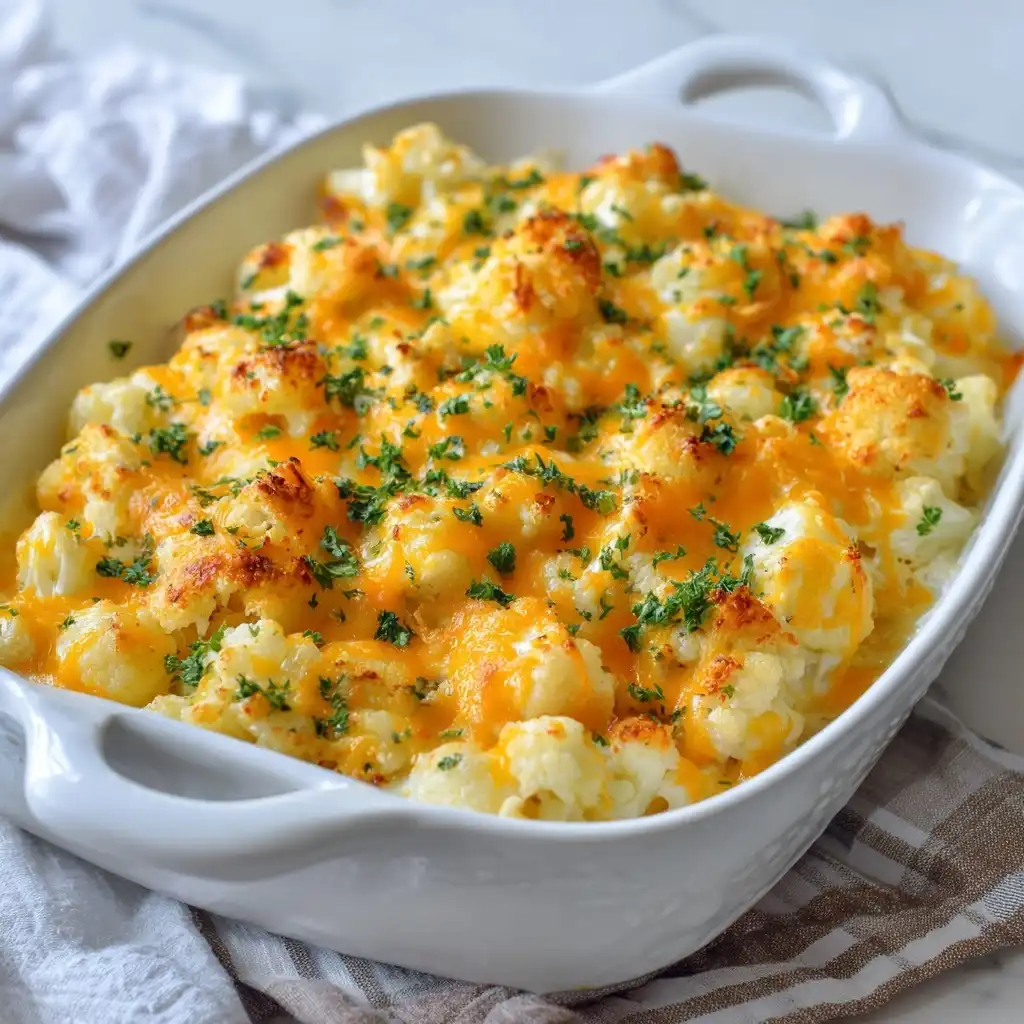
Welcome to the ultimate guide to Cheesy Cauliflower Casserole — a comforting, creamy, low-carb, and crowd-pleasing baked dish that bridges the gap between indulgence and nourishment. Whether you’re seeking a hearty side for holiday feasts, a satisfying vegetarian main for weeknight dinners, or a clever way to sneak more vegetables onto even the most skeptical plates (especially kids’!), this casserole delivers rich flavor, velvety texture, and golden-brown cheesy perfection in every bite. Unlike traditional potato-based casseroles, this version swaps starchy spuds for nutrient-dense cauliflower — yet loses absolutely nothing in soul-warming appeal. It’s gluten-free adaptable, easily customizable for dietary preferences, and reheats beautifully — making it as practical for meal prep as it is impressive for potlucks.
The History
The origins of Cheesy Cauliflower Casserole are rooted in mid-20th-century American home cooking, where convenience, affordability, and adaptability reigned supreme. While cauliflower itself has been cultivated since ancient times — prized by Greeks and Romans for its medicinal properties — its rise as a casserole star began in earnest during the 1950s and ’60s. Post-war America saw an explosion of “cream-of” soups, processed cheeses, and oven-ready dishes designed for busy homemakers. Cauliflower, once considered bland or overly fibrous, found new life when paired with rich dairy, sharp cheddar, and gentle baking — transforming it into something luxuriously tender and deeply savory. Its popularity surged again in the 2000s and 2010s with the low-carb, keto, and gluten-free movements, as health-conscious cooks rediscovered cauliflower not as a mere substitute, but as a versatile, nutrient-rich canvas. Today, Cheesy Cauliflower Casserole stands at the intersection of nostalgia and modern wellness — a testament to how humble ingredients, elevated with care and creativity, can become timeless staples.
Ingredients Breakdown
Every exceptional Cheesy Cauliflower Casserole begins with intention — selecting quality components that harmonize in flavor, texture, and function. Below is a meticulous breakdown of each ingredient’s purpose, sourcing notes, and substitution logic:
- Fresh Cauliflower (1 large head, ~2 lbs / 900g): The foundation. Choose dense, creamy-white florets with vibrant green leaves — avoid yellowing or dark spots. Fresh is ideal for superior texture and sweetness, though frozen riced cauliflower (thawed and *thoroughly drained*) can work in a pinch — just expect slightly softer results.
- Unsalted Butter (4 tbsp / 60g): Adds richness, aids in roux formation, and carries fat-soluble flavors. Opt for grass-fed for deeper nuttiness and higher CLA content. Salted butter may be used, but reduce added salt accordingly.
- All-Purpose Flour (3 tbsp / 24g) or Gluten-Free 1:1 Blend: Thickens the cheese sauce smoothly. For gluten-free integrity, use a trusted blend containing xanthan gum (e.g., Bob’s Red Mill). Almond flour or coconut flour will *not* work here — they lack the starch needed for proper thickening.
- Whole Milk (1 ½ cups / 360ml) or Half-and-Half (for extra luxury): Provides creaminess and balances acidity. Avoid skim milk — its low fat content risks a thin, grainy sauce. Unsweetened oat or cashew milk *can* substitute for dairy-free versions, but expect milder flavor and less binding power.
- Grated Sharp Cheddar Cheese (2 ½ cups / 250g, freshly shredded): Non-negotiable for tang and meltability. Pre-shredded cheese contains anti-caking agents (like cellulose) that inhibit smooth melting and can yield a greasy or stringy sauce. Sharpness intensifies flavor depth — mild cheddar lacks complexity. Consider blending in ½ cup Gruyère or fontina for nutty sophistication.
- Colby Jack or Monterey Jack (1 cup / 100g, freshly shredded): Adds buttery sweetness and superior stretch. Its lower acidity complements cheddar’s boldness and improves overall sauce cohesion.
- Garlic Powder (1 tsp), Onion Powder (1 tsp), Dijon Mustard (1 tbsp), and Smoked Paprika (½ tsp): A flavor trifecta: garlic and onion powders lend savory umami without raw bite; Dijon adds bright tang and emulsifying power (helping fats and liquids bind); smoked paprika contributes subtle warmth and aroma without heat. Skip generic “seasoning salt” — control sodium and layer flavors intentionally.
- Freshly Ground Black Pepper (½ tsp) and Fine Sea Salt (¾ tsp, plus more to taste): Salting in layers — blanching water, sauce, and topping — ensures balanced seasoning throughout. Coarse kosher salt is fine for initial blanching; fine sea salt integrates seamlessly into sauces.
- Panko Breadcrumbs (½ cup / 30g) or Gluten-Free Panko: For crunch and visual appeal. Toasted in butter until golden, they create a textural counterpoint to the creamy interior. Regular breadcrumbs work but yield a denser, less airy crust.
- Fresh Chives or Parsley (2 tbsp, chopped, for garnish): A bright, herbaceous finish that cuts richness and adds freshness. Add just before serving — heat wilts delicate herbs quickly.
Step-by-Step Recipe
- Prep & Blanch the Cauliflower: Remove leaves and core. Cut into uniform 1–1.5-inch florets. Bring a large pot of salted water (2 tsp salt per quart) to a rolling boil. Add florets and cook for 4–5 minutes — just until fork-tender but still holding shape (overcooking leads to mush). Drain *thoroughly* in a colander, then spread on clean kitchen towels or paper towels. Press gently to remove excess moisture — this is critical for sauce absorption and preventing sogginess.
- Make the Roux-Based Cheese Sauce: In a heavy-bottomed saucepan over medium-low heat, melt butter. Whisk in flour and cook, stirring constantly, for 1–2 minutes until bubbly and fragrant (no raw flour taste). Gradually whisk in warm milk, ¼ cup at a time, ensuring no lumps form. Bring to a gentle simmer, whisking continuously, until thickened to a coat-the-back-of-a-spoon consistency (~5–7 minutes). Reduce heat to low. Whisk in garlic powder, onion powder, Dijon mustard, smoked paprika, black pepper, and ½ tsp salt. Remove from heat.
- Incorporate Cheese Gradually: Let sauce cool slightly (1–2 minutes) to prevent seizing. Add shredded cheddar in three additions, whisking vigorously after each until fully melted and smooth before adding more. Repeat with Colby Jack. Taste and adjust salt — the cheese brings saltiness, so add judiciously. Sauce should be luxuriously thick but pourable.
- Combine & Layer: In a large bowl, gently fold blanched, dried cauliflower into the warm cheese sauce until evenly coated. Transfer mixture to a generously greased 9×13-inch (or 3-quart) baking dish. Smooth top with a spatula.
- Prepare Topping: In a small skillet, melt 1 tbsp butter. Add panko and toast over medium heat, stirring constantly, until golden brown and crisp (2–3 minutes). Remove from heat; stir in remaining ¼ tsp salt and optional pinch of garlic powder.
- Bake to Golden Perfection: Sprinkle toasted panko evenly over casserole. Bake uncovered at 375°F (190°C) for 25–30 minutes — until bubbling vigorously at edges, top is deeply golden, and internal temperature reaches 165°F (74°C) when checked with an instant-read thermometer. For extra browning, broil 1–2 minutes at the end — watch closely!
- Rest Before Serving: Let casserole rest for 10–15 minutes before cutting. This allows the sauce to re-set, prevents excessive ooze, and makes portioning cleaner. Garnish with fresh chives or parsley.
Tips
- Moisture is the #1 Enemy: Never skip pressing cauliflower dry. Excess water dilutes the sauce, creates steam pockets, and yields a watery, separated casserole. If using frozen cauliflower, thaw completely, then squeeze in a clean towel like a sponge — wring out every drop.
- Shred Your Own Cheese: Pre-shredded cheese contains potato starch or cellulose that interferes with melting. Freshly grated cheese melts smoothly, binds better, and tastes exponentially richer.
- Warm Your Milk: Cold milk shocks the roux, causing lumps. Warm it gently in the microwave or saucepan before whisking in.
- Low Heat for Cheese Sauce: High heat causes proteins to tighten and separate — resulting in oily, grainy sauce. Keep it low and patient.
- Undercook Slightly: Cauliflower continues to soften while baking. Err on the side of *al dente* when blanching — it should offer slight resistance.
- Layer Flavors Strategically: Season the blanching water, the sauce base, *and* the topping. Each layer builds complexity.
- Use a Light-Colored Baking Dish: Glass or ceramic distributes heat more evenly than dark metal, preventing over-browning on the bottom while ensuring center cooks through.
- Test Doneness Beyond Time: Ovens vary. Look for vigorous bubbling around the edges and a golden, crisp topping — not just the timer.
- Resting is Non-Negotiable: Cutting too soon releases steam and sauce. Resting firms the structure and enhances flavor melding.
- Reheat Gently: To preserve texture, reheat individual portions in a covered skillet over low heat with a splash of milk, or in the oven at 325°F (160°C) covered with foil until warmed through.
Variations and Customizations
This casserole is a masterclass in adaptability — embrace your pantry, dietary needs, and cravings with these inspired twists:
- Keto/Low-Carb Version: Replace flour with 1 tbsp xanthan gum or 2 tsp glucomannan powder (dissolved in cold milk first). Use full-fat dairy, increase cheese slightly, and top with crushed pork rinds instead of panko.
- Dairy-Free/Vegan: Use vegan butter, unsweetened almond or oat milk, and high-quality meltable vegan cheddar (e.g., Daiya Cutting Board or Violife). Thicken with cornstarch slurry (1 tbsp cornstarch + 2 tbsp cold water) instead of roux. Add nutritional yeast (2 tbsp) for umami depth.
- Protein-Packed: Fold in 1 ½ cups cooked, crumbled bacon, diced ham, shredded rotisserie chicken, or sautéed mushrooms and spinach (well-drained!). Add post-sauce but pre-baking.
- Vegetable-Forward: Mix in 1 cup roasted broccoli florets, caramelized onions, sautéed leeks, or finely diced roasted red peppers. Ensure all add-ins are well-drained and cooled.
- Gourmet Cheese Profile: Swap half the cheddar for aged Gouda, Havarti, or Taleggio. Add ¼ cup crumbled blue cheese for bold contrast — stir in at the very end of sauce prep.
- Herb & Spice Infusions: Stir 1 tsp fresh thyme leaves or rosemary (finely minced) into the sauce. Or add a pinch of cayenne, chipotle powder, or curry powder for warmth.
- Creamier Texture: Replace ½ cup milk with ½ cup sour cream or full-fat Greek yogurt — add off-heat after cheese is melted to prevent curdling.
- Gluten-Free Certified: Use certified GF flour blend and ensure all spices/cheeses are labeled GF (some blends contain hidden gluten).
- Mini-Muffin Version: Portion into greased muffin tins. Bake at 375°F for 18–22 minutes — perfect for parties, portion control, or kid-friendly servings.
- Make-Ahead Magic: Assemble up to 24 hours ahead (without topping), cover tightly, and refrigerate. Add panko and bake straight from fridge — add 5–8 minutes to bake time. Freeze unbaked (up to 3 months); thaw overnight before baking.
Health Considerations and Nutritional Value
A single 1-cup serving (approx. 225g) of this Cheesy Cauliflower Casserole delivers a thoughtful balance of macro- and micronutrients — far surpassing its starchy counterparts:
- Nutrient Density: Cauliflower is exceptionally rich in vitamin C (77% DV), vitamin K (20% DV), folate (14% DV), and glucosinolates — sulfur-containing compounds studied for antioxidant and potential anti-inflammatory support. Its high fiber (3g/serving) promotes digestive health and satiety.
- Lower Carb & Calorie-Conscious: At ~180–210 calories per serving (vs. ~350+ in scalloped potatoes), and only ~10g net carbs (vs. ~35g+), it’s a strategic choice for low-carb, keto, or weight-management plans — without sacrificing satisfaction.
- Calcium & Protein Boost: Cheese provides highly bioavailable calcium (25–30% DV) and complete protein (12–14g/serving), supporting bone health and muscle maintenance.
- Smart Fat Profile: While containing saturated fat (from cheese/butter), it also delivers beneficial monounsaturated fats (especially if using grass-fed dairy) and fat-soluble vitamins (A, D, K) that require dietary fat for absorption.
- Considerations & Mitigations: Sodium can be moderate (~450–600mg/serving) due to cheese and added salt. Control this by using low-sodium cheese, reducing added salt by ¼ tsp, and rinsing canned soup alternatives (if used). For lactose sensitivity, aged cheddars and Swiss cheeses are naturally lower in lactose; lactase enzyme supplements can also help.
- Not Just “Diet Food”: This isn’t a compromise — it’s a nutrient upgrade. You’re getting cruciferous phytonutrients *plus* bone-building minerals and gut-supportive fiber, all wrapped in comforting flavor. It supports blood sugar stability better than high-glycemic sides and encourages vegetable consumption in even the most resistant eaters.
Ingredients
- 1 large head cauliflower (about 2 pounds / 900g), cut into 1–1.5-inch florets
- 4 tablespoons (60g) unsalted butter, divided
- 3 tablespoons (24g) all-purpose flour (or gluten-free 1:1 blend)
- 1 ½ cups (360ml) whole milk, warmed
- 2 ½ cups (250g) sharp cheddar cheese, freshly shredded
- 1 cup (100g) Colby Jack or Monterey Jack cheese, freshly shredded
- 1 teaspoon garlic powder
- 1 teaspoon onion powder
- 1 tablespoon Dijon mustard
- ½ teaspoon smoked paprika
- ½ teaspoon freshly ground black pepper
- ¾ teaspoon fine sea salt, plus more for blanching water
- ½ cup (30g) panko breadcrumbs (gluten-free if needed)
- 2 tablespoons fresh chives or parsley, chopped (for garnish)
Directions
- Preheat oven to 375°F (190°C). Grease a 9×13-inch (3-quart) baking dish.
- Bring a large pot of water to boil. Add 2 teaspoons salt. Add cauliflower florets and boil for 4–5 minutes until just tender. Drain thoroughly in a colander, then transfer to clean kitchen towels or layers of paper towels. Press firmly to remove as much moisture as possible.
- In a medium saucepan over medium-low heat, melt 3 tablespoons butter. Whisk in flour and cook for 1–2 minutes until bubbly and fragrant. Gradually whisk in warm milk, ¼ cup at a time, until smooth. Bring to a gentle simmer, whisking constantly, until thickened (5–7 minutes). Reduce heat to low.
- Whisk in garlic powder, onion powder, Dijon mustard, smoked paprika, black pepper, and ½ tsp salt. Remove from heat.
- Let sauce cool 1–2 minutes. Whisk in cheddar cheese in three batches, stirring until fully melted and smooth before adding more. Repeat with Colby Jack. Taste and adjust salt.
- In a large bowl, gently fold blanched, dried cauliflower into cheese sauce until fully coated. Transfer to prepared baking dish and smooth top.
- In a small skillet, melt remaining 1 tbsp butter. Add panko and toast over medium heat, stirring constantly, until golden (2–3 minutes). Stir in remaining ¼ tsp salt.
- Sprinkle toasted panko evenly over casserole. Bake uncovered for 25–30 minutes, until edges bubble vigorously and top is deep golden brown.
- Let rest for 10–15 minutes. Garnish with fresh chives or parsley before serving.
FAQ
- Can I make this ahead of time?
- Absolutely! Assemble the casserole (without panko topping) up to 24 hours in advance. Cover tightly and refrigerate. Add panko just before baking and increase bake time by 5–8 minutes. For longer storage, freeze unbaked (up to 3 months); thaw overnight in the fridge before baking.
- Why did my sauce turn out grainy or oily?
- This usually happens from overheating the cheese sauce or adding cold cheese to hot liquid. Always remove the base sauce from heat before adding cheese, let it cool slightly, and add cheese gradually while whisking constantly. Using pre-shredded cheese (with anti-caking agents) is another common culprit — always shred your own.
- Can I use frozen cauliflower?
- Yes, but proceed with caution. Use plain frozen cauliflower florets (not seasoned or buttered). Thaw completely, then place in a clean towel and *wring out every drop of water*. Excess moisture is the leading cause of a watery casserole.
- Is this casserole gluten-free?
- It can be! Simply substitute a certified gluten-free 1:1 flour blend for the all-purpose flour and use gluten-free panko. Double-check all cheese labels, as some processed varieties may contain gluten-derived additives.
- How do I reheat leftovers without drying them out?
- For best texture, reheat individual portions in a covered skillet over low heat with a splash of milk or cream, stirring gently until warmed. Alternatively, place in an oven-safe dish, cover with foil, add 1 tbsp milk, and bake at 325°F (160°C) for 15–20 minutes.
- Can I omit the mustard?
- You can, but don’t skip it! Dijon adds essential tang and acts as an emulsifier, helping fats and liquids bind smoothly. If allergic or averse, substitute ½ tsp white wine vinegar or apple cider vinegar — add at the same stage.
- What’s the best cheese for maximum melt and flavor?
- Sharp cheddar provides tang and structure; Colby Jack adds buttery melt. For even richer results, blend in ½ cup Gruyère (nutty, complex) or fontina (creamy, mild). Avoid very hard cheeses like Parmesan alone — they won’t melt smoothly in volume.
- My casserole turned out too salty — what went wrong?
- Over-salting often occurs from using salted butter, pre-shredded cheese (which is saltier), or adding salt at every stage without tasting. Next time, use unsalted butter, reduce added salt by ¼ tsp, and taste the sauce *before* adding final salt — remember cheese contributes significantly.
- Can I make this dairy-free?
- Yes! Use vegan butter, unsweetened oat or cashew milk, and high-melt vegan cheddar. Thicken with a cornstarch slurry (1 tbsp cornstarch + 2 tbsp cold water) instead of roux. Add 2 tbsp nutritional yeast for umami depth. Note: texture and flavor will differ, but it remains delicious and comforting.
- How do I know when it’s done baking?
- Look beyond the timer. The casserole is ready when the edges bubble *vigorously*, the center is hot and set (not jiggly), the topping is deeply golden and crisp, and an instant-read thermometer inserted into the center reads 165°F (74°C).
Summary
Cheesy Cauliflower Casserole is a brilliantly adaptable, nutritionally rich, and deeply comforting dish that transforms humble cauliflower into a luxurious, crowd-pleasing centerpiece — whether served as a hearty side, a satisfying vegetarian main, or a clever low-carb alternative to classic starch-laden casseroles.
With its velvety cheese sauce, perfectly tender-yet-firm cauliflower, golden panko crust, and layers of savory depth, it proves that wholesome eating never means sacrificing flavor, texture, or tradition — just upgrading it with intention, care, and culinary wisdom.