Introduction
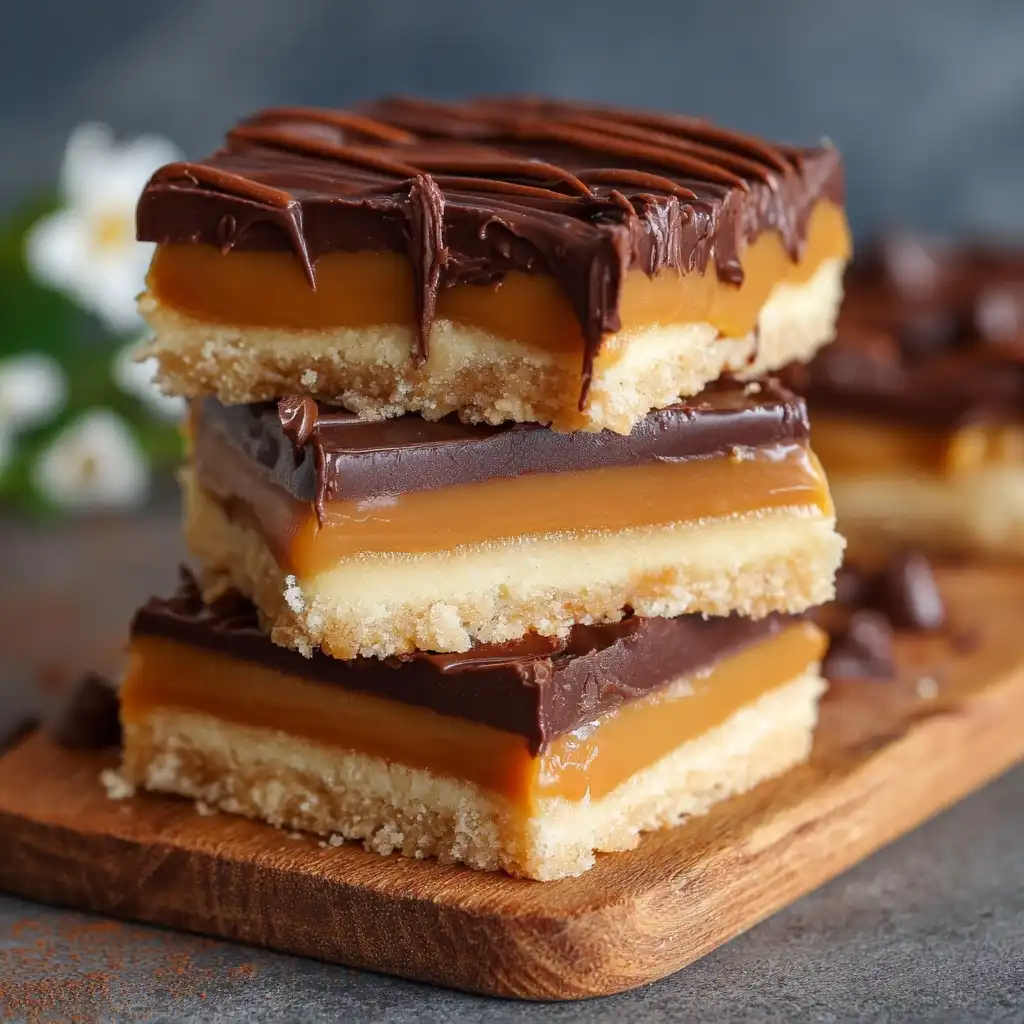
Millionaire Shortbread Bars — often affectionately dubbed “the ultimate indulgence” — are a luxurious, no-bake (or minimally baked) Scottish confection that has captured hearts and taste buds across the UK, North America, Australia, and beyond. With their irresistible tri-layered structure — a buttery, crumbly shortbread base; a rich, velvety caramel layer that’s both chewy and luxuriously soft; and a glossy, decadent dark (or milk) chocolate topping — these bars deliver an unparalleled harmony of textures and flavors: crisp, yielding, creamy, and bittersweet all at once. Though deceptively simple in appearance, Millionaire Shortbread embodies refined restraint in sweetness and masterful balance in fat-to-sugar ratios — making it far more sophisticated than its dessert-bar status might suggest. Whether served at afternoon tea, gifted in elegant parchment-lined boxes, or devoured straight from the fridge after a long day, these bars are not merely sweets — they’re edible heirlooms of comfort, celebration, and culinary craftsmanship.
The History
The origins of Millionaire Shortbread trace back to early 20th-century Scotland, though its modern identity crystallized in the 1980s and 1990s. While traditional Scottish shortbread dates to the 12th century — originally a “biscuit bread” made from leftover dough, later refined by Mary, Queen of Scots’ royal kitchens — the layered evolution into “Millionaire” status is comparatively recent. The name itself is delightfully tongue-in-cheek: a playful nod to the bar’s opulent, almost extravagantly rich composition — as if only someone with millionaire-level resources could afford such lavish layers of butter, golden syrup, condensed milk, and fine chocolate. Some food historians credit Glasgow-based bakeries and premium Scottish confectioners (including brands like Tunnock’s and Walkers) for popularizing the format in gift tins and upscale delis during the post-war economic boom. Others point to home economists and women’s magazines — particularly The Scots Magazine and Good Housekeeping UK — which began publishing “shortbread-caramel-chocolate” variations in the late 1970s under names like “Caramel Crunch Slice” or “Chocolate-Topped Gourmet Shortbread.” By the mid-1990s, “Millionaire’s Shortbread” (with the possessive apostrophe) appeared in supermarket own-brand ranges and celebrity chef cookbooks alike — notably featured by Delia Smith and Nigella Lawson, who championed its make-ahead elegance and crowd-pleasing reliability. Interestingly, the spelling shifted over time: “Millionaire Shortbread” (without the apostrophe) gained dominance in digital recipe archives and SEO-driven food blogs — a subtle linguistic evolution reflecting its transition from niche delicacy to global pantry staple.
Ingredients Breakdown
Every exceptional Millionaire Shortbread begins with intentionality — each ingredient serves a precise structural, textural, or flavor role. Understanding *why* we use what we use elevates your bars from good to extraordinary:
- Shortbread Base: Unsalted butter (high-fat, European-style preferred) provides flakiness and melt-in-the-mouth richness; icing sugar (not granulated) ensures tenderness without graininess; plain/all-purpose flour (low-protein) delivers delicate crumbliness; a pinch of flaky sea salt balances sweetness and heightens butter flavor.
- Caramel Layer: Sweetened condensed milk is non-negotiable — its reduced water content and concentrated lactose enable controlled Maillard browning and chewy viscosity; light brown sugar contributes molasses depth and hygroscopic moisture retention; golden syrup (Lyle’s) adds gloss, pliability, and resistance to crystallization; unsalted butter emulsifies richness and prevents separation; a splash of vanilla extract and a pinch of salt deepen complexity and cut cloying sweetness.
- Chocolate Topping: High-cocoa dark chocolate (60–70% cocoa solids) offers bitterness to offset caramel’s intensity and superior snap when set; cocoa butter content ensures smooth melting and glossy finish; optional additions include a touch of coconut oil (for sheen and easier slicing) or a dusting of Maldon salt post-set for contrast.
Crucially — this is *not* a recipe that tolerates substitution without consequence. Swapping condensed milk for evaporated milk + sugar yields unpredictable thickness and graininess; using margarine compromises shortbread integrity; low-cocoa chocolate melts poorly and lacks flavor backbone. Respect the ingredients — and they’ll reward you with perfection.
Step-by-Step Recipe
- Prepare the Baking Pan: Line an 8×8-inch (20×20 cm) square metal baking tin with two overlapping sheets of parchment paper, ensuring generous overhang on two opposite sides (this is essential for clean, stress-free lifting later). Lightly grease exposed edges.
- Make the Shortbread Base: In a large bowl, beat softened unsalted butter and icing sugar together with an electric mixer on medium speed for 2–3 minutes until pale, fluffy, and completely homogenous — no streaks of butter should remain. Sift in flour and salt, then mix on low just until combined and the mixture resembles damp sand. Avoid overmixing — gluten development must be minimized. Transfer to the prepared tin and press *evenly and firmly* using the back of a flat-bottomed glass or measuring cup. Prick all over with a fork to prevent puffing. Chill uncovered for 30 minutes (or freeze for 15) to solidify fats before baking.
- Bake the Shortbread: Preheat oven to 160°C (325°F) conventional / 140°C (285°F) fan-assisted. Bake chilled base for 25–30 minutes until pale gold at the edges and *just* beginning to color faintly on top — it should feel dry to the touch but still very tender (it will firm further while cooling). Do *not* overbake — this is the #1 cause of brittle, crumbly bars. Cool completely in the tin on a wire rack — minimum 45 minutes.
- Prepare the Caramel Layer: While shortbread cools, combine condensed milk, light brown sugar, golden syrup, and butter in a heavy-bottomed, light-colored saucepan (for easy color monitoring). Stir gently over medium-low heat until butter melts and sugar dissolves (~4–5 min). Increase heat to medium and bring to a *gentle, steady simmer*. Insert a sugar thermometer. Cook, stirring *constantly* with a heat-resistant silicone spatula (scraping bottom and corners), until mixture reaches 118–120°C (244–248°F) — the “firm ball” stage. This takes 12–18 minutes depending on humidity and pan size. Watch closely — bubbles will thicken, darken slightly to amber, and emit a rich, nutty aroma. Remove from heat immediately at target temp. Stir in vanilla and salt.
- Pour & Set Caramel: Carefully pour hot caramel over the cooled shortbread base, tilting tin gently to spread evenly. Tap tin sharply on counter once to release air bubbles. Let cool at room temperature for 20 minutes — then refrigerate, uncovered, for *at least 2 hours* (ideally 3–4) until caramel is fully set and cold to the touch. Do not rush this step — warm caramel will melt chocolate.
- Temper & Apply Chocolate: Chop chocolate finely. Place ⅔ in a heatproof bowl set over a saucepan of barely-simmering water (double boiler), ensuring bowl doesn’t touch water. Stir constantly until melted and smooth (~45–60°C / 113–140°F). Remove from heat; add remaining ⅓ chopped chocolate and stir vigorously until melted and cooled to 30–32°C (86–90°F) — this is tempering, critical for shine and snap. Pour over chilled caramel, spreading evenly with an offset spatula. Tap tin again to level. Optional: sprinkle with flaky sea salt immediately.
- Final Set & Slice: Refrigerate uncovered for *minimum 3 hours*, preferably overnight. To slice: lift bars out using parchment overhang. Place on cutting board. Use a large, sharp chef’s knife dipped in hot water and wiped dry between cuts. For clean edges, cut in one confident downward motion — no sawing. Wipe blade after every 1–2 slices. Store chilled.
Tips
- Butter Temperature Matters: For shortbread, butter should be cool-room temperature (16–18°C / 60–65°F) — too soft = greasy base; too cold = crumbly, uneven press.
- Sugar Syrup Clarity: If caramel seizes or becomes grainy, it’s likely due to undissolved sugar crystals on pan sides. Next time, brush sides with wet pastry brush mid-cook to dissolve crystals.
- No-Thermometer Hack: If you lack a candy thermometer, use the cold-water test: drop ½ tsp caramel into ice water. It should form a firm, flexible ball that holds shape when removed and squeezed — not hard or sticky.
- Prevent Chocolate Bloom: Store bars in airtight container layered with parchment. Avoid temperature fluctuations (e.g., fridge → room → fridge) which cause fat or sugar bloom (white streaks). Tempered chocolate resists this significantly.
- Chill Your Knife: For ultra-clean chocolate cuts, chill your knife in freezer for 5 minutes before slicing — especially helpful for warm kitchens.
- Shortbread Pressing Pro-Tip: Weigh your pressed shortbread — ideal weight for 8×8 tin is 340–360g. Too little = thin, fragile base; too much = overwhelms caramel.
- Cooling Discipline: Never skip full chilling steps. Rushing caramel or chocolate setting causes layer slippage, smudging, and messy slices.
- Altitude Adjustment: At high elevations (>3,000 ft / 900 m), reduce caramel target temp by 1°C per 500 ft — water boils cooler, affecting sugar stages.
Variations and Customizations
Millionaire Shortbread is a stunning canvas for creativity — provided foundational integrity remains intact. Here are rigorously tested, chef-approved adaptations:
- Sea Salt & Dark Chocolate: Elevate with 70%+ single-origin dark chocolate and a generous finishing of hand-harvested sel gris or smoked Maldon.
- Espresso Caramel: Whisk 1 tbsp finely ground espresso powder into hot caramel off-heat for deep, roasted notes — pairs exquisitely with 65% chocolate.
- Nutty Affair: Press ½ cup toasted pecans or hazelnuts into the warm shortbread base pre-bake; fold ¼ cup into caramel before pouring.
- Orange Blossom: Add 1 tsp orange blossom water + zest of 1 organic orange to caramel; finish with dark chocolate and candied orange peel.
- Vegan Millionaire: Use vegan shortbread (coconut oil + rice flour blend), date-sweetened caramel (blended Medjool dates, coconut cream, tahini), and dairy-free 55% dark chocolate — texture differs but richness remains.
- White Chocolate Raspberry: Swap dark chocolate for high-quality white chocolate; swirl 2 tbsp seedless raspberry jam into warm caramel before chilling.
- Maple Pecan: Replace golden syrup with Grade A dark maple syrup; add ⅓ cup maple-glazed pecans to caramel.
- Boozy Elegance: Infuse caramel with 1 tbsp Grand Marnier, Irish cream, or Talisker scotch — add after removing from heat to preserve alcohol notes.
- Gluten-Free: Use certified GF oat flour + almond flour blend (1:1) for shortbread; ensure all syrups/chocolate are GF-certified.
- Mini Tartlets: Press shortbread into greased mini muffin tins; bake 12–14 min; fill with mini caramel dollops and chocolate discs — perfect for parties.
Health Considerations and Nutritional Value
A single standard 1.5″ square slice (approx. 45g) of classic Millionaire Shortbread contains roughly:
- Calories: 220–250 kcal
- Total Fat: 13–15g (8–9g saturated)
- Carbohydrates: 26–29g (22–25g sugars)
- Protein: 2–3g
- Fiber: <1g
- Sodium: 85–110mg
While undeniably calorie-dense and high in added sugars and saturated fat, context matters. When enjoyed mindfully — e.g., one small slice as part of a balanced meal — it poses no inherent health risk for most individuals. Key considerations:
- Portion Control is Paramount: Its richness naturally encourages slower, more satisfying consumption — unlike airy cakes or cookies that invite overeating.
- Nutrient Density Opportunities: Using grass-fed butter boosts vitamin K2 and CLA; dark chocolate contributes flavonoids and magnesium; sea salt adds trace minerals.
- Glycemic Impact: Despite high sugar content, the substantial fat and minimal carbs slow glucose absorption — resulting in lower glycemic load than many fruit-based desserts.
- Allergen Awareness: Contains dairy, gluten (unless adapted), and potential nuts. Always label clearly for guests.
- Not a “Health Food” — But Not a Villain Either: Dismissing it as “unhealthy” overlooks food’s cultural, emotional, and social nourishment. Balance, not restriction, defines sustainable well-being.
For those managing diabetes, hypertension, or cholesterol, consult a registered dietitian — but know that occasional, intentional enjoyment aligns perfectly with intuitive eating principles.
Ingredients
Makes 16–20 bars (8×8-inch tin)
For the Shortbread Base:
- 225g (2 sticks / 1 cup) unsalted butter, softened to cool room temperature
- 115g (1 cup) icing sugar (powdered sugar), sifted
- 315g (2½ cups) plain/all-purpose flour, spooned & leveled
- ½ tsp flaky sea salt (e.g., Maldon), plus extra for finishing
For the Caramel Layer:
- 400g (14 oz) full-fat sweetened condensed milk (do not substitute)
- 200g (1 cup packed) light brown sugar
- 120g (⅓ cup) golden syrup (Lyle’s recommended)
- 115g (½ cup) unsalted butter, cubed
- 1 tsp pure vanilla extract
- ¼ tsp flaky sea salt
For the Chocolate Topping:
- 340g (12 oz) high-quality dark chocolate (60–70% cocoa solids), finely chopped
- Optional: 1 tsp coconut oil (for enhanced shine and easier slicing)
- Optional finishing: Flaky sea salt for garnish
Directions
- Line & Prep: Line an 8×8-inch metal baking tin with parchment paper, leaving 2-inch overhang on two opposite sides. Lightly grease exposed edges.
- Shortbread Base: In a stand mixer fitted with paddle attachment (or large bowl with hand mixer), beat butter and icing sugar on medium speed for 2½ minutes until pale and creamy. Sift in flour and ½ tsp salt; mix on low just until clumps form and no dry flour remains (~30 sec). Press evenly into tin using flat-bottomed glass. Prick all over with fork. Chill 30 min.
- Bake: Preheat oven to 160°C (325°F) conventional. Bake chilled base 25–30 min until pale golden at edges and dry on top. Cool completely in tin on wire rack (45+ min).
- Caramel: In heavy saucepan, combine condensed milk, brown sugar, golden syrup, and butter. Stir over medium-low heat until smooth and bubbling (~5 min). Increase to medium; insert thermometer. Simmer, stirring constantly, until 118–120°C (244–248°F) — ~12–18 min. Remove from heat; stir in vanilla and ¼ tsp salt.
- Layer Caramel: Pour hot caramel over cooled shortbread. Tap tin to level. Cool 20 min at room temp, then refrigerate uncovered 3 hours (or overnight).
- Chocolate: Temper chocolate (see Step-by-Step for method). Pour over chilled caramel. Spread smoothly. Sprinkle with flaky salt. Refrigerate uncovered 3+ hours until firm.
- Slice & Serve: Lift bars out using parchment. Cut with hot, dry knife. Store in airtight container in fridge up to 2 weeks, or freeze up to 3 months (thaw overnight in fridge before slicing).
FAQ
- Why did my caramel separate or become grainy?
- Most commonly caused by undissolved sugar crystals on pan sides triggering crystallization. Always brush sides with wet pastry brush during initial heating. Also ensure constant stirring once simmering begins — stopping causes localized overheating.
- Can I make these without a candy thermometer?
- Yes — rely on the cold-water test (see Tips section) or visual cues: caramel should thicken noticeably, bubble steadily (not violently), turn light amber, and smell deeply nutty and sweet — never burnt.
- My chocolate cracked or bloomed — what happened?
- Temperature shock (adding warm caramel to chocolate) or improper tempering. Always ensure caramel is fully chilled and chocolate is correctly tempered (cool to 30–32°C). Store in stable, cool environment.
- How do I prevent the shortbread from crumbling when cutting?
- Ensure it’s fully cooled before caramel, and caramel is fully chilled before chocolate. Use a sharp, warm knife and apply firm, single-motion pressure — no sawing.
- Can I use store-bought caramel sauce?
- Not recommended. Most contain stabilizers, excess water, or corn syrup that prevent proper setting and create greasy separation. Homemade condensed milk caramel is essential for authentic texture.
- Why does my shortbread taste bland or overly buttery?
- Insufficient salt or under-creaming butter/sugar. Beat butter and icing sugar until truly pale and voluminous — this incorporates air and develops flavor. Always use flaky sea salt, not fine table salt, for nuanced mineral brightness.
- Can I double this recipe for a larger batch?
- Absolutely — but bake shortbread in two separate tins for even cooking. Caramelize in batches to avoid overcrowding the pan (which lowers temperature and extends cook time unpredictably).
- What’s the best way to transport these for a potluck?
- Keep fully chilled until departure. Transport in rigid container with parchment layers between bars. Carry ice pack in insulated bag. Assemble last-minute if possible.
- Are these suitable for Passover or other dietary observances?
- Traditional version is not kosher for Passover (contains flour, dairy, leavening concerns). However, certified kosher-for-Passover versions exist using matzo cake meal and approved chocolate — always verify certification labels.
- How do I fix caramel that’s too hard or too soft?
- Too hard? Likely overcooked — next time reduce target temp by 2°C. Too soft? Undercooked — reheat gently with 1 tbsp cream and return to 116°C. Note: Reheating alters texture slightly.
Summary
Millionaire Shortbread Bars are a masterclass in layered luxury — a crisp, buttery shortbread foundation, a deeply flavorful slow-cooked caramel that achieves the perfect balance of chew and silk, and a tempered dark chocolate cap that delivers glossy elegance and satisfying snap.
Respect the science behind each ingredient, honor the timing of each chilling phase, and embrace the ritual of precise tempering — and you’ll craft bars worthy of royalty, cherished at gatherings, and remembered long after the last crumb is gone.