Introduction
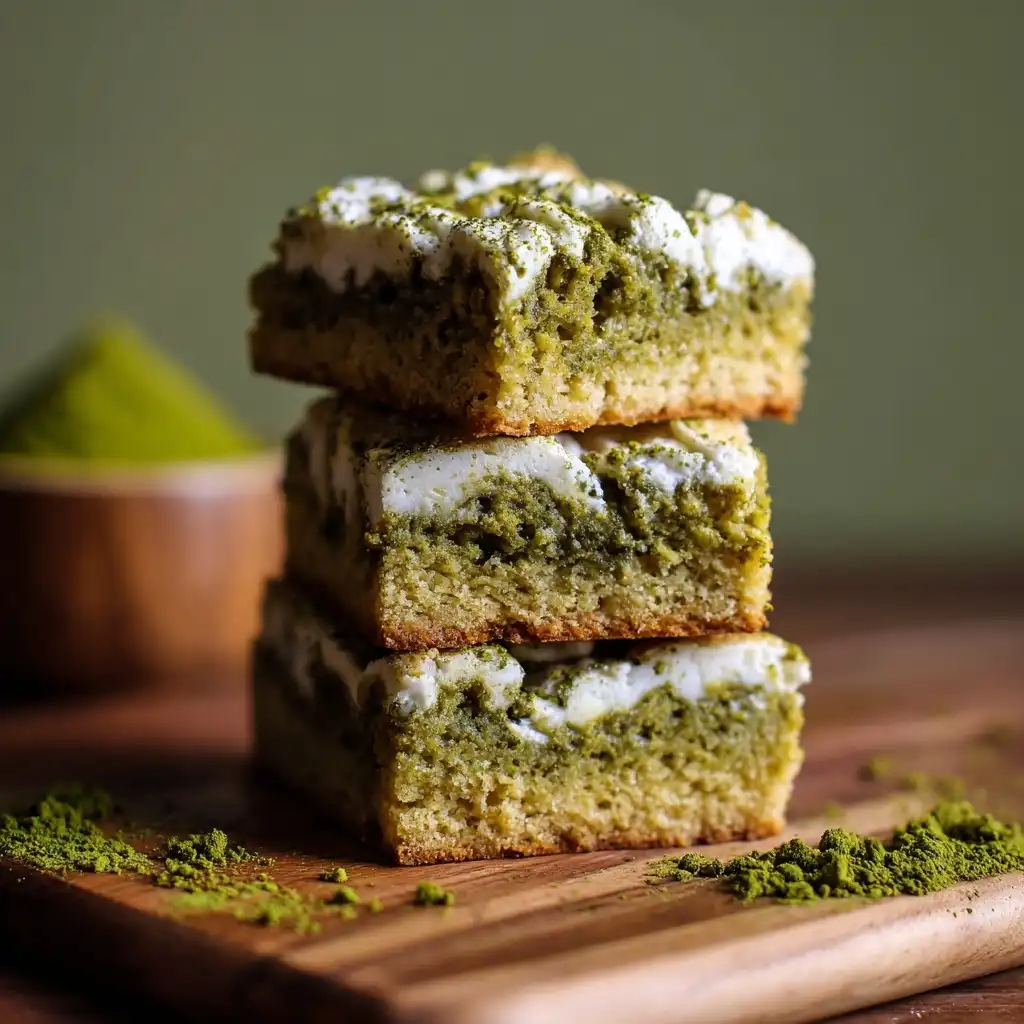
Indulge in the serene elegance and rich, velvety decadence of Matcha White Chocolate Blondies — a sophisticated twist on the classic blondie that marries the earthy, umami depth of premium ceremonial-grade matcha with the creamy sweetness of high-quality white chocolate. Unlike traditional brownies or even standard blondies, these treats offer a uniquely balanced flavor profile: subtly grassy and slightly astringent from the matcha, beautifully softened and elevated by the vanilla-forward, buttery notes of white chocolate and brown sugar. With their dense yet tender crumb, golden-brown edges, and delicate green hue, Matcha White Chocolate Blondies are more than just dessert — they’re a mindful culinary experience that appeals to both matcha connoisseurs and dessert lovers seeking something refined, visually stunning, and deeply comforting. Whether served at an afternoon tea gathering, offered as a gourmet gift, or enjoyed solo with a steaming cup of hojicha, these blondies invite pause, presence, and pure sensory delight.
The History
The origins of the blondie trace back to late 19th-century America — widely believed to have emerged as a “brownie without cocoa,” possibly as an accidental variation or intentional adaptation when cocoa was scarce or costly. Early versions appeared in cookbooks like the 1897 Boston Cooking-School Cook Book by Fannie Farmer, featuring brown sugar, butter, flour, and nuts. Over time, blondies evolved into a beloved bar cookie category known for their chewy-crisp texture and caramelized edges. Meanwhile, matcha — finely ground shade-grown green tea leaves — has been central to Japanese tea ceremony culture since the 12th century, introduced by Zen monk Eisai and later refined in Uji, Kyoto. Its global renaissance began in the early 2000s, accelerated by wellness trends, artisanal cafés, and the rise of matcha lattes. The fusion of matcha and blondies is a relatively recent innovation — emerging prominently in the mid-2010s among food bloggers, Tokyo-based patisseries (like Tsujiri and Ippodo’s café collaborations), and boutique bakeries in cities such as Los Angeles, New York, and London. This hybrid dessert reflects a broader culinary movement: East-meets-West ingredient alchemy, where ancient tradition meets modern indulgence — transforming humble pantry staples into luminous, nutrient-infused confections rooted in centuries-old craft.
Ingredients Breakdown
Every ingredient in this recipe plays a deliberate, functional, and flavorful role — no element is arbitrary. Below is an in-depth analysis of each component:
- Unsalted Butter (1 cup / 227g, melted and slightly cooled): Provides richness, moisture, and structure. Melted (not browned) butter ensures proper emulsification with sugars and prevents excessive gluten development. European-style butter (82–84% fat) is recommended for superior flavor and tenderness.
- Packed Light Brown Sugar (1 ½ cups / 300g): Offers deep molasses notes, moisture retention, and acidity that enhances matcha’s complexity. Dark brown sugar may be substituted for intensified caramel notes — though it will darken the batter and slightly mute the vibrant green hue.
- Granulated Sugar (¼ cup / 50g): Adds sparkle, aids in crust formation, and balances matcha’s bitterness without adding moisture. Reducing this may yield a softer, less defined edge.
- Large Eggs (2, room temperature): Act as binders and leavening agents (via steam and air incorporation). Room temperature eggs emulsify more smoothly into the warm butter-sugar mixture, preventing separation and ensuring uniform texture.
- Pure Vanilla Extract (2 tsp): Reinforces the creamy backdrop for matcha and complements white chocolate’s lactonic qualities. Madagascar bourbon vanilla is ideal; avoid imitation vanillin, which clashes with matcha’s subtlety.
- Ceremonial-Grade Matcha Powder (2 tbsp / 12g): The soul of the recipe. Must be *ceremonial-grade* — stone-ground, vibrant jade-green, with fine particle size (<10 microns), low tannin content, and naturally sweet, marine-like finish. Culinary-grade matcha is too bitter, coarse, and oxidized for baking at this concentration. Sift *immediately before mixing* to prevent clumping and ensure even dispersion.
- All-Purpose Flour (1 ¼ cups / 160g, spooned & leveled): Provides essential gluten structure. Too much leads to toughness; too little yields collapse. Use a digital scale for accuracy — volume measurements vary wildly. For gluten-free adaptation, see Variations section.
- Finely Ground Sea Salt (¾ tsp): Not merely for seasoning — salt heightens sweetness, mitigates matcha’s natural bitterness, and intensifies white chocolate’s dairy notes. Flaky Maldon or French fleur de sel may be used for finishing, but fine-grind is required *in* the batter for full integration.
- High-Quality White Chocolate (1 ¼ cups / 200g, finely chopped): Choose couverture-grade (32–38% cocoa butter) with real vanilla and no artificial emulsifiers (e.g., Callebaut, Valrhona Ivoire, Guittard Premium). Avoid “white baking chips” — they contain palm oil and stabilizers that seize, harden unevenly, and lack nuanced flavor. Chopping ensures even distribution and optimal melt-in-the-mouth texture.
- Optional Additions: Toasted white sesame seeds (1–2 tbsp), crushed roasted pistachios (¼ cup), or a drizzle of yuzu curd or black sesame paste for garnish — all enhance aroma, crunch, and cultural authenticity.
Step-by-Step Recipe
- Preheat & Prep: Position oven rack to center position. Preheat oven to 350°F (177°C). Grease a 9×13-inch metal baking pan *thoroughly*, then line with parchment paper, leaving 2-inch overhang on two opposite sides for easy removal. Lightly grease parchment.
- Melt Butter & Combine Sugars: In a medium heatproof bowl, melt butter in microwave (30-sec intervals) or over double boiler until fully liquid and shimmering — do not brown. Let cool 3–5 minutes until warm to the touch (110–120°F). Whisk in brown and granulated sugars until fully dissolved and glossy — about 1 minute. Mixture should be smooth, not grainy.
- Incorporate Eggs & Flavorings: One at a time, whisk in eggs until fully absorbed (approx. 30 sec each). Add vanilla and whisk vigorously for 1 minute — mixture will thicken slightly and become ribbon-like when lifted. This step aerates and builds structure.
- Integrate Matcha: Sift matcha directly into the wet mixture. Whisk *immediately and thoroughly* using a small balloon whisk or fine-mesh sieve to break up any micro-clumps. Continue whisking 45–60 seconds until batter is uniformly pale sage-green with no streaks or specks. This is critical — under-mixing causes bitter pockets; over-mixing introduces excess air.
- Fold in Dry Ingredients: In a separate bowl, whisk together flour and salt. Sift over wet mixture. Using a flexible silicone spatula, fold gently in 3 additions — cutting down center, sweeping across bottom, and folding up — just until *no dry streaks remain*. Do not overmix; a few faint flour traces are acceptable. Overmixing develops gluten → tough, cakey blondies.
- Swirl in White Chocolate: Add chopped white chocolate. Fold *just until evenly distributed* — about 10–12 gentle turns. Some larger shards are desirable for melty pockets. For marbled effect, reserve 2 tbsp chocolate and swirl in last 3 folds.
- Transfer & Smooth: Pour batter into prepared pan. Use offset spatula to spread evenly, pressing gently into corners. Tap pan sharply 4 times on counter to release air bubbles and level surface.
- Bake with Precision: Bake 32–38 minutes. Begin checking at 30 min: edges should be deeply golden and pulling away from pan; center should look set with slight jiggle (like firm gelatin) when gently shaken — *not liquid*. A toothpick inserted 1 inch from edge should come out with moist crumbs; center insertion should show *a few damp crumbs*, never wet batter. Rotate pan 180° at 20 minutes for even baking.
- Cool Completely: Place pan on wire rack. Cool *undisturbed* for 1 hour — this allows carryover cooking and structural setting. Then lift blondies out using parchment overhang. Cool completely on rack (2+ hours) before cutting. Rushing this step causes crumbling and loss of fudgy integrity.
- Cut & Serve: Use a sharp chef’s knife dipped in hot water and wiped clean between cuts. For clean squares, chill blondies in fridge 30 minutes first. Wipe knife after every 2 cuts. Store cut pieces layered with parchment in airtight container.
Tips
- Matcha Freshness is Non-Negotiable: Store ceremonial matcha in an airtight, opaque container in the freezer (not fridge — condensation harms quality). Use within 2–3 weeks of opening for peak vibrancy and minimal oxidation. Discard if color dulls to olive or aroma turns hay-like.
- Temperature Control is Key: All ingredients (especially eggs and butter) must be at consistent room temperature (68–72°F). Cold eggs cause butter to seize; warm eggs scramble upon contact. Set eggs out 45 min prior; cut butter into cubes to speed melting/cooling.
- Sifting is Sacred: Sift matcha *twice*: once before measuring, again directly into batter. Use a fine-mesh sieve + small whisk or sifter. Never substitute “stirring in” — clumped matcha creates bitter, chalky bites.
- White Chocolate Quality Dictates Outcome: If your white chocolate seizes or looks waxy post-baking, it likely contains vegetable oils. Test a 1-tsp portion in microwave: real couverture melts smoothly into glossy liquid; imitations separate or harden.
- Underbake Slightly: Blondies continue to set as they cool. Err on the side of *underdone* — they’ll firm up perfectly. Overbaked blondies become dry, crumbly, and lose their signature fudgy-chewy duality.
- Pan Material Matters: Use heavy-gauge aluminum or stainless steel — avoid glass or ceramic, which insulate unevenly and cause over-browning on edges before center sets. If using dark nonstick, reduce oven temp by 25°F.
- Resting Enhances Flavor: For maximum depth, wrap cooled blondies tightly and refrigerate overnight. Matcha’s flavors mellow and harmonize, while white chocolate re-crystallizes into silkier texture.
- Cutting Technique Prevents Crumbling: Chill before slicing. Use a long, thin-bladed knife (e.g., boning or bread knife). Apply gentle, sawing motion — no downward pressure. Warm knife = cleaner cuts.
Variations and Customizations
- Gluten-Free Matcha Blondies: Substitute 1:1 gluten-free all-purpose blend (Bob’s Red Mill or King Arthur) + ½ tsp xanthan gum. Add 1 tbsp psyllium husk powder to improve elasticity and moisture retention. Ensure all other ingredients (vanilla, matcha, chocolate) are certified GF.
- Vegan Adaptation: Replace butter with refined coconut oil (1 cup); eggs with flax eggs (2 tbsp ground flax + 6 tbsp warm water, rested 10 min); use vegan white chocolate (Pascha or Hu Kitchen). Add ¼ tsp apple cider vinegar to batter to react with baking soda (if included) for lift.
- Matcha-Black Sesame Swirl: Reserve ¼ cup batter. Mix with 1 tbsp toasted black sesame paste + 1 tsp maple syrup. Dollop over main batter and swirl gently with a chopstick — creates dramatic marbling and nutty contrast.
- Yuzu-Infused Blondies: Add 1 tbsp yuzu zest + 1 tsp yuzu juice to wet ingredients. Replace 1 tbsp brown sugar with yuzu sugar (zest + sugar, pulsed fine). Garnish with yuzu salt.
- Umami-Enhanced Version: Add ¼ tsp powdered dried shiitake mushroom (sifted with matcha) for savory depth — a subtle, grounding note that complements matcha’s earthiness without tasting “mushroomy.”
- Mini Blondie Bites: Use a lined 24-cup muffin tin. Fill ¾ full. Bake 14–18 minutes. Perfect for parties or portion control.
- Matcha White Chocolate Chunk Cookies: Drop rounded tablespoons onto parchment-lined sheet. Flatten slightly. Bake 10–12 minutes for soft centers with crisp edges.
- Layered Matcha Blondie Bars: Press half batter into pan. Top with ½ cup crumbled shortbread or graham cracker crumbs + 2 tbsp melted butter. Spread remaining batter. Bake as directed — adds textural intrigue and buttery base.
Health Considerations and Nutritional Value
While Matcha White Chocolate Blondies are undeniably indulgent, their nutritional profile offers meaningful advantages over conventional desserts — especially when prepared with intention and quality ingredients. A standard 2″ × 2″ square (1/24th of recipe) contains approximately:
- Calories: ~210–235 kcal
- Total Fat: 13–15g (mostly unsaturated from butter/cocoa butter)
- Carbohydrates: 24–26g (including 18–20g sugars — primarily from brown sugar and white chocolate)
- Fiber: 0.3g (low, but enhanced with GF oat flour or added psyllium)
- Protein: 2–2.5g
- Antioxidants: Exceptionally high — one serving delivers ~60–80mg EGCG (epigallocatechin gallate), the most potent catechin in matcha, linked to cellular protection, metabolic support, and neurocognitive benefits.
- L-Theanine: ~15–20mg per square — a unique amino acid in matcha that promotes alpha-brain-wave activity, inducing calm alertness without jitters — synergizing beautifully with caffeine (~3–4mg per square) for sustained focus.
- Minerals: Contains trace zinc, potassium, magnesium, and chlorophyll — all naturally occurring in shade-grown tencha leaves.
Important Considerations:
- Caffeine Sensitivity: Though low per serving, cumulative intake matters. Limit to 1–2 squares daily if sensitive. Decaf matcha is not recommended — decaffeination strips antioxidants and alters flavor.
- Sugar Awareness: Brown sugar contributes beneficial molasses minerals (iron, calcium), but portion control remains essential. For lower glycemic impact, replace ¼ cup brown sugar with date paste (blended dates + water) — reduces refined sugar by ~30%.
- Dairy & Allergens: Contains dairy (butter, white chocolate). Vegan versions omit dairy but retain matcha’s benefits. Always verify white chocolate labels for soy, nuts, or gluten cross-contamination if needed.
- Not a “Health Food” — But a Mindful Indulgence: These blondies shine not as diet fare, but as a conscious choice: replacing empty-calorie sweets with a treat rich in phytonutrients, ritual value, and culinary artistry. Their slow-release energy (from complex carbs + fat + L-theanine) provides satiety far beyond standard desserts.
Ingredients
- 1 cup (227g) unsalted butter, melted and slightly cooled
- 1 ½ cups (300g) packed light brown sugar
- ¼ cup (50g) granulated sugar
- 2 large eggs, room temperature
- 2 teaspoons pure vanilla extract
- 2 tablespoons (12g) high-quality ceremonial-grade matcha powder, sifted
- 1 ¼ cups (160g) all-purpose flour, spooned and leveled
- ¾ teaspoon fine sea salt
- 1 ¼ cups (200g) high-quality white chocolate, finely chopped (couverture preferred)
Directions
- Preheat oven to 350°F (177°C). Grease a 9×13-inch metal baking pan, then line with parchment paper, leaving 2-inch overhang on two opposite sides.
- In a medium heatproof bowl, melt butter in microwave (30-second bursts) or over double boiler until fully liquid and shimmering. Let cool 3–5 minutes until warm to the touch (110–120°F).
- Whisk brown sugar and granulated sugar into warm butter until fully dissolved and glossy — about 1 minute.
- Add eggs one at a time, whisking well after each addition (30 seconds each). Whisk in vanilla until mixture thickens and becomes ribbon-like — about 1 minute.
- Sift matcha directly into batter. Whisk immediately and thoroughly with a small balloon whisk until no streaks remain and color is uniformly pale sage-green — 45–60 seconds.
- In separate bowl, whisk together flour and salt. Sift over wet mixture. Using silicone spatula, fold gently just until no dry flour remains — ~15 folds. Do not overmix.
- Fold in chopped white chocolate just until evenly distributed — 10–12 folds.
- Pour batter into prepared pan. Spread evenly with offset spatula. Tap pan sharply 4 times on counter.
- Bake 32–38 minutes, rotating pan at 20 minutes. Edges should be deeply golden and pulling away; center should jiggle slightly when nudged. Toothpick in center should show *moist crumbs*, not wet batter.
- Cool blondies in pan on wire rack for 1 hour. Lift out using parchment. Cool completely (2+ hours) before cutting.
- Using hot, clean knife, cut into 24 squares. Wipe knife between cuts. Store airtight at room temperature up to 4 days, refrigerated up to 10 days, or frozen up to 3 months.
FAQ
- Can I use culinary-grade matcha?
- No — culinary-grade matcha is overly bitter, coarse, and oxidized. It will produce unpleasant astringency, muted color, and potential grittiness. Ceremonial grade is essential for balance and refinement.
- Why did my blondies turn brown or gray instead of green?
- This indicates matcha degradation: exposure to heat, light, or moisture before mixing; using old or low-grade matcha; or overmixing with alkaline ingredients (e.g., baking soda). Ensure matcha is fresh, cold, and sifted directly into cooled batter.
- Can I add baking powder or baking soda?
- No — blondies rely on egg structure and sugar’s caramelization for rise and texture. Leaveners create cakey, airy results inconsistent with authentic blondie density. This recipe is intentionally unleavened.
- My white chocolate seized in the batter — what went wrong?
- Seizing occurs when chocolate contacts even trace moisture (e.g., from uncooled butter or wet spatula) or overheats. Ensure butter is warm—not hot—and utensils are completely dry. Use couverture chocolate only.
- Can I make these ahead for an event?
- Absolutely — in fact, they improve! Bake 1–2 days ahead, cool completely, wrap tightly in parchment + foil, and store at room temperature. Flavor deepens, texture firms beautifully.
- How do I prevent greasy or oily blondies?
- Ensure butter is melted *and cooled* — hot butter separates the emulsion. Also, avoid over-creaming sugars; whisk only until dissolved. Finally, measure flour accurately — excess flour absorbs fat and causes greasiness upon cooling.
- Are these suitable for Passover or other dietary observances?
- They are not kosher for Passover (contain chametz flour and dairy). For Passover, substitute matzo cake meal + potato starch blend (3:1 ratio) and use pareve white chocolate. Consult rabbinic authority for certification.
- Can I reduce the sugar without ruining texture?
- Sugar is structural — reducing more than ¼ cup total compromises moisture, browning, and chew. For lower sugar, try replacing ⅓ cup brown sugar with monk fruit–erythritol blend (1:1) — but expect drier, paler results.
Summary
Matcha White Chocolate Blondies are a masterclass in mindful dessert-making — honoring centuries-old Japanese tea tradition through the lens of modern American baking, yielding bars that are luxuriously fudgy, delicately aromatic, and visually arresting.
With meticulous attention to matcha quality, precise temperature control, and reverent technique, these blondies transcend sweetness to deliver calm focus, antioxidant richness, and quiet joy — one verdant, velvety bite at a time.