Introduction
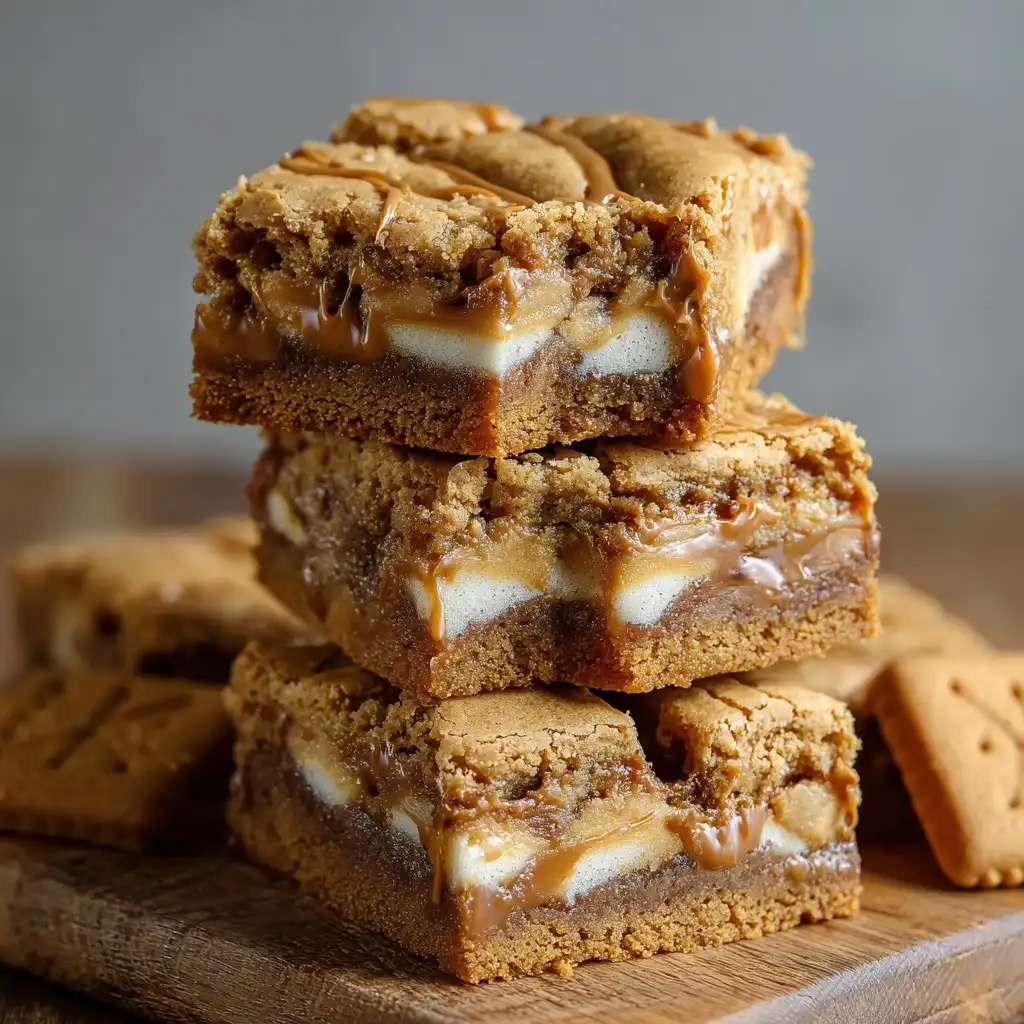
Biscoff Blondie Bars are a decadent, buttery, caramel-forward twist on the classic blondie—elevated with the unmistakable warm spice, rich molasses depth, and crunchy-crisp texture of Lotus Biscoff cookies. These bars strike the perfect balance between dense, fudgy tenderness and chewy-crisp contrast, delivering an irresistibly nostalgic flavor profile that evokes freshly baked speculoos cookies, caramelized brown sugar, and toasted cinnamon. Unlike traditional blondies that rely solely on brown sugar and vanilla, Biscoff Blondies boast layers of complexity: deep roasted notes from Biscoff spread, subtle gingerbread warmth from crushed cookies, and a satisfying textural interplay that keeps every bite intriguing. Whether served warm with a scoop of vanilla bean ice cream or enjoyed cold straight from the fridge, these bars have earned cult status among dessert lovers—and for good reason. They’re approachable enough for beginner bakers yet sophisticated enough to impress at dinner parties, bake sales, or holiday cookie exchanges.
The History
The origin of the Biscoff Blondie Bar is a delicious case study in global flavor fusion and social media–driven culinary evolution. While blondies themselves date back to the early 20th century—first appearing in American cookbooks as “blond brownies” or “brown sugar bars” in the 1930s—the Biscoff variation didn’t emerge until the 2010s, coinciding with the meteoric rise of Lotus Biscoff in North America and the UK. Originally launched in Belgium in 1932 by Lotus Bakeries as “Speculoos,” these spiced caramelized shortcrust biscuits gained international fame under the Biscoff brand name after aggressive marketing campaigns, viral TikTok recipes (especially the “Biscoff Latte” trend in 2021), and widespread supermarket distribution. Home bakers quickly began experimenting with Biscoff spread and crushed cookies in everything from pancakes to cheesecakes—and blondies were a natural next step. The first documented Biscoff Blondie recipe appeared on food blogs like Handle the Heat and Half Baked Harvest around 2018, but it wasn’t until 2022–2023 that the version we know today—featuring both swirls of Biscoff spread *and* generous folds of crumbled cookies—went truly viral on Pinterest and Instagram. Today, Biscoff Blondie Bars are considered a modern baking staple: a testament to how a single globally beloved ingredient can reinvent a century-old classic.
Ingredients Breakdown
Every element in this Biscoff Blondie Bar recipe serves a precise functional and sensory purpose—no ingredient is arbitrary. Let’s explore them in detail:
- Unsalted Butter (1 cup / 227g): Provides richness, moisture, and structure. Melted (not browned) butter ensures optimal emulsification with sugars and prevents excessive gluten development—keeping bars tender, not cakey. Using unsalted butter gives full control over sodium levels and avoids interference with Biscoff’s delicate spice balance.
- Packed Light Brown Sugar (1 ½ cups / 300g): The backbone of blondie texture and flavor. Its molasses content contributes moisture, chew, and deep caramel notes that harmonize seamlessly with Biscoff’s own caramelized sugar base. Dark brown sugar can be substituted for intensified molasses depth—but may darken color and intensify bitterness slightly.
- Granulated Sugar (¼ cup / 50g): Adds structural stability and fine crumb texture. It balances the hygroscopic nature of brown sugar, preventing oversaturation while contributing to the signature slight “snap” on the bar’s surface when cooled.
- Large Eggs (2, room temperature): Act as binders and leavening agents (via steam and air incorporation). Room temperature eggs emulsify more readily into the warm butter-sugar mixture, yielding a smoother, more uniform batter and minimizing tunneling or cracking during baking.
- Pure Vanilla Extract (2 tsp): Enhances all other flavors without dominating. Madagascar bourbon vanilla complements Biscoff’s cinnamon and nutmeg notes while adding floral sweetness and rounding out any sharp edges.
- All-Purpose Flour (1 ¼ cups / 160g, spooned & leveled): Provides gluten structure—but only *just enough*. Overmixing or excess flour leads to toughness; precise measuring (spooned, not scooped) ensures ideal density. For gluten-free versions, a 1:1 GF blend with xanthan gum works well—though texture becomes slightly more crumbly.
- Baking Powder (½ tsp): A subtle, often-overlooked lift agent. Unlike traditional blondies (which use none), this tiny amount encourages gentle rise and airy pockets without compromising fudginess—preventing the dreaded “dense brick” outcome.
- Ground Cinnamon (½ tsp) & Ground Ginger (¼ tsp): Echo and amplify Biscoff’s native spice profile. These aren’t “added flavor”—they’re *reinforcers*, bridging the gap between cookie crumbs and batter so the spices taste intentional and integrated, not tacked-on.
- Fine Sea Salt (¾ tsp): Critical for flavor enhancement and balancing sweetness. Salt doesn’t make things “salty”—it makes the caramel, brown sugar, and Biscoff taste *more intensely sweet and complex*. Adjust upward by ⅛ tsp if using low-sodium Biscoff spread.
- Lotus Biscoff Spread (¾ cup / 200g): The soul of the bar. This smooth, creamy version of speculoos paste delivers concentrated caramel, roasted sugar, and spice essence. Ensure you’re using the *original* (not “smooth” or “crunchy” labeled variants meant for spreading)—its higher fat and lower water content integrates flawlessly into batter and swirls beautifully.
- Lotus Biscoff Cookies (1 ½ cups / ~120g, finely crushed with some small chunks reserved): Two roles here: finely ground cookies act like “flour-plus-flavor,” adding subtle texture and reinforcing spice notes throughout the base; larger chunks (¼-inch pieces) provide bursts of crunch, caramelized crispness, and visual appeal. Avoid over-processing—pulsing in a food processor for 5–7 seconds yields ideal consistency.
- Optional Add-Ins: Flaky sea salt (Maldon) for finishing, toasted pecans or walnuts (½ cup, chopped) for nutty contrast, or a drizzle of white chocolate ganache (made with ¼ cup white chocolate + 2 tbsp heavy cream) for elegant presentation.
Step-by-Step Recipe
- Prep & Preheat: Position oven rack in the center. Preheat oven to 350°F (177°C). Line a 9×13-inch metal baking pan with two overlapping sheets of parchment paper, leaving 2-inch overhang on two opposite sides for easy lifting. Lightly grease exposed parchment and pan edges with butter or non-stick spray.
- Melt Butter & Combine Sugars: In a medium heatproof bowl, melt butter in the microwave in 30-second intervals, stirring between each, until fully liquid and shimmering (do not brown). Whisk in both brown and granulated sugars until fully combined and glossy—about 45 seconds. Let cool slightly (2–3 minutes) to avoid cooking eggs.
- Incorporate Wet Ingredients: Whisk in eggs one at a time, ensuring each is fully absorbed before adding the next. Stir in vanilla extract until smooth and homogenous. Batter will be thick and glossy.
- Dry Ingredients & Spice Blend: In a separate bowl, whisk together flour, baking powder, cinnamon, ginger, and salt until no streaks remain. Sift if lumps persist—this prevents uneven mixing and dry pockets.
- Fold Dry Into Wet: Using a silicone spatula, gently fold dry ingredients into wet batter in three additions. Mix only until *just combined*—a few faint flour streaks are acceptable. Overmixing develops gluten → tough, cakey bars. Stop immediately when no dry patches remain.
- Incorporate Biscoff Elements: Add ½ cup of the crushed Biscoff cookies (reserving remaining 1 cup) and fold gently 3–4 times—just enough to distribute. Then add the full ¾ cup Biscoff spread. Use the spatula to dollop spoonfuls across the surface, then fold *very briefly*—3–4 turns max—until swirls form but spread is still clearly visible. Over-folding eliminates marbling and dulls visual impact.
- Layer & Texture: Pour batter into prepared pan and spread evenly with an offset spatula. Sprinkle reserved 1 cup crushed Biscoff cookies evenly over top, pressing down lightly with fingertips to adhere. For extra crunch and elegance, sprinkle ½ tsp flaky sea salt across the surface.
- Bake with Precision: Bake for 32–38 minutes. Start checking at 32 minutes: bars are done when edges are deeply golden and pull slightly away from pan sides, the center looks *set* (no jiggle when gently shaken), and a toothpick inserted 1 inch from edge comes out with moist crumbs (not wet batter). The very center may look slightly soft—that’s ideal; it firms upon cooling. Avoid overbaking: even 2 extra minutes causes dryness.
- Cool Completely—Non-Negotiable: Remove pan from oven and place on a wire rack. Cool *undisturbed* for 2 hours at room temperature. This allows residual heat to finish cooking the center gently and lets starches and sugars fully set. Cutting too soon = crumbly, sticky, misshapen bars. For cleanest cuts, refrigerate cooled bars for 1 hour before slicing.
- Cut & Serve: Using a sharp chef’s knife wiped clean between cuts, slice into 16 equal 3×3-inch bars (or 24 smaller squares). Wipe knife with hot water and dry thoroughly before each cut for glassy edges.
Tips
- Room Temperature Eggs Are Non-Negotiable: Cold eggs cause the warm butter-sugar mixture to seize, creating grainy, separated batter. If forgotten, submerge eggs in warm (not hot) water for 5 minutes before using.
- Measure Flour Correctly: Scooping flour directly from the bag compacts it—leading to up to 25% more flour per cup. Always spoon flour into measuring cup and level with a straight edge. Better yet—use a kitchen scale.
- Don’t Skip the Parchment Overhang: This isn’t just for easy removal—it ensures even heat circulation underneath, prevents burnt bottoms, and guarantees clean, professional-looking bars every time.
- Swirl Strategically: For maximum visual drama, reserve 2 tablespoons of Biscoff spread. After pouring batter, dot surface with these final dollops, then drag a butter knife through in figure-eights—not circles—to create bold, bakery-style ribbons.
- Chill Before Slicing—Especially for Clean Edges: Refrigerating fully cooled bars for 60–90 minutes firms the butter and Biscoff spread, resulting in sharp corners and zero crumbling—even when cutting dense, chunk-laden bars.
- Rotate Pan Mid-Bake (If Your Oven Has Hot Spots): At 20 minutes, carefully rotate pan 180° front-to-back for even browning. Most home ovens run hotter at the rear or right side.
- Understand the “Set Center” Cue: The center should *not* be firm like a cake—it should have the slightest, slow wobble (like Jell-O) when nudged. That’s the hallmark of fudgy, not dry, blondies.
- Storage Hack for Maximum Freshness: Store cut bars in an airtight container with parchment between layers at room temperature for up to 4 days—or freeze unfrosted bars individually wrapped in plastic + foil for up to 3 months. Thaw overnight in fridge, then bring to room temp before serving.
- Revive Stale Bars: If bars sit longer than ideal, wrap individually in damp paper towel, then microwave for 8–10 seconds. The steam restores moisture and warmth without sogginess.
- Use a Metal Pan—Not Glass or Ceramic: Metal conducts heat faster and more evenly, crucial for achieving crisp edges and gooey centers. Glass retains heat too long, increasing risk of overbaking.
Variations and Customizations
The Biscoff Blondie Bar is a brilliantly adaptable canvas—here are 12 tested, crowd-pleasing variations ranging from subtle tweaks to showstopping transformations:
- Double Biscoff Crunch: Replace half the crushed cookies (¾ cup) with finely ground Biscoff cookie butter powder (available online or made by dehydrating and grinding spread). Adds intense, dry-roasted speculoos flavor without added fat.
- White Chocolate Biscoff Swirl: Melt ½ cup high-quality white chocolate (30–35% cocoa butter) and cool to 85°F. Swirl into batter alongside Biscoff spread for creamy, floral contrast and elegant marbling.
- Maple-Biscoff Fusion: Substitute ¼ cup pure maple syrup for ¼ cup of the brown sugar. Reduce granulated sugar to 2 tbsp. Adds autumnal depth, subtle woodsmoke nuance, and enhanced chew.
- Espresso Biscoff: Dissolve 1 tbsp instant espresso powder in 1 tsp hot water; cool completely, then stir into batter with vanilla. Deepens caramel notes and adds sophisticated bitterness that mirrors Biscoff’s roasted undertones.
- Stuffed Biscoff Blondie Bars: Press ½ tsp Biscoff spread + 1 small cookie piece into center of each unbaked bar (after portioning into pan). Creates molten, cookie-filled surprise cores.
- Vegan Biscoff Blondies: Use vegan butter (Miyoko’s or Earth Balance), flax eggs (2 tbsp ground flax + 6 tbsp water, rested 10 mins), and certified vegan Biscoff spread (check labels—some contain milk solids). Texture remains remarkably close to classic.
- Gluten-Free Biscoff Blondies: Swap AP flour 1:1 with King Arthur Measure-for-Measure GF blend. Add ¼ tsp xanthan gum if not included. Bake 2–3 minutes longer—GF batters set slower.
- Biscoff-Stuffed Date Bars: Layer ½ cup chopped Medjool dates (pitted, soaked 10 mins in hot water, drained) beneath batter. Dates lend natural caramel sweetness and jammy texture that pairs magically with Biscoff.
- Spiced Pear & Biscoff: Fold in 1 cup finely diced ripe Bartlett pears (tossed with 1 tsp lemon juice) and increase cinnamon to 1 tsp. Adds juicy brightness and seasonal sophistication.
- Biscoff S’mores Bars: Top baked & cooled bars with torched mini marshmallows, then broil 30 seconds until golden. Finish with ½ cup crushed graham crackers and extra Biscoff crumbs.
- Boozy Biscoff (Adult Version): Add 2 tbsp dark rum or spiced bourbon to wet ingredients. Infuses warmth and complexity—alcohol bakes off, leaving only nuanced aroma.
- Biscoff Cheesecake Swirl: Prepare a simplified no-bake Biscoff cream cheese layer (8 oz softened cream cheese, ⅓ cup Biscoff spread, 2 tbsp powdered sugar, ½ tsp vanilla). Swirl into batter pre-bake for a luxurious, tangy-marbled effect.
Health Considerations and Nutritional Value
While undeniably indulgent, Biscoff Blondie Bars can be contextualized thoughtfully within a balanced diet—and several mindful adaptations exist without sacrificing satisfaction. A standard 9×13-inch pan yields 16 servings. Per bar (approx. 75g), values are estimated using USDA data and standard Biscoff ingredients:
- Calories: ~295 kcal — moderate for a dessert bar, comparable to a slice of banana bread or small brownie.
- Total Fat: 15g (23% DV), with 8g saturated fat — primarily from butter and Biscoff spread. Notable that Biscoff spread contains no palm oil (Lotus uses sustainable sunflower/canola blend) and zero trans fats.
- Carbohydrates: 38g (13% DV), including 26g total sugars (naturally occurring + added). Brown sugar contributes ~18g; Biscoff spread adds ~6g; cookies add ~2g per bar.
- Fiber: ~0.5g — low, but easily boosted: substitute ¼ cup of flour with oat fiber or resistant corn starch (adds 3g+ soluble fiber per bar without altering texture).
- Protein: ~3g — modest, but increased to ~5g/bar by adding 2 tbsp almond flour to dry ingredients.
- Sodium: ~180mg (8% DV) — well within daily limits. Can be reduced to ~120mg by using low-sodium butter and omitting finishing sea salt.
- Key Micronutrients: Contains trace iron (from molasses in brown sugar), calcium (from Biscoff cookies’ fortified wheat flour), and manganese (from whole grain notes in speculoos spices).
Health-Conscious Modifications:
- Reduced-Sugar Option: Replace ½ cup brown sugar with coconut sugar (lower glycemic index) and use monk fruit–sweetened Biscoff spread (available in EU markets). Reduces added sugar by ~30% with minimal flavor loss.
- Higher-Fiber Boost: Add 3 tbsp ground flaxseed or chia seeds to dry ingredients. Adds omega-3s, fiber, and subtle nuttiness that complements Biscoff beautifully.
- Lower-Fat Adaptation: Substitute ¼ cup butter with unsweetened applesauce—but retain at least ¾ cup butter for structure and flavor integrity. Expect slightly denser, moister bars.
- Allergen Notes: Naturally nut-free and soy-free (check Biscoff label—some regional versions contain soy lecithin). Contains wheat, dairy, and eggs. Vegan/GF versions address these accordingly.
- Mindful Enjoyment Tip: Serve bars at room temperature—not cold—so flavors bloom fully. Pair with black coffee or herbal tea to enhance satiety and reduce urge to overconsume.
Ingredients
- 1 cup (227g) unsalted butter, melted and slightly cooled
- 1 ½ cups (300g) packed light brown sugar
- ¼ cup (50g) granulated sugar
- 2 large eggs, room temperature
- 2 tsp pure vanilla extract
- 1 ¼ cups (160g) all-purpose flour, spooned & leveled
- ½ tsp baking powder
- ½ tsp ground cinnamon
- ¼ tsp ground ginger
- ¾ tsp fine sea salt
- ¾ cup (200g) Lotus Biscoff Spread (original smooth)
- 1 ½ cups (120g) Lotus Biscoff Cookies, finely crushed (reserve ¼ cup for topping)
- Flaky sea salt (Maldon), for finishing (optional)
Directions
- Preheat oven to 350°F (177°C). Line a 9×13-inch metal baking pan with parchment paper, leaving 2-inch overhang on two sides. Lightly grease exposed parchment and pan edges.
- In a medium heatproof bowl, melt butter in microwave in 30-second bursts, stirring between, until fully liquid (do not brown). Whisk in brown and granulated sugars until glossy and combined (~45 sec). Let cool 2–3 minutes.
- Whisk in eggs one at a time, fully incorporating each before adding next. Stir in vanilla until smooth.
- In separate bowl, whisk together flour, baking powder, cinnamon, ginger, and salt until uniform.
- Fold dry ingredients into wet mixture in three parts, mixing *only until no dry streaks remain*. Do not overmix.
- Fold in ½ cup crushed Biscoff cookies. Then add Biscoff spread and fold gently 3–4 times until swirled but distinct.
- Spread batter evenly into prepared pan. Sprinkle reserved 1 cup crushed cookies evenly over top; press lightly. Optional: finish with flaky sea salt.
- Bake 32–38 minutes, until edges are deeply golden, center is set (no jiggle), and toothpick near edge comes out with moist crumbs.
- Cool completely in pan on wire rack—minimum 2 hours. For cleanest cuts, refrigerate 1 hour before slicing.
- Using sharp knife wiped between cuts, slice into 16 bars. Store airtight at room temperature up to 4 days or freeze up to 3 months.
FAQ
- Can I use Biscoff Cookie Butter instead of Biscoff Spread?
- Yes—but confirm it’s the *smooth, original* version (not “crunchy”). Cookie butter and spread are identical products—Lotus rebranded “spread” to “cookie butter” in some markets. Avoid “Biscoff Crunchy” for swirling—it won’t incorporate smoothly.
- Why did my bars sink in the center?
- Most common causes: underbaking (center wasn’t set), opening oven too early (causing temperature shock), or expired baking powder. Also ensure eggs are room temp—cold eggs destabilize batter structure.
- Can I make these ahead for a party?
- Absolutely. Bake 1–2 days ahead, cool completely, then store airtight at room temperature. They actually improve on Day 2 as flavors meld and texture matures. For best freshness, slice day-of.
- My batter looked curdled after adding eggs—did I ruin it?
- No—this is normal if butter was too warm or eggs too cold. Keep folding gently; it will emulsify into a smooth, thick batter by the time dry ingredients are incorporated. Don’t panic!
- Can I double the recipe for a larger batch?
- Yes, but bake in two separate 9×13 pans—not one 12×18. Doubling in one pan causes uneven baking, doming, and raw centers. Same temp/time applies.
- What’s the best way to crush Biscoff cookies?
- Place cookies in a zip-top bag, remove air, and roll firmly with a rolling pin. Or pulse 10–12 times in food processor. Aim for coarse sand with pea-sized chunks—not dust.
- Can I substitute oil for butter?
- Not recommended. Butter provides essential flavor, aeration, and structure that neutral oils cannot replicate. Coconut oil (refined, not virgin) yields greasy, bland bars with poor set.
- How do I prevent overly dark edges?
- Use light-colored metal pan (not dark non-stick), position rack dead-center, and consider wrapping pan exterior with a damp towel (tied snugly) for first 25 minutes—slows edge conduction.
- Are these bars suitable for mailing or gifting?
- Yes! Fully cooled bars travel exceptionally well. Wrap individually in parchment, then place in rigid box layered with bubble wrap or crumpled paper. Include a silica gel packet to inhibit moisture.
- Can I add chocolate chips?
- You can—but it changes the profile significantly. Dark chocolate (60–70%) works best. Fold in ½ cup *after* swirling Biscoff to avoid melting. Note: chocolate competes with Biscoff’s spice notes.
Summary
Biscoff Blondie Bars are a masterclass in layered flavor and intelligent texture—melding the nostalgic warmth of speculoos spices, deep caramelized sugar, and buttery richness into a luxuriously fudgy, yet crisply studded, bar that satisfies on every level.
With foolproof technique, smart substitutions, and endless customization potential, they’re as rewarding to bake as they are unforgettable to eat—solidifying their place not just as a trend, but as a timeless modern classic in the American dessert canon.