Introduction
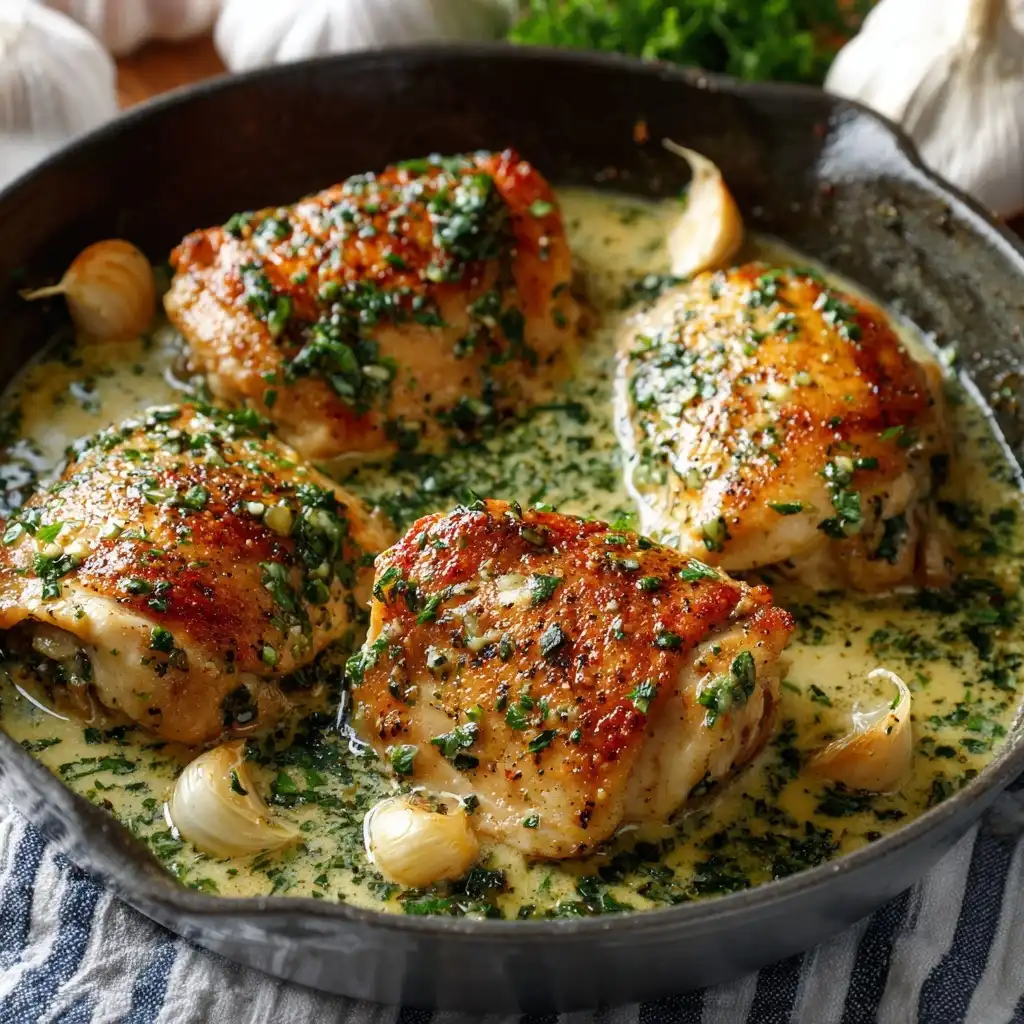
Garlic Butter Chicken with Garlic Butter Skillet Sauce is a restaurant-worthy, weeknight-easy dish that delivers bold, aromatic, and deeply savory flavors in under 30 minutes. This beloved classic combines tender, pan-seared chicken breasts or thighs with a luxuriously rich, golden-brown garlic butter sauce—infused with fresh herbs, a hint of acidity, and just the right amount of umami depth. Whether served over creamy mashed potatoes, steamed jasmine rice, buttered egg noodles, or alongside roasted vegetables, this dish consistently satisfies with its velvety texture, balanced richness, and unmistakable garlicky warmth. Its simplicity belies its elegance, making it equally suitable for cozy family dinners, impromptu date nights at home, or impressing guests without hours of prep.
The History
While no single documented “origin story” exists for Garlic Butter Chicken, its roots are deeply embedded in centuries-old culinary traditions across Europe and the Mediterranean. Butter-based sauces enriched with aromatics trace back to French beurre blanc and beurre noir, where clarified butter was emulsified with vinegar or lemon and shallots—techniques later adapted for heartier proteins. In mid-20th-century America, the rise of convenience cooking and the popularity of skillet-to-table meals helped propel garlic butter as a go-to flavor booster: frozen chicken cutlets were often pan-fried and finished with a quick garlic-butter glaze. Simultaneously, Italian-American kitchens embraced similar preparations—think pollo al burro e aglio—influenced by regional Italian techniques using extra virgin olive oil *and* butter for layered mouthfeel. By the 1980s and ’90s, food magazines and early cable cooking shows (notably Julia Child’s emphasis on proper browning and sauce reduction) cemented garlic butter as a foundational technique, evolving into today’s modern, streamlined version: high-heat searing followed by a vibrant, herb-flecked, skillet-deglazed sauce that clings luxuriously to every bite.
Ingredients Breakdown
Every ingredient in Garlic Butter Chicken plays a deliberate role—not just for flavor, but for texture, balance, and chemical function:
- Chicken Breast or Thighs: Boneless, skinless chicken breasts offer lean tenderness when properly pounded and cooked; thighs provide superior juiciness and forgiving fat content, ideal for longer simmering in the sauce. Both benefit from brining (even a 15-minute saltwater soak) for enhanced moisture retention.
- Unsalted Butter: The soul of the dish. High-fat European-style butter (82–84% fat) yields richer flavor and better emulsification. Unsalted butter allows precise sodium control. Cold butter added at the end ensures a glossy, cohesive, non-split sauce.
- Fresh Garlic: Non-negotiable. Pre-minced jarred garlic lacks nuance and can turn bitter when browned. Fresh cloves—minced fine or pressed—release allicin compounds that bloom beautifully in warm butter, delivering pungent aroma and sweet, nutty depth when gently sautéed (but never scorched).
- Dry White Wine (e.g., Sauvignon Blanc or Pinot Grigio): Adds brightness, acidity, and complexity. The alcohol evaporates, leaving behind fruity esters and subtle tannins that cut through richness. Substitute with low-sodium chicken broth + ½ tsp white wine vinegar if avoiding alcohol.
- Lemon Juice: A critical balancing agent—its citric acid lifts the sauce, prevents cloying heaviness, and brightens the garlic’s earthiness. Freshly squeezed is essential; bottled juice lacks vibrancy and contains preservatives that dull flavor.
- Fresh Parsley & Thyme: Flat-leaf parsley contributes grassy freshness and visual pop; thyme adds woody, floral notes that complement poultry. Stems can be added during simmering for infusion, then removed before serving.
- Heavy Cream or Full-Fat Coconut Milk (optional but recommended): Adds luxurious body and silkiness without thinning the sauce. Cream also helps stabilize the emulsion and mellow sharp garlic edges. For dairy-free, use canned coconut milk (full-fat, well-stirred) or cashew cream.
- Chicken Stock (low-sodium): Provides deep savory backbone (umami) via collagen and gelatin. Homemade stock yields superior mouthfeel; high-quality store-bought is acceptable—just reduce sodium elsewhere.
- Arrowroot or Cornstarch Slurry (optional): Used only if a thicker, clingier sauce is desired. Arrowroot is preferred—it’s clear, freeze-stable, and tolerates acidic ingredients better than flour.
Step-by-Step Recipe
- Prep & Season: Pat chicken dry thoroughly with paper towels. Pound to even ½-inch thickness using a meat mallet or rolling pin (prevents curling and ensures uniform cooking). Season both sides generously with kosher salt and freshly ground black pepper. Let rest 10 minutes at room temperature.
- Sear the Chicken: Heat 1 tbsp neutral oil (avocado or grapeseed) in a heavy-bottomed 12-inch stainless steel or cast-iron skillet over medium-high heat until shimmering. Place chicken in skillet without crowding—work in batches if needed. Sear undisturbed for 5–6 minutes until deeply golden and release easily. Flip and cook 4–5 minutes more until internal temperature reaches 155°F (68°C). Transfer to a clean plate, tent loosely with foil, and rest 5 minutes (carryover cooking brings it to safe 165°F).
- Build the Aromatic Base: Reduce heat to medium-low. Add 2 tbsp unsalted butter. Once melted and foaming subsides, add 4–5 thinly sliced garlic cloves (or 1 tbsp minced). Sauté 60–90 seconds—just until fragrant and lightly golden—stirring constantly to avoid burning.
- Deglaze & Simmer: Pour in ¼ cup dry white wine, scraping vigorously with a wooden spoon to lift all browned bits (fond) from the pan bottom—this is pure flavor gold. Simmer 2 minutes until alcohol cooks off and liquid reduces by half. Stir in ½ cup low-sodium chicken stock and 1 tbsp lemon juice. Bring to a gentle simmer and cook 3–4 minutes to concentrate flavors.
- Emulsify the Sauce: Reduce heat to low. Whisk in ¼ cup heavy cream (or coconut milk). Simmer gently 1 minute. Remove from heat. Whisk in remaining 4 tbsp cold unsalted butter, one tablespoon at a time, allowing each to melt fully before adding the next. This creates a stable, glossy, restaurant-quality emulsion.
- Finish & Serve: Return rested chicken to skillet, spooning sauce over top. Sprinkle with 2 tbsp finely chopped fresh parsley, 1 tsp chopped fresh thyme leaves, and a final pinch of flaky sea salt. Optional: finish with lemon zest or a drizzle of truffle oil. Serve immediately.
Tips
- Dry Chicken = Golden Crust: Moisture is the enemy of browning. Pat chicken *extremely* dry—even between layers if using tenders—and season just before cooking.
- Don’t Crowd the Pan: Overcrowding drops pan temperature, causing steaming instead of searing. Use two skillets or cook in batches.
- Control Garlic Burn: Garlic burns at ~300°F. Keep heat at medium-low when sautéing and stir constantly. If using garlic powder, add it *after* deglazing—never with hot butter.
- Rest the Chicken: Skipping the 5-minute rest causes juices to flood out upon slicing. Resting redistributes moisture for succulent, sliceable results.
- Butter Temperature Matters: Cold butter emulsifies best. Cut it into small cubes and keep refrigerated until the final step. Never add melted or room-temp butter—it won’t bind properly.
- Sauce Consistency Fixes: Too thin? Simmer 1–2 minutes longer. Too thick? Whisk in 1 tsp warm stock or lemon juice. Split sauce? Whisk in 1 tsp cold water or cream while heating gently.
- Make-Ahead Friendly: Marinate chicken in salt, pepper, and 1 tsp olive oil up to 24 hours ahead. Sauce base (minus butter and herbs) can be made 2 days ahead and gently reheated before finishing.
- Skillet Choice: Stainless steel offers best fond development; cast iron retains heat superbly; nonstick works—but won’t yield as much flavorful fond for deglazing.
Variations and Customizations
- Herbaceous Upgrade: Swap parsley/thyme for tarragon (adds anise-like elegance) or chives + dill (bright, springy notes). Add 1 tsp lemon zest with herbs for citrus lift.
- Spice Infusion: Add ¼ tsp red pepper flakes with garlic, or finish with smoked paprika or harissa paste (½ tsp) for North African warmth.
- Mushroom Medley: Sauté 1 cup sliced cremini or shiitake mushrooms in the same skillet after removing chicken, before adding garlic—deepens umami tenfold.
- Caprese Twist: Stir in ¼ cup torn fresh mozzarella and 3–4 halved cherry tomatoes during final sauce emulsification; garnish with basil ribbons.
- Asian Fusion: Replace wine with dry sherry; swap thyme for 1 tsp grated ginger and 1 green onion (thinly sliced); finish with toasted sesame oil and sesame seeds.
- Low-Carb/Keto: Omit wine or use sugar-free version; increase butter to 6 tbsp total; serve over cauliflower rice or zucchini noodles.
- Paleo/Whole30: Skip butter—use ghee (clarified butter) or avocado oil; replace wine with additional stock + 1 tsp apple cider vinegar; finish with coconut milk.
- Vegan Version: Use hearty plant-based chicken (like seitan or soy curls); substitute vegan butter and full-fat coconut milk; deglaze with tamari-based “chicken” stock; boost umami with 1 tsp nutritional yeast or white miso paste.
- One-Pan Roasted: Arrange seasoned chicken on a sheet pan with halved baby potatoes and broccoli florets. Roast at 425°F for 20 minutes, then drizzle with garlic butter mixture (melted butter, garlic, herbs, lemon) and return for 5–8 minutes.
Health Considerations and Nutritional Value
A standard 6-oz serving (chicken + ¼ cup sauce, no sides) provides approximately:
- Calories: 420–480 kcal (varies by cut and butter quantity)
- Protein: 42–48g (excellent source; supports muscle maintenance and satiety)
- Fat: 26–32g (mostly unsaturated from butter and olive oil; includes beneficial short-chain fatty acids like butyrate)
- Carbohydrates: 2–4g (naturally low; ideal for low-carb diets)
- Vitamins & Minerals: Rich in selenium (immune support), vitamin B6 (metabolism), niacin (energy production), and zinc (wound healing). Garlic contributes allicin (antioxidant, anti-inflammatory), while lemon juice boosts bioavailable iron absorption from chicken.
Considerations: While butter contributes saturated fat, recent research indicates moderate intake (≤10% daily calories) within a balanced diet poses minimal cardiovascular risk for most individuals. To reduce sodium, use low-sodium stock and omit added salt in seasoning—rely on herbs, lemon, and garlic for flavor. For those with lactose sensitivity, clarified butter (ghee) or lactose-free butter works seamlessly. Those managing cholesterol may opt for skinless thighs (higher in monounsaturated fats) and limit butter to 4 tbsp total, supplementing with heart-healthy olive oil in the sear step.
Ingredients
- 2 large boneless, skinless chicken breasts (about 1 lb / 450g) OR 4 boneless, skinless chicken thighs (about 1.25 lbs / 570g)
- 1½ tsp kosher salt, divided
- 1 tsp freshly ground black pepper, divided
- 1 tbsp avocado oil or high-heat neutral oil
- 6 tbsp unsalted butter, divided (4 tbsp cold, cubed; 2 tbsp for sautéing)
- 5 large garlic cloves, finely minced (about 1 tbsp)
- ¼ cup dry white wine (Sauvignon Blanc or Pinot Grigio)
- ½ cup low-sodium chicken stock
- 1 tbsp fresh lemon juice (plus zest for garnish, optional)
- ¼ cup heavy cream (or full-fat coconut milk for dairy-free)
- 2 tbsp fresh flat-leaf parsley, finely chopped
- 1 tsp fresh thyme leaves (or ½ tsp dried)
- Flaky sea salt (for finishing)
Directions
- Place chicken on a cutting board and cover with plastic wrap. Using a meat mallet or heavy skillet, pound evenly to ½-inch thickness. Season both sides with 1 tsp salt and ½ tsp pepper.
- Heat oil in a 12-inch heavy-bottomed skillet over medium-high heat. When oil shimmers, add chicken without overcrowding. Cook 5–6 minutes per side until golden brown and internal temp reaches 155°F. Transfer to plate, tent with foil, rest 5 minutes.
- Reduce heat to medium-low. Add 2 tbsp butter. Once melted and foamy, add garlic. Sauté 60–90 seconds until fragrant and pale gold—do not brown.
- Pour in wine, scraping pan vigorously to loosen fond. Simmer 2 minutes until reduced by half. Stir in stock and lemon juice. Simmer gently 3–4 minutes.
- Reduce heat to low. Whisk in cream. Simmer 1 minute. Remove from heat. Gradually whisk in cold butter, 1 tbsp at a time, until fully melted and sauce is glossy and thickened.
- Return chicken to skillet, spooning sauce over. Sprinkle with parsley, thyme, remaining ½ tsp salt, and ½ tsp pepper. Garnish with lemon zest if desired. Serve immediately.
FAQ
- Can I use frozen chicken?
- Yes—but thaw completely in the refrigerator overnight. Cooking from frozen leads to uneven doneness and excess moisture, preventing proper browning. Never thaw at room temperature.
- Why does my garlic butter sauce break or look greasy?
- Sauce breaks when butter is too warm, added too quickly, or emulsified over high heat. Always use cold butter, add gradually off-heat, and whisk constantly. If split, whisk in 1 tsp cold water or lemon juice while gently reheating.
- Can I make this ahead and reheat?
- Chicken reheats beautifully. Store separately from sauce (to prevent sogginess) for up to 3 days. Reheat chicken in oven or air fryer; warm sauce gently on stove, whisking in a splash of stock if needed. Avoid microwaving sauce alone—it often separates.
- What’s the best side dish?
- Classic pairings include creamy mashed potatoes (soaks up sauce), buttered wide egg noodles, jasmine or basmati rice, or simple roasted asparagus, green beans, or carrots. For low-carb, try cauliflower mash or zucchini ribbons sautéed in garlic butter.
- Can I double the recipe?
- Absolutely—but use two skillets or cook in batches. Doubling in one pan lowers temperature, steams instead of sears, and dilutes fond, resulting in weaker sauce flavor.
- Is there a way to make it gluten-free?
- Yes—this recipe is naturally gluten-free. Just verify your stock, wine, and any pre-made seasoning blends are certified GF. Avoid soy sauce or teriyaki unless labeled gluten-free.
- How do I prevent rubbery chicken?
- Key factors: (1) Don’t overcook—pull at 155°F; (2) Pound to even thickness; (3) Rest before slicing; (4) Brine briefly (15 min in 1 cup water + 1 tsp salt); (5) Use thighs for foolproof juiciness.
- Can I grill the chicken instead of pan-searing?
- Yes! Grill over medium heat (375–400°F) for 5–6 minutes per side. Prepare sauce separately in a skillet, then combine. Grill marks add smoky nuance—brush chicken lightly with garlic butter in the last 2 minutes.
Summary
Garlic Butter Chicken with Garlic Butter Skillet Sauce is a masterclass in simple, high-impact cooking—featuring perfectly seared, juicy chicken enveloped in a velvety, aromatic, herb-flecked sauce built from pantry staples and finished with cold butter for glossy perfection. Effortless enough for weeknights yet elegant enough for entertaining, it’s endlessly adaptable, nutritionally balanced, and guaranteed to become a cherished staple in your culinary repertoire.