Introduction
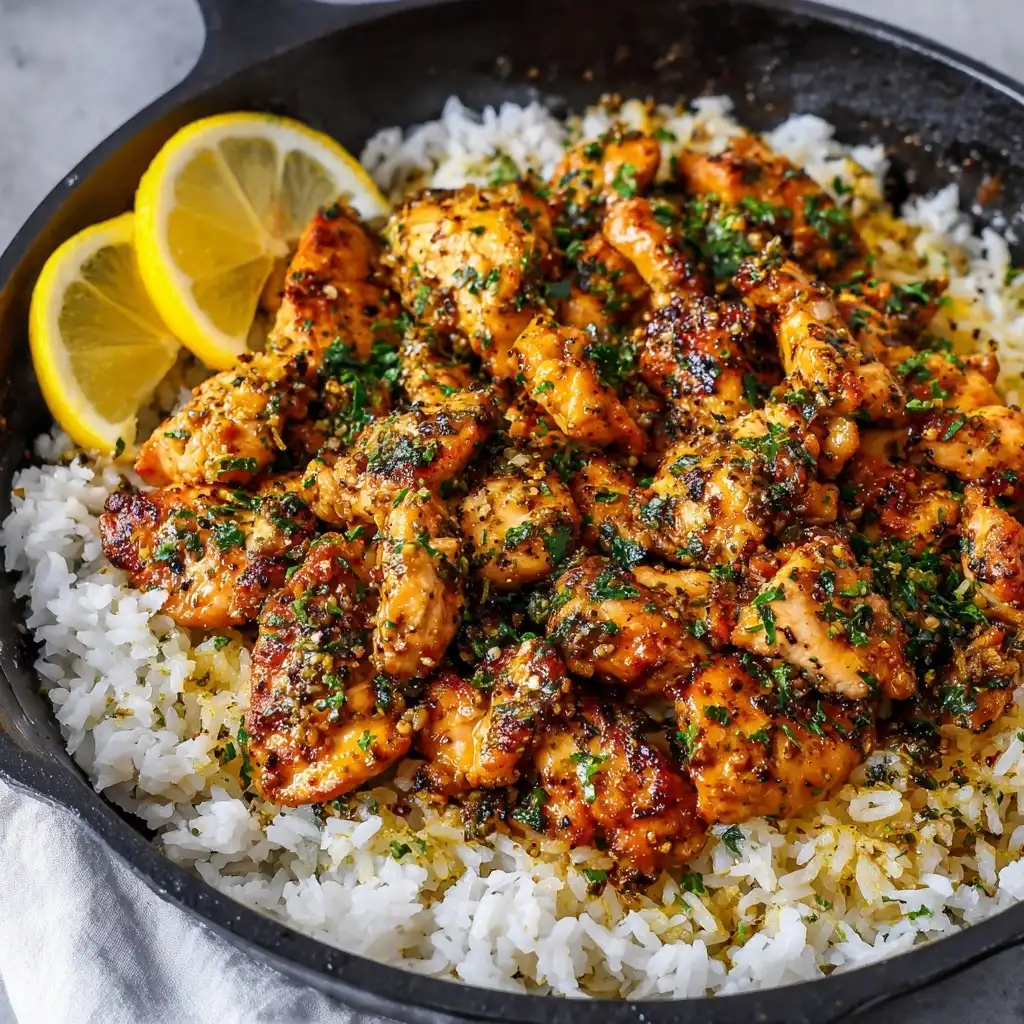
Garlic Butter Chicken with Lemon Pepper is a vibrant, restaurant-quality dish that marries the rich, savory depth of slow-melted butter and aromatic garlic with the bright, zesty punch of freshly ground lemon pepper. This harmonious fusion delivers an irresistible balance—creamy yet tangy, deeply umami yet refreshingly citrus-forward—making it equally suited for weeknight dinners, date-night elegance, or impressing guests at Sunday suppers. Unlike overly heavy or one-dimensional chicken preparations, this recipe celebrates simplicity without sacrificing sophistication: tender, pan-seared chicken breasts (or thighs) become canvases for a glossy, herb-flecked sauce that clings luxuriously to every bite. Its appeal lies not only in its bold flavor profile but also in its remarkable versatility—it pairs effortlessly with roasted vegetables, creamy mashed potatoes, zucchini noodles, or even crusty artisan bread for soaking up every last drop of that golden garlic-lemon butter.
The History
While there is no single documented origin story for “Garlic Butter Chicken with Lemon Pepper,” its roots can be traced through multiple culinary traditions converging over decades. Garlic butter itself has ancient lineage—garlic was revered in Egyptian, Greek, and Roman civilizations for both medicinal and culinary uses, while butter-based sauces flourished across European cuisines, particularly in French beurre blanc and Italian burro e salvia preparations. The modern American interpretation gained momentum in the mid-to-late 20th century, as home cooks embraced accessible pantry staples and bolder seasoning profiles. Lemon pepper—a blend traditionally consisting of dried lemon zest, cracked black pepper, salt, and sometimes citric acid—was popularized commercially in the 1960s by spice companies seeking to capture the essence of citrus-infused grilling. Its rise coincided with the surge of broiled and pan-seared chicken dishes in American cookbooks and TV cooking shows. By the 1990s and early 2000s, food bloggers and cable chefs began fusing these two beloved elements, transforming what was once a simple grilled chicken rub into a full-spectrum pan sauce technique. Today, Garlic Butter Chicken with Lemon Pepper stands as a hallmark of contemporary comfort cuisine—honoring time-honored techniques while embracing global flavor sensibilities and the modern desire for quick, flavorful, and visually stunning meals.
Ingredients Breakdown
Understanding each ingredient’s role elevates both execution and customization. Below is a comprehensive analysis of the core components—and why they matter:
- Chicken Breast (or Thighs): Boneless, skinless chicken breasts offer lean tenderness and a neutral canvas—but require careful cooking to avoid dryness. Chicken thighs, with their higher fat content and collagen-rich tissue, yield juicier, more forgiving results and deeper flavor absorption. For optimal texture, uniform thickness (½–¾ inch) ensures even searing and prevents curling.
- Unsalted Butter: The soul of the sauce. Unsalted butter allows precise sodium control and reveals pure dairy sweetness when browned slightly. European-style cultured butter (82–86% fat) adds extra richness and a subtle nuttiness. Avoid margarine or spreads—they contain water and stabilizers that break the emulsion and mute flavor.
- Fresh Garlic: Minced (not pre-minced from a jar) delivers volatile sulfur compounds responsible for pungent aroma and complex sweetness when cooked. Too much raw garlic burns easily; gentle sautéing in butter unlocks mellow, caramelized notes. One clove per serving is ideal—adjust based on preference, but never skip fresh.
- Lemon Pepper Seasoning: A nuanced blend—not just “lemon + pepper.” High-quality versions use cold-pressed lemon oil or dehydrated zest (not artificial flavor), coarsely cracked Tellicherry or Lampong black peppercorns, and minimal anti-caking agents. Some artisanal blends include coriander, dill seed, or onion powder for layered complexity. Always check labels for MSG or excessive sodium if dietary restrictions apply.
- Fresh Lemon Juice & Zest: Juice adds acidity to cut through butter’s richness and brighten the entire dish; zest contributes essential oils with intense citrus perfume. Bottled juice lacks volatile aromatics and often contains preservatives that dull flavor. Microplane-grated zest (avoiding bitter white pith) maximizes surface area and infusion potential.
- Dry White Wine (Optional but Recommended): A splash of Sauvignon Blanc or Pinot Grigio deglazes the pan, lifts fond (those delicious browned bits), and introduces subtle fruit-forward acidity. Alcohol cooks off, leaving only depth and brightness. Substitute with low-sodium chicken broth if avoiding alcohol—but note the flavor dimension shifts.
- Fresh Herbs (Parsley, Thyme, or Chives): Added at the end for freshness, color, and aromatic lift. Flat-leaf parsley offers clean, grassy notes; lemon thyme reinforces citrus tones; chives lend mild oniony brightness. Dried herbs lack volatile oils and are discouraged here.
- Heavy Cream or Half-and-Half (Optional Enricher): A tablespoon swirled in at the end creates silkier mouthfeel and stabilizes the emulsion—especially helpful if the sauce threatens to separate. Not traditional, but widely adopted for restaurant-style luxury.
- High-Heat Oil (Avocado, Grapeseed, or Light Olive Oil): Used for initial searing. Neutral flavor and high smoke point prevent burning during the critical browning phase—where Maillard reaction develops foundational umami and crust.
Step-by-Step Recipe
- Prep the Chicken: Pat chicken breasts *extremely* dry with paper towels—moisture is the enemy of sear. Place between two sheets of parchment and gently pound to ½-inch uniform thickness using a meat mallet or heavy skillet. Season both sides generously with salt (½ tsp per breast) and half the lemon pepper blend (reserve remainder for sauce). Let rest 10 minutes at room temperature.
- Preheat & Sear: Heat 1 tbsp high-heat oil in a heavy-bottomed stainless steel or cast-iron skillet over medium-high heat until shimmering (not smoking). Carefully place chicken in pan without crowding—work in batches if needed. Press gently with spatula for full contact. Sear undisturbed for 5–6 minutes until deeply golden brown and easily releases. Flip and cook 4–5 minutes more until internal temp reaches 155°F (it will rise to 165°F while resting). Transfer to a warm plate, tent loosely with foil, and rest 5 minutes.
- Build the Sauce Base: Reduce heat to medium-low. In same skillet (do not wipe—fond is gold!), add 2 tbsp unsalted butter. Once melted, add minced garlic and a pinch of red pepper flakes (optional). Sauté 30–45 seconds until fragrant but *not brown*—garlic burns fast. Immediately pour in ¼ cup dry white wine (or broth), scraping vigorously with a wooden spoon to release all browned bits. Simmer 1–2 minutes until reduced by half.
- Emulsify & Enrich: Whisk in remaining lemon pepper seasoning, 1 tbsp fresh lemon juice, and 1 tsp finely grated lemon zest. Reduce heat to low. Gradually whisk in remaining 4 tbsp cold butter, one tablespoon at a time, allowing each to fully incorporate before adding the next—this creates a stable, velvety emulsion. Optional: Stir in 1 tbsp heavy cream for extra lushness.
- Finish & Serve: Return rested chicken to pan, spooning sauce over top. Let warm gently 1–2 minutes (do not boil—butter may separate). Remove from heat. Stir in 2 tbsp chopped fresh parsley and a final squeeze of lemon juice (½ tsp). Taste and adjust: more lemon for brightness, lemon pepper for zing, salt for balance. Garnish with extra zest and parsley.
Tips
- Pound with Purpose: Uneven thickness causes uneven cooking. Use even pressure and check thickness with fingers or a ruler—aim for consistent ½ inch.
- Rest Religiously: Resting allows juices to redistribute. Skipping this leads to dry chicken—even if perfectly cooked.
- Butter Temperature Matters: Cold butter emulsifies better. Cut into small cubes and chill until ready to whisk in.
- Control the Garlic: Garlic burns at 300°F. Keep heat low when sautéing and stir constantly. If it darkens, start over—the bitterness ruins the sauce.
- Acid Timing: Add lemon juice in two stages—half during reduction, half at the end—to preserve volatile citrus top notes.
- Sauce Consistency Rescue: If sauce separates, remove from heat and whisk in 1 tsp cold water or lemon juice while vigorously whisking. Or blend with an immersion blender for 5 seconds.
- Pan Choice Counts: Stainless steel or cast iron gives superior fond. Nonstick won’t develop the same depth of browning.
- Don’t Overcrowd: Crowding drops pan temperature, steaming instead of searing. Cook in batches—even if it takes longer.
- Taste As You Go: Lemon pepper varies wildly by brand. Taste sauce before adding chicken and adjust seasoning incrementally.
- Leftover Magic: Extra sauce freezes beautifully for up to 3 months. Reheat gently in a saucepan with a splash of broth to re-emulsify.
Variations and Customizations
This recipe serves as a dynamic foundation—easily adapted for dietary needs, seasonal ingredients, global accents, or pantry limitations:
- Dietary Adaptations: For dairy-free: substitute high-quality vegan butter (Miyoko’s or Country Crock Plant Butter) and use nutritional yeast for umami depth. For keto/low-carb: omit optional cream; increase healthy fats with a drizzle of avocado oil finish. For Whole30/Paleo: use ghee instead of butter and ensure lemon pepper is sugar- and additive-free.
- Protein Swaps: Try boneless turkey cutlets (slightly longer cook time), firm white fish like cod or halibut (reduce sear to 2–3 min/side), or large shrimp (add in last 2 minutes of sauce). For plant-based: marinated and pressed tofu or king oyster mushrooms (sliced thick, seared until golden).
- Global Twists: Mediterranean: Add kalamata olives, capers, and oregano. Asian-Inspired: Swap lemon for yuzu juice, add ginger and scallions, finish with toasted sesame oil. Herbes de Provence: Replace lemon pepper with herbes de Provence + lemon zest. Spicy Cajun: Blend lemon pepper with smoked paprika and cayenne.
- Vegetable Integration: Sauté asparagus, cherry tomatoes, or baby spinach directly in the finished sauce after removing chicken. Or roast seasonal vegetables (Brussels sprouts, carrots, fennel) alongside chicken for a sheet-pan version.
- Grill & Broil Options: Marinate chicken in olive oil, lemon juice, garlic, and lemon pepper 30 minutes, then grill over medium heat. Finish with warm garlic butter sauce brushed on. Or broil 4 inches from element for charred edges and juicy centers.
- Creamy Upgrade: Stir in 2 tbsp crème fraîche or goat cheese at the end for luxurious tang and body—ideal with pasta or polenta.
- One-Pan Wonder: After searing chicken, remove and add sliced onions, bell peppers, and zucchini to same pan. Sauté 4 minutes, return chicken, pour sauce over, cover, and bake at 375°F for 15 minutes.
- Meal-Prep Friendly: Cook chicken and sauce separately. Store sauce chilled (up to 5 days) and reheat gently. Reheat chicken in air fryer (350°F, 4 min) to retain crispness.
Health Considerations and Nutritional Value
A 6-ounce serving (chicken breast + 2 tbsp sauce) provides approximately 380–420 calories, with ~42g protein, 22g fat (13g saturated), and <1g net carbs—making it naturally low-carb, gluten-free, and keto-friendly. Key health insights include:
- Garlic Benefits: Contains allicin, linked to cardiovascular support, antioxidant activity, and immune modulation—maximized when crushed and allowed to sit 10 minutes before cooking.
- Lemon Power: Vitamin C enhances non-heme iron absorption (relevant if served with leafy greens) and supports collagen synthesis. Citric acid may aid digestion and kidney stone prevention.
- Butter Nuance: While high in saturated fat, recent research suggests moderate butter intake (within overall healthy fat balance) doesn’t significantly impact heart disease risk for most people. Grass-fed butter offers higher CLA (conjugated linoleic acid) and vitamin K2.
- Sodium Awareness: Lemon pepper blends vary widely—some exceed 300mg sodium per ¼ tsp. Opt for low-sodium versions or make your own (zest 2 lemons, dry overnight, mix with 2 tbsp coarsely ground black pepper + ¼ tsp sea salt).
- Portion Mindfulness: Sauce richness invites overconsumption. Measure butter and serve sauce deliberately—1.5 tbsp per portion maintains indulgence without excess.
- Pairing for Balance: Serve with fiber-rich sides: roasted broccoli (sulforaphane), quinoa (complete protein), or lentil salad (prebiotic fiber) to slow glucose response and enhance satiety.
- Considerations for Specific Conditions: Those managing hypertension should monitor total sodium; those with GERD may find lemon acidity triggers—reduce juice by half and emphasize zest. Lactose-intolerant individuals generally tolerate clarified butter (ghee) well.
Overall, this dish exemplifies nutrient-dense, whole-food cooking—prioritizing quality ingredients over processed substitutes—while delivering profound satisfaction with minimal compromise.
Ingredients
- 2 (6–8 oz) boneless, skinless chicken breasts (or 4 chicken thighs), pounded to ½-inch thickness
- 1 tsp kosher salt (divided)
- 2 tsp high-quality lemon pepper seasoning (divided)
- 1 tbsp high-heat oil (avocado, grapeseed, or light olive oil)
- 6 tbsp unsalted butter, cold and cubed (divided)
- 4 cloves garlic, finely minced (about 1 tbsp)
- ¼ cup dry white wine (Sauvignon Blanc or Pinot Grigio) or low-sodium chicken broth
- 1 tbsp fresh lemon juice (plus extra for finishing)
- 1 tsp finely grated lemon zest (from 1 organic lemon)
- ¼ tsp red pepper flakes (optional)
- 2 tbsp fresh flat-leaf parsley, finely chopped
- Additional lemon wedges and parsley for garnish
Directions
- Pat chicken completely dry with paper towels. Place between two sheets of parchment paper and gently pound to even ½-inch thickness using a meat mallet or heavy-bottomed skillet. Season both sides with ½ tsp salt and 1 tsp lemon pepper. Let sit at room temperature for 10 minutes.
- Heat oil in a large stainless steel or cast-iron skillet over medium-high heat until shimmering. Carefully add chicken without overcrowding. Press gently with spatula and sear undisturbed for 5–6 minutes until deeply golden brown and releases easily. Flip and cook 4–5 minutes more until internal temperature reaches 155°F. Transfer to a warm plate, tent loosely with foil, and rest for 5 minutes.
- Reduce heat to medium-low. Add 2 tbsp butter to same skillet. Once melted, add garlic and red pepper flakes (if using). Sauté 30–45 seconds until fragrant—do not brown.
- Pour in wine (or broth), scraping bottom vigorously with wooden spoon to lift all browned bits. Simmer 1–2 minutes until reduced by half.
- Whisk in remaining 1 tsp lemon pepper, 1 tbsp lemon juice, and 1 tsp lemon zest. Reduce heat to low.
- Gradually whisk in remaining 4 tbsp cold butter, one tablespoon at a time, waiting until each is fully incorporated before adding the next. Sauce should become glossy and slightly thickened.
- Return rested chicken to skillet, spooning sauce over top. Warm gently for 1–2 minutes—do not boil.
- Remove from heat. Stir in chopped parsley and a final ½ tsp fresh lemon juice. Taste and adjust seasoning with salt or extra lemon pepper if desired.
- Transfer to serving plates. Spoon generous amounts of sauce over chicken. Garnish with extra lemon zest, parsley, and lemon wedges. Serve immediately.
FAQ
- Can I use frozen chicken?
- Yes—but thaw completely in refrigerator overnight (never at room temperature). Pat *extremely* dry before seasoning and searing to ensure proper browning.
- Why does my sauce break or look greasy?
- Overheating, adding butter too quickly, or vigorous boiling destabilizes the emulsion. Fix by removing from heat, whisking in 1 tsp cold water or lemon juice, and stirring vigorously—or blending briefly with an immersion blender.
- Can I make this ahead of time?
- The chicken can be seared and refrigerated for up to 2 days. Reheat gently in oven or air fryer. Sauce is best made fresh but can be prepared 1 day ahead—store chilled, then gently rewarm in saucepan with 1 tsp broth while whisking.
- Is lemon pepper the same as lemon herb seasoning?
- No. Lemon herb blends often contain basil, oregano, or rosemary and less citrus intensity. Lemon pepper specifically emphasizes citrus zest + cracked black pepper. Check labels carefully—substitutions alter the core flavor profile.
- What’s the best side dish for this?
- Classic pairings include garlic mashed potatoes, lemon-dill rice pilaf, roasted asparagus with almonds, or a crisp arugula salad with shaved Parmesan and lemon vinaigrette. For low-carb: zucchini noodles, cauliflower rice, or grilled romaine.
- Can I double the recipe?
- Absolutely—but use two skillets or work in batches. Doubling sauce ingredients in one pan risks overheating and separation. Scale butter and aromatics proportionally; keep wine/broth at ¼ cup unless reducing in larger vessel.
- How do I store and reheat leftovers?
- Store chicken and sauce separately in airtight containers for up to 3 days. Reheat chicken in air fryer (350°F, 4 min) or covered skillet over low heat. Reheat sauce in small saucepan over lowest heat, whisking in 1 tsp broth to restore sheen.
- Can I freeze this dish?
- Yes—sauce freezes exceptionally well for up to 3 months. Portion into ice cube trays, then transfer cubes to freezer bag. Thaw overnight in fridge, then gently reheat in saucepan. Chicken freezes well for up to 2 months—thaw in fridge and reheat as above.
- What if I don’t have white wine?
- Low-sodium chicken broth works well. For extra depth, add ½ tsp apple cider vinegar + 1 tsp broth. Avoid sweet wines or cooking “wine”—they contain salt and additives that muddy flavor.
- Can I make it spicy?
- Easily! Add ¼ tsp cayenne with garlic, include pickled jalapeños in sauce, or finish with chili crisp. For smoky heat, use chipotle lemon pepper or smoked paprika blended with lemon zest.
Summary
Garlic Butter Chicken with Lemon Pepper is a masterclass in balancing bold, aromatic flavors—featuring tender, expertly seared chicken enveloped in a luxuriously emulsified sauce where sweet-browned butter, pungent fresh garlic, and vibrant lemon-pepper brightness converge in perfect harmony.
Effortlessly adaptable for dietary preferences, globally inspired variations, and seasonal produce, it delivers gourmet satisfaction with approachable technique—proving that extraordinary taste truly begins with thoughtful ingredient selection, precise timing, and joyful culinary intention.