Introduction
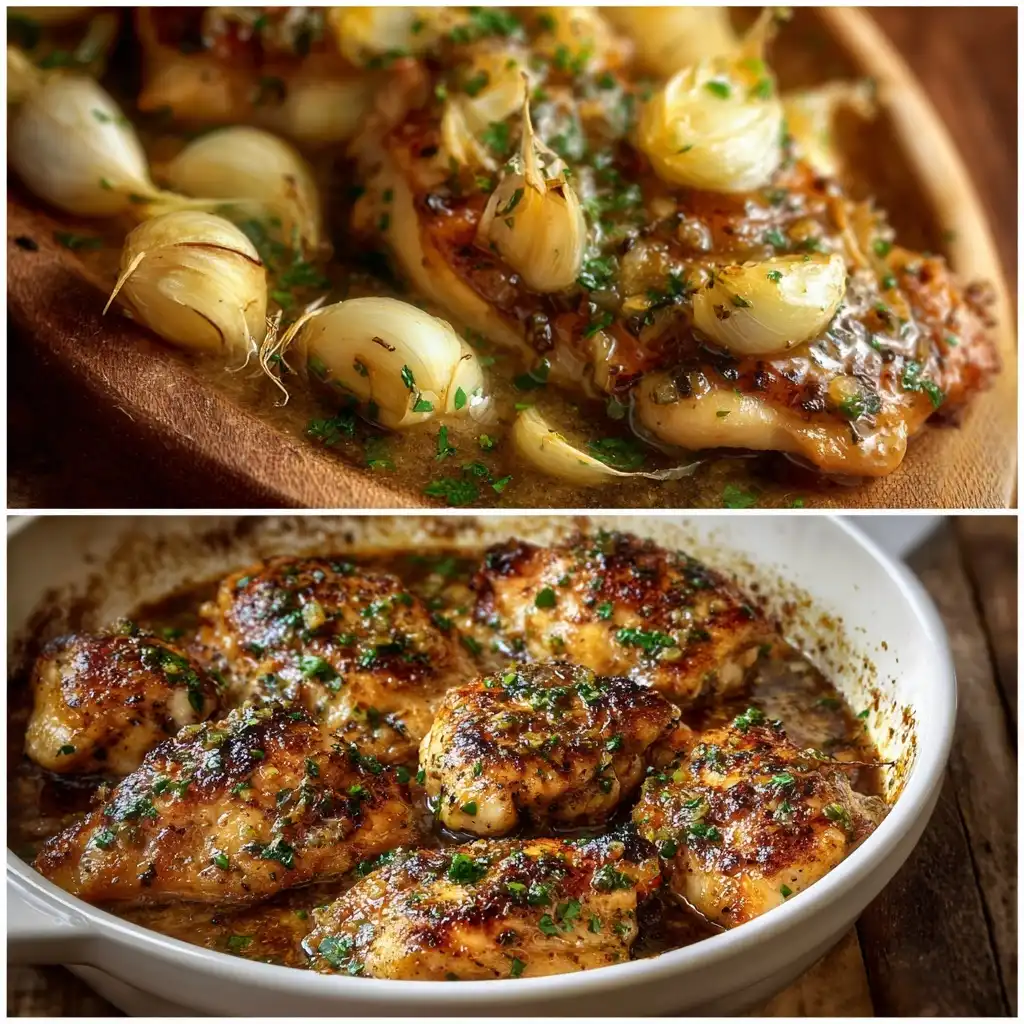
Garlic Butter Chicken with Garlic Butter Glaze is a luxurious, restaurant-quality dish that brings bold, aromatic flavors to your home kitchen in under 30 minutes. At its core, this recipe celebrates the timeless harmony of golden-brown chicken and a rich, velvety garlic butter glaze—deeply savory, luxuriously glossy, and irresistibly fragrant. Whether served over creamy mashed potatoes, tossed with linguine, spooned over roasted vegetables, or enjoyed alongside crusty artisan bread for soaking up every last drop, this dish delivers comfort, elegance, and depth in every bite. Its simplicity belies its sophistication: minimal ingredients, precise technique, and thoughtful layering of garlic’s pungent sweetness and butter’s nutty richness transform humble pantry staples into something truly extraordinary.
The History
While no single “inventor” claims Garlic Butter Chicken, its roots stretch across culinary traditions where garlic and butter have long been revered as foundational flavor amplifiers. In French cuisine, beurre composé—herb- and garlic-infused compound butters—date back centuries and were traditionally used to finish grilled meats and seafood. Italian cooks similarly embraced aglio e burro (garlic and butter) as a rustic yet refined sauce for veal scaloppine and chicken cutlets, especially in northern regions where dairy was abundant. Meanwhile, American home cooking in the mid-20th century saw a surge in “butter-basted” poultry preparations—often showcased in women’s magazines and early TV cooking shows—as a way to elevate weeknight meals with minimal effort and maximum impact. The modern Garlic Butter Chicken with Glaze evolved from this confluence: a streamlined fusion of European technique and American practicality, refined through decades of food blogging, viral social media recipes, and chef-driven reinterpretations emphasizing caramelized garlic, clarified butter nuances, and glossy pan reduction science. Today, it stands as a global comfort classic—equally at home in a Parisian bistro, a Tokyo izakaya side dish, or a cozy family dinner in Des Moines.
Ingredients Breakdown
Every element in this recipe serves a distinct functional and sensory purpose—no filler, no afterthoughts:
- Chicken Breasts (boneless, skinless): Preferred for their lean texture and quick cook time; pounded to an even ½-inch thickness ensures uniform searing and prevents dryness. Opt for air-chilled or organic, pasture-raised when possible for superior moisture retention and clean flavor.
- Unsalted Butter: The backbone of richness and mouthfeel. High-fat European-style butter (82–86% fat) yields deeper flavor and better emulsification. Unsalted allows precise sodium control—critical when balancing soy sauce or finishing salts later.
- Fresh Garlic: Non-negotiable. Pre-minced or jarred garlic lacks enzymatic complexity and can turn bitter under heat. Use 8–10 large cloves, finely minced *just before cooking* to maximize allicin release—the compound responsible for both pungency and health benefits.
- Dry White Wine (e.g., Sauvignon Blanc or Pinot Grigio): Adds bright acidity and fruit-forward nuance while deglazing the fond—the caramelized bits stuck to the pan that form the soul of the glaze. Alcohol evaporates fully, leaving only aromatic depth.
- Lemon Juice (freshly squeezed): Provides essential brightness and balance to cut through butter’s richness. Added at the very end to preserve volatile citrus oils and prevent curdling.
- Heavy Cream (36–40% fat): Not merely for “creaminess”—its milk proteins and fat stabilize the emulsion, giving the glaze its signature lustrous sheen and velvety body without breaking.
- Fresh Parsley (flat-leaf): Chopped just before garnish for grassy, peppery contrast. Stems reserved for homemade stock; leaves add visual pop and aromatic lift.
- High-Heat Oil (avocado, grapeseed, or refined olive oil): Used solely for searing—higher smoke point than butter prevents burning during initial browning. Butter is added *after* the chicken is flipped to avoid scorching garlic later.
- Seasonings: Fine sea salt (for even dissolution), freshly ground black pepper (coarse grind preferred for aromatic oils), and optional pinch of red pepper flakes for subtle warmth—not heat—that enhances garlic’s sweetness.
Step-by-Step Recipe
- Prep the Chicken: Place two 6–7 oz boneless, skinless chicken breasts between sheets of parchment paper. Using a meat mallet or heavy skillet, pound evenly to ½-inch thickness. Pat *extremely* dry with paper towels—moisture is the enemy of a golden crust. Season both sides generously with salt and pepper.
- Heat & Sear: Heat 1 tbsp high-heat oil in a heavy-bottomed stainless steel or cast-iron skillet over medium-high heat until shimmering (not smoking). Carefully place chicken in pan without crowding. Press gently with a spatula for 30 seconds to ensure full contact. Cook undisturbed for 5–6 minutes, until deeply golden and easily releases from pan. Flip and cook 4–5 more minutes until internal temperature reaches 155°F (it will rise to 165°F while resting).
- Rest & Reserve Juices: Transfer chicken to a wire rack set over a plate. Tent *loosely* with foil. Let rest 5 minutes—this allows juices to redistribute. Pour any accumulated juices from the plate into a small bowl; reserve.
- Build the Glaze Base: Reduce heat to medium-low. Add 3 tbsp unsalted butter to same skillet. Once melted and foaming subsides, add 8–10 finely minced garlic cloves. Stir constantly for 60–90 seconds—just until fragrant and lightly golden (do *not* brown or burn). Garlic burns fast; if it sizzles violently, lower heat immediately.
- Deglaze with Precision: Pour in ¼ cup dry white wine, scraping vigorously with a wooden spoon to lift all browned bits (fond) from the pan bottom. Simmer 2 minutes until reduced by half and alcohol smell dissipates.
- Enrich & Emulsify: Whisk in ¼ cup heavy cream, then the reserved chicken juices. Bring to a gentle simmer. Reduce heat to low. Gradually whisk in remaining 3 tbsp cold butter, one tablespoon at a time, allowing each to melt fully and emulsify before adding the next. This step is critical—adding butter too fast or on too-high heat causes separation.
- Finish with Brightness: Remove from heat. Stir in 1 tbsp fresh lemon juice and 2 tsp finely chopped parsley. Taste and adjust: a tiny pinch more salt may be needed; a few drops of lemon can lift flat notes.
- Glaze & Serve: Return rested chicken to skillet, spooning glaze over each piece. Let warm 60 seconds—do not re-boil. Transfer chicken to serving plates, drizzle generously with glaze, and garnish with extra parsley, lemon zest, and flaky sea salt.
Tips
- Pounding Perfection: Always pound chicken from the thicker end toward the thinner, using even pressure. A consistent thickness ensures even cooking—no rubbery edges or mushy centers.
- Dryness = Crispness: Moisture on the surface steams instead of sears. Pat chicken *twice*: once before seasoning, once right before hitting the pan.
- Thermometer Trust: Visual cues lie. Invest in an instant-read thermometer. Pull chicken at 155°F—it carries over to safe 165°F while resting, preserving juiciness.
- Garlic Timing is Everything: Add garlic *after* searing chicken and removing it—never with raw chicken in hot oil. Burnt garlic tastes acrid and ruins the glaze. Mince fine, but not to paste—it should retain slight texture.
- Cold Butter, Warm Pan: Cutting cold butter into small cubes ensures smooth, stable emulsification. If butter separates, remove from heat, add 1 tsp cold cream, and whisk vigorously—it often rescues the sauce.
- Wine Wisdom: Use a wine you’d drink. Avoid “cooking wine”—its salt and preservatives overwhelm delicate flavors. A crisp, unoaked white works best; avoid sweet Rieslings or heavy Chardonnays.
- Acid Last: Lemon juice added too early loses vibrancy and risks curdling cream. Stir in *off heat*, just before serving.
- Resting is Non-Negotiable: Skipping rest means losing up to 30% of precious juices. Resting on a wire rack—not a plate—prevents soggy bottoms.
- Sauce Consistency Control: Too thin? Simmer 30 seconds longer. Too thick? Whisk in 1 tsp warm broth or lemon juice. Never add water—it dilutes flavor.
- Make-Ahead Magic: Glaze base (garlic + wine reduction) can be made 1 day ahead and refrigerated. Reheat gently, then whisk in cream and butter fresh.
Variations and Customizations
This recipe is a master canvas—adaptable to dietary needs, seasonal produce, global accents, and pantry constraints:
- Herb-Infused: Stir in 1 tsp fresh thyme leaves or rosemary (finely minced) with garlic; finish with chives instead of parsley for oniony brightness.
- Lemon-Herb Intensified: Add zest of 1 lemon with garlic, then finish with 1 tsp lemon thyme and micro-cress.
- Spiced & Smoky: Add ½ tsp smoked paprika and ¼ tsp ground cumin to garlic; finish with crumbled feta and toasted pine nuts.
- Umami-Rich: Deglaze with 2 tbsp dry sherry + 1 tbsp low-sodium soy sauce instead of wine; add 1 tsp grated ginger with garlic.
- Coconut-Glazed (Dairy-Free): Substitute refined coconut oil for butter, full-fat coconut milk for cream, and lime juice for lemon. Toast coconut flakes for garnish.
- Low-Carb/Keto: Skip wine (use 2 tbsp chicken broth + 1 tsp apple cider vinegar) and ensure butter/cream are grass-fed and additive-free.
- Vegetarian “Chicken”: Use thick-cut, marinated king oyster mushrooms or pressed, baked tofu slabs—sear until deeply caramelized, then glaze identically.
- Sheet-Pan Roast: Toss chicken thighs (bone-in, skin-on) with garlic butter mixture, roast at 425°F for 35 mins, then broil 3 mins. Deglaze pan with wine/lemon for glaze.
- Meal-Prep Friendly: Cook chicken and glaze separately. Store glaze in airtight container up to 5 days. Reheat gently and pour over reheated chicken.
- Gourmet Garnishes: Top with edible flowers (nasturtiums), truffle salt, crispy shallots, or shaved Parmigiano-Reggiano rind simmered into the glaze.
Health Considerations and Nutritional Value
A 6-oz serving (chicken + ¼ cup glaze) provides approximately:
- Calories: ~480 kcal (moderate for a main course; 22% from protein, 62% from healthy fats, 16% from carbs)
- Protein: 42g (excellent source; supports muscle maintenance and satiety)
- Fat: 33g total (21g unsaturated—including heart-healthy oleic acid from butter and olive oil; 12g saturated—well within AHA guidelines when balanced with whole foods)
- Carbohydrates: 19g (primarily from natural sugars in wine/lemon; net carbs ~17g; gluten-free and grain-free)
- Vitamins & Minerals: Rich in B6 and B12 (chicken), selenium (immune support), vitamin A (butter), vitamin C (lemon), and allicin (raw garlic—retained in glaze’s brief cook time)
Key Health Notes:
- Garlic Benefits: Contains allicin, linked to reduced blood pressure, improved circulation, and antimicrobial activity. Crushing and resting garlic 10 minutes before cooking maximizes allicin yield.
- Butter Nuance: Grass-fed butter contains higher CLA (conjugated linoleic acid) and butyrate—anti-inflammatory compounds supporting gut health.
- Wine Wisdom: Moderate consumption of dry white wine contributes resveratrol and polyphenols; alcohol fully cooks off, leaving only antioxidants.
- Lower-Sodium Option: Omit added salt and rely on herb/lemon/garlic for flavor; use low-sodium broth if substituting wine.
- Heart-Healthy Swaps: Replace half the butter with avocado oil; use light coconut milk instead of cream for saturated fat reduction without sacrificing texture.
- Not for Everyone: Those with lactose intolerance may tolerate small amounts of butter/cream (low-lactose), but dairy-free versions are recommended. Garlic may interact with blood thinners—consult your physician if on medication.
Ingredients
- 2 (6–7 oz) boneless, skinless chicken breasts, pounded to ½-inch thickness
- 1 tbsp high-heat oil (avocado, grapeseed, or refined olive oil)
- 6 tbsp unsalted butter, divided (3 tbsp + 3 tbsp), cold and cubed
- 8–10 large garlic cloves, finely minced (about 3 tbsp)
- ¼ cup dry white wine (Sauvignon Blanc or Pinot Grigio)
- ¼ cup heavy cream (36–40% fat)
- 1 tbsp fresh lemon juice (from ~½ lemon)
- 2 tbsp fresh flat-leaf parsley, finely chopped (plus extra for garnish)
- 1 tsp fine sea salt (plus more to taste)
- ½ tsp freshly ground black pepper
- Pinch of red pepper flakes (optional)
- Flaky sea salt and lemon zest for garnish
Directions
- Pat chicken breasts extremely dry with paper towels. Season both sides generously with salt and pepper.
- Heat oil in a 12-inch heavy-bottomed skillet over medium-high heat until shimmering. Add chicken and cook undisturbed for 5–6 minutes until deeply golden. Flip and cook 4–5 minutes more until internal temperature reaches 155°F. Transfer to a wire rack; tent loosely with foil. Reserve juices.
- Reduce heat to medium-low. Add 3 tbsp butter to skillet. Once melted and foaming subsides, add garlic. Stir constantly 60–90 seconds until fragrant and pale gold.
- Pour in wine, scraping pan vigorously to lift all browned bits. Simmer 2 minutes until reduced by half.
- Whisk in cream and reserved chicken juices. Simmer gently 1 minute.
- Reduce heat to low. Whisk in remaining 3 tbsp cold butter, one cube at a time, allowing full emulsification before adding next.
- Remove from heat. Stir in lemon juice, parsley, and optional red pepper flakes. Taste and adjust salt.
- Return chicken to skillet, spooning glaze over top. Warm 60 seconds. Serve immediately, drizzled with extra glaze and garnished with parsley, lemon zest, and flaky salt.
FAQ
- Can I use chicken thighs instead of breasts?
- Absolutely—and they’re arguably more forgiving! Boneless, skinless thighs offer richer flavor and higher fat content, reducing dryness risk. Adjust cook time: sear 6–7 minutes per side until 165°F. Thighs also hold up beautifully to longer simmering if making a braised variation.
- Why does my garlic butter glaze break or look greasy?
- Three common culprits: (1) Butter added too fast or while pan is too hot—always whisk in cold, cubed butter slowly over low heat; (2) Cream added cold—warm it slightly before incorporating; (3) Over-simmering after butter is added—once emulsified, keep off direct heat. If broken, remove from heat, add 1 tsp cold cream, and whisk vigorously—it usually rebounds.
- Can I make this gluten-free?
- Yes—naturally gluten-free! Ensure your wine and broth (if substituting) are certified GF. No flour, soy sauce, or thickeners are used. Always check labels on pre-made stocks or seasonings if customizing.
- How do I store leftovers and how long do they last?
- Store chicken and glaze separately in airtight containers. Refrigerate up to 3 days. Reheat chicken gently in skillet or oven; warm glaze in a saucepan over low heat, whisking constantly. Do not microwave glaze—it often separates.
- Can I freeze this dish?
- Chicken freezes well for up to 3 months (wrap tightly in parchment + foil). Glaze does *not* freeze well—cream and butter separate upon thawing. Freeze chicken only; make fresh glaze when ready to serve.
- What sides pair best with Garlic Butter Chicken?
- Classic pairings include garlic mashed potatoes, buttered egg noodles, herbed orzo, roasted asparagus, sautéed green beans almondine, lemon-dill quinoa, or a crisp arugula salad with shaved Parmesan. For low-carb: zucchini noodles, cauliflower rice, or grilled radicchio.
- Is there a way to reduce the calorie count?
- Yes—substitute half the butter with heart-healthy avocado oil; use half-and-half instead of heavy cream (though glaze will be less glossy); increase lemon juice and herbs for flavor without calories; serve larger portions of non-starchy vegetables.
- Can I cook this entirely on the stovetop without a thermometer?
- You can—but it’s riskier. Cut into thickest part: juices should run clear (not pink), and meat should feel springy, not soft or firm. However, a $15 instant-read thermometer eliminates guesswork and guarantees perfect doneness every time.
- Why use both wine AND lemon juice? Can I skip one?
- Wine adds deep, fermented complexity and helps dissolve fond; lemon offers bright, volatile top-notes. Skipping wine yields a simpler, sharper sauce; skipping lemon makes it cloyingly rich. For wine-free: use 3 tbsp chicken broth + 1 tsp white wine vinegar. Never omit lemon entirely—it’s the balancing act.
- Can I add vegetables to the pan while cooking?
- Yes—add sliced mushrooms, cherry tomatoes, or baby spinach in the last 2 minutes of glaze simmering. For heartier veggies (broccoli, carrots), roast separately and toss with warm glaze just before serving to preserve texture.
Summary
Garlic Butter Chicken with Garlic Butter Glaze is a masterclass in elegant simplicity—where perfectly seared, tender chicken meets a luxuriously glossy, deeply aromatic sauce built from caramelized garlic, reduced wine, velvety cream, and slow-emulsified butter.
It’s a versatile, nutritionally balanced centerpiece that honors culinary tradition while embracing modern flexibility—ready to adapt to dietary needs, seasonal ingredients, and your personal definition of comfort, all without compromising on restaurant-worthy flavor or flawless texture.