Introduction
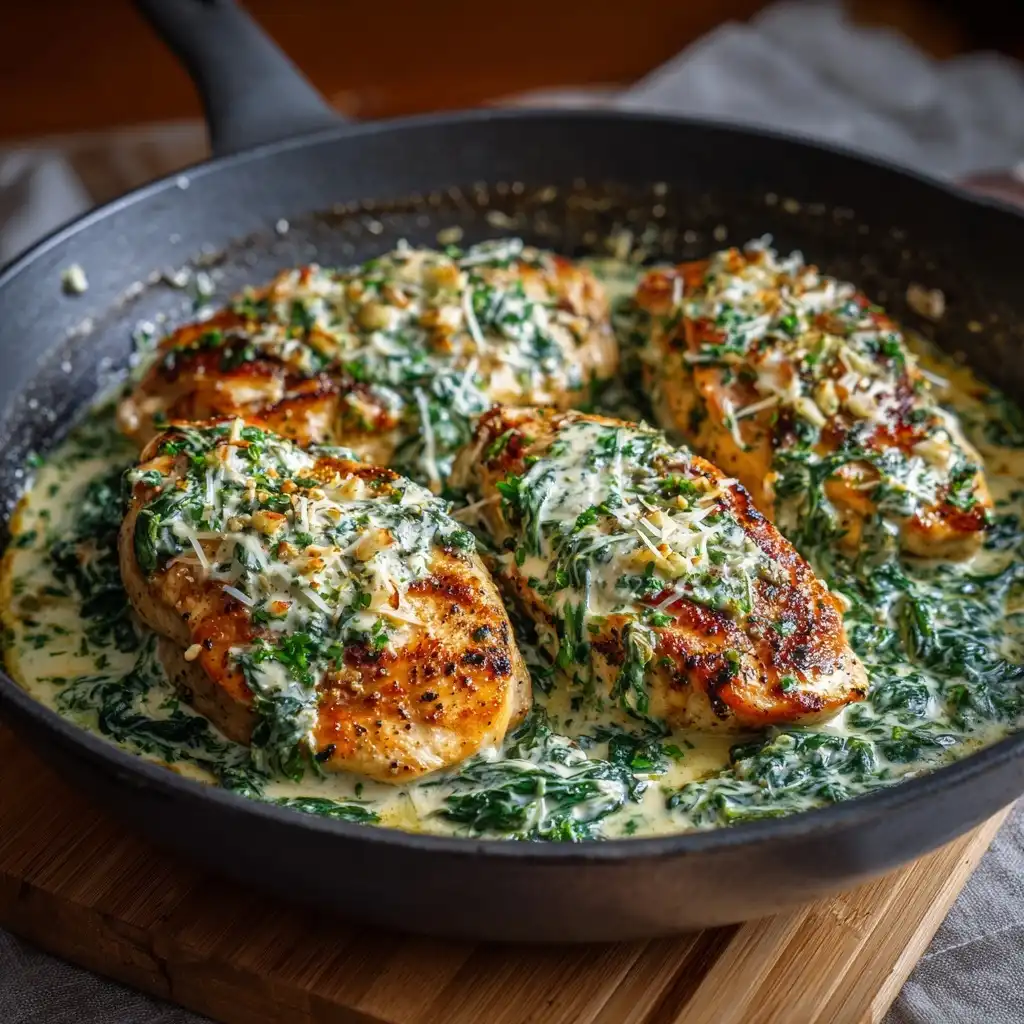
Garlic Butter Chicken with Creamy Parmesan Spinach is a restaurant-quality, weeknight-friendly dish that delivers bold flavor, velvety texture, and comforting warmth in every bite. It masterfully balances the savory richness of golden-brown chicken breast, the aromatic depth of slow-simmered garlic butter, and the luxuriously creamy, cheesy, earthy notes of sautéed spinach—elevated with freshly grated Parmigiano-Reggiano. This isn’t just dinner—it’s a culinary experience that feels indulgent yet approachable, elegant yet effortless, and deeply satisfying without requiring advanced technique or obscure ingredients. Whether you’re cooking for family, hosting friends, or treating yourself after a long day, this dish consistently delivers on aroma, taste, mouthfeel, and visual appeal—golden sear, glossy sauce, vibrant greens, and snow-white cheese glistening under soft kitchen light.
The History
While no single documented “origin story” exists for Garlic Butter Chicken with Creamy Parmesan Spinach—as it’s a modern fusion of time-honored culinary traditions—its roots span centuries and continents. The use of garlic and butter together traces back to classical French cuisine, where *beurre composé* (compound butter) was used since at least the 17th century to enrich proteins and vegetables. Garlic’s prominence surged across Mediterranean and Eastern European cooking for both flavor and medicinal properties, long before its global popularity in mid-20th-century American home kitchens. Meanwhile, spinach—cultivated in Persia over 2,000 years ago—entered European cuisine via Arab traders and became a staple in Italian and French preparations, especially when paired with cheese and cream. The iconic pairing of Parmesan and spinach appears in classic dishes like *spinaci al forno* (baked spinach with cheese) and *cannelloni ripieni*, while cream-based pan sauces gained traction post-WWII as dairy accessibility increased and home chefs sought richer, more restaurant-style finishes. What makes this specific combination distinctly contemporary is its intentional layering: the protein-first sear, the reduction-driven pan sauce built from fond, the careful tempering of dairy to avoid curdling, and the final flourish of freshly grated Parmesan added off-heat to preserve its complex nutty, umami-laced crystalline texture—techniques refined by decades of food media, cooking schools, and digital recipe sharing. In essence, this dish is a delicious testament to culinary evolution—where ancient ingredients meet modern technique and global inspiration.
Ingredients Breakdown
Every ingredient in this recipe serves a precise functional and sensory role—no filler, no afterthoughts. Let’s explore them in detail:
- Chicken Breasts (boneless, skinless): Opt for air-chilled, antibiotic-free, and preferably organic or pasture-raised for superior moisture retention and clean flavor. Pounded to an even ½-inch thickness, they cook uniformly, develop maximum crust, and remain tender without drying out. Their mild canvas allows the garlic butter and spinach to shine without competition.
- Unsalted Butter: High-fat (82%+), European-style butter provides unparalleled richness, smooth mouthfeel, and caramelized nuttiness when browned. Unsalted butter gives full control over sodium levels—critical when balancing salty Parmesan and optional seasonings.
- Fresh Garlic (minced or pressed): Far superior to jarred or powdered—fresh garlic delivers volatile sulfur compounds (allicin) responsible for pungent aroma and complex sweetness when cooked low and slow. Mincing increases surface area for even infusion into the butter without burning.
- Dry White Wine (e.g., Sauvignon Blanc or Pinot Grigio): Adds bright acidity, depth, and complexity to the pan sauce. Its alcohol evaporates during reduction, leaving behind fruity esters and subtle minerality that cut through fat and lift the entire dish. Substitute with dry vermouth or low-sodium chicken broth if avoiding alcohol—but know you’ll lose brightness and dimension.
- Heavy Cream (36–40% fat): Provides luxurious body, silkiness, and emulsification stability. Lower-fat alternatives (half-and-half, whole milk) risk breaking, thinning, or curdling—especially when combined with acidic wine and salty cheese. Cold cream also helps regulate pan temperature during incorporation.
- Freshly Grated Parmigiano-Reggiano: Not pre-grated “Parmesan” (which often contains cellulose and lacks flavor). Authentic Parmigiano-Reggiano contributes deep umami, nutty caramel notes, subtle crystalline crunch, and natural thickening power thanks to its aged protein structure. Its salt content also enhances other flavors synergistically.
- Fresh Baby Spinach: Tender, sweet, and nutrient-dense. Unlike mature spinach (which can be fibrous and bitter), baby spinach wilts quickly, retains vibrant green color, and absorbs sauce without becoming slimy. Its high water content also gently steams itself in the residual heat of the pan.
- Extra-Virgin Olive Oil: Used only for initial searing—its higher smoke point than butter prevents burning while imparting grassy, peppery notes that complement garlic and herbs. Avoid refined oils; their neutral profile lacks character.
- Fresh Lemon Juice (optional but highly recommended): A finishing touch—not cooked—that adds vital acidity, lifts heaviness, balances fat, and brightens the entire palate. It’s the “secret whisper” that transforms rich into radiant.
- Fresh Herbs (parsley or thyme): Flat-leaf parsley adds fresh, chlorophyll-rich contrast; thyme contributes woodsy, floral depth. Both are stirred in at the end to preserve volatile oils and aroma.
- Seasonings (kosher salt & freshly ground black pepper): Kosher salt’s flaky texture ensures even distribution and controlled salting; freshly cracked black pepper delivers piperine’s warm, floral heat—far superior to pre-ground, which loses potency within weeks.
Step-by-Step Recipe
- Prep the Chicken: Place two 6–8 oz boneless, skinless chicken breasts between two sheets of parchment paper or plastic wrap. Using a meat mallet or heavy skillet, pound evenly to ½-inch thickness. Pat *extremely* dry with paper towels—this is non-negotiable for achieving a crisp, golden sear. Season both sides generously with kosher salt and freshly ground black pepper.
- Heat the Pan: Heat a large, heavy-bottomed stainless steel or cast-iron skillet over medium-high heat for 2 minutes. Add 1 tbsp extra-virgin olive oil and swirl to coat. Heat until oil shimmers slightly but does not smoke (~350°F).
- Sear the Chicken: Carefully place chicken in hot pan without overcrowding (cook in batches if needed). Press gently with a spatula for full contact. Sear undisturbed for 5–6 minutes until deeply golden brown and easily releases from pan. Flip and cook 4–5 more minutes until internal temperature reaches 155°F (it will carry over to 160–165°F while resting). Transfer to a clean plate, tent loosely with foil, and rest for 5 minutes—this preserves juiciness and allows carryover cooking.
- Build the Aromatic Base: Reduce heat to medium-low. In same skillet (do not wipe—those browned bits are flavor gold), add 3 tbsp unsalted butter. Once melted, add 4–5 cloves finely minced garlic. Stir constantly for 60–90 seconds—just until fragrant and softened, *not* browned or bitter. Watch closely: garlic burns fast.
- Deglaze with Wine: Pour in ¼ cup dry white wine, scraping vigorously with a wooden spoon to lift all browned fond from the pan bottom. Simmer 2–3 minutes until reduced by half and alcohol smell dissipates. Liquid should be syrupy, not watery.
- Incorporate Cream: Whisk in ½ cup cold heavy cream. Bring to a gentle simmer (do not boil rapidly). Reduce heat to low and stir continuously for 3–4 minutes until sauce thickens slightly and coats the back of a spoon.
- Add Spinach: Stir in 5 oz fresh baby spinach in three additions, allowing each batch to wilt completely (about 30 seconds per addition) before adding more. Total wilting time: ~1.5–2 minutes. Do not overcook—spinach should be vibrant green and tender-crisp.
- Enrich with Cheese: Remove pan from heat. Gradually whisk in ½ cup freshly grated Parmigiano-Reggiano, one tablespoon at a time, stirring until fully melted and smooth before adding more. Sauce should be velvety, cohesive, and slightly glossy—not grainy or separated.
- Final Seasoning & Finish: Return rested chicken to pan, nestling pieces into the creamy spinach. Spoon sauce over tops. Gently reheat for 1 minute on low—do not boil. Off heat, stir in 1 tsp fresh lemon juice and 2 tbsp chopped flat-leaf parsley. Taste and adjust: more salt? A pinch of white pepper? A final drizzle of olive oil?
- Serve Immediately: Plate chicken atop creamy spinach, spooning extra sauce over top. Garnish with extra grated Parmesan, lemon zest, and a sprig of fresh thyme or parsley.
Tips
- Temperature Control Is Everything: Use an instant-read thermometer for chicken—guesswork leads to dryness or undercooking. Target 155°F at removal, then rest. For the sauce, keep heat low after adding cream—boiling causes separation.
- Dry Chicken = Golden Chicken: Moisture is the enemy of browning. Pat chicken thoroughly—even let it air-dry uncovered in the fridge for 15 minutes prior for ultimate crust.
- Grate Your Own Cheese: Pre-grated cheeses contain anti-caking agents (like cellulose or potato starch) that prevent proper melting and create grittiness. A microplane yields the finest, most flavorful, melt-prone shreds.
- Respect the Garlic Timeline: Garlic goes from aromatic to acrid in under 15 seconds. Stir constantly, lower heat if needed, and remove from heat the *moment* it becomes fragrant and translucent.
- Spinach Should Shine—Not Shrink Excessively: Add it last and wilt just until darkened and tender. Overcooking drains color, nutrients, and texture. If using frozen spinach, thaw completely and squeeze *all* liquid out—or sauce will thin dramatically.
- Sauce Consistency Rescue: Too thin? Simmer 1–2 minutes longer. Too thick? Whisk in 1 tsp warm cream or broth. Broken sauce? Remove from heat, add 1 tsp cold butter, and whisk vigorously until re-emulsified.
- Make-Ahead Friendly: Cook chicken and sauce separately up to 2 days ahead. Store chilled. Reheat chicken gently in oven (325°F, 10 min); warm sauce on stove with splash of cream. Combine just before serving.
- Pan Choice Matters: Stainless steel offers best fond development and control. Nonstick prevents sticking but sacrifices browning. Cast iron retains heat beautifully but requires careful temp management with dairy.
- Resting Is Non-Negotiable: Skipping the 5-minute rest allows juices to flood the pan instead of staying in the meat—resulting in drier, less flavorful chicken.
- Taste As You Go: Season in layers—not just at the end. Salt the chicken, season the sauce base, adjust acidity, finish with brightness. Each layer builds harmony.
Variations and Customizations
This recipe is endlessly adaptable—here’s how to personalize it for dietary needs, pantry limitations, seasonal produce, or adventurous palates:
- Protein Swaps: Try boneless chicken thighs (more forgiving, richer flavor), turkey cutlets, veal scaloppini, or pan-seared firm tofu (pressed & marinated in soy-ginger-garlic mix for 30 min).
- Dairy-Free/Vegan Version: Replace butter with high-heat avocado oil + 1 tbsp nutritional yeast; use full-fat coconut milk (canned, shaken well) instead of cream; swap Parmesan for vegan Parmesan (e.g., Violife or homemade cashew-based); wilt spinach in olive oil, then stir in sauce made from blended soaked cashews, lemon, garlic, and miso paste.
- Gluten-Free: Naturally GF—just verify wine and broth labels are certified gluten-free (some wines use gluten-containing fining agents).
- Keto/Low-Carb Friendly: Already compliant! Net carbs: ~4g/serving (mostly from spinach and trace wine). Boost fat with extra butter or a swirl of truffle oil.
- Higher Protein Boost: Stir in ½ cup crumbled feta or ricotta salata at the end—or top with pan-seared shrimp added in the last 2 minutes.
- Herb & Spice Twists: Add ½ tsp smoked paprika with garlic; stir in 1 tsp Dijon mustard with wine; infuse cream with fresh rosemary or tarragon; finish with Calabrian chili flakes for heat.
- Vegetable Upgrades: Fold in sautéed mushrooms (cremini or oyster), sun-dried tomatoes (chopped, oil-packed), roasted cherry tomatoes, or blanched asparagus tips. For heartier meals, add white beans or farro.
- Grain & Base Pairings: Serve over cauliflower rice, zucchini noodles, quinoa, orzo (GF version available), polenta, or crusty artisan bread for soaking up sauce. Also divine alongside roasted potatoes or garlic mashed cauliflower.
- Meal Prep Hack: Double the sauce and spinach base—portion into jars and freeze for up to 3 months. Thaw overnight, reheat, and pair with freshly cooked chicken or grilled fish.
- Restaurant Presentation: Pipe creamy spinach onto plate with piping bag, top with chicken, drizzle with garlic butter reduction, garnish with edible flowers, lemon wheels, and microgreens.
Health Considerations and Nutritional Value
A single serving (1 chicken breast + ½ recipe sauce/spinach) provides approximately:
- Calories: 520–580 kcal
- Protein: 42–48 g (excellent source—supports muscle maintenance, satiety, metabolism)
- Fat: 32–36 g (mostly unsaturated from olive oil, butter, and Parmesan; includes beneficial CLA from dairy)
- Carbohydrates: 6–8 g (net carbs: ~4 g; primarily from spinach’s fiber and natural sugars)
- Fiber: 3–4 g (from spinach—supports gut health and blood sugar regulation)
- Vitamins & Minerals: Exceptionally high in Vitamin K (1,000+ mcg—900% DV), Vitamin A (from beta-carotene in spinach), calcium (25% DV from Parmesan), iron (15% DV), magnesium, folate, and antioxidants (lutein, zeaxanthin, vitamin C).
Health Highlights:
- Heart-Healthy Fats: Olive oil’s monounsaturated fats + small amounts of omega-3s from spinach support arterial health and reduce inflammation.
- Bone Support: Parmesan is one of the most bioavailable dietary sources of calcium and vitamin K2 (menaquinone), essential for bone mineralization and preventing calcification of arteries.
- Antioxidant Powerhouse: Spinach contains >13 different flavonoid compounds—many studied for anti-cancer, neuroprotective, and vision-preserving effects.
- Digestive Benefits: Garlic contains prebiotic inulin and allicin, shown to promote beneficial gut bacteria and support immune function.
- Low Glycemic Impact: With minimal net carbs and high protein/fat, this dish stabilizes blood glucose—ideal for diabetics or insulin-resistant individuals.
- Considerations: Sodium content (~680 mg/serving) is moderate—reduce salt during prep if on low-sodium protocol, and opt for low-sodium broth if substituting wine. Those with lactose sensitivity may tolerate aged Parmesan well (naturally low-lactose), but can use lactose-free cream or coconut milk alternatives.
Ingredients
- 2 (6–8 oz) boneless, skinless chicken breasts, pounded to ½-inch thickness
- 1 tsp kosher salt, plus more to taste
- ½ tsp freshly ground black pepper, plus more to taste
- 1 tbsp extra-virgin olive oil
- 3 tbsp unsalted butter, divided
- 4–5 cloves garlic, finely minced (about 1½ tbsp)
- ¼ cup dry white wine (Sauvignon Blanc or Pinot Grigio preferred)
- ½ cup heavy cream (36–40% fat)
- 5 oz fresh baby spinach (about 6 loosely packed cups)
- ½ cup freshly grated Parmigiano-Reggiano cheese (not pre-grated)
- 1 tsp fresh lemon juice (optional but recommended)
- 2 tbsp chopped fresh flat-leaf parsley
- Lemon zest and extra Parmesan for garnish (optional)
Directions
- Pat chicken breasts extremely dry with paper towels. Season both sides with 1 tsp kosher salt and ½ tsp black pepper.
- Heat olive oil in a large skillet over medium-high heat until shimmering. Add chicken and sear 5–6 minutes per side, until golden brown and internal temperature reaches 155°F. Transfer to a plate, tent with foil, and rest 5 minutes.
- Reduce heat to medium-low. Add 2 tbsp butter to same skillet. Once melted, add garlic and cook 60–90 seconds until fragrant and soft—do not brown.
- Pour in wine, scraping up browned bits. Simmer 2–3 minutes until reduced by half.
- Whisk in heavy cream. Simmer gently 3–4 minutes until slightly thickened.
- Add spinach in three batches, wilting completely between additions (~30 sec each).
- Remove from heat. Whisk in Parmesan, 1 tbsp at a time, until smooth and creamy.
- Return rested chicken to pan. Spoon sauce over top. Gently reheat 1 minute on low.
- Off heat, stir in lemon juice and parsley. Taste and adjust seasoning.
- Plate immediately. Garnish with lemon zest, extra parsley, and grated Parmesan.
FAQ
- Can I use frozen spinach?
- Yes—but thaw completely and squeeze out *every drop* of water using cheesecloth or a clean kitchen towel. Excess moisture will dilute the sauce and prevent proper thickening.
- Why does my sauce break or look grainy?
- Most common causes: overheating after adding cream or cheese, using pre-grated cheese (with anti-caking agents), or adding cold cheese to hot sauce too quickly. Fix by removing from heat, adding 1 tsp cold butter, and whisking vigorously until smooth.
- Can I make this ahead of time?
- Absolutely. Cook chicken and sauce separately, cool, and refrigerate for up to 3 days or freeze for up to 3 months. Reheat gently—never boil—and combine just before serving to preserve texture.
- Is there a lighter version?
- You can substitute half-and-half *if* you reduce the wine longer and thicken with a cornstarch slurry (1 tsp cornstarch + 1 tbsp cold water, whisked in at end). However, flavor and mouthfeel will be noticeably less rich and cohesive.
- What wine should I cook with if I don’t drink?
- Choose a dry, unoaked white you’d enjoy sipping—avoid “cooking wine” (loaded with salt and preservatives). If avoiding alcohol entirely, use equal parts low-sodium chicken broth + 1 tsp white wine vinegar for brightness.
- Can I use dried spinach or kale instead?
- Dried spinach is not recommended—it won’t rehydrate properly and creates a dusty texture. Kale can work if thinly sliced (lacinato/kale massaged with olive oil first) and added earlier—but expect longer wilting time and sturdier texture.
- My garlic tasted bitter—what went wrong?
- Garlic burned. Always cook over medium-low heat, stir constantly, and remove from heat the second it turns fragrant and pale gold. If it sizzles aggressively or turns brown, start over—the bitterness won’t cook out.
- How do I store leftovers?
- Store in airtight container in refrigerator for up to 3 days. Reheat gently in skillet over low heat with a splash of cream or broth to refresh consistency. Not ideal for microwave-only reheating (can make chicken rubbery).
- Can I double the recipe?
- Yes—but use two skillets or cook in batches. Crowding the pan lowers temperature, steams instead of sears, and prevents fond development—critical for sauce depth.
- What sides pair best?
- Light, textural contrasts shine: lemon-herb quinoa, roasted fingerling potatoes, garlic sautéed green beans, crusty sourdough, or a simple arugula salad with lemon vinaigrette.
Summary
Garlic Butter Chicken with Creamy Parmesan Spinach is a masterclass in balanced indulgence—melding golden-crisp, tender chicken with a luxuriously smooth, garlicky, wine-enriched sauce and vibrant, nutrient-dense spinach crowned with nutty, umami-rich Parmigiano-Reggiano. Every step, ingredient, and technique is purpose-built to deliver maximum flavor, texture, and satisfaction without compromise.
Effortless enough for Tuesday nights yet elegant enough for weekend entertaining, this dish proves that exceptional home cooking doesn’t require complexity—just intention, quality ingredients, and respect for foundational techniques.