Introduction
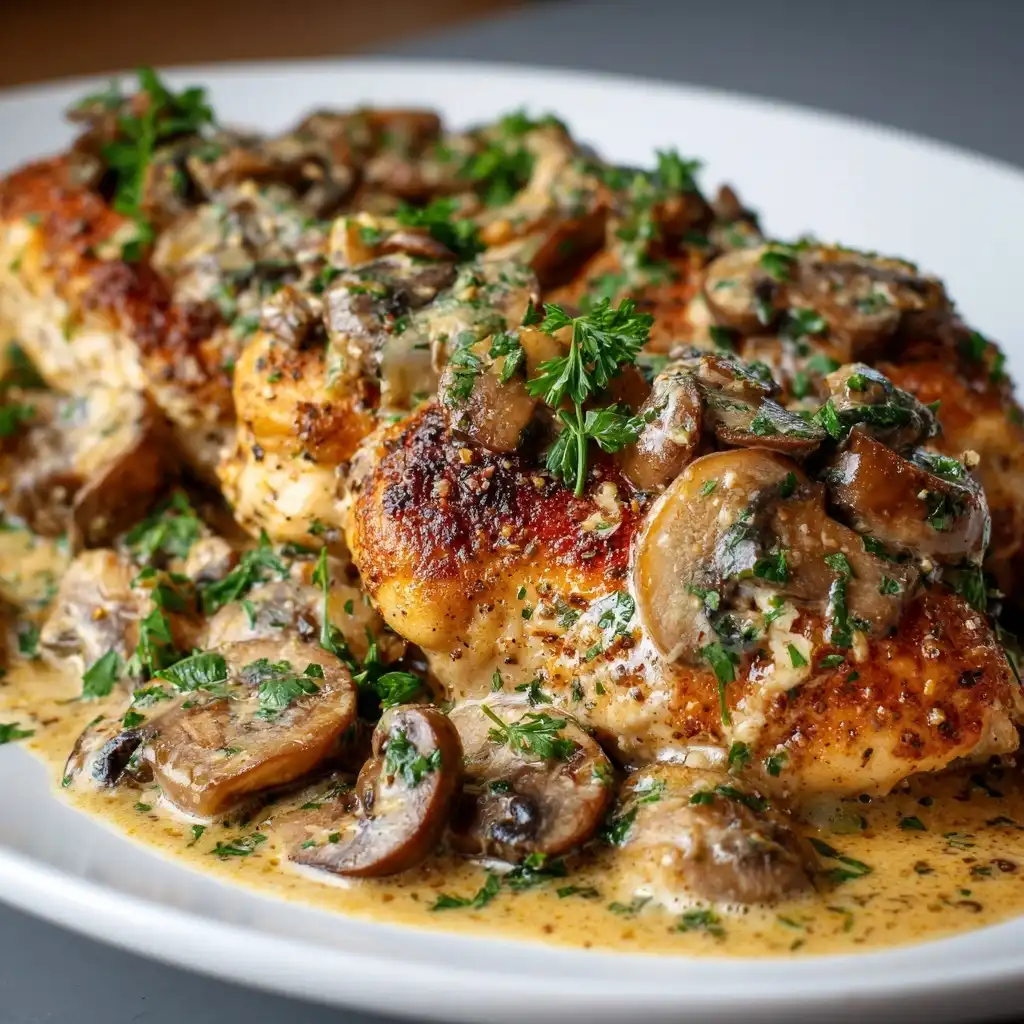
Garlic Butter Chicken with Garlic Mushroom Sauce is a restaurant-quality, comfort-food classic that brings together tender pan-seared chicken breasts, rich golden garlic butter, and an umami-packed, velvety mushroom sauce—all in one cohesive, deeply aromatic dish. This recipe strikes the perfect balance between simplicity and sophistication: it’s approachable enough for weeknight dinners yet elegant enough to serve guests at a dinner party. The magic lies in layering garlic at multiple stages—raw minced for pungent brightness, sautéed for sweetness, and finished with fresh parsley and lemon for lift—while the mushrooms absorb every drop of savory, herb-infused butter. Whether you’re craving something hearty, soul-warming, or simply crave the unmistakable fragrance of garlic sizzling in browned butter, this dish delivers on all fronts—with minimal effort and maximum flavor.
The History
While no single origin story exists for Garlic Butter Chicken with Garlic Mushroom Sauce, its roots are deeply embedded in both French and American culinary traditions. The technique of cooking chicken in butter—known as *poulet à la meunière*—dates back to 19th-century France, where chefs would dredge chicken or fish in flour, pan-fry in butter until golden, then finish with lemon, parsley, and capers. Garlic entered the equation more prominently in mid-20th-century American home cooking, as post-war kitchens embraced bold, accessible flavors and pantry staples like dried porcini and button mushrooms became widely available. Simultaneously, the rise of “continental” dining in U.S. supper clubs and mid-century cookbooks popularized creamy, butter-based sauces featuring sautéed mushrooms—think dishes inspired by *boeuf stroganoff* or *chicken marsala*, but adapted for quicker preparation and local ingredients. Over time, home cooks began merging these concepts: using boneless, skinless chicken breasts (a post-war protein staple) and amplifying richness with generous amounts of real butter, slow-cooked garlic, and earthy cremini or white mushrooms. Today, the dish thrives across food blogs, TikTok cooking reels, and family recipe boxes—not because it’s trendy, but because it’s timeless: a testament to how humble ingredients, treated with care and layered thoughtfully, can yield extraordinary depth and comfort.
Ingredients Breakdown
Every element in this recipe serves a distinct functional and flavor purpose—no filler, no afterthoughts. Let’s explore why each ingredient matters:
- Chicken Breasts (boneless, skinless): Opt for air-chilled, organic, or pasture-raised breasts when possible—they retain moisture better during cooking and have superior texture. Pounding them to an even ½-inch thickness ensures uniform searing and prevents dryness.
- Unsalted Butter: Used in three phases—searing (for browning and fond development), sauce base (for richness and emulsification), and finishing (for gloss and aroma). Unsalted butter gives full control over sodium levels and avoids off-flavors from rancid salted versions.
- Fresh Garlic (whole cloves + minced): Raw minced garlic added at the end preserves volatile sulfur compounds responsible for bright, spicy top notes. Meanwhile, whole cloves gently roasted in butter release sweet, mellow, almost nutty undertones—creating a multidimensional garlic profile.
- Mushrooms (cremini or baby bella preferred): Higher in glutamates than white button mushrooms, creminis deliver deeper umami and meatier texture. Their natural moisture releases during sautéing, creating the foundation for the sauce’s body—and later, concentrates into intense flavor when cooked down.
- Dry Sherry or Dry White Wine: Adds acidity and complexity without sharpness. Sherry (especially fino or manzanilla) contributes subtle nuttiness and balances fat; substitute with dry vermouth or a crisp Sauvignon Blanc if needed. Never use cooking wine—it contains salt and preservatives that dull flavor.
- Low-Sodium Chicken Broth: Provides savory depth and liquid volume while keeping sodium in check. Homemade broth is ideal; if using store-bought, choose brands with clean labels—no MSG, excessive sodium, or artificial flavors.
- Fresh Thyme & Parsley: Thyme’s earthy, floral notes complement mushrooms and garlic without overpowering; flat-leaf parsley adds freshness and visual contrast. Dried thyme can be substituted (use ⅓ the amount), but dried parsley lacks vibrancy and should be avoided.
- Lemon Juice (freshly squeezed): Not just for acidity—the citric acid brightens the entire dish, cuts through richness, and lifts the garlic’s intensity. Bottled juice lacks enzymatic brightness and often contains preservatives that mute flavor.
- Heavy Cream (optional but recommended): Adds luxurious mouthfeel and stabilizes the emulsion. For dairy-free versions, full-fat coconut milk (well-stirred) or cashew cream work surprisingly well—just avoid low-fat alternatives, which can cause splitting.
- Flour (all-purpose or gluten-free 1:1 blend): Used minimally as a slurry (not a roux) to gently thicken without heaviness. It binds the sauce without masking delicate garlic-mushroom nuances.
Step-by-Step Recipe
- Prep the Chicken: Place two 6–8 oz boneless, skinless chicken breasts between two sheets of parchment paper or plastic wrap. Using a meat mallet or heavy skillet, pound evenly to ½-inch thickness. Pat *extremely* dry with paper towels—this ensures a proper sear, not steam. Season both sides generously with kosher salt and freshly ground black pepper.
- Sear the Chicken: Heat 1 tbsp unsalted butter and 1 tbsp neutral oil (like avocado or grapeseed) in a large stainless steel or cast-iron skillet over medium-high heat until shimmering. Carefully place chicken in the pan without crowding. Cook undisturbed for 5–6 minutes, until deeply golden brown and easily releases from the pan. Flip and cook another 4–5 minutes, until internal temperature reaches 155°F (it will carry over to 160–165°F while resting). Transfer to a plate, tent loosely with foil, and rest for 10 minutes—this allows juices to redistribute.
- Build the Garlic-Mushroom Base: Reduce heat to medium. In the same skillet (do not wipe out browned bits—they’re flavor gold), add 2 tbsp butter. Once melted, add 8–10 peeled garlic cloves (left whole) and 1 tbsp fresh thyme leaves. Sauté gently for 2–3 minutes until garlic softens and turns pale gold—but do *not* let it brown or burn. Remove garlic cloves with a slotted spoon and set aside.
- Sauté the Mushrooms: Add 8 oz sliced cremini mushrooms to the skillet. Cook undisturbed for 3 minutes to allow moisture to release and initial browning to occur. Stir and continue cooking 4–5 more minutes until deeply caramelized, shrunken, and deeply fragrant. Season lightly with salt.
- Deglaze & Simmer: Pour in ¼ cup dry sherry (or white wine), scraping vigorously with a wooden spoon to lift all browned bits (fond). Let bubble 1 minute to cook off alcohol. Add ¾ cup low-sodium chicken broth, the reserved roasted garlic cloves (lightly crushed with fork), and 1 tsp fresh lemon juice. Bring to a gentle simmer and cook 3–4 minutes until reduced by ~⅓.
- Thicken & Enrich: In a small bowl, whisk together 1 tsp flour and 1 tbsp cold water until smooth. Whisk slurry into simmering sauce. Cook 1–2 minutes until slightly thickened. Stir in 2 tbsp heavy cream (or dairy-free alternative) and 1 tbsp cold butter—this final “mounting” adds shine and silkiness. Taste and adjust seasoning: more salt? A pinch of white pepper? Another squeeze of lemon?
- Finish & Serve: Gently stir in 2 tsp finely minced raw garlic and 2 tbsp chopped fresh parsley. Return rested chicken to the skillet, spooning sauce over each piece. Let warm through for 1–2 minutes on low heat—do not boil, or the sauce may break. Serve immediately, garnished with extra parsley, lemon zest, and flaky sea salt.
Tips
- Dry chicken thoroughly—even twice. Moisture is the enemy of browning. After pounding, pat again right before seasoning.
- Use a stainless steel or cast-iron skillet. Nonstick pans won’t develop adequate fond (those flavorful browned bits essential for sauce depth).
- Don’t rush the mushroom sauté. Let them release water *first*, then wait for true caramelization. Rushing yields steamed, gray mushrooms—not rich, deeply flavored ones.
- Control garlic intensity with timing. Whole roasted garlic = sweet, mellow, creamy. Minced raw garlic added at the end = vibrant, pungent, fresh. Both are essential—don’t skip either.
- Rest chicken *before* saucing. If you add hot chicken directly to warm sauce, it continues cooking and dries out. Resting first locks in juices; warming it gently in the sauce reheats without overcooking.
- Make-ahead advantage: Roast garlic cloves up to 3 days ahead and store covered in fridge. Sauté mushrooms and make sauce base (without cream or raw garlic) up to 2 days ahead—reheat gently before finishing.
- Fix a broken sauce: If cream causes separation, remove from heat and whisk in 1 tsp cold butter, 1 tsp lemon juice, and 1 tsp warm broth—whisk vigorously to re-emulsify.
- Scale wisely: This recipe doubles easily—but use two skillets or cook in batches. Crowding lowers pan temperature and steams instead of sears.
Variations and Customizations
Protein Swaps
- Chicken Thighs: More forgiving and flavorful—use boneless, skinless thighs; reduce sear time by 1–2 minutes per side. They benefit from longer simmering in sauce.
- Shrimp or Scallops: Sear separately (shrimp: 1–2 min/side; scallops: 2 min/side unflipped), then fold in at the very end—overcooking makes them rubbery.
- Plant-Based Option: Use large, marinated tofu steaks (pressed, baked or pan-fried) or king oyster mushrooms sliced lengthwise and seared like “scallops.” Boost umami with tamari and nutritional yeast in the sauce.
Mushroom Variations
- Wild Mushroom Medley: Substitute half the creminis with dried porcini (soaked 20 min in hot water, strained—reserve soaking liquid to replace part of broth) plus fresh oyster or shiitake for complex woodsy notes.
- Truffle Infusion: Stir in ½ tsp white truffle oil *after* removing from heat—or shave fresh black truffle over plated dish.
- Herbaceous Twist: Add 1 tsp fresh tarragon (in last minute of sauce cooking) for a subtle anise note that pairs beautifully with mushrooms and garlic.
Sauce & Texture Tweaks
- Creamy Dairy-Free: Replace heavy cream with 3 tbsp raw cashew cream (soaked cashews + water, blended ultra-smooth) or ¼ cup full-fat coconut milk (add at end, heat gently).
- Lighter Version: Skip cream entirely; thicken with 1 tsp cornstarch + 1 tbsp water, and finish with extra lemon juice and a drizzle of high-quality olive oil.
- Extra Garlicky: Add 1 additional tsp minced raw garlic—and consider infusing the butter beforehand by gently heating 4 tbsp butter with 4 smashed garlic cloves for 5 minutes, then straining.
- Spicy Kick: Stir in ¼ tsp red pepper flakes with mushrooms—or finish with pickled jalapeño ribbons and a splash of their brine.
Serving Styles
- Pasta Pairing: Toss with wide pappardelle or tagliatelle—reserve ¼ cup pasta water to help emulsify sauce.
- Grain Bowl Base: Spoon over creamy polenta, garlic mashed potatoes, or farro pilaf.
- Low-Carb Friendly: Serve alongside roasted asparagus, sautéed spinach, or zucchini noodles (add zoodles at the very end to avoid excess water).
- Brunch Reinvention: Top toasted sourdough or brioche with sliced chicken, warm sauce, and a soft-poached egg.
Health Considerations and Nutritional Value
This dish balances indulgence with thoughtful nutrition—when prepared mindfully, it supports satiety, blood sugar stability, and anti-inflammatory benefits. Here’s what makes it nourishing:
- High-Quality Protein: Chicken breast provides ~31g lean protein per 6-oz serving—supporting muscle maintenance, metabolic health, and prolonged fullness. Choosing organic or pasture-raised increases omega-3s and decreases exposure to antibiotics and hormones.
- Garlic’s Bioactive Power: Contains allicin (activated when crushed and exposed to air), linked in research to cardiovascular support, immune modulation, and antioxidant activity. Using both roasted *and* raw garlic maximizes diverse phytochemical profiles.
- Mushroom Micronutrients: Cremini mushrooms are rich in B vitamins (especially riboflavin and niacin), selenium, copper, and ergothioneine—an amino acid with potent cellular protection properties. Their beta-glucans also support gut-immune axis health.
- Butter Wisdom: While high in saturated fat, grass-fed butter contains beneficial conjugated linoleic acid (CLA), vitamin K2 (for bone/vascular health), and butyrate (a gut-soothing short-chain fatty acid). Portion control (3–4 tbsp total per serving) keeps calories balanced without sacrificing richness.
- No Refined Sugars or Processed Additives: Naturally low-glycemic, gluten-free (with GF flour), and free from artificial preservatives—ideal for clean-eating, Mediterranean, or whole-foods-focused diets.
- Nutrition Snapshot (per serving, approx. 1 chicken breast + ⅔ cup sauce):
Calories: 425 • Fat: 28g (16g saturated) • Carbs: 6g (2g fiber, 1g sugar) • Protein: 34g • Sodium: 480mg (adjustable with low-sodium broth and mindful salting) • Vitamin D: 8% DV • Iron: 12% DV • Zinc: 18% DV
Note: For those managing cholesterol or following heart-healthy guidelines, swap half the butter for heart-friendly extra-virgin olive oil during sautéing—and increase garlic, lemon, and herbs to enhance flavor without added fat.
Ingredients
- 2 (6–8 oz) boneless, skinless chicken breasts
- 1½ tsp kosher salt, divided
- 1 tsp freshly ground black pepper, divided
- 1 tbsp neutral high-heat oil (avocado, grapeseed, or refined coconut)
- 3 tbsp unsalted butter, divided
- 10 large garlic cloves, peeled (plus 2 tsp finely minced raw garlic for finishing)
- 1 tsp fresh thyme leaves (or ¼ tsp dried)
- 8 oz cremini (baby bella) mushrooms, wiped clean and thinly sliced
- ¼ cup dry sherry or dry white wine
- ¾ cup low-sodium chicken broth
- 1 tsp freshly squeezed lemon juice (plus extra for serving)
- 1 tsp all-purpose flour (or gluten-free 1:1 blend)
- 1 tbsp cold water
- 2 tbsp heavy cream (or full-fat coconut milk or cashew cream)
- 2 tbsp fresh flat-leaf parsley, finely chopped (plus extra for garnish)
- Flaky sea salt (Maldon or similar) and lemon zest for finishing
Directions
- Place chicken breasts between two sheets of parchment paper. Pound evenly to ½-inch thickness using a meat mallet or heavy-bottomed pan. Pat *very* dry with paper towels. Season both sides with 1 tsp salt and ½ tsp pepper.
- Heat oil and 1 tbsp butter in a large stainless steel or cast-iron skillet over medium-high heat until butter foams and subsides (~350°F). Carefully add chicken. Cook undisturbed 5–6 minutes until deep golden brown and releases easily. Flip and cook 4–5 minutes more, until internal temp reads 155°F. Transfer to plate, tent with foil, rest 10 minutes.
- Reduce heat to medium. Add 1 tbsp butter to same skillet. Once melted, add whole garlic cloves and thyme. Sauté 2–3 minutes until garlic is soft and pale gold. Remove cloves with slotted spoon; lightly crush with fork and set aside.
- Add remaining 1 tbsp butter. When melted, add mushrooms in single layer. Cook undisturbed 3 minutes. Stir and cook 4–5 more minutes until deeply browned and shrunken. Sprinkle with remaining ½ tsp salt.
- Pour in sherry, scraping bottom vigorously to lift fond. Bubble 1 minute. Add broth, crushed roasted garlic, and 1 tsp lemon juice. Simmer 3–4 minutes until reduced by ~⅓.
- In small bowl, whisk flour and cold water into smooth slurry. Whisk into sauce. Simmer 1–2 minutes until slightly thickened. Stir in cream and 1 tbsp cold butter until glossy.
- Gently stir in minced raw garlic and chopped parsley. Return rested chicken to skillet, spooning sauce over. Warm gently 1–2 minutes on low—do not boil. Taste and adjust: more lemon? Salt? White pepper?
- Serve immediately, garnished with extra parsley, lemon zest, and flaky sea salt. Optional: drizzle with extra virgin olive oil or truffle oil.
FAQ
- Can I use frozen chicken breasts?
- Yes—but thaw completely in the refrigerator overnight, then pat *extremely* dry. Frozen-and-thawed chicken has higher water content, so extend sear time by 1–2 minutes per side and consider light dredging in flour before cooking to aid browning.
- Why does my sauce break or look greasy?
- Sauces break when emulsions separate—common when overheated, over-stirred, or when cold cream hits hot liquid too quickly. Solution: Remove from heat before adding cream; whisk constantly while adding in a slow stream. If broken, whisk in 1 tsp cold butter and 1 tsp warm broth off-heat until smooth.
- Can I make this dairy-free?
- Absolutely. Substitute butter with refined coconut oil or vegan butter (look for trans-fat-free, non-hydrogenated brands). Use full-fat coconut milk or raw cashew cream instead of heavy cream. Ensure broth is certified dairy-free (some contain whey).
- How do I store and reheat leftovers?
- Cool completely and store chicken and sauce separately in airtight containers for up to 3 days. Reheat sauce gently in a saucepan over low heat—do not boil. Warm chicken in toaster oven or skillet (not microwave) to preserve texture. Add a splash of broth to refresh sauce if needed.
- What wine pairs best with this dish?
- A crisp, mineral-driven white like Chablis, unoaked Chardonnay, or dry Riesling complements the garlic and butter without overwhelming. For red lovers, try a lighter Pinot Noir with bright acidity and earthy notes—avoid high-tannin or oaky reds.
- My garlic tastes bitter—what went wrong?
- Bitterness comes from burnt garlic. Whole cloves must stay pale gold—not brown. Mince raw garlic *just before finishing*; pre-mincing and letting it sit oxidizes and intensifies harshness. Also, avoid high-heat sautéing of minced garlic—it scorches instantly.
- Can I use dried mushrooms only?
- Yes—with adjustments. Soak ¼ oz dried porcini in 1 cup hot water for 20 minutes. Strain liquid (reserve), chop mushrooms. Use soaking liquid *instead of part of broth* for deeper flavor. Sauté dried mushrooms briefly before adding fresh ones—or use all-dried for an intensely umami, rustic version.
- Is this recipe gluten-free?
- Yes—as written—with certified gluten-free flour (like Bob’s Red Mill 1:1 or King Arthur GF blend). Always verify broth and wine labels, as some contain hidden gluten or barley derivatives.
- How can I meal prep this efficiently?
- Prep components ahead: pound & season chicken (store up to 24 hours); roast garlic cloves; slice mushrooms (store in airtight container up to 2 days); make broth-sherry mixture. Assemble and cook within 30 minutes when ready to eat.
- What sides go best with this dish?
- Classic pairings include buttered egg noodles, garlic mashed potatoes, or creamy polenta. Lighter options: roasted broccolini, lemon-dill quinoa, or a crisp arugula salad with shaved Parmesan and lemon vinaigrette. For keto: cauliflower “rice” sautéed in garlic butter.
Summary
Garlic Butter Chicken with Garlic Mushroom Sauce is a masterclass in layered flavor—where tender, rested chicken meets a luxuriously silky sauce built from slow-roasted garlic, deeply caramelized mushrooms, fortified wine, and velvety cream, all lifted by fresh herbs and bright lemon.
It’s a versatile, nutrient-dense weeknight hero that feels special without fuss—easily adapted for dietary needs, scalable for crowds, and endlessly customizable with seasonal ingredients or pantry twists.