Introduction
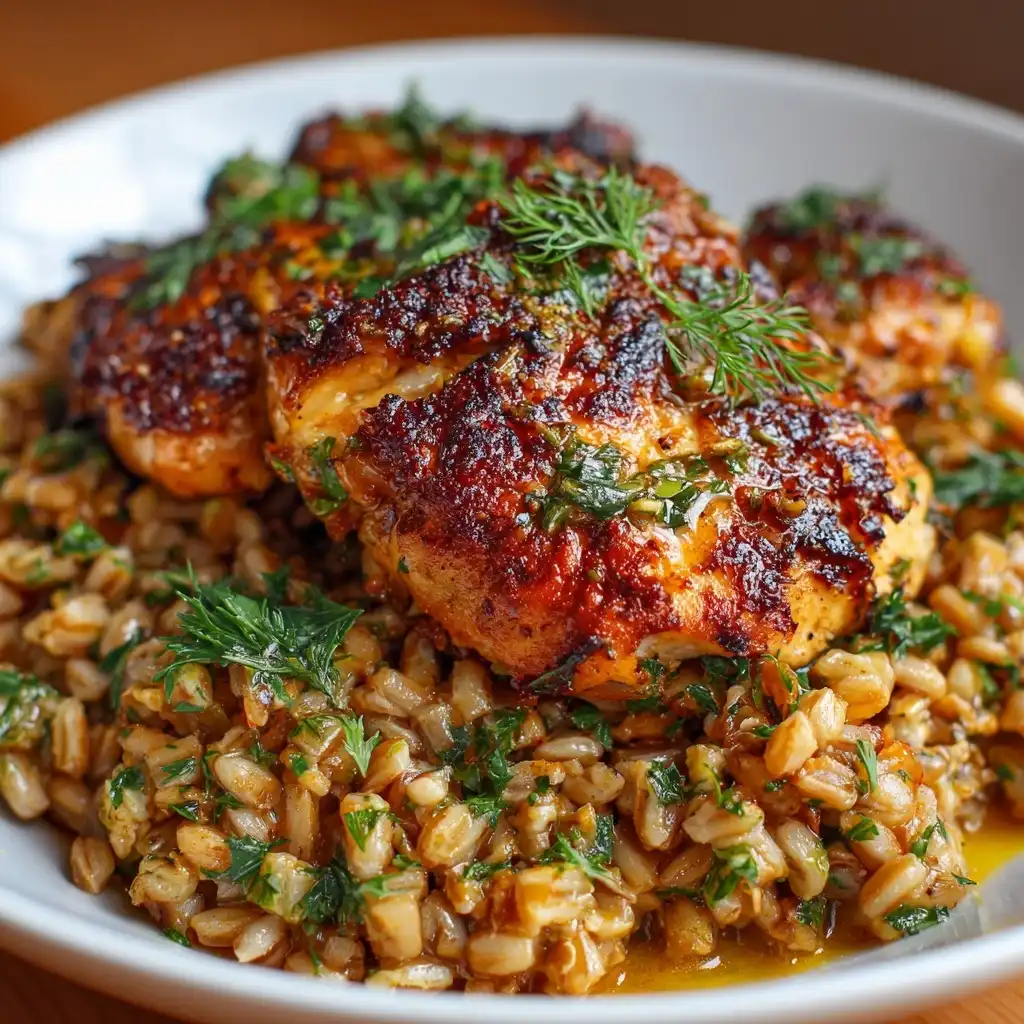
Garlic Butter Chicken and Farro is a harmonious, restaurant-worthy dish that marries tender, herb-infused chicken breast or thigh with nutty, chewy farro—a nutrient-dense ancient grain—and a luxuriously aromatic garlic butter sauce that ties everything together. This recipe transcends the ordinary weeknight dinner by delivering layers of savory depth, textural contrast, and wholesome satisfaction—all while remaining approachable for home cooks of all skill levels. Whether you’re meal prepping for the week, hosting a relaxed Sunday supper, or seeking a balanced plate that satisfies both comfort and nutrition goals, this dish delivers elegance without excess effort. Its versatility shines across seasons: serve it warm with roasted vegetables in fall, chilled over baby arugula with lemon zest in summer, or alongside creamy polenta in winter. More than just a recipe, Garlic Butter Chicken and Farro represents a mindful shift toward whole-food cooking—where bold flavor and functional nutrition coexist effortlessly.
The History
The origins of Garlic Butter Chicken and Farro reflect a beautiful convergence of culinary traditions spanning continents and centuries. Garlic butter as a preparation technique traces back to medieval European kitchens, where butter—often clarified or browned—was used to carry the pungent, medicinal richness of garlic across meats and vegetables. In France, beurre à la bourguignonne and beurre noisette laid foundational techniques later adapted into modern pan sauces. Meanwhile, farro—the collective name for three ancient wheat species (Triticum dicoccum, T. spelta, and T. monococcum)—has been cultivated in the Fertile Crescent for over 10,000 years. It was a staple grain of the Roman Empire, featured in polenta farrea and military rations alike, earning the nickname “the food of emperors and soldiers.” Though largely supplanted by modern wheat varieties during the Industrial Revolution, farro experienced a renaissance in the late 20th century thanks to Italy’s Slow Food movement and renewed global interest in heirloom grains, ancient grains, and low-glycemic, high-fiber alternatives. The fusion of these two time-honored elements—garlic butter chicken and farro—emerged organically in contemporary American and Mediterranean-inspired cuisine, championed by chefs like Dan Barber (Stone Barns), Lidia Bastianich, and food writers such as Melissa Clark and David Tanis, who emphasize ingredient integrity, seasonal adaptation, and cultural storytelling on the plate.
Ingredients Breakdown
Understanding each ingredient—not just its role but its science and sourcing—elevates this dish from good to exceptional:
- Chicken Breast or Thigh: Boneless, skinless chicken breast offers lean protein and a clean canvas, while boneless, skinless chicken thighs provide superior moisture, richer flavor (thanks to higher myoglobin and fat content), and greater forgiveness during cooking—ideal for beginners or when multitasking. For optimal tenderness, look for air-chilled, antibiotic-free poultry; consider heritage breeds like Red Ranger for enhanced umami.
- Farro: True Italian farro (farro perlato or semi-pearled) cooks in ~25–30 minutes and retains ideal chewiness. Whole farro (farro integrale) requires overnight soaking and 45–60 minutes of simmering but delivers maximum fiber (8g per ½ cup cooked) and B vitamins. Avoid “farro-style” imitations (e.g., spelt or barley labeled as farro)—always check the Latin name on packaging. Certified organic farro minimizes glyphosate residue concerns.
- Unsalted Butter: High-fat (82%+), European-style cultured butter (e.g., Kerrygold or Plugrá) contributes complex lactic tang and superior browning capacity due to lower water content. Clarified butter (ghee) can be substituted for dairy-free or high-heat searing needs—though it sacrifices some aromatic compounds found only in milk solids.
- Fresh Garlic: Raw garlic contains allicin—a potent sulfur compound activated upon crushing or chopping. For balanced heat and aroma, mince finely and let sit 10 minutes before cooking to maximize enzymatic conversion. Avoid jarred minced garlic (often preserved with phosphoric acid), which lacks nuance and can taste metallic.
- Shallots: Milder and sweeter than onions, shallots add aromatic sophistication without overwhelming. Their layered structure yields silky texture when sautéed—essential for building the sauce’s foundational depth.
- Dry White Wine: A crisp, high-acid wine like Sauvignon Blanc, Pinot Grigio, or dry Vermouth deglazes the pan, dissolving caramelized fond while contributing bright acidity that cuts through butter’s richness. Alcohol fully evaporates during simmering (leaving only flavor compounds), making it safe for all diners—including children and those avoiding alcohol for health reasons.
- Low-Sodium Chicken Broth: Provides savory depth (umami) via natural glutamates. Opt for collagen-rich, slow-simmered bone broth for added gut-supportive benefits—or use mushroom broth for vegan variation. Always reduce sodium to control overall salt intake.
- Fresh Herbs: Flat-leaf parsley adds chlorophyll-rich freshness and a subtle peppery note; thyme contributes earthy, floral terpenes (e.g., thymol) with antioxidant properties. Add delicate herbs like chives or tarragon at the very end to preserve volatile oils.
- Lemon Zest & Juice: Citrus doesn’t just “brighten”—it chemically balances fat perception via citric acid modulation of taste receptors and enhances salivary amylase activity for improved starch digestion in farro.
- Extra-Virgin Olive Oil: Used for initial searing (high smoke point varieties like arbequina or picual), it contributes polyphenols (oleocanthal) with anti-inflammatory effects. Reserve finishing drizzle for raw application to preserve antioxidants.
- Sea Salt & Freshly Ground Black Pepper: Diamond Crystal kosher salt ensures even seasoning; freshly cracked Tellicherry black pepper releases piperine—bioenhancing absorption of turmeric (if added) and other phytonutrients.
Step-by-Step Recipe
- Prep the Farro: Rinse 1 cup semi-pearled farro under cold water until runoff runs clear. Combine with 3 cups low-sodium chicken broth (or water) and ½ tsp sea salt in a medium saucepan. Bring to a gentle boil, reduce heat to low, cover, and simmer for 25–30 minutes—until tender yet pleasantly chewy (al dente). Drain any excess liquid, fluff with a fork, and set aside. For enhanced flavor, toast farro in a dry skillet over medium heat for 3–4 minutes until fragrant and golden before boiling.
- Brine the Chicken (Optional but Recommended): In a bowl, combine 2 cups cold water, 2 tbsp kosher salt, 1 tbsp brown sugar, 2 smashed garlic cloves, 1 tsp black peppercorns, and 2 sprigs thyme. Submerge 2 (6-oz) chicken breasts or 4 thighs for 30 minutes (or up to 2 hours refrigerated). Remove, pat *extremely* dry with paper towels—this is critical for achieving golden sear and preventing steam.
- Sear the Chicken: Heat 1 tbsp extra-virgin olive oil in a heavy-bottomed stainless steel or cast-iron skillet over medium-high heat until shimmering (~375°F). Season chicken generously with salt and pepper. Place in pan without crowding; cook undisturbed 5–6 minutes until deeply golden and easily releases. Flip and cook 4–5 more minutes (for breast) or 6–7 minutes (for thighs) until internal temperature reaches 160°F (breast) or 175°F (thigh). Transfer to a plate, tent loosely with foil, and rest 5–8 minutes—allowing juices to redistribute.
- Build the Sauce: Reduce heat to medium. In the same skillet, add 1 tbsp butter. Once melted, add 2 finely minced shallots and 4–5 thinly sliced garlic cloves. Sauté 2–3 minutes until soft and fragrant—do not brown garlic (it turns bitter). Stir in ¼ cup dry white wine, scraping vigorously with a wooden spoon to lift all browned bits (fond). Simmer 2 minutes until alcohol evaporates and liquid reduces by half.
- Enrich & Emulsify: Whisk in ¾ cup warmed low-sodium chicken broth. Simmer gently 3–4 minutes until slightly thickened. Remove from heat. Whisk in remaining 3 tbsp cold, cubed unsalted butter, one piece at a time, allowing each to melt fully before adding the next. This creates a velvety, stable emulsion—do not return to heat after adding butter, or it may break. Stir in 1 tsp lemon juice, 1 tsp lemon zest, and ¼ cup chopped fresh parsley.
- Combine & Finish: Return rested chicken to skillet, spooning sauce over top. Gently fold in cooked farro, ensuring every grain glistens with garlic butter. Warm through over low heat 1–2 minutes—do not boil. Adjust seasoning with flaky sea salt and cracked black pepper. Garnish with additional parsley, lemon zest, and optional microgreens or toasted pine nuts.
Tips
- Dry Chicken Is Non-Negotiable: Moisture is the enemy of Maillard reaction. Pat chicken *twice*: once after rinsing/brining, again right before seasoning. Use lint-free bamboo or linen cloths for best results.
- Control Butter Temperature: For emulsification, butter must be cold but pliable—not frozen nor softened. If sauce breaks, whisk in 1 tsp cold water or broth while slowly drizzling in broken sauce—it will re-emulsify.
- Farro Texture Matters: Overcooked farro turns mushy and starchy, diluting sauce viscosity. Test at 22 minutes—grains should yield to pressure but retain a slight bite. Shock in ice water if overcooked to halt cooking.
- Sauce Consistency Hack: If too thin, simmer uncovered 1–2 minutes longer. If too thick, whisk in warm broth 1 tsp at a time. Never use flour or cornstarch—this dish relies on natural reduction and butter emulsion for purity of flavor.
- Resting Is Science, Not Suggestion: Resting allows muscle fibers to relax and reabsorb juices. Cutting too soon releases up to 40% of flavorful, moisture-rich proteins—resulting in dry chicken.
- Batch Cooking Efficiency: Cook farro in quadruple batches and freeze in 1-cup portions (with 1 tsp olive oil to prevent clumping). Thaw overnight or microwave 60 seconds. Chicken can be brined and portioned ahead, then cooked fresh.
- Pan Selection Impact: Stainless steel provides superior fond development vs. nonstick. Cast iron retains heat beautifully but requires careful temperature management to avoid garlic burning.
- Acid Timing: Lemon juice added *after* removing from heat preserves volatile citrus esters (like limonene) responsible for brightness. Adding it earlier dulls the aroma.
- Herb Preservation: Chop parsley stems finely and add with garlic—they’re packed with apigenin (a calming flavonoid) and deepen green color.
- Leftover Magic: Cold leftovers make an exceptional grain bowl base—add crumbled feta, roasted cherry tomatoes, cucumber ribbons, and a drizzle of lemon-tahini dressing.
Variations and Customizations
This recipe is a master template—infinitely adaptable to dietary needs, pantry constraints, seasonal produce, and global flavor profiles:
- Dairy-Free/Vegan: Replace butter with high-oleic sunflower oil + 1 tbsp nutritional yeast (for umami) + ½ tsp white miso paste (for depth). Use tofu “chicken” cutlets (pressed extra-firm tofu marinated in tamari, garlic, and smoked paprika) or seitan strips. Substitute farro with gluten-free millet or sorghum.
- Gluten-Free: Swap farro for certified GF pearl barley, brown rice, or tri-color quinoa. Ensure broth and wine are GF-certified (some wines use gluten-based fining agents).
- Low-Carb/Keto: Omit farro entirely. Serve chicken and sauce over cauliflower “farro” (pulse raw cauliflower florets in food processor until rice-like, then sauté 5–6 minutes with garlic and olive oil). Boost healthy fats with avocado slices and toasted walnuts.
- Mediterranean Twist: Add ¼ cup kalamata olives, 2 tbsp capers, and 1 tsp dried oregano to sauce. Finish with crumbled feta and roasted red peppers.
- Italian Rustica: Stir in ¼ cup sun-dried tomatoes (oil-packed, chopped), 2 tbsp chopped basil, and 2 tbsp grated Parmigiano-Reggiano. Top with toasted breadcrumbs sautéed in garlic-infused olive oil.
- Asian-Inspired: Replace white wine with dry sherry; swap thyme for 1 tsp grated ginger and 1 minced scallion white. Add 1 tbsp tamari and 1 tsp toasted sesame oil to sauce. Garnish with cilantro, lime wedges, and crushed peanuts.
- Spicy Harissa Version: Rub chicken with 1 tbsp harissa paste before searing. Swirl 1 tsp harissa into finished sauce. Top with pickled red onions and mint.
- Herbaceous Spring: Fold in blanched asparagus tips, English peas, and fresh tarragon. Use chive blossoms and edible pansies for garnish.
- Winter Root Vegetable: Roast diced parsnips, carrots, and celeriac at 425°F for 25 minutes with olive oil and rosemary. Fold into farro-chicken mixture at the end.
- Kid-Friendly: Skip garlic (or use roasted garlic purée for mellow sweetness), add mild shredded mozzarella to sauce, and serve over fun shapes—try farro cooked with a splash of beet juice for pink “dragon” farro.
Health Considerations and Nutritional Value
A single serving (1 chicken breast or 2 thighs + ¾ cup cooked farro + full sauce) delivers a synergistic, clinically supported nutritional profile:
- Complete Protein Powerhouse: Chicken provides all 9 essential amino acids—especially leucine (3g per 6 oz), critical for muscle protein synthesis. Farro contributes complementary plant-based protein (6g per ½ cup) plus lysine, often limiting in grains—making this combo a near-perfect protein matrix.
- Fiber & Gut Health: Semi-pearled farro offers 5–6g fiber per serving—mostly insoluble (for regularity) and resistant starch (a prebiotic fermented by Bifidobacteria into butyrate, the primary fuel for colonocytes). Paired with garlic’s fructooligosaccharides (FOS), this meal actively nourishes a diverse microbiome.
- Cardiovascular Support: Garlic contains allicin and ajoene—shown in meta-analyses (e.g., Journal of Nutrition, 2020) to modestly lower systolic BP and LDL oxidation. Olive oil’s oleocanthal inhibits COX enzymes similarly to ibuprofen—reducing vascular inflammation. Butter’s CLA (conjugated linoleic acid) may improve lipid metabolism when consumed in moderation.
- Antioxidant Density: Lemon zest provides 3x more polyphenols (hesperidin, diosmin) than juice alone; parsley delivers apigenin and luteolin—neuroprotective flavonoids linked to reduced cognitive decline risk. Shallots contain quercetin glycosides with superior bioavailability vs. onions.
- Glycemic Control: Farro’s low glycemic index (GI ≈ 40) and high amylose content slow glucose absorption. The fat/protein matrix further blunts insulin response—ideal for prediabetes or metabolic syndrome management.
- Nutrient Synergy: Vitamin C in lemon enhances non-heme iron absorption from farro (1.5mg per ½ cup); fat-soluble vitamin K in parsley aids calcium utilization for bone health; selenium in chicken supports thyroid hormone activation.
- Cautions & Modifications: Those with GERD may reduce garlic quantity or use roasted garlic; individuals on blood thinners should consult providers before consuming therapeutic doses of garlic (>1g raw daily). Low-sodium versions easily comply with ADA or AHA guidelines (<1,500 mg/day). For histamine sensitivity, substitute lemon with apple cider vinegar and omit aged cheeses if added.
Per Serving (approx. 520 kcal): 42g protein • 48g complex carbs • 22g total fat (12g sat) • 8g fiber • 420mg sodium (adjustable) • 25% DV iron • 45% DV B6 • 120% DV vitamin K • 90mg vitamin C.
Ingredients
- 1 cup semi-pearled farro (rinsed)
- 3 cups low-sodium chicken broth (or vegetable broth for vegetarian option)
- ½ teaspoon fine sea salt (for farro)
- 2 (6-ounce) boneless, skinless chicken breasts OR 4 boneless, skinless chicken thighs
- 2 tablespoons Diamond Crystal kosher salt (divided—1 tbsp for brine, 1 tsp for chicken)
- 1 tablespoon light brown sugar (for brine)
- 2 cloves garlic, smashed (for brine)
- 2 sprigs fresh thyme (for brine)
- 2 tablespoons extra-virgin olive oil (plus more for finishing)
- 4 tablespoons unsalted butter (divided—1 tbsp for sautéing, 3 tbsp for emulsifying)
- 2 large shallots, finely minced
- 4–5 cloves garlic, very finely minced
- ¼ cup dry white wine (Sauvignon Blanc or Pinot Grigio) or dry vermouth
- ¾ cup warmed low-sodium chicken broth
- Zest and juice of 1 medium lemon (about 1 tsp zest, 1 tbsp juice)
- ¼ cup fresh flat-leaf parsley, finely chopped (stems included)
- Freshly ground black pepper
- Flaky sea salt (Maldon or fleur de sel) for finishing
- Optional garnishes: lemon wedges, microgreens, toasted pine nuts, grated Parmigiano-Reggiano
Directions
- In a medium saucepan, combine rinsed farro, 3 cups broth, and ½ tsp sea salt. Bring to a boil over high heat. Reduce heat to low, cover, and simmer gently for 25–30 minutes, until farro is tender but still chewy. Drain well in a fine-mesh strainer, rinse briefly with warm water to remove excess starch (optional for lighter texture), and fluff with a fork. Set aside, covered, to keep warm.
- Prepare brine: In a non-reactive bowl, dissolve 1 tbsp kosher salt and 1 tbsp brown sugar in 2 cups cold water. Add smashed garlic cloves and thyme sprigs. Submerge chicken completely. Refrigerate 30 minutes (breasts) or up to 2 hours (thighs).
- Remove chicken from brine; discard brine. Pat chicken *extremely* dry with paper towels. Season both sides with remaining 1 tsp kosher salt and several grinds of black pepper.
- Heat 1 tbsp olive oil in a 12-inch stainless steel or cast-iron skillet over medium-high heat until shimmering. Carefully place chicken in pan without crowding. Cook undisturbed 5–6 minutes until deeply golden and releases easily. Flip and cook 4–7 more minutes until internal temperature reaches 160°F (breast) or 175°F (thigh). Transfer to a plate, tent with foil, and rest 5–8 minutes.
- Reduce heat to medium. Add 1 tbsp butter to same skillet. Once melted, add minced shallots and garlic. Sauté 2–3 minutes until fragrant and translucent—but do not let garlic brown.
- Pour in white wine, scraping bottom vigorously with a wooden spoon to release all browned bits. Simmer 2 minutes until reduced by half.
- Whisk in warmed broth. Simmer gently 3–4 minutes until slightly thickened and glossy.
- Remove skillet from heat. Whisk in remaining 3 tbsp cold butter, one cube at a time, until fully melted and sauce is emulsified and velvety. Stir in lemon zest, lemon juice, and chopped parsley.
- Return rested chicken to skillet, spooning sauce over top. Gently fold in warm farro until evenly coated. Warm through over low heat 1–2 minutes—do not boil.
- Season with additional flaky salt and black pepper. Serve immediately, garnished with extra parsley, lemon zest, and optional toppings.
FAQ
- Can I use instant pot or pressure cooker for farro?
- Yes! For semi-pearled farro: Rinse 1 cup farro, add to Instant Pot with 2 cups broth and ½ tsp salt. Seal lid, set to Manual/High Pressure for 12 minutes, then natural release 10 minutes. Quick release remaining pressure. Fluff and drain excess liquid if needed.
- Why does my garlic butter sauce break?
- Sauces break when emulsion fails—usually from overheating after adding butter, adding butter too quickly, or using warm/hot butter. Fix: Whisk 1 tsp cold water or broth into broken sauce off heat, then slowly drizzle broken sauce into it while whisking vigorously.
- Can I make this ahead and reheat?
- Absolutely. Cook components separately: Farro keeps refrigerated 5 days or frozen 3 months. Chicken stores 3–4 days refrigerated. Sauce is best made fresh, but you can prep garlic-shallot base ahead. Reheat farro with a splash of broth; warm chicken gently; finish sauce fresh and combine.
- What’s the difference between pearled, semi-pearled, and whole farro?
- Pearled has bran fully removed—cooks fastest (15–20 min) but lowest fiber. Semi-pearled retains partial bran—ideal balance of texture, nutrition, and cook time (25–30 min). Whole farro has intact bran and germ—requires soaking and 45–60 min cooking, offering maximum fiber and nutrients.
- Is farro gluten-free?
- No—farro is an ancient wheat and contains gluten. It is *not* safe for celiac disease or gluten intolerance. Substitute with gluten-free grains like quinoa, buckwheat, or certified GF oats.
- Can I use frozen chicken?
- Yes, but thaw completely in refrigerator first—never cook from frozen in this method, as uneven heating causes dryness and poor sear. Pat *extra* dry if thawed.
- How do I store leftovers?
- Store components separately in airtight containers: Farro (refrigerate up to 5 days), chicken (3–4 days), sauce (2 days—butter may separate, but re-emulsifies with gentle whisking). Freeze cooked farro and chicken for up to 3 months.
- What wine should I use if I don’t drink alcohol?
- Use high-quality non-alcoholic white wine (e.g., Fre or Ariel) or substitute with equal parts broth + 1 tsp apple cider vinegar + ½ tsp sugar to mimic acidity and fruitiness.
- My farro turned out mushy—what went wrong?
- Overcooking is the culprit. Start checking at 22 minutes. Rinsing farro thoroughly helps prevent excess starch buildup. Also, ensure you’re using true farro—not barley or spelt mislabeled as farro.
- Can I air-fry the chicken instead of pan-searing?
- Yes! Pat chicken dry, rub with 1 tsp olive oil, season well. Air-fry at 375°F for 12–15 minutes (flipping halfway) until internal temp reaches target. Finish with sauce as directed—air-frying yields crisp edges but less fond, so enhance sauce with ½ tsp soy sauce or mushroom powder for umami depth.
Summary
Garlic Butter Chicken and Farro is a masterclass in balanced, soul-nourishing cooking—uniting tender, golden chicken, nutty chewy farro, and a luxuriously aromatic, emulsified garlic-butter sauce enriched with lemon, herbs, and savory depth.
It’s a nutritionally intelligent, globally inspired, endlessly customizable dish that honors ancient grains and time-tested techniques while meeting modern needs for flavor, flexibility, and functional wellness—truly weeknight elegance, elevated.