Introduction
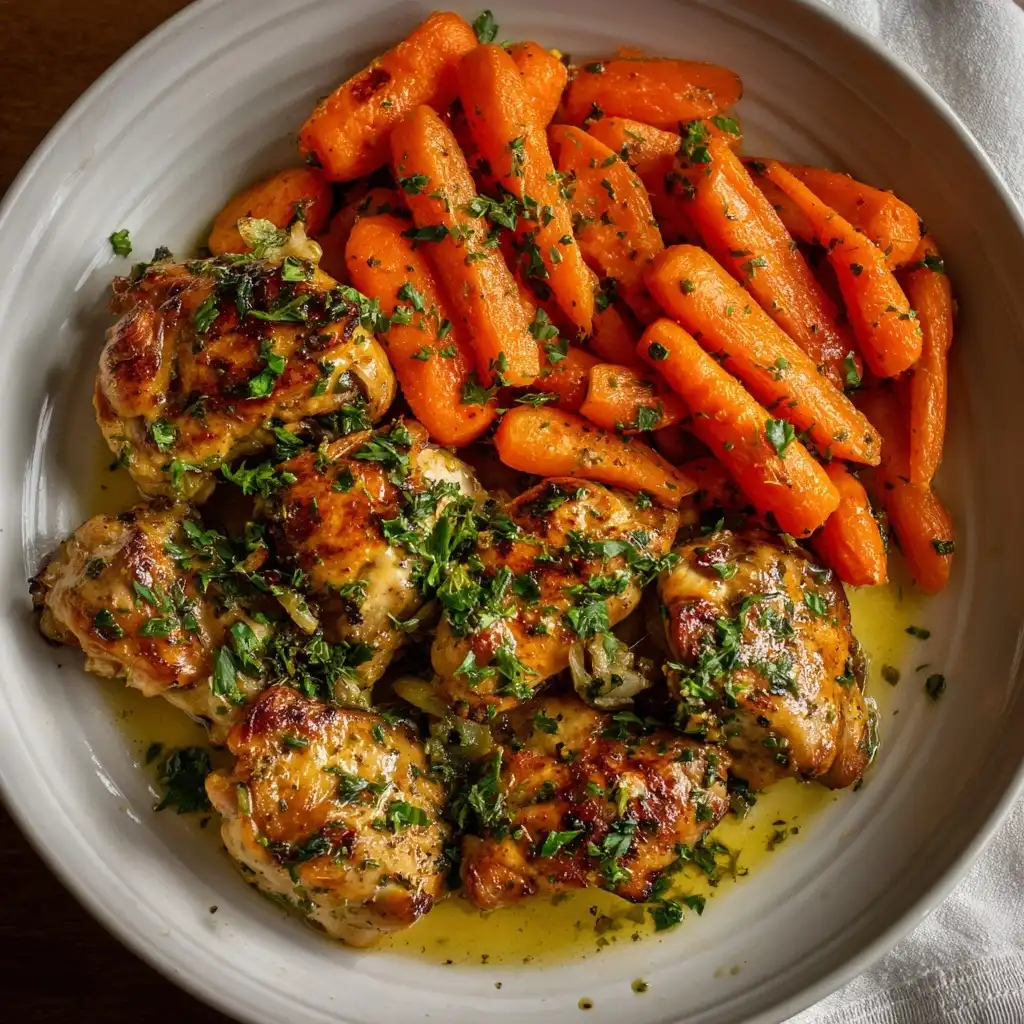
Garlic Butter Chicken and Carrots is a timeless, soul-satisfying one-pan dinner that marries tender, golden-brown chicken breasts with sweet, caramelized carrots—all luxuriously bathed in a rich, aromatic garlic butter sauce. This dish effortlessly balances simplicity and elegance: it requires minimal prep, uses accessible pantry staples, and delivers restaurant-quality flavor without the fuss. Whether you’re cooking for a busy weeknight family meal, preparing a cozy date-night dinner, or seeking a comforting yet nutritionally balanced plate, Garlic Butter Chicken and Carrots rises to the occasion—offering warmth, depth, and harmony in every bite. Its versatility makes it equally at home on a rustic farmhouse table or a modern minimalist kitchen counter, and its forgiving nature welcomes both novice cooks and seasoned chefs alike.
The History
While there’s no single documented “origin story” for Garlic Butter Chicken and Carrots, the dish emerges organically from centuries of culinary cross-pollination rooted in European, Mediterranean, and American home-cooking traditions. Garlic has been revered for over 7,000 years—from ancient Egypt (where it was fed to laborers building the pyramids for stamina) to medieval Europe (where it was used medicinally and culinarily). Butter, especially clarified or browned forms like beurre noisette, has long been a cornerstone of French technique, lending richness and nutty complexity. Carrots, domesticated in Persia around the 10th century and originally purple or yellow, became orange in the Netherlands in the 17th century as a tribute to the House of Orange—and soon after, a beloved roasted and sautéed vegetable across Northern Europe. The marriage of chicken, carrots, and garlic butter gained widespread popularity in mid-20th-century American cookbooks and television cooking shows, where home economists emphasized economical, one-dish meals that maximized flavor with minimal ingredients. Today, it thrives as a foundational “gateway recipe” in food blogs, meal-prep communities, and TikTok kitchens—evolving constantly while staying grounded in its rustic, deeply flavorful essence.
Ingredients Breakdown
Understanding each ingredient—not just as a component but as a contributor to texture, aroma, balance, and function—is key to mastering this dish:
- Chicken Breasts (boneless, skinless): Preferred for their lean protein, mild flavor, and ability to absorb seasonings. Opt for uniform thickness (about ¾-inch) to ensure even cooking; pounding helps prevent dryness and promotes faster, gentler searing.
- Unsalted Butter: The soul of the sauce. Unsalted allows precise sodium control. High-fat European-style butter (82–86% fat) yields superior browning, richer mouthfeel, and more stable emulsification. Cold butter added at the end (off-heat) enhances silkiness and gloss.
- Fresh Garlic: Non-negotiable. Pre-minced or jarred garlic lacks enzymatic brightness and can turn bitter when heated. Fresh cloves—finely minced or pressed—release allicin, the compound responsible for both pungent aroma and health benefits. Sauté gently to mellow sharpness without burning.
- Carrots: Choose medium-thick, firm, bright-orange varieties (e.g., Imperator or Nantes) for optimal sweetness and texture. Peeling is recommended for consistency and food safety, though scrubbing thoroughly is acceptable if organic and unwaxed. Cut into uniform 3-inch batons or thick coins (¼–½ inch) to ensure even roasting and glazing.
- Dry White Wine (optional but highly recommended): Adds acidity, depth, and complexity. Sauvignon Blanc, Pinot Grigio, or unoaked Chardonnay work best—avoid oaky or sweet wines. The alcohol cooks off, leaving only bright fruit and mineral notes that cut through the butter’s richness.
- Chicken Broth (low-sodium): Provides savory umami backbone and liquid volume for sauce reduction. Low-sodium gives control over final salt content—especially important when using salted butter or pre-brined chicken.
- Fresh Herbs: Parsley adds a clean, grassy finish; thyme contributes earthy, floral notes; rosemary brings pine-like intensity. Use whole sprigs during cooking (for infusion) and fresh leaves for garnish (for vibrancy).
- Lemon Juice (freshly squeezed): A critical finishing touch. Brightens the entire dish, balances fat, and lifts the garlic and herb notes. Never substitute bottled—it lacks volatile citrus oils essential for aromatic lift.
- Seasonings: Kosher salt enhances natural flavors and aids moisture retention; freshly ground black pepper adds gentle heat and aromatic complexity; smoked paprika (optional) lends subtle warmth and visual appeal without overpowering.
Step-by-Step Recipe
- Prep & Pat Dry: Place chicken breasts on a cutting board. If uneven, cover with parchment and gently pound to ¾-inch thickness using a meat mallet or heavy skillet. Pat *extremely* dry with paper towels—moisture is the enemy of browning.
- Season Generously: Lightly coat both sides with 1 tsp olive oil, then season evenly with 1 tsp kosher salt, ½ tsp black pepper, and optional ¼ tsp smoked paprika. Let rest 10 minutes at room temperature.
- Preheat Pan & Sear Chicken: Heat a large, heavy-bottomed stainless steel or cast-iron skillet over medium-high heat until shimmering (about 2 minutes). Add 1 tbsp neutral oil (avocado or grapeseed). Once oil shimmers and slightly ripples, place chicken smooth-side down. Press gently with a spatula for 3 seconds to ensure full contact. Cook undisturbed for 5–6 minutes until deeply golden and easily releases. Flip and cook 4–5 more minutes until internal temperature reaches 155°F (68°C) at the thickest part. Transfer to a clean plate, tent loosely with foil, and rest 5–10 minutes (temp will rise to safe 165°F/74°C).
- Sauté Aromatics: Reduce heat to medium. In the same skillet (do not wipe—those browned bits are flavor gold), add 2 tbsp unsalted butter. Once melted and foaming subsides, add 4–5 finely minced garlic cloves and 1 tsp fresh thyme leaves (or 2 whole sprigs). Sauté 60–90 seconds until fragrant but *not browned*—garlic burns quickly and turns acrid.
- Deglaze & Simmer Sauce: Pour in ½ cup dry white wine, scraping vigorously with a wooden spoon to lift all browned fond. Simmer 2–3 minutes until reduced by half. Add ¾ cup low-sodium chicken broth and return thyme sprigs (if using). Simmer gently 4–5 minutes until slightly thickened and glossy.
- Roast & Glaze Carrots: While sauce simmers, toss 1 lb peeled, cut carrots with 1 tbsp olive oil, ½ tsp salt, and ¼ tsp pepper on a parchment-lined baking sheet. Roast at 425°F (220°C) for 20–25 minutes until fork-tender and caramelized at edges. Alternatively, for stovetop-only cooking: add carrots to the skillet after deglazing, cover, and simmer gently in sauce for 12–15 minutes until tender-crisp, stirring occasionally.
- Finish Sauce & Combine: Remove skillet from heat. Whisk in remaining 2 tbsp cold butter, 1 tbsp lemon juice, and 2 tbsp finely chopped fresh parsley. Taste and adjust: more salt? A pinch of sugar if carrots taste too sharp? A dash of lemon if too rich?
- Plate & Serve: Slice rested chicken diagonally. Arrange carrots alongside or underneath. Spoon generous amounts of warm garlic butter sauce over everything. Garnish with extra parsley, lemon zest, and a flaky sea salt sprinkle (like Maldon) for textural contrast.
Tips
- Rest the Chicken: Skipping the 5–10 minute rest leads to dry, stringy chicken. Resting allows juices to redistribute—cutting too soon releases them onto the plate instead of into the meat.
- Brown, Don’t Steam: Crowding the pan lowers temperature and causes steaming. Cook chicken in batches if needed—even if it takes 2 extra minutes.
- Control Garlic Heat: Garlic burns at ~300°F (150°C). Keep heat at medium or lower once butter is added—and never leave unattended during the 90-second sauté window.
- Use a Thermometer: Visual cues (firmness, color) are unreliable. A digital instant-read thermometer is the only foolproof way to guarantee safe, perfectly cooked chicken.
- Emulsify Like a Pro: For a velvety, cohesive sauce, whisk cold butter in gradually—1 tbsp at a time—off direct heat. The residual warmth melts butter slowly, allowing fat and water to bind smoothly.
- Roast Carrots Separately for Best Texture: Oven-roasting yields deeper caramelization, firmer bite, and less water release than stovetop simmering—keeping your sauce from thinning out.
- Save the Fond: That dark, crusty layer left after searing chicken? It’s pure umami. Deglazing with wine or broth transforms it into the foundation of your sauce—never wash it away!
- Make Ahead Smart: Marinate chicken up to 24 hours in olive oil, lemon zest, garlic, and herbs (no salt until just before cooking). Roast carrots up to 1 day ahead and reheat gently in sauce.
- Rescue a Broken Sauce: If sauce separates or looks greasy, remove from heat, let cool 1 minute, then whisk vigorously while adding 1 tsp cold water or lemon juice—it often re-emulsifies instantly.
- Layer Flavors Early: Add a bay leaf or smashed shallot to the sauce while reducing—it infuses background depth and gets removed before serving.
Variations and Customizations
This recipe is a canvas—adaptable to dietary needs, seasonal produce, global influences, and pantry constraints:
- Dietary Adaptations:
- Gluten-Free: Naturally compliant—just verify broth and wine labels. Thicken sauce with ½ tsp xanthan gum instead of flour if desired.
- Dairy-Free: Substitute high-quality vegan butter (like Miyoko’s or Country Crock Plant Butter) and add 1 tsp nutritional yeast for umami depth.
- Keto/Low-Carb: Replace carrots with parsnips, radishes, or zucchini ribbons—roasted until tender. Increase healthy fats with extra butter or a drizzle of infused olive oil.
- Paleo/Whole30: Use ghee instead of butter, omit wine (substitute additional broth + 1 tsp apple cider vinegar), and ensure all seasonings are compliant.
- Protein Swaps: Try boneless chicken thighs (more forgiving, richer flavor), turkey cutlets, pork tenderloin medallions, or pan-seared cod fillets (reduce cooking time to 2–3 min per side).
- Vegetable Rotations: Swap carrots for roasted baby potatoes, Brussels sprouts, asparagus, fennel wedges, or rainbow chard stems—each offering unique sweetness, bitterness, or crunch.
- Global Twists:
- Mediterranean: Add kalamata olives, capers, sun-dried tomatoes, and oregano.
- Asian-Inspired: Replace wine with dry sherry; add 1 tsp grated ginger, 1 tbsp tamari, 1 tsp sesame oil, and top with scallions and toasted sesame seeds.
- Herbes de Provence: Swap thyme for 1 tsp dried herbes de Provence and stir in ¼ cup crumbled feta at the end.
- Spicy Harissa: Whisk 1 tbsp harissa paste into the finished sauce—or rub chicken with harissa before searing.
- Meal Prep & Batch Friendly: Double the sauce and store separately. Cook chicken fresh each time—but roast carrots in bulk and portion for 3–4 meals. Reheat gently in skillet with splash of broth to refresh moisture.
- Freezer-Friendly Components: Freeze cooled, unbaked chicken (brined or seasoned) for up to 3 months. Roasted carrots freeze well for 2 months—thaw overnight and reheat in sauce.
Health Considerations and Nutritional Value
A single serving (1 breast + 1 cup roasted carrots + 2 tbsp sauce) provides approximately:
- Calories: ~420–480 kcal (varies by butter/oil amount)
- Protein: ~38g (excellent complete source from chicken; supports muscle maintenance and satiety)
- Fat: ~24g (mostly unsaturated from olive oil and butter; includes heart-healthy oleic acid and fat-soluble vitamin carriers)
- Carbohydrates: ~12g (primarily from carrots’ natural sugars and fiber—low glycemic impact when paired with protein/fat)
- Fiber: ~3.5g (supports gut health, cholesterol regulation, and digestive regularity)
- Vitamin A (as beta-carotene): >400% DV (critical for vision, immune function, skin health—enhanced by dietary fat for absorption)
- Vitamin C: ~25% DV (from carrots and lemon—boosts iron absorption and antioxidant defense)
- Selenium & Zinc: Significant amounts from chicken—support thyroid health, immunity, and wound healing
- Allicin (from raw garlic): Potent antimicrobial, anti-inflammatory, and cardiovascular-supportive compound—maximized when garlic is crushed and allowed to sit 10 minutes before heating.
Considerations: Sodium content can be moderated by using low-sodium broth and unsalted butter—and avoiding pre-brined chicken. Butter intake should align with overall dietary patterns; swapping half the butter for olive oil reduces saturated fat while preserving richness. For those managing blood sugar, pairing with a small side of quinoa or lentils adds complex carbs and further stabilizes glucose response. Overall, this dish exemplifies nutrient density—packing vitamins, minerals, antioxidants, and high-quality protein into a satisfying, minimally processed format.
Ingredients
- 2 (6–8 oz) boneless, skinless chicken breasts, pounded to ¾-inch thickness
- 2 tbsp extra-virgin olive oil, divided
- 1½ tsp kosher salt, divided
- 1 tsp freshly ground black pepper, divided
- ¼ tsp smoked paprika (optional)
- 4 tbsp unsalted butter, divided (2 tbsp for aromatics, 2 tbsp cold for finishing)
- 4–5 garlic cloves, finely minced
- 1 tsp fresh thyme leaves (or 2 whole sprigs)
- ½ cup dry white wine (e.g., Sauvignon Blanc)
- ¾ cup low-sodium chicken broth
- 1 lb medium carrots, peeled and cut into 3-inch batons or ½-inch coins
- 1 tbsp fresh lemon juice (plus zest for garnish)
- 2 tbsp fresh flat-leaf parsley, finely chopped
- Flaky sea salt (e.g., Maldon), for finishing
Directions
- Pat chicken breasts extremely dry with paper towels. Rub with 1 tbsp olive oil, then season evenly with 1 tsp salt, ½ tsp pepper, and optional smoked paprika. Let sit at room temperature 10 minutes.
- Heat a large heavy skillet (stainless or cast iron) over medium-high heat until hot (about 2 minutes). Add remaining 1 tbsp olive oil. When oil shimmers, add chicken smooth-side down. Press gently. Cook undisturbed 5–6 minutes until deeply golden and releases easily. Flip; cook 4–5 minutes more until internal temp reaches 155°F. Transfer to plate, tent with foil, rest 5–10 minutes.
- Reduce heat to medium. Add 2 tbsp butter to same skillet. Once melted and foaming subsides, add garlic and thyme. Sauté 60–90 seconds until fragrant—do not brown.
- Pour in wine, scraping up all browned bits. Simmer 2–3 minutes until reduced by half. Add broth and thyme sprigs (if using). Simmer gently 4–5 minutes until slightly thickened.
- Meanwhile, toss carrots with ½ tsp salt and ¼ tsp pepper. Roast on parchment-lined sheet at 425°F for 20–25 minutes until tender-crisp and caramelized.
- Remove skillet from heat. Whisk in remaining 2 tbsp cold butter, lemon juice, and parsley. Taste and adjust seasoning.
- Slice rested chicken. Arrange carrots and chicken on plates or shallow bowls. Spoon warm sauce generously over top. Garnish with lemon zest, extra parsley, and flaky salt.
FAQ
- Can I use frozen chicken?
- Yes—but thaw completely in the refrigerator overnight. Never cook frozen chicken in this method; uneven thawing risks undercooking or overcooking. If short on time, use the cold-water thaw method (sealed bag submerged in cold water, changed every 30 minutes) for ~1–1.5 hours.
- Why does my garlic butter sauce separate or look oily?
- Most commonly due to overheating the sauce after adding cold butter, or adding butter too quickly. Always remove from heat first, let cool 30 seconds, then whisk in cold butter 1 tbsp at a time. If separation occurs, whisk in 1 tsp cold water or lemon juice off-heat—it often rebounds instantly.
- Can I make this dairy-free?
- Absolutely. Use high-fat, cultured vegan butter (check for no artificial additives) and add ½ tsp nutritional yeast to the sauce for savory depth. Ensure broth is vegan-certified.
- What’s the best wine to use if I don’t cook with alcohol?
- Substitute with ½ cup additional low-sodium broth + 1 tsp apple cider vinegar or white wine vinegar. The acidity mimics wine’s balancing role—just add vinegar in the last 30 seconds of simmering to preserve brightness.
- How do I keep carrots from getting mushy?
- Roasting separately at high heat ensures caramelization without sogginess. If cooking on-stovetop, reduce liquid, cover only halfway through, and stir gently—never boil vigorously. Check for tenderness with a fork at 10-minute intervals.
- Can I use dried herbs instead of fresh?
- You can—but adjust ratios: 1 tsp dried thyme = 1 tbsp fresh. Add dried herbs earlier (with garlic) to rehydrate; reserve fresh parsley for finishing to preserve its vibrant flavor and color.
- Is it safe to reuse the pan drippings for another dish?
- Yes! Those fond-rich drippings are flavor gold. After removing chicken and carrots, deglaze with broth and freeze in ice cube trays for future soups, gravies, or risottos. Label and use within 3 months.
- How long does leftovers last—and how do I reheat?
- Refrigerate in airtight container up to 4 days. Reheat gently in a skillet over low heat with a splash of broth or water to revive moisture—never microwave uncovered (dries out chicken). Stir occasionally until warmed through (165°F).
- Can I air-fry the chicken and carrots together?
- Yes—with adjustments: Toss carrots in oil and roast at 375°F for 12 minutes. Remove, add seasoned chicken, spray lightly with oil, and air-fry at 375°F for 12–14 minutes, flipping halfway. Make sauce separately and combine after cooking.
- Why is my chicken rubbery?
- Overcooking is the #1 cause. Pull at 155°F—not 165°F—and rest. Also ensure even thickness before cooking; uneven pieces cook at different rates. Brining (30 min in 1 qt water + 3 tbsp salt) also improves tenderness and juiciness.
Summary
Garlic Butter Chicken and Carrots is a masterclass in elegant simplicity—transforming humble, everyday ingredients into a harmonious, deeply flavorful, and nutritionally robust meal through thoughtful technique, layered seasoning, and respect for ingredient integrity. From its historic roots in European hearth cooking to its modern reinventions across global kitchens, it remains a beloved staple because it delivers comfort, sophistication, and nourishment—all in one stunning, easy-to-execute dish.