Introduction
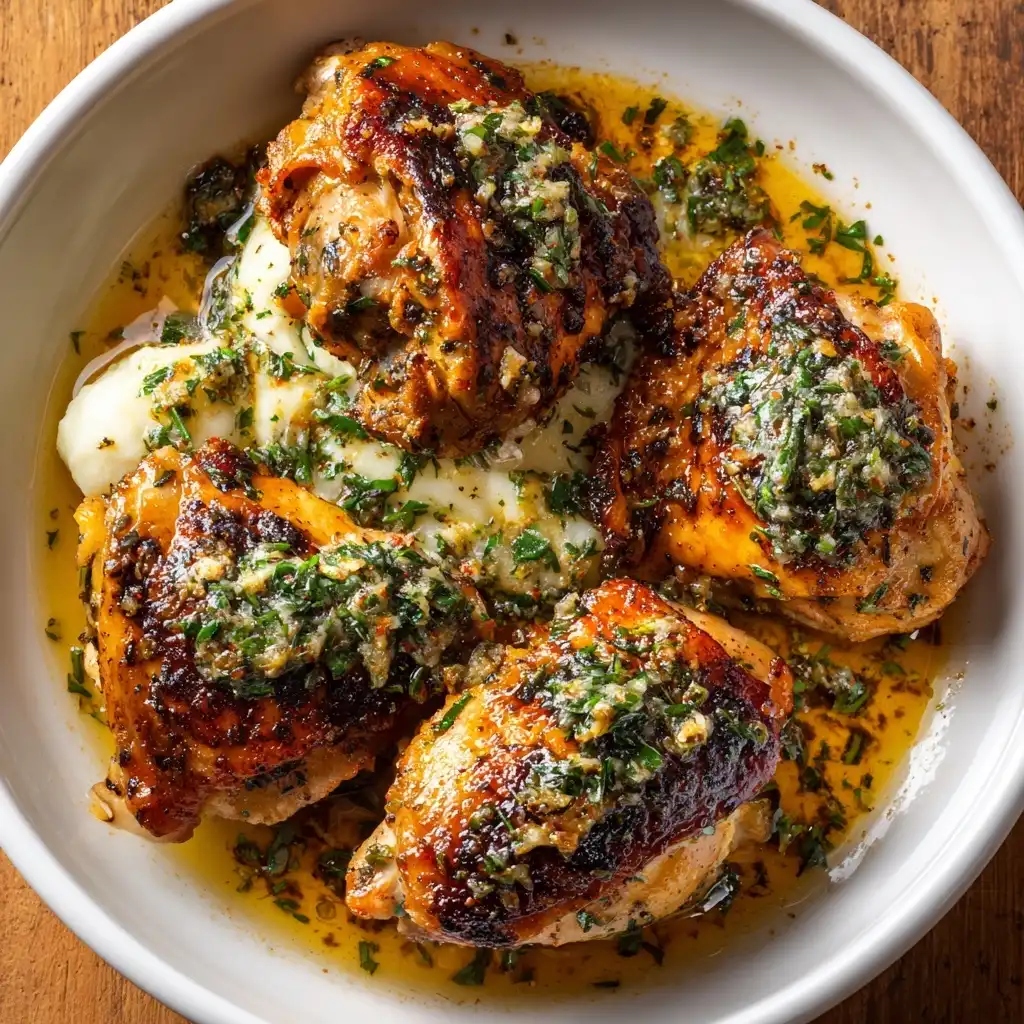
Garlic Butter Chicken with Garlic Herb Butter is a restaurant-worthy, soul-satisfying dish that brings bold, aromatic flavors to your everyday table. Crispy-edged, golden-brown chicken breasts—tender and juicy within—are lavishly coated in a rich, velvety sauce made from slow-simmered garlic, premium unsalted butter, fresh herbs, and a touch of lemon brightness. This isn’t just “chicken with butter”—it’s an orchestrated harmony of umami depth, herbal freshness, caramelized garlic sweetness, and luxurious mouthfeel. Whether served over creamy mashed potatoes, tossed with linguine, spooned over crusty artisan bread, or paired with roasted seasonal vegetables, this dish delivers comfort, elegance, and unmistakable flavor in every bite. It’s the kind of meal that transforms weeknight dinners into memorable experiences—and earns repeat requests from family and guests alike.
The History
While no single documented origin story exists for Garlic Butter Chicken, its roots are deeply embedded in centuries-old culinary traditions across Europe and the Mediterranean. The marriage of garlic and butter traces back to French beurre composé (compound butter), a technique perfected in 17th-century haute cuisine—where chefs blended softened butter with herbs, spices, and aromatics to enrich sauces, finish grilled meats, and elevate simple preparations. In Provence, beurre à l’ail et aux herbes became a staple accompaniment to roasted poultry and grilled fish. Meanwhile, Italian burro all’aglio and Spanish mantequilla de ajo reflect parallel evolutions—each region adapting the concept using local herbs like flat-leaf parsley, rosemary, thyme, and oregano. In mid-20th-century America, the rise of “continental” home cooking—popularized by Julia Child, Craig Claiborne, and early TV chefs—brought garlic butter techniques into suburban kitchens, often simplified for accessibility. The modern Garlic Butter Chicken iteration gained viral momentum in the 2010s through food blogs and social media platforms, where its photogenic golden sheen, minimal ingredient list, and foolproof technique resonated with home cooks seeking impressive yet approachable recipes. Today, it stands as a global comfort classic—a testament to how timeless ingredients, thoughtfully combined, transcend trends and geography.
Ingredients Breakdown
Every element in this recipe serves a distinct purpose—no filler, no afterthought. Here’s why each ingredient matters:
- Chicken Breasts (boneless, skinless): Opt for uniform, thick-cut (¾–1 inch) breasts—or pound them gently to even thickness. This ensures consistent searing and prevents dryness. Organic, air-chilled, or pasture-raised options offer superior flavor and texture due to better fat marbling and ethical sourcing.
- Unsalted Butter: The foundation of richness and emulsification. Unsalted allows precise sodium control; high-fat European-style butter (82–86% butterfat) yields a silkier, more stable sauce with deeper nutty notes when browned.
- Fresh Garlic: Non-negotiable. Pre-minced or jarred garlic lacks enzymatic complexity and introduces off-flavors when cooked at high heat. Fresh cloves deliver pungent, sweet, and floral layers—especially when some are finely minced (for immediate impact) and others sliced thin (for gentle caramelization).
- Fresh Herbs: A triumvirate of flavor: flat-leaf parsley for grassy brightness and visual pop; fresh thyme leaves (stripped from stems) for earthy, lemony depth; and fresh chives for delicate onion nuance and subtle crunch. Dried herbs lack volatile oils and can taste dusty or medicinal—reserve them only for emergency substitutions (use ⅓ the amount).
- Lemon Juice & Zest: Juice adds vital acidity to cut through fat and balance richness; zest contributes aromatic citrus oils that perfume the entire dish without sourness. Always use organic lemons for zest to avoid wax or pesticide residue.
- Heavy Cream (or Full-Fat Coconut Milk for dairy-free): Stabilizes the emulsion, adds body and silkiness, and tempers garlic’s sharpness. Low-fat alternatives separate or curdle—avoid half-and-half or milk unless you’re making a lighter pan sauce variation.
- White Wine (dry, such as Sauvignon Blanc or Pinot Grigio): Deglazes the fond—the flavorful browned bits stuck to the pan—unlocking deep, complex Maillard notes. Alcohol evaporates, leaving only nuanced fruit and mineral tones. Substitute with low-sodium chicken broth if avoiding alcohol, but add a splash of apple cider vinegar (¼ tsp) to restore brightness.
- High-Heat Oil (avocado, grapeseed, or light olive oil): Essential for achieving a perfect golden sear without burning butter. Butter alone smokes too early; blending it with a neutral, high-smoke-point oil extends its usability during initial cooking.
- Sea Salt & Freshly Ground Black Pepper: Kosher or flaky sea salt seasons evenly and enhances natural chicken flavor; freshly cracked black pepper adds warm, floral heat that complements garlic’s intensity.
Step-by-Step Recipe
- Prep & Season: Pat chicken breasts *extremely* dry with paper towels—moisture is the enemy of browning. Lightly pound thicker ends to ¾-inch uniformity. Season both sides generously with salt and pepper. Let sit at room temperature for 15–20 minutes to ensure even cooking.
- Sear the Chicken: Heat a heavy-bottomed stainless steel or cast-iron skillet over medium-high heat. Add 1 tbsp high-heat oil. When shimmering (not smoking), place chicken in the pan without crowding. Press gently with a spatula for full contact. Sear undisturbed for 5–6 minutes until deeply golden and easily releases. Flip and cook 4–5 more minutes until internal temperature reaches 155°F (68°C) at the thickest part. Transfer to a clean plate, tent loosely with foil, and rest for 5 minutes (carryover cooking will bring it to 165°F/74°C).
- Build the Garlic Herb Butter Base: Reduce heat to medium-low. In the same skillet (do not wipe out browned bits!), add 3 tbsp unsalted butter. Once melted, add 4 thinly sliced garlic cloves. Cook gently for 1–2 minutes until fragrant and pale gold—do not let brown or burn. Stir in 1 tsp lemon zest and ½ tsp freshly cracked black pepper.
- Deepen Flavor with Deglazing: Pour in ¼ cup dry white wine, scraping vigorously with a wooden spoon to lift all fond from the pan bottom. Simmer 1–2 minutes until reduced by half and alcoholic bite dissipates.
- Enrich & Emulsify: Whisk in ¼ cup heavy cream and 2 tbsp finely minced garlic. Simmer 2 minutes until slightly thickened. Reduce heat to low. Gradually whisk in remaining 4 tbsp cold, cubed butter—one piece at a time—allowing each to melt fully before adding the next. This creates a glossy, stable emulsion. Do not boil once butter is added—gentle heat preserves texture.
- Incorporate Herbs & Brightness: Remove from heat. Stir in 3 tbsp chopped flat-leaf parsley, 1 tbsp finely chopped fresh thyme leaves, 1 tbsp snipped chives, and 1½ tbsp fresh lemon juice. Taste and adjust: more salt for depth, lemon for brightness, or a pinch of red pepper flakes for warmth.
- Finish & Serve: Slice rested chicken crosswise into ½-inch medallions. Return slices to the skillet, spooning sauce over top. Gently warm through for 30 seconds—do not reboil. Garnish with extra parsley, lemon wedges, and a flaky sea salt sprinkle. Serve immediately.
Tips
- Dry Chicken = Golden Chicken: Moisture steams instead of sears. For ultra-crisp edges, try a quick brine: 1 tsp salt + 1 cup cold water + 1 tsp sugar, soak 15–30 minutes, then pat *thoroughly* dry.
- Butter Temperature Matters: Cold, cubed butter emulsifies smoothly. Warm or melted butter causes separation. Keep it refrigerated until the final step.
- Garlic Timing is Everything: Sliced garlic goes in first for mellow sweetness; minced garlic joins later to retain punch. Burnt garlic turns bitter—set a timer and watch closely.
- Resting is Non-Negotiable: Skipping the 5-minute rest squeezes out juices, resulting in dry chicken. Resting lets muscle fibers relax and reabsorb moisture.
- Low and Slow for the Sauce: High heat after adding cream or butter breaks the emulsion. If sauce separates, remove from heat, whisk in 1 tsp cold water or lemon juice, and gently re-warm while whisking constantly.
- Pan Choice Impacts Results: Stainless steel offers best fond development; cast iron retains heat evenly. Avoid nonstick for searing—it won’t generate the same depth of flavor.
- Make-Ahead Flexibility: Garlic herb butter can be made up to 3 days ahead and stored in an airtight container in the fridge. Re-soften slightly before using—or melt gently into warm pan sauce.
- Rescue a Broken Sauce: If your butter separates, immediately remove from heat, add 1 tsp cold water or lemon juice, and vigorously whisk in a circular motion until re-emulsified. A handheld immersion blender also works wonders.
- Serving Temperature Tip: Warm plates prevent rapid cooling. Place serving dishes in a low oven (200°F) for 5 minutes before plating.
- Leftover Magic: Extra garlic herb butter freezes beautifully for up to 3 months. Portion into silicone molds or parchment paper rolls—pop out a cube to melt over grilled steak, roasted carrots, or popcorn.
Variations and Customizations
This recipe is a canvas—adaptable to dietary needs, pantry constraints, seasonal produce, and global inspirations:
- Dairy-Free / Vegan Version: Swap butter for high-quality vegan butter (Miyoko’s or Forager); use full-fat coconut milk instead of cream; replace wine with vegetable broth + ½ tsp apple cider vinegar; garnish with nutritional yeast for umami depth.
- Spicy Cajun Twist: Rub chicken with 1 tsp smoked paprika, ½ tsp cayenne, 1 tsp garlic powder, and ½ tsp dried oregano before searing. Finish sauce with 1 tsp hot sauce and ¼ tsp chipotle powder.
- Mediterranean Style: Add ¼ cup halved Kalamata olives, 2 tbsp crumbled feta, and 1 tsp dried oregano to the sauce. Serve over lemon-herb orzo.
- Asian-Inspired Umami Boost: Replace wine with 2 tbsp dry sherry + 1 tbsp tamari; swap thyme for 1 tsp grated ginger and 1 scallion (green parts only); finish with toasted sesame oil and sesame seeds.
- Creamy Mushroom Upgrade: After searing chicken, sauté 8 oz sliced cremini mushrooms in the same pan until golden. Remove, then proceed with garlic butter steps—stir mushrooms back in at the end.
- Low-Carb/Keto Friendly: Naturally compliant! Serve over cauliflower mash, zucchini noodles, or a bed of garlicky spinach sautéed in olive oil.
- Meal-Prep Friendly: Cook chicken and sauce separately. Store chicken slices and sauce in airtight containers for up to 4 days. Reheat chicken gently in sauce to prevent toughness.
- Sheet Pan Roast Option: Toss chicken thighs (bone-in, skin-on) with olive oil, salt, pepper, and garlic powder. Roast at 425°F for 35–40 minutes. Meanwhile, prepare garlic herb butter separately and spoon over hot chicken before serving.
- Grill or Air Fryer Adaptation: Marinate chicken in 1 tbsp olive oil, 1 tsp lemon juice, salt, and pepper. Grill over medium heat or air fry at 375°F for 12–15 minutes. Finish with warm garlic herb butter drizzle.
- Herb Garden Rotation: Use whatever’s flourishing: basil and lemon thyme in summer; sage and rosemary in fall; dill and tarragon in spring. Each imparts unique aromatic signatures.
Health Considerations and Nutritional Value
When prepared mindfully, Garlic Butter Chicken offers notable nutritional benefits—far beyond indulgence:
- High-Quality Protein: A 6-oz chicken breast provides ~53g of complete protein—supporting muscle repair, satiety, immune function, and metabolic health.
- Garlic’s Bioactive Power: Contains allicin (activated when crushed and rested), linked to cardiovascular support, anti-inflammatory effects, and antimicrobial activity. Cooking reduces but doesn’t eliminate benefits—especially when using fresh, abundant garlic.
- Healthy Fats: Butter contains butyrate (gut-health supporting), conjugated linoleic acid (CLA), and fat-soluble vitamins A, D, E, and K2—especially in grass-fed varieties. Paired with monounsaturated fats from olive oil (if used in prep), it supports hormone balance and nutrient absorption.
- Antioxidant-Rich Herbs: Parsley is exceptionally high in vitamin C and K; thyme contains thymol (a potent antioxidant); chives provide quercetin and allicin. These compounds combat oxidative stress and support cellular health.
- Lemon Benefits: Vitamin C enhances iron absorption from the chicken, while citric acid aids digestion and promotes alkalinity.
- Considerations for Balance: While rich, portion control keeps calories in check (~620 kcal per 6-oz serving with sauce). Those managing cholesterol may opt for ghee (clarified butter, lactose-free, higher smoke point) or reduce butter to 5 tbsp total. Sodium remains moderate (~480mg) with mindful salting—ideal for most heart-healthy diets.
- Notable Micronutrients Per Serving: Vitamin B6 (45% DV), Selenium (60% DV), Niacin (55% DV), Phosphorus (35% DV), and Zinc (25% DV)—all essential for energy metabolism, immunity, and DNA synthesis.
- Dietary Inclusion Notes: Naturally gluten-free, nut-free, soy-free, and egg-free. Easily adapted for paleo (omit wine or use coconut aminos), Whole30 (substitute ghee and compliant wine), or pescatarian-leaning (swap chicken for firm white fish like halibut).
Ingredients
- 2 large boneless, skinless chicken breasts (about 1 lb / 450g), pounded to ¾-inch thickness
- 1 tsp kosher salt (plus more to taste)
- 1 tsp freshly ground black pepper (plus more to taste)
- 1 tbsp high-heat oil (avocado, grapeseed, or light olive oil)
- 7 tbsp unsalted butter, divided (3 tbsp + 4 tbsp), cold and cubed
- 6 large garlic cloves: 4 thinly sliced, 2 finely minced
- 1 tsp lemon zest (from ~½ organic lemon)
- ¼ cup dry white wine (Sauvignon Blanc or Pinot Grigio)
- ¼ cup heavy cream (or full-fat coconut milk for dairy-free)
- 3 tbsp fresh flat-leaf parsley, finely chopped (plus extra for garnish)
- 1 tbsp fresh thyme leaves, stripped from stems
- 1 tbsp fresh chives, snipped
- 1½ tbsp fresh lemon juice (from ~½ organic lemon)
- Flaky sea salt (such as Maldon), for finishing
- Lemon wedges, for serving
Directions
- Pat chicken breasts completely dry with paper towels. Pound gently with a meat mallet or rolling pin until uniformly ¾-inch thick. Season both sides generously with 1 tsp kosher salt and 1 tsp black pepper. Let sit at room temperature for 15–20 minutes.
- Heat a 12-inch stainless steel or cast-iron skillet over medium-high heat. Add 1 tbsp high-heat oil. When oil shimmers (test with a drop of water—it should sizzle instantly), place chicken in pan without crowding. Press lightly with a spatula. Sear undisturbed for 5–6 minutes until deeply golden and releases easily. Flip and cook 4–5 minutes more until internal temperature reads 155°F (68°C) at thickest part. Transfer to a clean plate, tent loosely with foil, and rest 5 minutes.
- Reduce heat to medium-low. In same skillet, melt 3 tbsp butter. Add 4 thinly sliced garlic cloves. Cook 1–2 minutes until fragrant and pale gold—stir constantly. Stir in lemon zest and ½ tsp black pepper.
- Pour in white wine, scraping vigorously with a wooden spoon to release all browned bits (fond). Simmer 1–2 minutes until reduced by half.
- Whisk in heavy cream and 2 tbsp minced garlic. Simmer gently 2 minutes until slightly thickened. Reduce heat to low.
- Remove skillet from heat. Whisk in remaining 4 tbsp cold, cubed butter—one piece at a time—allowing full melting before adding next. Do not boil.
- Stir in parsley, thyme, chives, and lemon juice. Taste and adjust seasoning with salt, pepper, or extra lemon.
- Slice rested chicken crosswise into ½-inch medallions. Return to skillet, spooning sauce over top. Warm gently 30 seconds—do not boil.
- Garnish with extra parsley, lemon wedges, and flaky sea salt. Serve immediately alongside mashed potatoes, rice, pasta, or roasted vegetables.
FAQ
- Can I use chicken thighs instead of breasts?
- Absolutely! Boneless, skinless thighs are more forgiving and stay juicier. Adjust sear time to 6–7 minutes per side, aiming for 165°F internally. Thighs also pair beautifully with bolder herbs like rosemary or sage.
- Why does my sauce break or look greasy?
- Most commonly caused by overheating after adding butter or using warm (not cold) butter cubes. Always remove from heat before whisking in butter, and keep heat low. If broken, whisk in 1 tsp cold water or lemon juice off-heat to re-emulsify.
- Can I make this ahead of time?
- Yes—with caveats. Cook chicken and sauce separately. Store chicken slices and sauce in airtight containers in the fridge for up to 4 days. Reheat chicken gently *in* the sauce over low heat to prevent drying. Garlic herb butter freezes well for up to 3 months—portion into ice cube trays for easy use.
- Is there a way to make it lower in calories?
- You can reduce butter to 5 tbsp total and use half-and-half instead of heavy cream (though texture will be lighter). Serve over cauliflower rice or a large green salad to increase volume and fiber without adding significant calories.
- What wine should I use if I don’t cook with alcohol?
- Use low-sodium chicken broth + ¼ tsp apple cider vinegar to mimic acidity and depth. Avoid “cooking wines”—they contain excess salt and preservatives that dull flavor.
- My garlic tastes bitter—what went wrong?
- Burnt garlic turns acrid. Ensure medium-low heat for sliced garlic, stir constantly, and never walk away. If it darkens past pale gold, discard and start fresh—bitterness won’t mellow in the sauce.
- Can I use dried herbs?
- Not recommended for best results—but in a pinch: substitute 1 tsp dried parsley, ½ tsp dried thyme, and ½ tsp dried chives. Add them with the wine to rehydrate. Expect less vibrancy and aroma than fresh.
- How do I store and reheat leftovers safely?
- Store within 2 hours of cooking. Refrigerate in shallow, airtight containers for up to 4 days. Reheat in a skillet over low heat with a splash of broth or water to refresh moisture—never microwave uncovered, as it dries out chicken.
- Is this safe for pregnant individuals?
- Yes—when chicken reaches 165°F and wine is fully simmered (alcohol evaporates at 172°F), it poses no risk. Choose pasteurized dairy and wash all produce thoroughly.
- Can I double the recipe for a crowd?
- Yes—but cook chicken in batches to avoid overcrowding and steaming. Keep cooked chicken warm in a 200°F oven while preparing sauce. Double sauce ingredients precisely; it reheats beautifully and can be held on a warming tray for up to 1 hour.
Summary
Garlic Butter Chicken with Garlic Herb Butter is a masterclass in simplicity meeting sophistication—featuring perfectly seared, tender chicken enveloped in a luxuriously smooth, aromatic sauce built from slow-cooked garlic, European-style butter, vibrant fresh herbs, bright lemon, and rich cream.
With customizable variations, thoughtful nutrition, chef-approved techniques, and make-ahead flexibility, it’s a versatile, crowd-pleasing centerpiece that elevates everyday meals into unforgettable, deeply flavorful experiences—proving that extraordinary taste begins with exceptional ingredients and intentional care.