Introduction
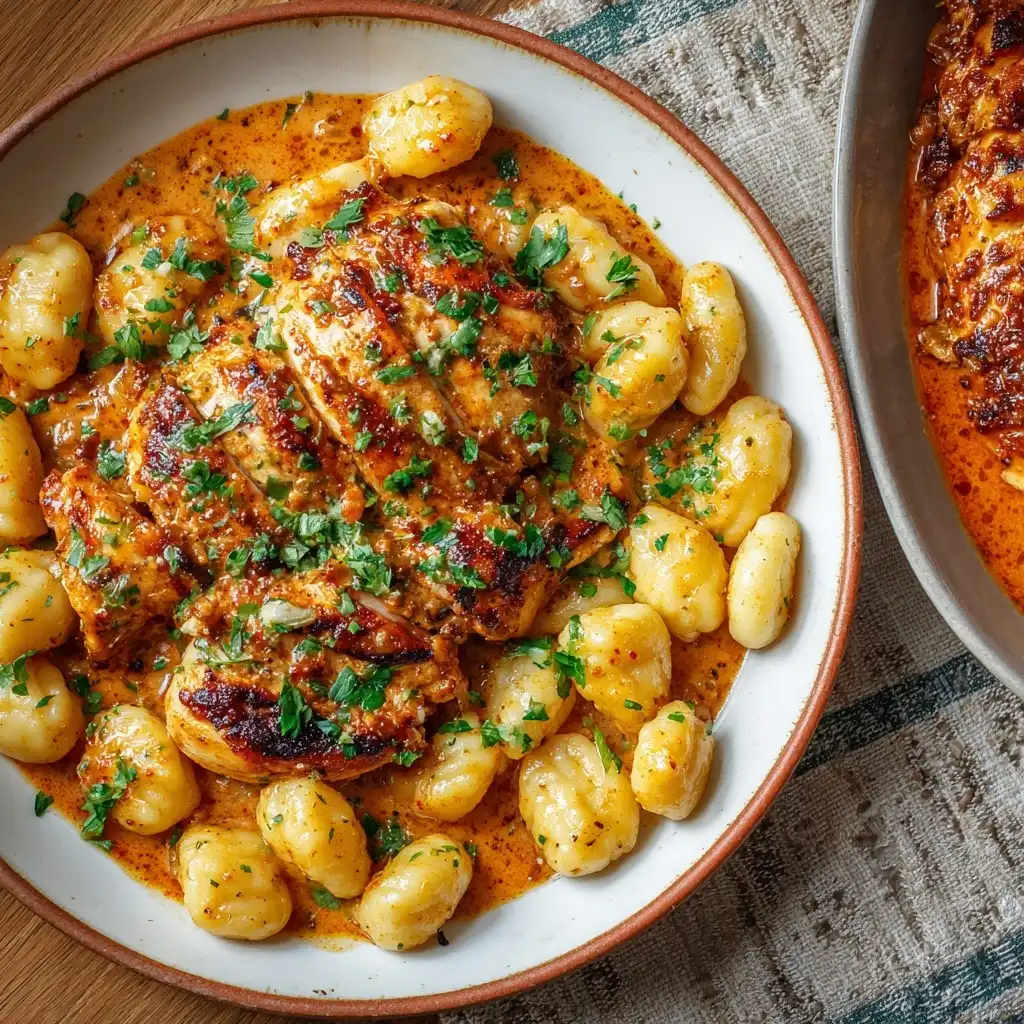
Garlic Butter Chicken and Gnocchi is a restaurant-worthy, comfort-food masterpiece that marries tender, herb-infused chicken breasts with pillowy-soft potato gnocchi in a luxuriously rich, aromatic garlic butter sauce. This dish strikes the perfect balance between elegance and approachability—elegant enough for date night or holiday entertaining, yet simple enough for a weeknight dinner with minimal prep and clean-up. Its magic lies in the layering of deeply savory flavors: the golden sear on the chicken releases umami-rich fond, the slow-simmered garlic mellows into sweetness, the fresh herbs add brightness, and the creamy, velvety sauce clings effortlessly to each delicate gnocchi dumpling. Whether you’re a seasoned home cook or just discovering the joys of pan sauces, this recipe delivers consistent, impressive results—and it’s endlessly adaptable to suit dietary preferences, seasonal produce, and pantry availability.
The History
While no single documented origin story exists for “Garlic Butter Chicken and Gnocchi” as a unified dish, its roots are deeply embedded in centuries-old culinary traditions across Europe—particularly Italy and France. Garlic butter (beurre à l’ail) traces back to 19th-century French provincial cooking, where chefs used high-quality butter and freshly crushed garlic to elevate grilled meats, seafood, and vegetables. In Italy, gnocchi—especially potato-based gnocchi (gnocchi di patate)—evolved in the northern regions like Piedmont and Lombardy during the 18th century, following the widespread adoption of the potato after its introduction from the Americas. These soft, dumpling-like pasta alternatives were traditionally served with simple, fat-rich sauces such as melted butter and sage—a preparation still revered today as gnocchi al burro e salvia. The modern fusion of pan-seared chicken with gnocchi in garlic butter likely emerged in mid-to-late 20th-century American-Italian kitchens and upscale bistro menus, where chefs began marrying classic Italian starches with protein-forward, French-inspired pan sauces. Over time, food bloggers, cooking shows, and viral social media recipes propelled the dish into mainstream home kitchens—transforming it into a beloved staple symbolizing rustic sophistication, pantry flexibility, and crave-worthy comfort.
Ingredients Breakdown
Understanding each ingredient’s role ensures both flavor integrity and technical success:
- Chicken Breasts (boneless, skinless): Opt for air-chilled, never-frozen, and preferably organic or pasture-raised for superior texture and taste. Pounding to an even ½-inch thickness ensures uniform cooking and prevents dryness. Brining (30 minutes in ¼ cup salt + 2 cups cold water) adds moisture and seasoning depth.
- High-Quality Unsalted Butter: European-style (82–84% butterfat) is ideal—it browns beautifully, carries flavor more intensely, and creates a silkier emulsion. Avoid margarine or low-fat spreads, which contain water and stabilizers that break the sauce.
- Fresh Garlic: Always use fresh cloves—not jarred or powdered. Mincing by hand (not pressing) preserves essential oils and prevents bitterness; sauté gently to avoid burning, which turns garlic acrid.
- Dry White Wine (e.g., Sauvignon Blanc or Pinot Grigio): Adds acidity, complexity, and deglazing power. Choose one you’d drink—avoid “cooking wine” (loaded with salt and preservatives). For non-alcoholic versions, substitute with dry vermouth, unsweetened apple cider vinegar + low-sodium broth (1:1), or white grape juice with a splash of lemon juice.
- Heavy Cream (36–40% milkfat): Provides body, richness, and stability. Half-and-half or whole milk will thin the sauce and risk curdling; ultra-pasteurized cream may take longer to thicken but works in a pinch.
- Fresh Herbs: Flat-leaf parsley adds grassy freshness and visual contrast; fresh thyme leaves (stripped from stems) contribute earthy, floral notes; optional chives or basil lend nuance. Dried herbs lack volatile oils and should only be used if fresh aren’t available—use ⅓ the amount.
- Potato Gnocchi: Fresh refrigerated gnocchi (found near deli or pasta sections) offers the best texture—light, tender, and slightly chewy. Shelf-stable dried gnocchi requires longer boiling and yields denser results; frozen gnocchi must be fully thawed and patted dry to prevent splattering and mushiness. Homemade gnocchi (made from ricotta or potato dough) delivers unparalleled delicacy but demands more time and technique.
- Grated Parmigiano-Reggiano (not pre-grated): Authentic, aged (24+ months), and microplaned for maximum surface area—melts seamlessly and adds salty, nutty umami. Pre-grated cheese contains anti-caking agents (e.g., cellulose) that inhibit melting and create graininess.
- Seasonings: Fine sea salt enhances all flavors; freshly cracked black pepper adds warmth and aroma; a pinch of red pepper flakes introduces subtle heat without overwhelming; optional grated lemon zest brightens the entire profile at the finish.
Step-by-Step Recipe
- Prep the Chicken: Place two 6–8 oz boneless, skinless chicken breasts between sheets of parchment paper. Using a meat mallet or heavy skillet, pound evenly to ½-inch thickness. Pat *extremely* dry with paper towels—this is critical for achieving a golden sear. Season both sides generously with salt and pepper.
- Prepare the Gnocchi: Bring a large pot of well-salted water (2 tbsp kosher salt per 4 quarts) to a rolling boil. Add gnocchi in batches (don’t overcrowd) and cook just until they float—typically 2–3 minutes for fresh, 4–5 for dried. As soon as they rise, scoop out with a slotted spoon and immediately rinse under cool water to halt cooking and prevent sticking. Toss lightly with 1 tsp neutral oil (e.g., grapeseed) and set aside.
- Sear the Chicken: Heat 1.5 tbsp unsalted butter + 1 tbsp olive oil in a large stainless steel or cast-iron skillet over medium-high heat until shimmering. Carefully place chicken in the pan without crowding. Cook undisturbed for 4–5 minutes until deeply golden and easily releases from the pan. Flip and cook another 3–4 minutes until internal temperature reaches 155°F (it will carry over to 165°F while resting). Transfer to a warm plate, tent loosely with foil, and rest 5 minutes.
- Build the Sauce Base: Reduce heat to medium-low. In the same skillet, add remaining 3.5 tbsp butter. Once melted, add 4–5 thinly sliced garlic cloves (or 2 tbsp minced) and 1 tsp fresh thyme leaves. Sauté gently for 60–90 seconds—just until fragrant and translucent (do not brown!).
- Deglaze & Reduce: Pour in ½ cup dry white wine, scraping vigorously with a wooden spoon to lift all browned bits (fond) from the pan bottom. Simmer 2–3 minutes until reduced by half and alcohol evaporates (you’ll smell sharpness fade).
- Enrich & Emulsify: Whisk in ¾ cup heavy cream and ¼ cup grated Parmigiano-Reggiano. Bring to a gentle simmer—not a boil—and stir constantly for 3–4 minutes until sauce thickens to coat the back of a spoon (nappe consistency). If too thin, simmer 1–2 minutes longer; if too thick, whisk in warm chicken broth, 1 tbsp at a time.
- Combine & Finish: Return rested chicken to the skillet, spooning sauce over it. Add cooked gnocchi and gently fold using a silicone spatula—do not stir aggressively, which can break gnocchi. Warm through for 60–90 seconds. Remove from heat. Stir in ¼ cup finely chopped fresh parsley, 1 tsp lemon zest (optional), and a final 2 tbsp grated Parmigiano-Reggiano. Taste and adjust seasoning—often needs a pinch more salt and a crack of black pepper.
- Serve Immediately: Plate family-style or portion individually. Garnish with extra parsley, a drizzle of high-quality extra-virgin olive oil, flaky sea salt (e.g., Maldon), and additional lemon wedges for brightness.
Tips
- Dry Chicken = Golden Chicken: Excess moisture causes steaming instead of searing. Pat chicken *twice*: once before seasoning, again right before it hits the pan.
- Control the Garlic: To prevent burning, add garlic *after* the butter melts but *before* it foams subsides—timing is everything. Alternatively, infuse whole peeled cloves in melted butter off-heat for 10 minutes, then strain and use infused butter.
- Sauce Consistency Mastery: If your sauce breaks (separates into greasy pools), immediately remove from heat and whisk in 1 tsp cold butter or 1 tbsp cold heavy cream—this helps re-emulsify. A handheld immersion blender also works wonders for silky texture.
- Gnocchi Texture Rescue: Overcooked gnocchi turns gummy. Set a timer—and watch closely. When they float, they’re done. Rinsing stops residual heat from overcooking them further.
- Rest the Chicken: Skipping the 5-minute rest leads to juice loss when slicing. Resting allows muscle fibers to relax and reabsorb moisture—resulting in succulent, juicy slices.
- Layered Seasoning: Salt the chicken *before* cooking, salt the gnocchi water *heavily*, and season the sauce *at the end*. This builds dimension rather than relying on one salting moment.
- Non-Stick Skillet Warning: While convenient, non-stick pans inhibit fond development—the foundation of flavor. Use stainless steel or cast iron for optimal browning and deglazing.
- Make-Ahead Strategy: Prep chicken and gnocchi up to 1 day ahead. Store separately (chicken wrapped in parchment; gnocchi tossed with oil in airtight container). Sauce is best made fresh—but base (garlic butter + wine reduction) can be made 2 days ahead and reheated gently before adding cream.
- Reheating Without Ruin: Never microwave—gnocchi hardens and sauce separates. Reheat gently on stove: add 1–2 tbsp warm broth or cream to skillet, then incorporate chilled components over low heat, stirring constantly.
Variations and Customizations
Protein Swaps
- Shrimp: Sauté 1 lb peeled, deveined shrimp (tails on/off) for 1.5–2 minutes per side in the garlic butter before removing. Add back with gnocchi.
- Chicken Thighs: More forgiving and flavorful—use boneless, skinless thighs pounded to even thickness. Cook to 165°F; they’ll stay juicier than breasts.
- Scallops: Dry-sear dry-packed sea scallops in same pan before building sauce. Add back at the end—overcooking makes them rubbery.
- Vegetarian Option: Replace chicken with 2 cups roasted cremini mushrooms (tossed in olive oil, salt, thyme, roasted at 400°F for 20 mins) or pan-seared halloumi cubes.
Gnocchi Alternatives
- Homemade Ricotta Gnocchi: Lighter, cloud-like texture—made with whole-milk ricotta, egg, lemon zest, and just enough flour to bind.
- Spinach-Gnocchi: Blend cooked spinach into dough for vibrant color and added nutrients.
- Gluten-Free Gnocchi: Use certified GF potato gnocchi or make with GF all-purpose flour blend + xanthan gum.
- Low-Carb Swap: Replace gnocchi with roasted cauliflower “gnocchi” (cauliflower rice pulsed, squeezed dry, mixed with egg & parmesan, formed into dumplings, and pan-fried).
Sauce Twists
- Lemon-Herb: Add zest + 2 tbsp fresh lemon juice at the end; swap parsley for dill or chervil.
- Tomato-Garlic: Stir in ¼ cup sun-dried tomato paste or ½ cup roasted cherry tomatoes after deglazing.
- Truffle: Finish with ½ tsp white truffle oil and shaved black truffle (or high-quality truffle salt).
- Spicy Arrabbiata-Style: Sauté 1 diced shallot + 1 tsp red pepper flakes before garlic; add 2 tbsp tomato paste and cook 1 minute before wine.
- Creamy Mushroom: Sauté 8 oz sliced cremini or oyster mushrooms in 1 tbsp butter until golden before adding garlic.
Dietary Adaptations
- Dairy-Free: Use high-fat coconut cream (full-fat, chilled, solid part only) + vegan butter (Miyoko’s or Forager); omit cheese or use nutritional yeast + cashew parmesan.
- Lower-Calorie: Substitute half the butter with olive oil; use half-and-half (not heavy cream); increase garlic, lemon, and herbs for bold flavor without fat.
- Keto-Friendly: Skip gnocchi entirely—serve over roasted broccoli “rice,” zucchini noodles, or shirataki noodles. Boost fat with extra butter and parmesan.
- Whole30/Paleo: Omit dairy and grains—use roasted sweet potato “gnocchi” (cubed, roasted until tender) and a sauce made from ghee, coconut aminos, garlic, lemon, and fresh herbs.
Health Considerations and Nutritional Value
A standard serving (1 chicken breast + 1.5 cups cooked gnocchi + ⅓ cup sauce) provides approximately:
- Calories: ~720–850 kcal (varies by butter/cream quantity and gnocchi type)
- Protein: ~42–48 g (excellent source—supports muscle maintenance and satiety)
- Carbohydrates: ~55–65 g (primarily complex from potatoes; fiber ~2–3 g unless using whole-wheat or veggie gnocchi)
- Fat: ~38–45 g (mostly unsaturated from olive oil and butter; includes beneficial CLA and butyrate from grass-fed sources)
- Vitamins & Minerals: Rich in B6 and B12 (chicken), potassium (potatoes), vitamin A (butter), calcium and phosphorus (parmesan), and antioxidants (garlic, parsley, thyme)
Health Highlights:
- Garlic’s Benefits: Contains allicin—linked to cardiovascular support, immune modulation, and anti-inflammatory effects. Crushing and resting garlic for 10 minutes before cooking maximizes allicin formation.
- Potassium Power: Both chicken and potatoes contribute significantly to daily potassium needs—vital for blood pressure regulation and nerve function.
- Probiotic Potential: Fermented dairy (if using cultured butter or aged parmesan) may offer trace probiotics, though heat diminishes viability.
- Mindful Modifications: Reducing butter by 1 tbsp and adding 2 tbsp low-sodium chicken broth maintains richness while cutting ~100 calories and 12g saturated fat. Using whole-wheat gnocchi increases fiber to ~6g per serving.
Cautions: Those managing hypertension should monitor sodium—opt for low-sodium broth and skip added salt in gnocchi water. Individuals with lactose sensitivity may tolerate aged parmesan (naturally low-lactose) better than fresh cheeses, but dairy-free alternatives provide full inclusivity.
Ingredients
- 2 (6–8 oz) boneless, skinless chicken breasts, pounded to ½-inch thickness
- 1 tsp fine sea salt, plus more for gnocchi water
- 1 tsp freshly ground black pepper
- 4.5 tbsp unsalted European-style butter, divided
- 1 tbsp extra-virgin olive oil
- 4–5 garlic cloves, very thinly sliced or finely minced (about 2 tbsp)
- 1 tsp fresh thyme leaves, stripped from stems
- ½ cup dry white wine (e.g., Sauvignon Blanc)
- ¾ cup heavy cream (36–40% fat)
- ¼ cup freshly grated Parmigiano-Reggiano, plus 2 tbsp for finishing
- 1 (16 oz) package fresh potato gnocchi (refrigerated section)
- ¼ cup finely chopped fresh flat-leaf parsley
- 1 tsp finely grated lemon zest (optional but recommended)
- Flaky sea salt and extra-virgin olive oil for garnish
- Lemon wedges for serving
Directions
- Pat chicken breasts *very* dry with paper towels. Season both sides with 1 tsp salt and 1 tsp pepper.
- Bring 4 quarts water to a rolling boil. Add 2 tbsp kosher salt. Add gnocchi in batches; cook just until they float—2–3 minutes for fresh, 4–5 for dried. Remove with slotted spoon, rinse under cool water, toss with 1 tsp olive oil, and set aside.
- Heat 1.5 tbsp butter and 1 tbsp olive oil in a large skillet over medium-high heat. When shimmering, add chicken. Cook undisturbed 4–5 minutes until deeply golden. Flip; cook 3–4 minutes more until internal temp reaches 155°F. Transfer to plate, tent with foil, rest 5 minutes.
- Reduce heat to medium-low. Add remaining 3 tbsp butter to skillet. Once melted, add garlic and thyme. Sauté 60–90 seconds until fragrant and pale gold—do not brown.
- Pour in wine. Scrape up browned bits with wooden spoon. Simmer 2–3 minutes until reduced by half.
- Whisk in heavy cream and ¼ cup parmesan. Simmer gently 3–4 minutes, stirring often, until thickened to coat spoon.
- Return chicken to skillet; spoon sauce over. Add gnocchi; gently fold to combine. Warm 60–90 seconds.
- Remove from heat. Stir in parsley, lemon zest, and remaining 2 tbsp parmesan. Taste and adjust salt/pepper.
- Serve immediately, garnished with flaky salt, extra parsley, a drizzle of olive oil, and lemon wedges.
FAQ
- Can I use frozen gnocchi?
- Yes—but thaw completely in the fridge overnight, then pat *extremely* dry with paper towels before boiling. Frozen gnocchi releases excess water, causing sauce to thin and splatter violently in hot butter.
- Why does my sauce break or look greasy?
- This happens when butter separates due to overheating, adding cold cream to hot sauce, or vigorous whisking. Fix it by removing from heat and whisking in 1 tsp cold butter or 1 tbsp cold cream. Next time, warm cream slightly before adding, and keep heat at gentle simmer—not boil.
- Can I make this ahead for meal prep?
- You can prep components up to 2 days ahead: cooked & cooled chicken (store airtight), boiled & oiled gnocchi (refrigerate up to 3 days), and garlic-wine reduction (cool, refrigerate up to 48 hrs). Reheat reduction gently, then add cream and finish fresh. Fully assembled dish doesn’t reheat well—gnocchi becomes dense and sauce loses sheen.
- Is there a way to lighten this without sacrificing flavor?
- Absolutely. Replace half the butter with olive oil; use half-and-half instead of heavy cream (simmer 1–2 minutes longer to thicken); boost garlic, lemon zest, herbs, and black pepper for robust flavor without added fat. Serve with a large side salad dressed in lemon vinaigrette to balance richness.
- What wine pairs best with this dish?
- A crisp, high-acid white complements the butter and garlic beautifully: try Vermentino, Albariño, or unoaked Chardonnay. For red lovers, a light-bodied, low-tannin option like chilled Gamay or Pinot Noir works surprisingly well.
- My gnocchi fell apart in the sauce—what went wrong?
- Overcooking is the usual culprit. Fresh gnocchi cooks in *seconds* after floating—remove immediately. Also, avoid stirring aggressively; fold gently. If gnocchi was old or improperly stored, it may have absorbed moisture and weakened its structure.
- Can I freeze leftovers?
- Not recommended. Freezing causes gnocchi to become waterlogged and grainy upon thawing, and dairy-based sauces often separate and curdle. Best enjoyed fresh—or repurpose leftovers into a frittata or baked casserole within 2 days.
- How do I get restaurant-quality sear on my chicken?
- Three keys: 1) Dry chicken thoroughly, 2) Pan must be hot *before* adding oil, then hot enough that oil shimmers (not smokes), 3) Don’t move chicken for full first interval—let crust form naturally. A cast-iron skillet retains heat best for consistent browning.
Summary
Garlic Butter Chicken and Gnocchi is a masterclass in balancing simplicity and sophistication—featuring perfectly seared, juicy chicken nestled among tender potato gnocchi in a velvety, aromatic sauce enriched with garlic, white wine, cream, and aged Parmigiano-Reggiano.
With smart prep, mindful technique, and endless customization options—from dairy-free adaptations to keto swaps and globally inspired twists—it’s a timeless, nourishing, and deeply satisfying centerpiece that transforms humble ingredients into unforgettable comfort, night after night.