Introduction
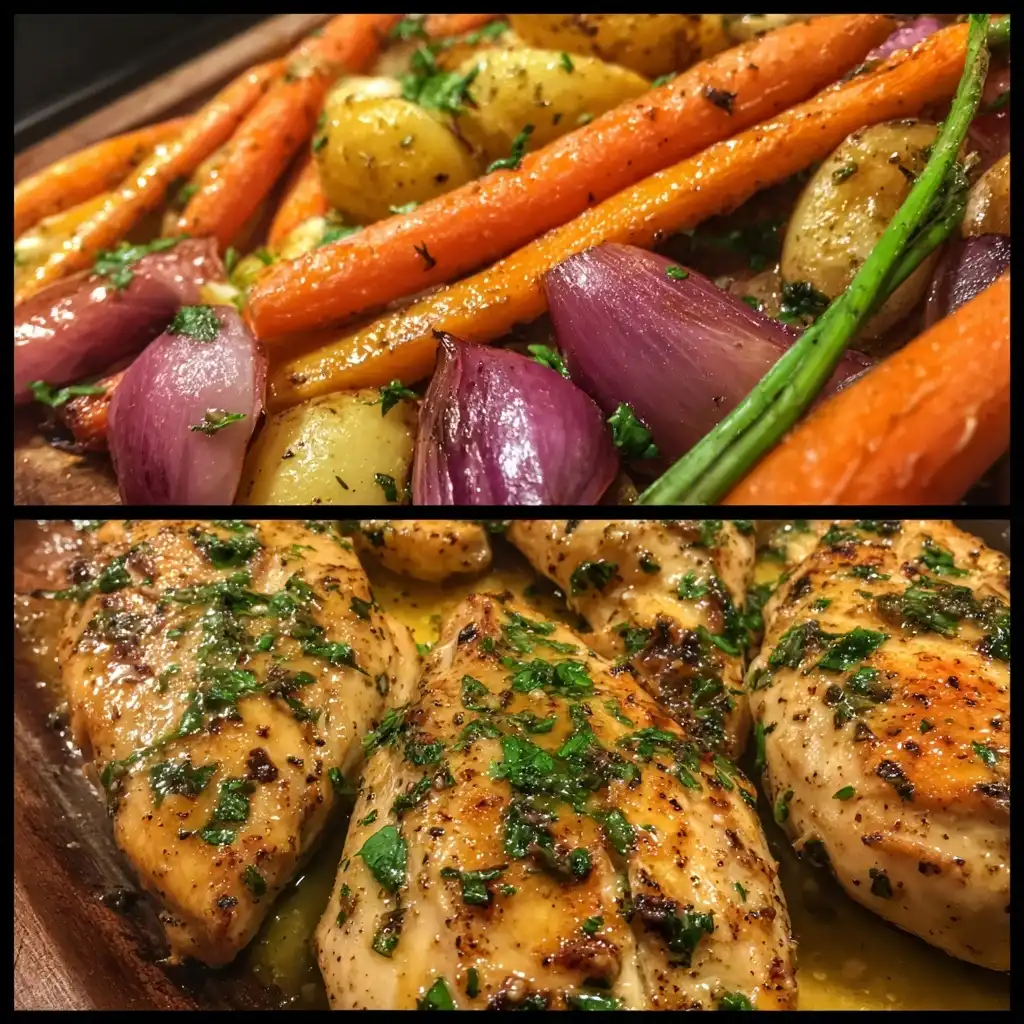
Garlic Butter Chicken with Roasted Veggies is a restaurant-quality, weeknight-friendly masterpiece that effortlessly balances rich, savory depth with bright, earthy freshness. This dish delivers tender, golden-brown chicken breasts or thighs enveloped in a luxuriously aromatic garlic butter sauce—infused with fresh herbs, lemon zest, and just the right amount of umami—served alongside vibrant, caramelized seasonal vegetables roasted to perfection. It’s more than just a meal; it’s a sensory experience that fills your kitchen with irresistible aromas, satisfies hearty appetites, and impresses even discerning palates—all while remaining approachable for home cooks of all skill levels. Whether you’re cooking for family, prepping healthy meals for the week, or hosting an intimate dinner, this recipe serves as a versatile, nourishing, and deeply flavorful cornerstone that celebrates simplicity without sacrificing sophistication.
The History
While there’s no single documented origin for “Garlic Butter Chicken,” its roots trace back to centuries-old culinary traditions where butter, garlic, and poultry converged across multiple cultures. In medieval Europe—particularly in France and Italy—chicken was frequently pan-seared in clarified butter or ghee and finished with minced garlic and parsley, forming the basis of early *poulet à la provençale* and *pollo al burro*. The French technique of *monter au beurre* (mounting a sauce with cold butter) refined the silky texture and emulsified richness now central to modern garlic butter sauces. Meanwhile, Mediterranean and Middle Eastern kitchens long embraced garlic-infused fats for roasting meats and vegetables—think Lebanese *samin*, Greek *ladolemono*, or Turkish *sarımsaklı tereyağı*. In the mid-20th century, American home cooking magazines began popularizing “butter-basted” chicken recipes, often paired with simple roasted root vegetables. The contemporary fusion we know today—featuring herb-flecked garlic butter glaze over protein and sheet-pan roasted veggies—emerged strongly in the 2010s alongside the rise of food blogs, Instagrammable one-pan meals, and clean-label, whole-food-focused eating trends. Its enduring appeal lies in its elegant minimalism: few ingredients, maximum impact, and timeless technique.
Ingredients Breakdown
Every component in Garlic Butter Chicken with Roasted Veggies plays a purposeful role—no filler, no afterthoughts. Here’s why each ingredient matters:
- Chicken (boneless, skinless breasts or thighs): Breasts offer lean tenderness and quick cook time; thighs provide richer flavor, superior moisture retention, and forgiving texture—even if slightly overcooked. Both benefit from proper brining or dry-brining (see Tips).
- Unsalted butter: Essential for building the sauce’s body, mouthfeel, and depth. Unsalted allows full control over sodium levels. European-style butter (82–86% fat) yields superior browning and nutty complexity.
- Fresh garlic: Non-negotiable. Pre-minced or jarred garlic lacks enzymatic pungency and sweetness that develops when freshly crushed or finely minced. The alliinase enzyme activates on cutting, creating allicin—the compound behind garlic’s bold aroma and health benefits.
- Dry white wine (e.g., Sauvignon Blanc or Pinot Grigio): Adds brightness, acidity, and complexity to the pan sauce. It deglazes browned bits (*fond*), lifting concentrated flavor into the sauce. Substitute low-sodium chicken broth if avoiding alcohol—but note the subtle flavor shift.
- Fresh lemon juice & zest: Juice provides balancing acidity to cut through butter’s richness; zest contributes volatile citrus oils for aromatic lift—never skip the zest!
- Fresh herbs (parsley, thyme, optional rosemary): Parsley adds grassy freshness and visual pop; thyme contributes earthy, floral notes that complement roasted vegetables beautifully; rosemary (used sparingly) adds pine-like intensity ideal for heartier root veg.
- Roasted vegetable medley: A thoughtfully curated blend ensures textural contrast and balanced sweetness/earthiness. Classic trio includes carrots (natural sugars caramelize), red potatoes (starchy yet firm), and broccoli (cruciferous bite + nutrient density). Additions like bell peppers (sweetness & color), red onion (savory depth), zucchini (tender-crisp texture), or cherry tomatoes (bursting acidity) expand flavor architecture.
- High-smoke-point oil (avocado, grapeseed, or light olive oil): Critical for achieving crisp, non-soggy roasted vegetables. Extra virgin olive oil can burn and taste bitter at high roasting temps (425°F+).
- Quality sea salt & freshly ground black pepper: Kosher or flaky sea salt ensures even seasoning; freshly cracked pepper delivers volatile aromatic compounds lost in pre-ground versions.
Step-by-Step Recipe
- Prep & Marinate (15 min, optional but recommended): Pat chicken dry with paper towels. Lightly season both sides with ½ tsp kosher salt and ¼ tsp black pepper. Place on a wire rack over a baking sheet and refrigerate uncovered for 15–30 minutes (air-drying promotes better sear). For deeper flavor, combine 1 tbsp melted butter, 1 minced garlic clove, ½ tsp lemon zest, and 1 tsp chopped thyme; rub onto chicken and let sit 10 minutes.
- Preheat & Prep Veggies (10 min): Position oven rack in upper third. Preheat oven to 425°F (220°C). While heating, wash and chop vegetables uniformly (½-inch dice for potatoes/carrots, 1-inch florets for broccoli, ½-inch rings for onions). Toss in a large bowl with 2 tbsp high-heat oil, 1 tsp salt, ½ tsp black pepper, 1 tsp dried oregano (optional), and ½ tsp smoked paprika (for depth)—mix thoroughly to coat every surface.
- Roast Vegetables (25–30 min): Spread vegetables in a single layer on a parchment-lined or lightly oiled rimmed baking sheet. Roast for 15 minutes. Remove, flip/stir gently, then roast another 10–15 minutes until fork-tender with golden-brown, slightly charred edges. Rotate pan front-to-back halfway for even cooking. Set aside, tented loosely with foil.
- Sear Chicken (6–8 min): Heat 1 tbsp oil in a heavy-bottomed, oven-safe skillet (stainless steel or cast iron preferred) over medium-high heat until shimmering. Add chicken—do not crowd; sear in batches if needed. Cook undisturbed 4–5 minutes until deep golden crust forms. Flip and cook 2–3 minutes more until lightly golden. Internal temp should read 150–155°F (chicken will finish cooking in sauce). Transfer to a clean plate; tent with foil.
- Build Garlic Butter Sauce (5 min): Reduce heat to medium-low. Pour off excess oil, leaving ~1 tsp. Add 1 tbsp unsalted butter and swirl until melted. Add 4–5 finely minced garlic cloves and 1 tsp fresh thyme leaves; sauté 30–60 seconds until fragrant (do not brown garlic!). Pour in ¼ cup dry white wine (or low-sodium broth), scraping vigorously with a wooden spoon to release all browned bits. Simmer 2 minutes until reduced by half. Whisk in 3 tbsp cold butter, one piece at a time, allowing each to melt fully before adding next—this creates a glossy, emulsified sauce. Stir in 1 tbsp fresh lemon juice, 1 tsp lemon zest, and a pinch of red pepper flakes (optional).
- Finish & Combine (3 min): Return chicken to skillet, spooning sauce over top. Simmer gently 1–2 minutes until chicken reaches 165°F internally. Remove from heat. Stir in 2 tbsp finely chopped fresh parsley and adjust seasoning with salt and pepper. Spoon chicken and sauce over warm roasted vegetables. Garnish generously with extra parsley, lemon wedges, and flaky sea salt.
Tips
- Dry chicken thoroughly: Moisture is the enemy of browning. Use paper towels—not cloth—to pat every surface. Even residual water causes steaming instead of searing.
- Don’t skip the wire rack chill: Air-drying for 15+ minutes firms up the surface proteins, resulting in crisper, more uniform sear—and less splatter.
- Uniform veggie sizing = even roasting: Cut denser vegetables (potatoes, carrots) slightly smaller than softer ones (zucchini, tomatoes) so they finish together.
- Roast veggies first, then sear chicken: This timing ensures veggies aren’t sitting under foil while chicken cooks—and prevents soggy bottoms from steam condensation.
- Use cold butter for emulsion: Adding cold, cubed butter off-heat while whisking vigorously creates a stable, velvety sauce that won’t break or separate.
- Control garlic heat: Garlic burns fast. Keep heat at medium-low when sautéing—it should sizzle softly, never pop or turn brown. Burnt garlic tastes acrid and ruins the sauce.
- Rest chicken before slicing: Let it sit 3–5 minutes after finishing in sauce. This allows juices to redistribute, yielding moist, succulent meat—not dry shreds.
- Sheet pan swap trick: If using same sheet pan for veggies and chicken drippings, line with parchment first—then roast veggies. Remove parchment, wipe pan, and use for searing chicken. Reuse parchment for final plating if desired.
- Boost umami: Add 1 tsp tomato paste when sautéing garlic—or a splash of Worcestershire sauce with the wine—for deeper savory resonance.
- Make ahead smartly: Roast veggies up to 2 days ahead; store chilled in airtight container. Reheat in oven at 375°F for 10 minutes before serving. Sauce base (garlic + wine reduction) can be made 1 day ahead—whisk in cold butter just before serving.
Variations and Customizations
This recipe is a canvas—adaptable to seasons, pantries, diets, and cravings. Explore these inspired twists:
- Global Infusions: Swap thyme for 1 tsp garam masala + ½ tsp ground cumin (Indian-inspired); add 1 tbsp gochujang + 1 tsp rice vinegar (Korean-style); stir in 2 tbsp capers + ½ cup kalamata olives + oregano (Mediterranean tapenade twist).
- Protein Swaps: Use bone-in, skin-on chicken thighs for ultra-crispy skin and juiciness (increase roasting time to 35–40 min); substitute turkey cutlets, pork tenderloin medallions, or firm tofu (pressed & marinated) for plant-forward or leaner options.
- Veggie Rotations: Spring: asparagus, snap peas, baby potatoes, radishes. Summer: zucchini, cherry tomatoes, corn kernels, yellow squash. Fall/Winter: sweet potatoes, parsnips, Brussels sprouts, delicata squash, shallots. Always include at least one starchy (potato/sweet potato), one cruciferous (broccoli/cauliflower), and one colorful (pepper/tomato) for balance.
- Dietary Adaptations: Gluten-free: Naturally compliant—just verify broth/wine labels. Dairy-free: Replace butter with high-quality vegan butter (Miyoko’s or Country Crock Plant Butter) and finish with 1 tbsp nutritional yeast for “cheesy” depth. Keto: Increase healthy fats—add avocado slices, toasted almonds, or drizzle with infused olive oil; omit potatoes, double broccoli/zucchini. Paleo: Use ghee instead of butter; ensure all spices are additive-free.
- Sauce Elevations: Stir in ¼ cup grated Parmesan off-heat for creamy richness; swirl in 1 tsp Dijon mustard for tangy complexity; finish with 1 tbsp crème fraîche for luxurious silkiness; infuse butter beforehand with smashed garlic cloves and herbs (strain before using).
- Meal Prep Friendly: Double the recipe. Store components separately: chicken + sauce (3 days fridge / 3 months freezer), roasted veggies (4 days fridge), and extra herb-garlic butter (freeze in ice cube trays for instant flavor boosts).
- Grill or Air Fryer Option: Grill chicken over medium coals (6–8 min per side), basting with garlic butter in last 2 minutes. Roast veggies in air fryer at 400°F for 15–20 min, shaking basket twice. Finish sauce on stove.
Health Considerations and Nutritional Value
When prepared mindfully, Garlic Butter Chicken with Roasted Veggies is a nutritionally robust, balanced meal aligned with modern wellness principles. A standard serving (1 medium chicken breast + 1.5 cups mixed roasted vegetables + 2 tbsp sauce) contains approximately:
- Calories: 480–540 kcal (varies by cut, oil, and butter quantity)
- Protein: 38–42g — high-quality complete protein supporting muscle maintenance, satiety, and metabolic health
- Fat: 24–29g — predominantly unsaturated (from olive/avocado oil, butter’s CLA & butyrate) and naturally occurring medium-chain fatty acids; supports hormone synthesis and nutrient absorption (especially fat-soluble vitamins A, D, E, K)
- Carbohydrates: 22–28g — primarily complex, fiber-rich carbs from vegetables (4–6g dietary fiber per serving), promoting gut microbiome diversity and stable blood sugar
- Vitamins & Minerals: Exceptionally high in Vitamin A (carrots, sweet potatoes), Vitamin C (broccoli, bell peppers, lemon), Vitamin K (leafy greens if added, broccoli), potassium (potatoes, spinach), selenium (chicken), and manganese (legumes, nuts—add toasted pumpkin seeds as garnish).
Key Health Highlights:
- Garlic’s Bioactive Power: Contains allicin, shown in clinical studies to support cardiovascular health (modest BP and LDL reduction), immune modulation, and antioxidant activity. Crushing and resting garlic 10 minutes before cooking maximizes allicin yield.
- Roasting Benefits: Unlike boiling, roasting preserves heat-stable nutrients (vitamin K, carotenoids) and enhances bioavailability of lycopene (in tomatoes) and beta-carotene (in carrots) via lipid-assisted absorption—especially when paired with healthy fats in the sauce.
- Butter Nuance: Grass-fed butter provides vitamin K2 (critical for calcium metabolism and arterial health), butyrate (anti-inflammatory short-chain fatty acid), and conjugated linoleic acid (CLA), linked to improved body composition in human trials.
- Low Added Sugar & Sodium: No hidden sugars—flavor comes from natural veggie sweetness and umami. Sodium remains moderate (~480mg/serving) when using unsalted butter and controlling added salt—well below FDA’s 2,300mg daily limit.
- Digestive Support: Lemon juice stimulates gastric acid production; garlic and onions act as prebiotics feeding beneficial gut bacteria; fiber from diverse vegetables promotes regularity and microbiome resilience.
Note: Individuals with GERD or IBS may wish to reduce garlic quantity or sauté longer to mellow FODMAP content. Those managing cholesterol should prioritize chicken breast and moderate butter portions—though recent meta-analyses suggest dietary cholesterol has minimal impact on serum LDL for most people.
Ingredients
- 1.5 lbs boneless, skinless chicken breasts or thighs, trimmed and patted very dry
- 3 tbsp unsalted butter, divided (2 tbsp for roasting veggies, 1 tbsp for searing, 3 tbsp cold for sauce)
- 2 tbsp high-smoke-point oil (avocado, grapeseed, or light olive oil), divided
- 1.5 lbs mixed vegetables (e.g., 1 large red potato, 2 medium carrots, 1 large head broccoli, 1 red bell pepper, ½ red onion), chopped uniformly
- 1½ tsp kosher salt, divided (1 tsp for veggies, ½ tsp for chicken)
- 1 tsp freshly ground black pepper, divided
- 5–6 large garlic cloves, finely minced (about 2 tbsp)
- ¼ cup dry white wine (Sauvignon Blanc or Pinot Grigio) or low-sodium chicken broth
- 1 tbsp fresh lemon juice (about ½ lemon)
- 1 tsp finely grated lemon zest
- 1 tsp fresh thyme leaves (or ½ tsp dried)
- 2 tbsp finely chopped fresh flat-leaf parsley, plus extra for garnish
- Pinch of red pepper flakes (optional)
- Lemon wedges and flaky sea salt, for serving
Directions
- Preheat oven to 425°F (220°C). Line a large rimmed baking sheet with parchment paper.
- In a large bowl, combine chopped vegetables, 2 tbsp oil, 1 tsp salt, ½ tsp black pepper, and optional smoked paprika or oregano. Toss until evenly coated. Spread in a single layer on prepared baking sheet.
- Roast vegetables for 15 minutes. Remove from oven, flip/stir gently, and return to oven for another 10–15 minutes, until tender and caramelized at edges. Remove and tent with foil.
- While veggies roast, season chicken with remaining ½ tsp salt and ½ tsp black pepper. Heat 1 tbsp oil in a large oven-safe skillet over medium-high heat until shimmering. Add chicken without crowding; sear 4–5 minutes per side until deeply golden and internal temperature reaches 150–155°F. Transfer to a plate; tent with foil.
- Reduce heat to medium-low. Pour off excess oil, leaving ~1 tsp. Add 1 tbsp butter and swirl until melted. Add minced garlic and thyme; sauté 30–60 seconds until fragrant (do not brown). Pour in wine (or broth), scraping up browned bits. Simmer 2 minutes until reduced by half.
- Remove skillet from heat. Whisk in cold butter, one tablespoon at a time, until fully incorporated and sauce is glossy and emulsified. Stir in lemon juice, lemon zest, red pepper flakes (if using), and remaining 1 tbsp parsley.
- Return chicken to skillet, spooning sauce over top. Gently simmer 1–2 minutes until chicken reaches 165°F. Remove from heat.
- Spoon roasted vegetables onto serving plates or a large platter. Top with chicken and generous spoonfuls of garlic butter sauce. Garnish with extra parsley, lemon wedges, and flaky sea salt.
FAQ
- Can I use frozen chicken?
- Yes—but thaw completely in the refrigerator overnight. Never cook frozen chicken directly in this recipe, as uneven thawing leads to rubbery texture and unreliable doneness. Pat *extremely* dry before seasoning and searing.
- Why does my garlic butter sauce break or look greasy?
- Sauce breaking usually occurs from overheating (causing butterfat separation) or adding butter too quickly. Always remove from heat before whisking in cold butter, and add in small pieces while whisking constantly. If it breaks, whisk in 1 tsp cold water or lemon juice to re-emulsify.
- Can I make this dairy-free?
- Absolutely. Substitute high-fat vegan butter (like Miyoko’s) for all butter. For best results, use a neutral oil for roasting and reserve the vegan butter for the finishing sauce. Add 1 tsp nutritional yeast for savory depth.
- How do I prevent soggy roasted vegetables?
- Three keys: (1) Dry veggies thoroughly before tossing with oil; (2) Use enough oil to coat—but not drown—each piece; (3) Ensure single-layer spacing with no overlapping. Crowding causes steaming instead of roasting.
- Can I prepare this entirely in one pan?
- Yes—with strategic timing. Roast veggies first on a sheet pan. While they bake, sear chicken in skillet. Remove chicken, make sauce in same skillet, then return chicken to finish. Serve veggies straight from the sheet pan—no need to transfer.
- What wine should I use—and do I really need it?
- Choose a dry, acidic white wine you’d drink—avoid “cooking wine” (high sodium, artificial flavors). Sauvignon Blanc, Pinot Grigio, or unoaked Chardonnay work beautifully. Wine adds nuanced acidity and complexity; low-sodium broth is a fine substitute, though the sauce will be milder.
- Can I add cheese?
- Deliciously yes! Stir in ¼ cup grated Parmesan or Pecorino Romano into the warm sauce just before serving. Or top chicken with mozzarella and broil 1–2 minutes for a melty finish. Avoid strong cheeses like blue—they overwhelm the delicate garlic-butter profile.
- How long does leftovers keep—and how do I reheat?
- Store components separately in airtight containers: chicken + sauce (up to 4 days fridge / 3 months freezer), roasted veggies (up to 5 days fridge). To reheat, gently warm chicken and sauce in a skillet over low heat, stirring. Roast veggies in oven at 375°F for 10 minutes or microwave covered with damp paper towel for 1.5–2 minutes.
- Is this recipe suitable for kids?
- Very much so! Mild garlic and butter appeal to young palates. For sensitive eaters, reduce garlic to 2 cloves and omit red pepper flakes. Serve with extra lemon wedge for interactive flavor control—and sneak in finely grated zucchini or carrots into the veggie mix.
- Can I double this for a crowd?
- Yes—just use two sheet pans for veggies (don’t overcrowd!) and sear chicken in batches. Make sauce in a larger skillet or Dutch oven. Keep finished chicken warm in a 200°F oven while finishing components. Garnish generously before serving family-style.
Summary
Garlic Butter Chicken with Roasted Veggies is a masterclass in harmonious, restaurant-worthy home cooking—melding golden-seared poultry, a velvety herb-infused garlic butter sauce, and deeply caramelized seasonal vegetables into one cohesive, nutrient-dense, and deeply satisfying meal.
With its flexible framework, rich culinary heritage, and science-backed health benefits, this dish transcends trendiness to become a timeless, adaptable staple—equally at home on a busy Tuesday, a Sunday supper, or a celebratory gathering.