Introduction
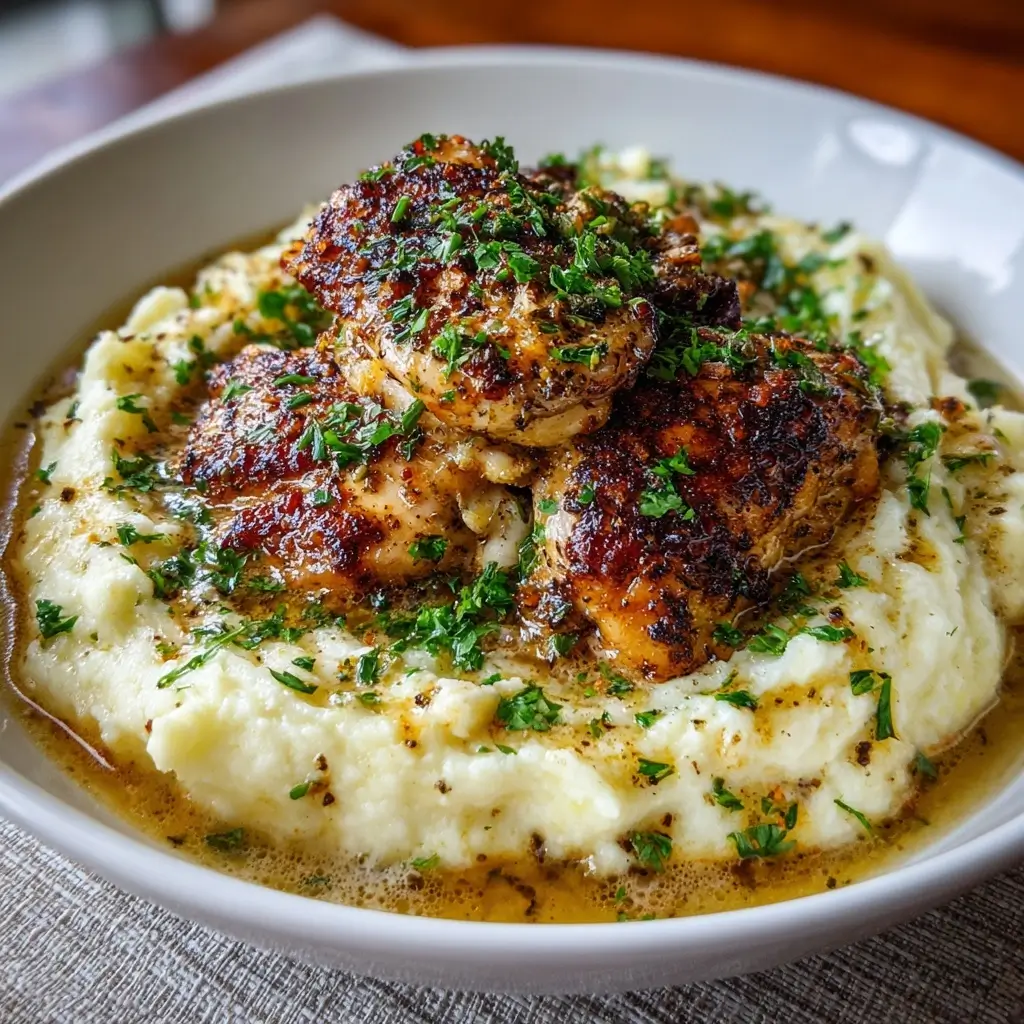
Garlic Butter Chicken over Mashed Potatoes is the quintessential comfort food dish that marries tender, pan-seared chicken with a luxuriously aromatic garlic butter sauce—and serves it all atop a cloud-like bed of creamy, velvety mashed potatoes. This timeless combination delivers rich umami depth, gentle herbaceous notes, and soul-warming satisfaction in every bite. Whether you’re preparing a cozy weeknight dinner for your family, impressing guests with minimal effort and maximum flavor, or seeking a restaurant-quality meal you can recreate at home, this recipe stands as a culinary anchor—simple in technique yet deeply rewarding in execution. Its universal appeal lies not only in its indulgent profile but also in its remarkable versatility, adaptability to dietary preferences, and forgiving nature for cooks of all skill levels.
The History
The origins of Garlic Butter Chicken trace back through centuries of European culinary tradition—particularly French and Italian cuisines, where garlic and butter have long served as foundational flavor carriers. In classical French cooking, beurre blanc and beurre noisette exemplify the art of transforming butter into complex, nutty, emulsified sauces—techniques later adapted for poultry preparations. Meanwhile, Italian pollo al burro e aglio (chicken with butter and garlic) has appeared in regional cookbooks since the early 19th century, often finished with lemon zest or parsley to brighten the richness. The pairing with mashed potatoes, however, gained widespread popularity in mid-20th-century America, as post-war home kitchens embraced convenience, consistency, and hearty fare. Influenced by both Irish potato traditions and French pommes purée (a silky, butter-enriched version perfected at Escoffier’s time), American mashed potatoes evolved into a creamy, comforting canvas ideal for capturing every drop of savory sauce. Over decades, food magazines, cooking shows, and later, viral social media platforms amplified this duo—turning Garlic Butter Chicken over Mashed Potatoes into a beloved staple across diners, supper clubs, and modern meal-prep routines alike.
Ingredients Breakdown
Every exceptional dish begins with intentionality toward ingredients—and this recipe is no exception. Each component plays a precise role in building layers of texture, aroma, and balance:
- Chicken Breasts: Boneless, skinless chicken breasts (preferably air-chilled and never previously frozen) offer lean protein and a neutral canvas. For optimal tenderness, look for “natural” or “minimally processed” labels without added sodium solution, which can cause uneven browning and sogginess.
- Unsalted Butter: High-fat, European-style unsalted butter (82–86% fat) provides superior mouthfeel, richer browning, and cleaner control over seasoning. Salted butter is discouraged here, as salt levels become difficult to calibrate when combined with brined chicken or added seasonings.
- Fresh Garlic: Always use freshly minced or crushed garlic—not jarred or powdered. Fresh garlic contains alliinase enzymes that activate upon cutting, releasing allicin—the compound responsible for its pungent, fragrant, and health-promoting properties. Pre-minced versions lose potency rapidly and often contain preservatives that mute flavor.
- Heavy Cream (Optional but Recommended): A small amount (¼ cup) adds silkiness, stabilizes the emulsion, and prevents the sauce from breaking—especially when reheated. For dairy-free alternatives, full-fat coconut milk or cashew cream works remarkably well.
- Chicken Stock or Broth: Use low-sodium, homemade stock if possible—or a high-quality, clean-label store-bought version. Avoid bouillon cubes with excessive MSG or artificial flavors; they introduce off-notes that clash with delicate garlic and herb tones.
- Fresh Herbs: Flat-leaf parsley adds freshness and visual contrast, while optional thyme or rosemary contributes earthy complexity. Dried herbs lack volatile oils and should be used sparingly (⅓ the amount) and added earlier in cooking to rehydrate.
- Yukon Gold Potatoes: The star of the mash—waxy yet buttery, with naturally creamy flesh and thin skins that don’t require peeling. Their moderate starch content yields a dense, luxurious texture without glueyness—unlike russets, which can become gummy if overworked.
- Warm Whole Milk or Half-and-Half: Cold dairy causes lumps and cools the potatoes too quickly. Gently warmed dairy integrates smoothly and enhances creaminess without diluting flavor.
- Roasted Garlic Paste (Optional Enhancement): Roasting whole garlic heads transforms sharp raw notes into sweet, caramelized depth—ideal for layering complexity beneath the fresh garlic in the sauce.
Step-by-Step Recipe
- Prep the Chicken: Place two 6–7 oz boneless, skinless chicken breasts between two sheets of parchment paper or plastic wrap. Using a meat mallet or heavy skillet, gently pound to an even ½-inch thickness—this ensures uniform cooking and prevents dry edges. Pat thoroughly dry with paper towels—moisture is the enemy of golden sear.
- Season Thoughtfully: Lightly season both sides with ½ tsp fine sea salt and ¼ tsp freshly ground black pepper. For enhanced flavor penetration, let rest uncovered at room temperature for 15 minutes (no longer—food safety first).
- Sear to Perfection: Heat 1 tbsp high-smoke-point oil (avocado or grapeseed) in a heavy-bottomed stainless steel or cast iron skillet over medium-high heat until shimmering. Carefully place chicken in hot pan without crowding. Cook undisturbed for 5–6 minutes, until deeply golden brown and easily releases from pan. Flip and cook opposite side 4–5 minutes more, until internal temperature reaches 155°F (68°C). Transfer to a wire rack set over a plate; tent loosely with foil. Rest 5–7 minutes—carryover cooking will bring it to safe 165°F (74°C) while retaining juiciness.
- Build the Sauce Base: Reduce heat to medium-low. In same skillet (do not wipe out browned bits—they’re flavor gold), add 3 tbsp unsalted butter. Once melted and foaming subsides, add 4–5 finely minced garlic cloves and 1 tsp fresh thyme leaves. Sauté 60–90 seconds—just until fragrant and lightly golden—but do not let garlic brown or burn, or it turns bitter.
- Deepen Flavor & Deglaze: Pour in ½ cup low-sodium chicken stock, scraping vigorously with a wooden spoon to lift all fond (caramelized bits) from the pan bottom. Simmer 2–3 minutes until reduced by one-third and slightly syrupy.
- Emulsify & Enrich: Whisk in ¼ cup warm heavy cream (or dairy-free alternative) and simmer gently 1–2 minutes more. Stir in remaining 1 tbsp cold butter, one piece at a time, whisking constantly until fully incorporated and glossy. Remove from heat.
- Finish with Freshness: Stir in 2 tbsp finely chopped fresh parsley, a squeeze of lemon juice (½ tsp), and optional pinch of red pepper flakes. Taste and adjust: more salt? A touch more lemon for brightness? A whisper of grated lemon zest?
- Prepare Mashed Potatoes: While chicken rests, peel and cube 1.5 lbs Yukon Gold potatoes. Place in cold, salted water (2 tsp kosher salt per quart), bring to gentle boil, then reduce to simmer. Cook 15–18 minutes—until fork-tender but not disintegrating. Drain *thoroughly*, return to warm pot, and let sit 1–2 minutes to evaporate excess moisture. Mash with potato ricer or hand masher (never food processor—it releases too much starch). Gradually fold in ½ cup warm whole milk or half-and-half, 4 tbsp softened unsalted butter, ½ tsp salt, and ¼ tsp white pepper until smooth and airy. Keep covered with lid and a kitchen towel to retain steam and warmth.
- Plate with Intention: Spoon generous mound of warm mashed potatoes into wide, shallow bowls. Slice rested chicken diagonally into ½-inch medallions. Arrange elegantly over potatoes. Ladle warm garlic butter sauce generously over top—let it pool delicately around the base. Garnish with extra parsley, microgreens, flaky sea salt, and lemon wedges for interactive acidity.
Tips
- Pounding Is Non-Negotiable: Uneven thickness leads to overcooked edges and undercooked centers. Pounding also tenderizes muscle fibers and increases surface area for browning.
- Dry Chicken = Golden Chicken: Even a trace of surface moisture creates steam instead of sear. Blot aggressively—and consider salting 10 minutes ahead to draw out residual water, then re-blot before cooking.
- Don’t Rush the Garlic: Garlic burns in under 30 seconds at medium-high heat. Keep heat at medium-low during sauce-building and stir constantly. If using roasted garlic, add it after fresh garlic has softened—but before deglazing.
- Rest Before Slicing: Skipping the rest allows juices to flood out onto the cutting board instead of staying locked inside. Use this time to finish sauce and mash.
- Warm Your Serving Ware: Chilled bowls cool the dish instantly. Warm bowls in oven (200°F/95°C) for 5 minutes before plating—or run under hot water and dry thoroughly.
- Sauce Consistency Control: Too thin? Simmer 30–60 seconds longer. Too thick? Whisk in 1 tsp warm stock or cream. Never add cold liquid—it breaks the emulsion.
- Mash Smart, Not Hard: Overmixing activates gluten and starch, yielding gluey potatoes. Use a ricer for foolproof fluffiness—or a hand masher for rustic charm. Always warm dairy and butter before adding.
- Make-Ahead Strategy: Brine chicken (½ cup water + 1 tbsp salt + 1 tsp sugar, 30 min) for deeper flavor and moisture retention. Prep garlic, herbs, and stock portions ahead. Cook potatoes up to 2 hours in advance—reheat gently with splash of milk and butter stirred in.
Variations and Customizations
This recipe thrives on creativity—here are thoughtfully tested adaptations for diverse palates, diets, and occasions:
- Lemon-Herb Variation: Add zest of 1 lemon + 1 tbsp lemon juice to sauce; swap thyme for 1 tsp chopped fresh oregano and 1 tbsp additional parsley. Serve with lemon-roasted asparagus.
- Spicy Cajun Twist: Rub chicken with 1 tsp smoked paprika, ½ tsp cayenne, ½ tsp garlic powder, and ¼ tsp dried thyme before searing. Finish sauce with 1 tsp hot sauce (e.g., Crystal or Louisiana) and sliced green onions.
- Dairy-Free / Vegan Option: Use olive oil or vegan butter for searing and sauce. Replace dairy butter with high-quality plant-based butter (Miyoko’s or Earth Balance). Substitute full-fat coconut milk or cashew cream for heavy cream. Use nutritional yeast (1 tsp) for subtle umami depth.
- Gluten-Free Assurance: Naturally GF—but verify broth, butter, and any pre-made stocks are certified gluten-free (many contain hidden wheat-derived dextrin or hydrolyzed wheat protein).
- Low-Carb/Keto Adaptation: Replace mashed potatoes with cauliflower mash (steamed riced cauliflower blended with butter, cream cheese, roasted garlic, and Parmesan) or rutabaga mash (boiled, drained, and whipped with butter, almond milk, and nutmeg).
- Meal-Prep Friendly Version: Cook chicken and sauce separately. Portion chicken + sauce over pre-portioned mashed potatoes in airtight containers. Reheat gently in microwave (cover with damp paper towel) or oven (325°F/165°C, 15–20 min, covered with foil).
- Gourmet Upgrade: Sear chicken in browned butter infused with sage leaves. Finish sauce with 1 tsp truffle oil and 1 tbsp grated aged Parmigiano-Reggiano. Top mashed potatoes with crispy shallots and chive blossoms.
- Sheet-Pan Simplified: Toss halved baby potatoes and chicken thighs (bone-in, skin-on for extra flavor) with olive oil, garlic, herbs, salt, and pepper. Roast at 425°F (220°C) for 35–40 minutes. Make quick pan sauce from drippings + stock + butter.
Health Considerations and Nutritional Value
A single serving (one 6-oz chicken breast, 1 cup mashed potatoes, and ¼ cup garlic butter sauce) provides approximately:
- Calories: ~620 kcal (moderate for a balanced dinner)
- Protein: ~42g (excellent source—supports muscle repair, satiety, and metabolic function)
- Carbohydrates: ~48g (primarily complex carbs from potatoes—rich in potassium, vitamin C, and resistant starch when cooled slightly)
- Fat: ~32g (mostly unsaturated from butter and olive oil—supports hormone production and nutrient absorption; saturated fat remains within USDA-recommended limits at ~16g)
- Fiber: ~4g (enhanced if skins are left on potatoes or if served with steamed greens)
- Vitamins & Minerals: Excellent source of B6 and B12 (chicken), potassium and vitamin C (potatoes), selenium (garlic), and vitamin K (butter and parsley). Garlic contributes allicin—a compound studied for cardiovascular and immune-supportive properties.
Nutrition Notes & Mindful Modifications:
- Sodium Awareness: Total sodium hovers around 520mg/serving—well below the 2,300mg daily limit. Reduce further by omitting added salt and relying on herb-forward seasoning (dill, tarragon, chives) and acid (lemon, vinegar) for brightness.
- Heart-Healthy Tweaks: Replace half the butter with extra-virgin olive oil in sauce; use Greek yogurt (2 tbsp) + 1 tbsp butter for lighter mash; add spinach or leeks to potatoes for phytonutrient boost.
- Diabetic-Friendly Adjustments: Opt for lower-glycemic fingerling or purple potatoes; increase non-starchy veg side (roasted broccoli, sautéed kale); pair with apple cider vinegar-based salad to modulate glucose response.
- Allergen Transparency: Contains dairy (butter, cream), gluten (only if broth contains it—verify label), and eggs (none in base recipe, but check butter brands for potential cross-contamination warnings).
- Portion Guidance: For weight management, consider 4-oz chicken portion + ¾ cup potatoes + 3 tbsp sauce. Boost volume with 1½ cups roasted vegetables (zucchini, bell peppers, mushrooms) tossed in 1 tsp olive oil and herbs.
Ingredients
For the Garlic Butter Chicken:
- 2 (6–7 oz) boneless, skinless chicken breasts, pounded to ½-inch thickness
- 1 tsp fine sea salt, divided
- ½ tsp freshly ground black pepper, divided
- 1 tbsp high-smoke-point oil (avocado, grapeseed, or refined coconut)
- 4 tbsp unsalted butter, cold and cubed, divided
- 4–5 garlic cloves, finely minced (about 1½ tbsp)
- 1 tsp fresh thyme leaves (or ½ tsp dried)
- ½ cup low-sodium chicken stock (homemade preferred)
- ¼ cup heavy cream or full-fat coconut milk (for dairy-free)
- 2 tbsp fresh flat-leaf parsley, finely chopped
- ½ tsp fresh lemon juice (plus lemon wedges for serving)
- Pinch of red pepper flakes (optional)
For the Mashed Potatoes:
- 1.5 lbs Yukon Gold potatoes (about 4 medium), peeled and cubed
- 2 tsp kosher salt (for boiling water)
- ½ cup whole milk or half-and-half, warmed
- 4 tbsp unsalted butter, softened
- ½ tsp fine sea salt (or to taste)
- ¼ tsp freshly grated white pepper
- Optional: 2 tbsp sour cream or cream cheese for extra tang and richness
Directions
- Boil the Potatoes: Place cubed potatoes in a large pot. Cover with cold water by 1 inch. Add 2 tsp kosher salt. Bring to a gentle boil over high heat, then reduce to medium-low and simmer uncovered for 15–18 minutes—until tender when pierced with a fork but still holding shape. Drain thoroughly in a colander; return to warm pot and let sit 1–2 minutes to steam-dry.
- Mash the Potatoes: Using a potato ricer or hand masher, process potatoes until smooth and lump-free. Gradually fold in warmed milk, softened butter, ½ tsp salt, and white pepper. Stir gently until creamy and cohesive. For extra luxury, whisk in sour cream or cream cheese. Cover and keep warm.
- Prep and Season Chicken: Pat chicken completely dry. Season both sides with ½ tsp salt and ¼ tsp pepper. Let sit at room temperature 15 minutes.
- Sear the Chicken: Heat oil in large skillet over medium-high heat until shimmering. Add chicken; press gently with spatula. Cook 5–6 minutes without moving until deeply golden. Flip and cook 4–5 minutes more, until internal temp reads 155°F. Transfer to wire rack; tent loosely with foil. Rest 5–7 minutes.
- Make the Sauce: Reduce heat to medium-low. Add 3 tbsp butter to same skillet. Once melted and foaming, add garlic and thyme. Sauté 60–90 seconds until fragrant. Pour in stock, scraping fond. Simmer 2–3 minutes until reduced by ⅓. Whisk in cream. Remove from heat; whisk in remaining 1 tbsp cold butter, one piece at a time, until glossy. Stir in parsley, lemon juice, and optional red pepper flakes. Taste and adjust seasoning.
- Final Assembly: Slice rested chicken diagonally. Spoon warm mashed potatoes into bowls. Arrange chicken over top. Generously ladle warm sauce over chicken and around potatoes. Garnish with extra parsley, flaky salt, lemon wedges, and optional microgreens or chives.
FAQ
- Can I use chicken thighs instead of breasts?
- Absolutely—and many chefs prefer them for their superior flavor and moisture. Boneless, skinless thighs require slightly longer cooking: sear 6–7 minutes per side, aiming for 165°F internally. They’re more forgiving and less prone to drying out.
- Why does my garlic butter sauce break or separate?
- Sauces break when emulsions fail—usually due to temperature shock (adding cold butter or cream), overheating, or insufficient whisking. Always remove from heat before adding cold butter, and whisk continuously. If broken, whisk in 1 tsp warm stock or cream while gently reheating.
- Can I make this ahead and reheat?
- Yes—with smart strategy. Cook components separately: chicken stays juiciest refrigerated whole (slice before reheating); sauce thickens upon cooling—thin with stock when reheating; mashed potatoes reheat beautifully with a splash of warm milk and butter stirred in. Assemble just before serving.
- What’s the best potato for mashed potatoes—and why not russets?
- Yukon Golds strike the ideal balance: waxy enough to hold shape, starchy enough to become creamy, and naturally buttery-sweet. Russets, while fluffy, contain excessive starch that turns gummy if overmixed—and their thick skins and watery flesh make them harder to control. Red potatoes work in a pinch but yield denser results.
- Is there a way to make this lower in calories without sacrificing flavor?
- Yes! Replace half the butter in sauce with olive oil or light coconut milk. Use Greek yogurt (¼ cup) + 2 tbsp butter in mash. Increase volume with roasted vegetables (cauliflower, carrots, parsnips) blended into potatoes. Boost umami with nutritional yeast or mushroom powder instead of extra salt.
- My sauce tastes bland—how do I fix it?
- Blandness usually stems from under-seasoning, weak stock, or garlic that wasn’t properly bloomed. First, add a pinch more salt and a squeeze of lemon. Then, sauté 1 more minced garlic clove in ½ tsp butter for 30 seconds and whisk in. If stock was weak, stir in ¼ tsp soy sauce or tamari for instant depth (gluten-free if needed).
- Can I freeze Garlic Butter Chicken?
- Chicken and sauce freeze well for up to 3 months. Cool completely, store in airtight container with ¼-inch headspace. Thaw overnight in fridge. Reheat gently on stove (sauce) and oven (chicken at 325°F/165°C, covered, 15–20 min). Avoid freezing mashed potatoes—they separate and become grainy.
- What wine pairs best with this dish?
- A medium-bodied white like unoaked Chardonnay, Pinot Gris, or dry Riesling complements the richness without overwhelming. For red lovers, choose a low-tannin, fruit-forward option like chilled Beaujolais or Grenache. Sparkling Rosé offers delightful contrast with its crisp acidity.
Summary
Garlic Butter Chicken over Mashed Potatoes is a masterclass in simple elegance—where perfectly seared, juicy chicken meets a sumptuous, aromatic sauce and rests upon impossibly creamy, butter-kissed potatoes. It’s a dish rooted in time-honored technique, endlessly adaptable to dietary needs, seasonal ingredients, and personal taste—making it not just a meal, but a cherished ritual in countless kitchens.
With meticulous attention to ingredient quality, thoughtful layering of flavors, and respect for foundational cooking principles—from proper searing to gentle emulsification—this recipe delivers restaurant-worthy depth and comfort, night after night, year after year.