Introduction
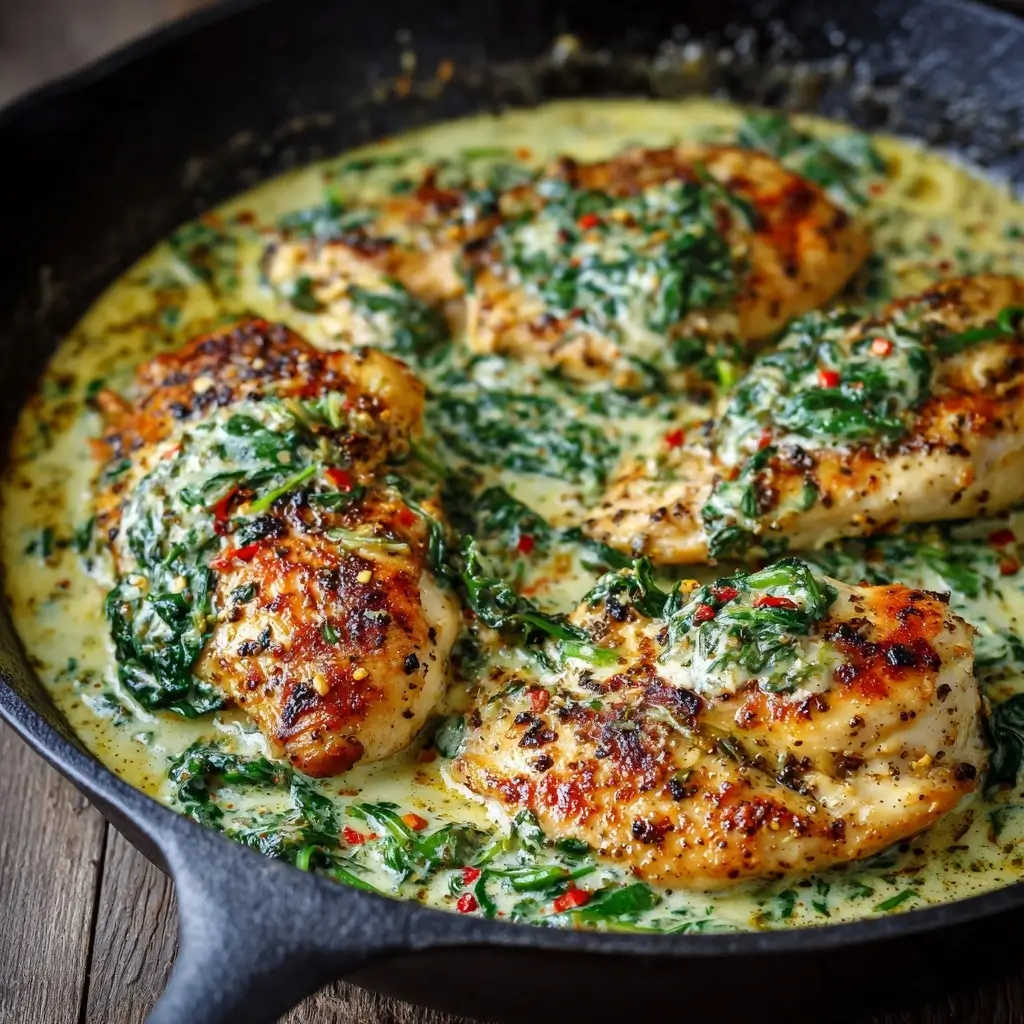
Garlic Butter Chicken with Spinach Cream Sauce is a restaurant-worthy, yet surprisingly approachable weeknight dinner that delivers rich, velvety comfort in every bite. This elegant yet humble dish marries tender pan-seared chicken breasts with a luxuriously smooth, herb-flecked sauce—creamy without being heavy, garlicky without overwhelming, and deeply savory with the earthy sweetness of fresh spinach. Whether you’re impressing guests, treating yourself after a long day, or simply craving something nourishing and soul-satisfying, this recipe strikes the perfect balance between indulgence and wholesome simplicity. Its harmonious blend of textures—crisp-edged chicken, silky sauce, and gently wilted spinach—makes it feel both decadent and grounded, embodying modern comfort food at its finest.
The History
While no single documented origin exists for “Garlic Butter Chicken with Spinach Cream Sauce,” its roots trace back to a confluence of culinary traditions spanning centuries and continents. The use of garlic butter as a finishing element finds early expression in French cuisine—think *beurre noir* (brown butter) and *beurre blanc*, where emulsified butter elevates proteins with richness and depth. In Italy, *burro e salvia* (butter and sage) has long been used to finish veal or chicken, while Spanish and Portuguese cuisines celebrate garlic-infused olive oil and butter sauces like *mojo blanco*. Spinach, cultivated since ancient Persia and introduced to Europe via Moorish Spain in the 12th century, became a staple green across Mediterranean and Northern European kitchens by the Renaissance. Its pairing with cream-based sauces gained popularity in 19th-century French *haute cuisine*, particularly in dishes like *épinards à la crème*. The American home-cooking evolution of this dish accelerated in the mid-20th century, as refrigerated cream and pre-minced garlic became widely available, and cookbooks began emphasizing “elegant but easy” dinners—culminating in today’s beloved fusion: golden-brown chicken enveloped in a lush, garlic-kissed, spinach-studded cream sauce that honors tradition while embracing accessibility.
Ingredients Breakdown
Every element in this dish plays a deliberate role—not just for flavor, but for texture, balance, and structural integrity of the sauce:
- Chicken Breasts (boneless, skinless): Opt for uniform thickness (about ¾-inch) to ensure even cooking. Pounding them lightly prevents dryness and allows quick searing while retaining juiciness. High-quality, air-chilled, or organic chicken yields superior flavor and moisture retention.
- Unsalted Butter: Used in two stages—first for searing (high smoke point when clarified or combined with oil), then added at the end for richness and gloss. Unsalted butter gives precise control over seasoning.
- Olive Oil (or Avocado Oil): Added to the pan alongside butter to raise the smoke point and prevent burning during high-heat searing. Extra virgin olive oil adds fruitiness if used only for finishing, but refined versions are preferred for cooking.
- Fresh Garlic (minced or finely grated): Fresh is non-negotiable—pre-minced jarred garlic lacks brightness and can turn bitter when sautéed. Grating on a microplane releases maximum aromatic compounds and ensures even distribution without harsh raw bits.
- Shallots (finely diced): A milder, sweeter cousin to onions, shallots add layered allium depth without sharpness—essential for building the sauce’s aromatic base.
- Dry White Wine (e.g., Sauvignon Blanc or Pinot Grigio): Adds acidity and complexity, lifting the richness of the sauce. It deglazes the flavorful browned bits (*fond*) from the pan—a critical step for umami depth. Substitute with low-sodium chicken broth + ½ tsp lemon juice if avoiding alcohol.
- Low-Sodium Chicken Broth: Provides savory backbone and body. Homemade or high-quality store-bought brands (like Kettle & Fire or Better Than Bouillon) make a measurable difference in clarity and depth.
- Heavy Cream (36–40% fat): Essential for stability and luxurious mouthfeel. Lower-fat alternatives (half-and-half, whole milk) will not thicken properly and may curdle. For dairy-free adaptation, see Variations section.
- Fresh Baby Spinach: Tender, young leaves wilt quickly and retain vibrant color and mild sweetness. Mature spinach works but requires longer cooking and may become stringy; remove stems first.
- Grated Parmesan Cheese (freshly grated): Adds umami, saltiness, and subtle nuttiness. Pre-grated versions contain anti-caking agents that hinder melting and create graininess. Use Parmigiano-Reggiano for best results.
- Fresh Herbs (parsley, thyme, optional dill or chives): Parsley offers bright, clean finish; thyme contributes earthy warmth. Add delicate herbs at the very end to preserve volatile oils and freshness.
- Lemon Zest and Juice: A secret weapon—zest adds aromatic citrus oil without acidity; juice balances the sauce’s richness. Never skip this step—it transforms the dish from “good” to “unforgettable.”
- Seasonings: Fine sea salt and freshly cracked black pepper are foundational. A pinch of freshly grated nutmeg (optional) enhances the spinach’s natural sweetness and deepens creaminess.
Step-by-Step Recipe
- Prep & Season Chicken: Place chicken breasts between two sheets of parchment paper or plastic wrap. Gently pound to an even ¾-inch thickness using a meat mallet or heavy skillet. Pat *extremely* dry with paper towels—this ensures a golden crust, not steam. Season both sides generously with salt and pepper.
- Heat Pan & Sear: Heat a large stainless steel or cast-iron skillet over medium-high heat. Add 1 tbsp olive oil and 1 tbsp butter. When butter melts and begins to foam (not brown), carefully place chicken in the pan without crowding. Cook undisturbed for 5–6 minutes until deeply golden and easily releases from the pan. Flip and cook another 4–5 minutes until internal temperature reaches 160°F (it will rise to 165°F while resting). Transfer to a clean plate, tent loosely with foil, and rest for 5 minutes—this locks in juices.
- Build Aromatic Base: Reduce heat to medium-low. In the same skillet, add remaining 1 tbsp butter. Once melted, add shallots and sauté 2 minutes until translucent. Add garlic and cook 45 seconds—just until fragrant (do not let brown).
- Deglaze & Simmer: Pour in white wine, scraping vigorously with a wooden spoon to lift all browned bits from the pan bottom. Simmer 2–3 minutes until reduced by half. Stir in chicken broth and simmer 3 more minutes to concentrate flavor.
- Enrich & Thicken: Reduce heat to low. Gradually whisk in heavy cream, ensuring no lumps form. Simmer gently (do not boil rapidly) for 4–5 minutes, stirring frequently, until sauce thickens enough to coat the back of a spoon.
- Incorporate Spinach: Stir in fresh spinach in batches, allowing each addition to wilt before adding more. Cook just until spinach is tender and vibrant green—about 90 seconds total. Overcooking leads to dull color and mushiness.
- Finish with Flavor: Remove from heat. Stir in grated Parmesan, lemon zest, lemon juice, and nutmeg (if using). Taste and adjust seasoning—add salt only if needed (Parmesan and broth contribute sodium). Fold in most of the chopped parsley, reserving some for garnish.
- Combine & Serve: Slice rested chicken crosswise into ½-inch medallions. Gently fold slices into the warm sauce to coat without breaking. Let sit 1 minute to marry flavors. Garnish with remaining parsley, extra lemon zest, and a final drizzle of high-quality olive oil or a pat of cold butter for sheen.
Tips
- Dry Chicken is Key: Moisture is the enemy of browning. Even a light film of water creates steam instead of sear. Pat twice—once before seasoning, once after.
- Don’t Crowd the Pan: Overcrowding drops the pan temperature, causing chicken to steam and gray instead of caramelize. Cook in batches if necessary.
- Control Garlic Heat: Garlic burns in under 60 seconds at medium-high. Keep it moving and lower the heat as soon as aromas bloom.
- Whisk Constantly When Adding Cream: Prevents separation and encourages gentle emulsification. If sauce looks thin, simmer longer—but never boil hard, or cream may break.
- Rest Chicken Before Slicing: Skipping this step causes precious juices to spill onto the cutting board instead of staying in the meat. Five minutes makes a dramatic difference in tenderness.
- Spinach Timing Matters: Add it off-heat or at the very end of cooking. Residual heat finishes wilting without overcooking. Stir only until vibrant green—no more than 90 seconds.
- Acid Last, Always: Lemon juice added too early can cause cream to curdle slightly. Incorporate it at the final stage for brightness and stability.
- Sauce Consistency Check: Dip a spoon into sauce, run your finger across the back—if the line holds cleanly, it’s ready. Too thin? Simmer 1–2 more minutes. Too thick? Whisk in 1 tsp warm broth.
- Use a Metal Spoon for Testing: Wooden spoons absorb heat and don’t give accurate visual cues for coating consistency.
- Leftover Magic: This sauce freezes beautifully (up to 3 months). Thaw overnight in fridge and gently reheat over low heat with a splash of broth to restore silkiness.
Variations and Customizations
Protein Swaps
- Chicken Thighs: More forgiving and flavorful—use boneless, skinless thighs. Sear 6–7 min per side; cook to 165°F. Their higher fat content enriches the sauce naturally.
- Shrimp or Scallops: Sauté 2–3 minutes per side until opaque or just firm. Add to sauce at the very end to avoid overcooking.
- Thin-Cut Pork Cutlets: Similar prep to chicken—pound to ¼-inch, sear 2–3 min per side. Complements the creamy-savory profile beautifully.
Dietary Adaptations
- Dairy-Free: Replace butter with vegan butter (Miyoko’s or Earth Balance), heavy cream with full-fat coconut milk (canned, stirred well) or cashew cream (soak ½ cup raw cashews in hot water 15 min, blend with ¾ cup water until ultra-smooth). Omit Parmesan or use nutritional yeast + almond flour blend for umami.
- Lower-Carb/Keto: Already naturally low-carb! Ensure broth and wine are sugar-free. Boost fats with extra butter or a swirl of truffle oil.
- Gluten-Free: Naturally GF—just verify broth and wine labels for hidden gluten (rare, but possible in flavored broths).
- Vegan: Use pressed, baked tofu or king oyster mushrooms (sliced thick and seared). Replace all dairy with cashew cream, vegan butter, and nutritional yeast. Add miso paste (½ tsp white miso) for deep savoriness.
Flavor & Texture Twists
- Mushroom & Spinach: Sauté 8 oz sliced cremini or wild mushrooms with shallots before adding garlic—adds meaty umami and chew.
- Sun-Dried Tomato & Spinach: Stir in ¼ cup chopped oil-packed sun-dried tomatoes (drained) with the spinach for tangy-sweet contrast.
- Creamy Dijon Variation: Whisk in 1 tbsp whole-grain or classic Dijon mustard with the cream for sharp, complex depth.
- Herb-Forward: Double the thyme and add 1 tsp chopped fresh rosemary (finely minced) with the garlic—or infuse cream with herbs by warming gently with sprigs, then straining.
- Spiced Warmth: Add ¼ tsp smoked paprika or Aleppo pepper flakes with the garlic for gentle heat and aroma.
- Umami Bomb: Stir in 1 tsp white miso paste or ½ tsp soy sauce (reduced sodium) with the broth for profound savoriness without detectable “soy” flavor.
Health Considerations and Nutritional Value
This dish offers notable nutritional strengths when prepared mindfully—and several considerations for balanced enjoyment:
Nutritional Highlights (per serving, approx. 1 chicken breast + ¾ cup sauce)
- High-Quality Protein: ~38g chicken breast supports muscle maintenance, satiety, and metabolic health.
- Vitamin K Powerhouse: One cup cooked spinach provides >600% DV of vitamin K—critical for blood clotting and bone mineralization.
- Folate & Iron: Spinach contributes significant folate (B9) for cellular repair and non-heme iron—enhanced by vitamin C from lemon juice for better absorption.
- Healthy Fats: Olive oil and butter supply monounsaturated and saturated fats essential for hormone synthesis and nutrient absorption (especially fat-soluble vitamins A, D, E, K found in spinach and dairy).
- Antioxidant-Rich: Garlic contains allicin (anti-inflammatory, cardiovascular-supportive); lemon zest adds limonene; parsley delivers apigenin and vitamin C.
Considerations for Balanced Enjoyment
- Cream & Sodium: Heavy cream contributes saturated fat (~10g/serving); moderate portions align with heart-healthy guidelines. Using low-sodium broth and limiting added salt keeps sodium in check (~420mg/serving with careful seasoning).
- Calorie Awareness: At ~580–650 kcal per serving, it’s satisfying but portion-conscious—ideal for one balanced meal, not daily consumption unless activity level is high.
- Digestive Notes: Garlic and spinach are FODMAP-friendly in moderate servings (1 cup raw spinach = low-FODMAP; garlic is high-FODMAP—use infused oil or garlic-infused butter for sensitive individuals).
- Bone Health Synergy: Vitamin K (spinach) + calcium (Parmesan, dairy) + vitamin D (naturally present in cream/butter, especially if grass-fed) work synergistically for bone density.
- Anti-Inflammatory Profile: Omega-3s from pasture-raised butter/eggs (if using), polyphenols from olive oil and lemon, and sulfur compounds from garlic collectively support systemic inflammation balance.
Note: Nutritional values vary based on ingredient brands, exact measurements, and substitutions. For personalized guidance, consult a registered dietitian.
Ingredients
- 2 (6–8 oz) boneless, skinless chicken breasts, pounded to ¾-inch thickness
- ¼ tsp fine sea salt, plus more to taste
- ¼ tsp freshly cracked black pepper, plus more to taste
- 2 tbsp extra-virgin olive oil (or avocado oil), divided
- 3 tbsp unsalted butter, divided
- 1 large shallot (about ¼ cup), finely diced
- 4 cloves garlic, finely grated or minced
- ½ cup dry white wine (e.g., Sauvignon Blanc)
- 1 cup low-sodium chicken broth
- ¾ cup heavy cream (36–40% fat)
- 4 cups fresh baby spinach (about 4 oz)
- ⅓ cup freshly grated Parmesan cheese (Parmigiano-Reggiano preferred)
- Zest of 1 lemon (about 1 tsp)
- 1 tbsp fresh lemon juice
- ¼ tsp freshly grated nutmeg (optional but recommended)
- 3 tbsp fresh flat-leaf parsley, finely chopped, plus more for garnish
- Additional flaky sea salt and lemon wedges for serving
Directions
- Pat chicken breasts *very* dry with paper towels. Season both sides with ¼ tsp salt and ¼ tsp pepper.
- Heat a large skillet over medium-high heat. Add 1 tbsp olive oil and 1 tbsp butter. When butter foams, add chicken without crowding. Sear 5–6 minutes per side until golden and internal temperature reaches 160°F. Transfer to a plate, tent with foil, and rest 5 minutes.
- Reduce heat to medium-low. Add remaining 1 tbsp butter to same skillet. Add shallots; cook 2 minutes until soft. Add garlic; cook 45 seconds until fragrant.
- Pour in wine, scraping pan to lift browned bits. Simmer 2–3 minutes until reduced by half. Stir in broth; simmer 3 minutes more.
- Reduce heat to low. Whisk in cream gradually. Simmer gently 4–5 minutes, stirring often, until thickened to coat spoon.
- Add spinach in batches, stirring until wilted before adding more. Cook 90 seconds total—until vibrant green and tender.
- Remove from heat. Stir in Parmesan, lemon zest, lemon juice, nutmeg, and 2 tbsp parsley.
- Slice rested chicken. Gently fold into sauce. Let sit 1 minute. Garnish with remaining parsley, lemon zest, and flaky salt. Serve immediately with lemon wedges.
FAQ
- Can I use frozen spinach?
- Yes—but thaw completely and squeeze out *all* excess water (use cheesecloth or clean towel). Frozen spinach releases significant liquid, which will thin the sauce and mute flavor. Fresh is strongly preferred for texture and brightness.
- Why does my sauce look curdled or greasy?
- Most commonly caused by overheating the cream (boiling instead of gentle simmering), adding cold cream to a very hot pan, or vigorous whisking that breaks the emulsion. Fix it by removing from heat, letting cool 1 minute, then whisking in 1 tsp cold butter or a splash of warm broth. Next time, add cream gradually over low heat and stir gently.
- Can I make this ahead of time?
- The chicken and sauce can be made separately up to 3 days ahead and stored covered in the fridge. Reheat sauce gently over low heat with 1–2 tsp broth to loosen; warm chicken in oven or skillet. Combine just before serving. Freezing is excellent—cool completely, freeze sauce up to 3 months; thaw overnight, reheat slowly.
- What sides pair best with this dish?
- Its rich, creamy nature calls for textural and acidic contrasts: roasted asparagus or broccoli, herbed quinoa or farro, crusty artisan bread for soaking, simple arugula salad with lemon vinaigrette, or buttered egg noodles. Avoid overly starchy or heavy sides (like mashed potatoes) unless serving as a smaller portion.
- Is there a way to lighten this without sacrificing flavor?
- Absolutely: substitute half the cream with evaporated skim milk (adds body without fat), use Greek yogurt (stir in off-heat at the end to prevent curdling), or increase spinach volume to 6 cups for bulk and nutrients. Boost garlic, lemon, herbs, and umami (miso, mushrooms) to maintain depth without added fat.
- Can I cook this in an Instant Pot or slow cooker?
- Not ideal—the sear and delicate emulsion rely on stovetop control. However, you can use the IP for chicken: pressure cook 8 minutes (natural release), then finish sauce on sauté mode. Slow cooker yields overly soft chicken and broken sauce—best avoided.
- What wine should I serve with it?
- A crisp, high-acid white complements the richness perfectly: Albariño, Grüner Veltliner, or unoaked Chardonnay. For red lovers, choose a light-bodied, low-tannin option like Pinot Noir or Gamay—avoid bold Cabernets that clash with cream.
- My garlic tasted bitter—what went wrong?
- Burning garlic is the culprit. It turns acrid within seconds at high heat. Always sauté garlic last, over medium-low heat, and stir constantly. If using pre-minced, reduce quantity by half and add later in the process.
- Can I double this recipe?
- Yes—but use two skillets or a very large (14-inch) pan to avoid overcrowding. Do not double the garlic/shallot ratio exactly; increase by 1.5x max to prevent overpowering. Simmer times may extend slightly for thicker sauce volume.
- How do I reheat leftovers without breaking the sauce?
- Reheat gently in a saucepan over low heat, stirring constantly. Add 1–2 tsp warm broth or cream to restore silkiness. Avoid microwaving uncovered—it causes rapid, uneven heating that separates fats.
Summary
Garlic Butter Chicken with Spinach Cream Sauce is a masterclass in balancing rustic technique with refined elegance—featuring juicy, golden chicken enveloped in a luxuriously smooth, herb-flecked sauce that’s deeply savory, bright with lemon, and enriched by the earthy sweetness of fresh spinach.
With pantry-friendly ingredients, adaptable to dietary needs, and scalable for any occasion—from cozy solo meals to dinner party centerpieces—it’s a timeless, nourishing, and endlessly customizable dish that consistently delivers restaurant-quality satisfaction in your own kitchen.