Introduction
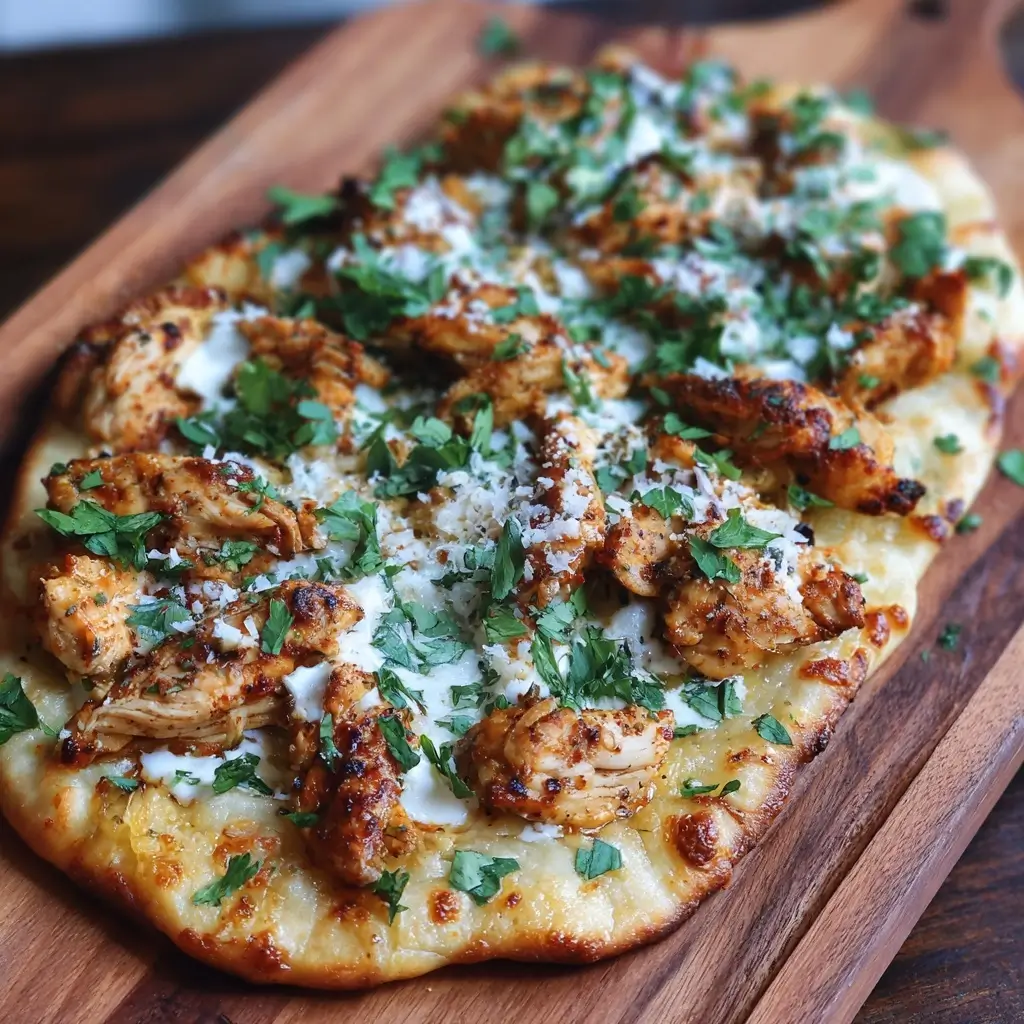
Garlic Butter Chicken Flatbread is a vibrant, restaurant-quality dish that effortlessly bridges the gap between comfort food and gourmet flair. With its tender, herb-infused chicken breast, rich golden garlic butter sauce, and soft, pillowy flatbread—often toasted to a delicate crisp—it delivers layers of savory depth, aromatic warmth, and textural contrast in every bite. Whether served as a weeknight dinner, a crowd-pleasing appetizer at a gathering, or a portable lunch wrapped in parchment, this dish satisfies cravings while remaining approachable for home cooks of all skill levels. Its versatility, bold yet balanced flavor profile, and minimal prep time make it a beloved staple in modern kitchens—from busy parents seeking nutritious meals to food enthusiasts experimenting with global-inspired twists.
The History
While there is no single documented origin for Garlic Butter Chicken Flatbread, its roots trace back to a confluence of culinary traditions. The use of garlic butter as a finishing sauce has deep European heritage—particularly French (beurre à la bourguignonne) and Italian (burro aglio e prezzemolo)—where it’s traditionally used to elevate grilled meats and seafood. Flatbreads, on the other hand, span millennia and continents: from Indian roti and naan, Middle Eastern lavash and pita, to Mediterranean pide and Greek tzatziki-topped pitas. In the late 20th and early 21st centuries, American fusion cuisine began marrying these elements—grilled or pan-seared proteins with compound butters and handheld flatbread vehicles—spurred by food media, celebrity chefs, and the rise of fast-casual concepts like Flatbreads & Fireworks and local artisanal pizzerias offering “flatbread sandwiches.” Garlic Butter Chicken Flatbread emerged organically from this movement: a natural evolution of chicken pan sauces meeting the convenience and rustic charm of flatbread. Its popularity exploded on social media platforms like Pinterest and TikTok around 2018–2020, where short-form recipe videos showcased sizzling butter, golden sear marks, and generous herb garnishes—transforming it into a viral kitchen essential.
Ingredients Breakdown
Every component plays a purposeful role—not just in flavor, but in texture, moisture retention, and structural integrity:
- Chicken Breast (boneless, skinless): Lean, mild, and quick-cooking—ideal for absorbing marinade and developing a golden crust. Thin-cut or pounded to ½-inch thickness ensures even cooking and tenderness.
- Unsalted Butter: Provides richness, mouthfeel, and emulsifying power. Unsalted allows precise sodium control; clarified butter can be used for higher smoke point during searing.
- Fresh Garlic (minced or microplaned): Far superior to jarred—its volatile sulfur compounds deliver pungent aroma and sweet, nutty complexity when gently cooked in butter. Too much raw garlic can overwhelm; slow infusion unlocks balance.
- Dry White Wine (e.g., Sauvignon Blanc or Pinot Grigio): Adds acidity, fruitiness, and depth—deglazes the pan, lifts fond, and balances fat. Substitute with low-sodium chicken broth or lemon juice + water if avoiding alcohol.
- Fresh Herbs (parsley, thyme, chives): Parsley adds bright, grassy freshness; thyme contributes earthy floral notes; chives lend mild oniony nuance. Always added at the end to preserve volatile oils.
- Lemon Juice & Zest: Juice provides vibrant acidity to cut through richness; zest contributes aromatic citrus oils that perfume the entire dish without adding liquid.
- Flatbread (naan, pita, lavash, or homemade dough): Acts as both vessel and flavor carrier. Naan offers subtle yogurt tang and chew; whole-wheat pita adds fiber and nuttiness; lavash brings crispness and neutral canvas. For authenticity, lightly charred on a griddle or cast-iron skillet enhances smoky dimension.
- Grated Parmesan or Pecorino Romano: Salty, umami-rich finish that amplifies savoriness without overpowering. Optional but highly recommended for depth.
- Olive Oil or Avocado Oil: High-heat oil for initial searing—ensures proper Maillard reaction and crust formation without burning.
- Smoked Paprika or Aleppo Pepper (optional): Adds subtle warmth and visual appeal—complements garlic’s earthiness without heat dominance.
Step-by-Step Recipe
- Prep the Chicken: Pat chicken breasts *extremely* dry with paper towels—this is critical for browning. Pound gently between plastic wrap to an even ½-inch thickness using a meat mallet or heavy skillet. Season both sides generously with kosher salt and freshly ground black pepper. Let rest at room temperature for 15 minutes.
- Make the Garlic Butter Base: In a small bowl, combine 4 tbsp softened unsalted butter, 3 minced garlic cloves, 1 tsp lemon zest, 1 tbsp finely chopped fresh parsley, ½ tsp dried thyme (or 1 tsp fresh), and a pinch of smoked paprika. Mix until smooth. Set aside—do not refrigerate; cold butter will seize when added to hot pan.
- Sear the Chicken: Heat 1½ tbsp high-smoke-point oil in a large stainless steel or cast-iron skillet over medium-high heat until shimmering. Place chicken in pan without crowding. Cook undisturbed for 5–6 minutes until deeply golden and easily releases from pan. Flip and cook 4–5 more minutes until internal temperature reaches 155°F (it will carry over to 165°F). Transfer to a clean plate, tent loosely with foil, and rest 5 minutes.
- Build the Sauce: Reduce heat to medium. Pour off excess oil, leaving ~1 tbsp and browned bits (fond). Add 2 more minced garlic cloves and sauté 30 seconds until fragrant—do not burn. Deglaze with ¼ cup dry white wine, scraping vigorously with a wooden spoon to lift all fond. Simmer 1–2 minutes until reduced by half. Stir in 2 tbsp lemon juice and simmer 30 seconds.
- Finish with Butter & Herbs: Remove pan from heat. Whisk in the prepared garlic butter, one tablespoon at a time, allowing each to melt and emulsify before adding the next. Return pan to lowest heat if needed—but do not boil, or butter will separate. Stir in remaining 2 tbsp fresh parsley, 1 tsp lemon zest, and optional grated cheese. Taste and adjust salt/acid.
- Warm & Char the Flatbread: While sauce finishes, heat a dry cast-iron skillet or grill pan over medium-high. Warm flatbreads one at a time for 45–60 seconds per side until pliable and lightly blistered. For extra flavor, brush lightly with olive oil before heating.
- Assemble: Slice rested chicken diagonally into thin strips. Spoon warm garlic butter sauce generously over flatbread. Arrange chicken evenly, then drizzle with any remaining sauce from the plate. Garnish with extra parsley, lemon wedges, flaky sea salt, and freshly cracked black pepper. Serve immediately.
Tips
- Dry Chicken Is Non-Negotiable: Moisture is the enemy of browning. If chicken steams instead of sears, you’ll miss the foundational flavor layer.
- Control Garlic Burn: Raw garlic burns easily above 300°F. Always add minced garlic *after* initial fond is created—and only for 20–45 seconds before deglazing.
- Emulsify Like a Pro: Whisk butter in off-heat or lowest possible heat. Cold butter + hot liquid = broken sauce. Softened butter binds smoothly into warm (not boiling) liquid.
- Rest the Chicken: Skipping the 5-minute rest causes juices to flood out upon slicing—leading to dry, stringy results. Resting redistributes moisture throughout the muscle fibers.
- Flatbread Matters: Avoid pre-toasted or cracker-style flatbreads—they become brittle and tear. Opt for soft, pliable varieties. If using store-bought naan, choose plain or garlic—skip “butter” versions which contain dairy that may separate when heated.
- Sauce Consistency Hack: If sauce looks thin or oily, whisk in 1 tsp Dijon mustard—it acts as an emulsifier and adds gentle tang.
- Double-Duty Garlic: Reserve 1 clove raw, finely grated, to stir in *at the very end*—adds bright, spicy top-note that contrasts beautifully with mellow cooked garlic.
- Batch Cooking Friendly: Marinate chicken up to 24 hours ahead (no acid in marinade—just oil, salt, pepper, herbs). Garlic butter can be made 3 days ahead and stored covered in fridge—soften before using.
- Leftover Magic: Extra garlic butter makes an exceptional spread for roasted vegetables, corn on the cob, or melted over grilled shrimp or steak.
- Timing Symphony: Start warming flatbreads *while* sauce simmers—everything should finish within 90 seconds of each other for peak temperature and texture harmony.
Variations and Customizations
This recipe is a master template—infinitely adaptable to dietary needs, seasonal produce, pantry staples, and global inspirations:
- Spicy Harissa Version: Stir 1 tbsp harissa paste into garlic butter; top finished flatbread with crumbled feta and pickled red onions.
- Mediterranean Twist: Add kalamata olives, sun-dried tomatoes, and crumbled goat cheese after saucing. Finish with oregano and a drizzle of high-quality olive oil.
- Asian-Inspired: Replace white wine with 2 tbsp dry sherry + 1 tsp rice vinegar; swap parsley for cilantro and scallions; add 1 tsp grated ginger to garlic butter; garnish with sesame seeds and chili crisp.
- Low-Carb/Keto: Serve garlic butter chicken over grilled zucchini ribbons or cauliflower “flatbread” (riced cauliflower + egg + cheese, baked thin).
- Vegan Adaptation: Use seitan or marinated king oyster mushrooms instead of chicken; substitute cultured vegan butter and nutritional yeast for Parmesan; use tamari instead of wine for umami depth.
- Kid-Friendly Mild: Omit garlic entirely from butter (use roasted garlic purée instead); add 1 tsp honey to sauce for subtle sweetness; serve with mild ranch or yogurt-dill dip.
- Breakfast Flatbread: Top with a fried or poached egg, crumbled bacon, and chives—sauce remains the same, but reduce lemon juice by half.
- Meal Prep Style: Cook chicken and sauce separately; store flatbreads at room temp. Reheat chicken in sauce, then warm flatbread just before serving—prevents sogginess.
- Gourmet Upscale: Use chicken thigh meat for richer flavor; finish sauce with truffle butter and microgreens; serve on house-made sourdough flatbread with fermented black garlic aioli.
- Herb Garden Edition: Rotate fresh herbs seasonally—basil in summer, tarragon in spring, rosemary in winter—with complementary citrus (orange with rosemary, lime with basil).
Health Considerations and Nutritional Value
A single serving (one 6-inch flatbread with 5 oz chicken and full sauce) contains approximately 520–610 calories, depending on flatbread type and butter quantity. Key nutritional highlights include:
- High-Quality Protein: ~42g from chicken breast supports muscle maintenance, satiety, and metabolic health. Chicken thighs offer more bioavailable iron and zinc but increase saturated fat slightly.
- Heart-Healthy Fats: Butter contains conjugated linoleic acid (CLA) and butyrate—both linked to anti-inflammatory benefits—especially when sourced from grass-fed cows. Olive oil contributes monounsaturated fats and polyphenols.
- Phytonutrient Power: Garlic contains allicin (activated upon chopping/crushing), associated with cardiovascular support and immune modulation. Lemon zest delivers limonene—a potent antioxidant shown to support liver detox pathways.
- Fiber Options: Whole-grain flatbreads provide 3–5g of fiber per serving, aiding digestion and glycemic control. Pair with a side salad for added fiber and micronutrients.
- Sodium Awareness: Most sodium comes from added salt and cheese (~480–650mg/serving). Reduce by using low-sodium broth instead of wine, omitting cheese, and seasoning with herbs/spices instead of salt.
- Lower-Glycemic Swaps: For blood sugar management, choose sprouted grain or almond-flour flatbreads (net carbs ~8–12g vs. 30g in white naan).
- Dietary Accommodations: Naturally gluten-free if using certified GF flatbread (e.g., cassava or coconut flour-based); dairy-free with plant-based butter and nutritional yeast; nut-free and soy-free with careful label reading.
- Portion Mindfulness: The richness encourages slower eating—leveraging satiety signals. Serve with non-starchy vegetables (roasted asparagus, cucumber ribbons, cherry tomatoes) to increase volume and nutrients without significant calorie addition.
Consult a registered dietitian for personalized modifications—especially for hypertension, diabetes, or specific elimination diets (e.g., FODMAP: reduce garlic to infused oil only and use garlic-infused olive oil instead of raw garlic).
Ingredients
- 2 (6-oz) boneless, skinless chicken breasts, pounded to ½-inch thickness
- 2 tbsp high-smoke-point oil (avocado, grapeseed, or light olive oil)
- 1 tsp kosher salt (plus more to taste)
- ½ tsp freshly ground black pepper
- 6 tbsp unsalted butter, divided (4 tbsp softened, 2 tbsp cold)
- 5 garlic cloves, minced (3 for butter, 2 for sauce)
- ¼ cup dry white wine (Sauvignon Blanc or Pinot Grigio) or low-sodium chicken broth
- 3 tbsp fresh lemon juice (about 1½ lemons)
- 2 tsp lemon zest
- ¼ cup finely chopped fresh flat-leaf parsley (plus extra for garnish)
- 1 tsp fresh thyme leaves (or ½ tsp dried)
- ¼ tsp smoked paprika (optional)
- 2 (6- to 7-inch) soft flatbreads (naan, whole-wheat pita, or lavash)
- 2 tbsp grated Parmesan or Pecorino Romano (optional)
- Flaky sea salt and extra black pepper, for finishing
- Lemon wedges, for serving
Directions
- Pat chicken breasts completely dry with paper towels. Place between two sheets of plastic wrap and gently pound with a meat mallet or heavy skillet until uniformly ½-inch thick. Season both sides with 1 tsp kosher salt and ½ tsp black pepper. Let sit at room temperature 15 minutes.
- In a small bowl, combine 4 tbsp softened butter, 3 minced garlic cloves, 1 tsp lemon zest, 2 tbsp parsley, 1 tsp thyme, and smoked paprika (if using). Stir until fully incorporated. Set aside at room temperature.
- Heat oil in a large stainless steel or cast-iron skillet over medium-high heat until shimmering (approx. 375°F). Carefully place chicken in pan without crowding. Cook undisturbed 5–6 minutes until deeply golden brown and releases easily. Flip and cook 4–5 minutes more until internal temperature reads 155°F. Transfer to a clean plate, tent loosely with foil, and rest 5 minutes.
- Reduce heat to medium. Pour off excess oil, leaving about 1 tbsp and browned bits. Add remaining 2 minced garlic cloves; sauté 30 seconds until fragrant. Immediately pour in white wine, scraping bottom vigorously with wooden spoon to loosen fond. Simmer 1–2 minutes until reduced by half.
- Add lemon juice and simmer 30 seconds. Remove pan from heat. Whisk in room-temp garlic butter, one tablespoon at a time, until fully melted and emulsified. Return to lowest heat only if needed—do not boil. Stir in remaining 2 tbsp parsley, 1 tsp lemon zest, and cheese (if using). Taste and adjust salt or acidity.
- Heat a dry cast-iron or heavy skillet over medium-high. Warm flatbreads one at a time for 45–60 seconds per side until pliable and lightly blistered. Do not stack—keep warm wrapped in clean kitchen towel.
- Slice rested chicken diagonally into ½-inch strips. Spoon generous amount of warm sauce onto center of each flatbread. Arrange chicken evenly over sauce. Drizzle with any accumulated juices from resting plate. Garnish with extra parsley, lemon wedges, flaky salt, and black pepper.
- Serve immediately while flatbread is warm and sauce is glossy. For best experience, fold flatbread in half or roll like a taco to contain filling.
FAQ
- Can I use frozen chicken?
- Yes—but thaw completely in the refrigerator overnight and pat *extremely* dry before cooking. Never cook from frozen; uneven heating leads to rubbery texture and poor browning.
- Why does my garlic butter sauce break or look greasy?
- Most commonly caused by overheating the sauce after adding butter or using cold butter. Always remove pan from heat before whisking in butter, and ensure butter is softened—not melted or chilled. If broken, whisk in 1 tsp warm broth or lemon juice to re-emulsify.
- Can I make this ahead for meal prep?
- Absolutely. Cook chicken and sauce separately. Store chicken airtight for up to 4 days; sauce for up to 5 days refrigerated or 3 months frozen. Reheat chicken gently in sauce over low heat—do not boil. Warm flatbreads fresh before assembling.
- What’s the best flatbread for gluten-free diets?
- Certified gluten-free options include Siete Almond Flour Tortillas, BFree Gluten-Free Wraps, or homemade cassava flour flatbread. Avoid “gluten-removed” products unless certified GF—they’re unsafe for celiac disease.
- Can I air fry the chicken instead of pan-searing?
- You can—but texture differs significantly. Air frying yields drier, less flavorful results due to lack of fond and Maillard-driven depth. If using, marinate chicken in 1 tbsp olive oil + herbs for 30 minutes first, and finish under broiler 1 minute to enhance color.
- Is there a lower-fat version?
- Yes. Replace half the butter with unsweetened applesauce or mashed avocado (for creaminess), use skinless chicken thighs (more flavor at similar fat), and opt for whole-wheat flatbread. Note: fat carries flavor—reducing too much compromises authenticity.
- My garlic tastes bitter—what went wrong?
- Bitterness indicates burned garlic. Garlic burns in under 60 seconds over medium-high heat. Always add it *after* deglazing and reduce heat slightly—or infuse oil with garlic first, then strain before searing chicken.
- Can I grill this outdoors?
- Yes! Grill chicken over medium direct heat (400°F) for 5–6 minutes per side. Prepare sauce on a side burner or indoors. Toast flatbreads directly on grill grates for 30 seconds per side. Assembly remains identical.
- How do I prevent soggy flatbread?
- Never assemble more than 2 minutes before serving. Warm flatbreads just before topping. If prepping for guests, keep components separate until the final 90 seconds. A light brush of olive oil before toasting creates a moisture barrier.
- What wine pairs well with this dish?
- A crisp, unoaked Chardonnay or dry Riesling complements the garlic and lemon. For red lovers, try a lighter Pinot Noir with bright acidity and low tannins. Non-alcoholic: sparkling lemon-ginger water or hibiscus iced tea.
Summary
Garlic Butter Chicken Flatbread is a harmonious, globally inspired dish that celebrates simplicity elevated—tender pan-seared chicken enrobed in a luxuriously aromatic, herb-flecked garlic butter sauce, served atop warm, char-kissed flatbread for handheld satisfaction.
With customizable variations, thoughtful health adaptations, and foolproof technique rooted in foundational cooking principles, it’s as nourishing for the body as it is joyful for the senses—proving that extraordinary flavor need not require extraordinary effort.