Introduction
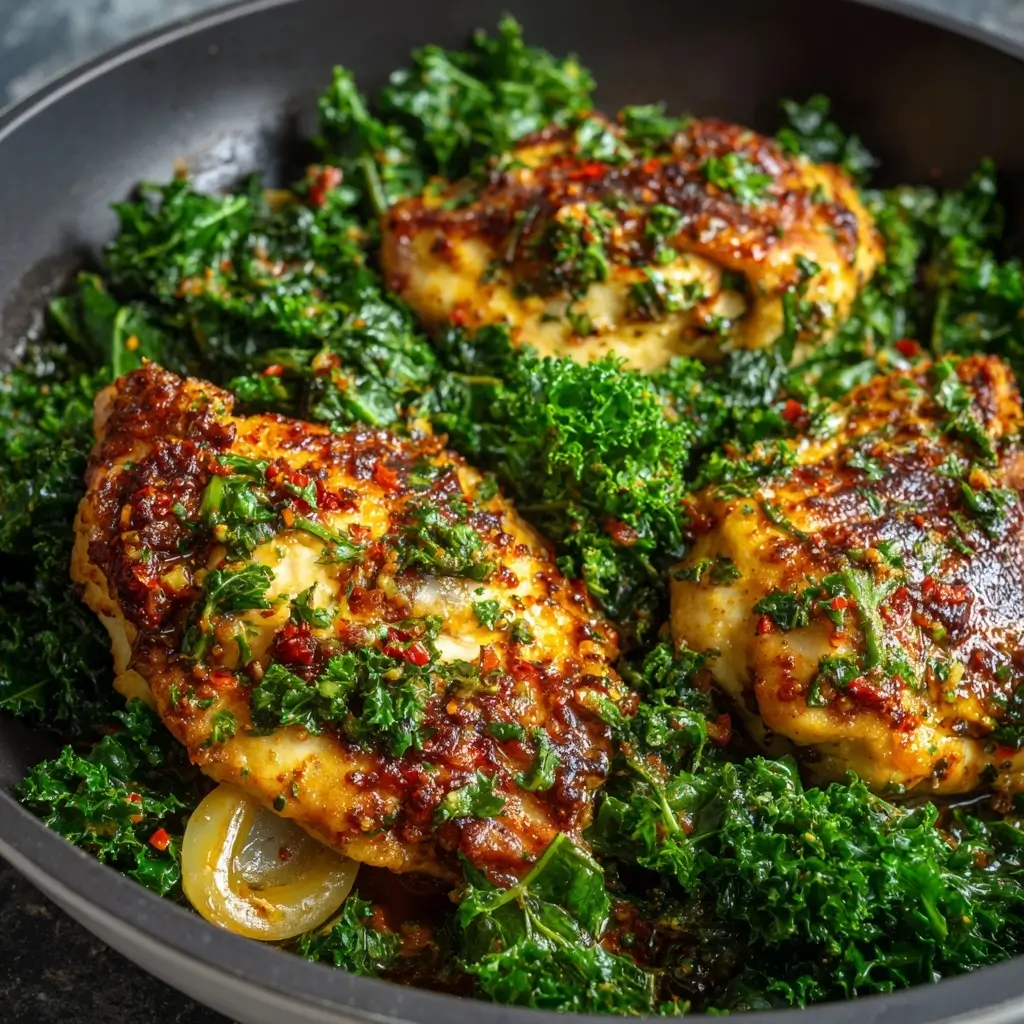
Garlic Butter Chicken with Kale is a vibrant, nutrient-dense, and deeply flavorful one-pan dish that marries the rich umami of seared chicken, the aromatic pungency of fresh garlic, the luxurious silkiness of browned butter, and the earthy, slightly bitter resilience of curly or Lacinato kale. Far from being just another weeknight dinner, this recipe represents a modern culinary sweet spot—where gourmet technique meets accessible ingredients, where health-conscious choices don’t sacrifice indulgence, and where every bite delivers layers of texture and complexity. Whether you’re meal prepping for the week, hosting an impromptu dinner party, or simply craving something both comforting and virtuous, this dish rises to the occasion with elegance and ease.
The History
While there’s no single documented origin for “Garlic Butter Chicken with Kale,” its roots are woven through several culinary traditions. The use of garlic and butter as a foundational sauce dates back centuries in French cuisine—think beurre blanc and beurre noir, where butter is carefully emulsified or browned to deepen flavor. Garlic-infused butter sauces became especially popular in mid-20th-century American bistro cooking, often draped over grilled or pan-seared proteins. Kale, meanwhile, has been cultivated since ancient Roman times and was a staple across Northern and Eastern Europe for its hardiness and nutrition. Its resurgence in contemporary Western kitchens began in the early 2000s, propelled by the farm-to-table movement and growing awareness of leafy green superfoods. The intentional pairing of chicken with kale in a garlic-butter preparation reflects the broader culinary shift toward “elevated simplicity”—a philosophy championed by chefs like Alice Waters, Samin Nosrat, and Bon Appétit’s test kitchen, where seasonal vegetables aren’t mere garnishes but co-stars. This dish, therefore, is less a historical artifact and more a delicious testament to how tradition, science, and wellness converge on today’s stovetop.
Ingredients Breakdown
Every element in this recipe serves a precise sensory and functional role—understanding why each ingredient is included deepens both your technique and appreciation:
- Chicken breasts or thighs (boneless, skin-on or skinless): Breasts offer lean tenderness; thighs provide richer flavor and forgiving moisture retention. Skin-on yields crackling crispness and extra rendered fat for sautéing greens.
- Unsalted butter: Used in two stages—first for searing (high smoke point when clarified or combined with oil), then added fresh at the end for aromatic richness and glossy emulsion. European-style butter (82–86% fat) browns more evenly and delivers deeper nuttiness.
- Fresh garlic (minced or thinly sliced): Raw garlic burns easily—adding it mid-cook (after chicken is flipped and fond has developed) preserves its pungent brightness while allowing gentle caramelization. Roasted garlic can be stirred in at the end for mellow sweetness.
- Kale (curly, Lacinato/Tuscan, or red Russian): Curly kale holds up best to sautéing; Lacinato offers a more delicate, almost asparagus-like texture; red Russian adds visual pop and subtle peppery notes. Stems are fibrous but edible—thinly slice them for even cooking or reserve for stocks.
- Extra-virgin olive oil: Used alongside butter to raise the smoke point during initial searing. Its fruitiness complements garlic and kale without overpowering.
- Lemon juice and zest: Bright acidity cuts through butter’s richness and lifts the earthiness of kale. Zest adds volatile citrus oils—introduced off-heat for maximum fragrance.
- Red pepper flakes (optional but recommended): Not for heat alone—they contribute fruity, smoky depth and balance garlic’s sharpness.
- Finishing touches: freshly grated Parmesan or Pecorino, toasted pine nuts or slivered almonds, chopped fresh parsley or dill: These add salty, nutty, herbal counterpoints that round out the flavor profile and enhance mouthfeel.
Step-by-Step Recipe
- Prep & Marinate (10 minutes, optional but transformative): Pat chicken dry thoroughly—this ensures proper sear. Season generously with kosher salt and black pepper. For deeper flavor, marinate 30 minutes (up to 4 hours refrigerated) in 1 tbsp olive oil, 2 minced garlic cloves, 1 tsp lemon zest, and a pinch of red pepper flakes.
- Preheat & Sear (6–8 minutes): Heat a heavy-bottomed stainless steel or cast-iron skillet over medium-high. Add 1 tbsp olive oil + 1 tbsp butter. When butter foams and subsides (not browned yet), place chicken in skillet, smooth-side down. Press gently with spatula. Sear undisturbed 5–6 minutes until golden-brown and release easily. Flip, reduce heat to medium, and cook 4–5 more minutes (for breasts) or until internal temp reaches 165°F (74°C). Transfer to plate; tent loosely with foil.
- Build the Fond & Aromatics (2 minutes): In same skillet, reduce heat to medium-low. Add remaining 1 tbsp olive oil if pan looks dry. Add 4–5 thinly sliced garlic cloves and ½ tsp red pepper flakes. Stir constantly 30–60 seconds until fragrant but not browned. Scrape up browned bits (fond) with wooden spoon—this is flavor gold.
- Sauté the Kale (4–5 minutes): Remove thick stems from kale; chop leaves into 1-inch ribbons. Add to skillet in batches if needed. Toss vigorously to coat in garlicky oil. Sprinkle with ¼ tsp salt—this draws out moisture and wilts leaves faster. Cook, stirring every 45 seconds, until kale is tender-crisp, darkened in color, and slightly shrunken (about 4 minutes total). If too dry, splash in 1–2 tsp chicken broth or water.
- Emulsify the Sauce (2 minutes): Reduce heat to low. Add remaining 3 tbsp cold butter, 1 tbsp at a time, swirling constantly until each addition melts and incorporates smoothly. Avoid boiling—gentle heat creates a velvety, cohesive sauce. Stir in 1 tbsp fresh lemon juice and ½ tsp lemon zest.
- Finish & Serve (1 minute): Return chicken to skillet, nestling pieces into kale. Spoon sauce over top. Let rest 2 minutes for flavors to marry. Garnish generously with flaky sea salt, grated cheese, toasted nuts, and herbs.
Tips
- Dry chicken is non-negotiable: Moisture is the enemy of browning. Use paper towels—and even let seasoned chicken air-dry uncovered in fridge 20 minutes before cooking.
- Don’t crowd the pan: Overcrowding drops temperature, causing steaming instead of searing. Cook in batches if necessary.
- Control garlic burn: Add garlic after the first sear—not at the start—with lower heat and constant motion. Burnt garlic turns acrid and ruins the sauce.
- Massage kale first (for raw applications): If serving partially raw or adding kale at the very end, rub leaves with ½ tsp olive oil and pinch of salt for 1 minute—breaks down cellulose, softens bitterness, and improves absorption of dressing.
- Brown butter nuance: For advanced depth, brown 1 tbsp of the butter separately (until golden-brown specks form and aroma is nutty), then stir it in at the end—adds profound complexity without risking burnt garlic.
- Rest before slicing: Let chicken rest 5 minutes before cutting—juices redistribute, yielding succulent, moist bites.
- Acid timing matters: Lemon juice added too early dulls brightness. Always stir in at the very end—off heat or on lowest setting—to preserve its vibrant lift.
- Use the fond wisely: That dark crust on the pan? It’s concentrated meat essence. Deglaze with a splash of dry white wine (like Sauvignon Blanc) or apple cider vinegar before adding kale for an extra layer of acidity and savoriness.
- Skillet selection: Stainless steel gives superior fond development; cast iron retains heat beautifully for even searing; nonstick works—but won’t build the same fond intensity.
- Taste-as-you-go seasoning: Kale absorbs salt slowly. Underseason initially, then adjust after wilting. Likewise, garlic mellows with heat—taste sauce before final plating and add a whisper more if needed.
Variations and Customizations
This recipe is inherently adaptable—here’s how to tailor it to dietary needs, seasons, pantry constraints, or global inspirations:
- Low-Carb/Keto: Keep as-is—it’s naturally low in carbs. Boost healthy fats with extra butter, avocado oil, or a drizzle of MCT oil at finish.
- Paleo/Whole30: Substitute ghee for butter (clarified butter, dairy-free), omit cheese/nuts, and use coconut aminos instead of soy-based condiments if adding umami depth.
- Vegetarian/Vegan: Replace chicken with marinated, pressed tofu or tempeh (pan-fried until golden), or hearty roasted cauliflower steaks. Use vegan butter and nutritional yeast instead of Parmesan.
- Sheet Pan Version: Toss chicken and kale with oil, garlic, lemon, and spices; roast at 425°F (220°C) for 20–25 minutes, flipping halfway. Finish with melted garlic butter and lemon zest.
- Mediterranean Twist: Add kalamata olives, sun-dried tomatoes, crumbled feta, and oregano. Swap lemon for orange zest and juice.
- Asian-Inspired: Replace garlic butter with ginger-scallion butter (add 1 tbsp grated fresh ginger + 2 sliced scallions); finish with tamari, sesame oil, and toasted sesame seeds.
- Spicy Harissa Style: Whisk 1 tsp harissa paste into melted butter before emulsifying. Top with preserved lemon and cilantro.
- Creamy Version: Stir in 2 tbsp full-fat coconut milk or crème fraîche at the end for luxurious silkiness—especially lovely with smoked paprika and thyme.
- Grilled Variation: Grill chicken over charcoal; toss kale in garlic butter separately in a grill basket. Plate together with charred lemon halves.
- Meal Prep Friendly: Cook components separately—chicken, kale, and sauce—and store chilled up to 4 days. Reheat kale and sauce together (low and slow), then add warm chicken.
Health Considerations and Nutritional Value
Garlic Butter Chicken with Kale isn’t just delicious—it’s a thoughtfully balanced nutritional powerhouse, designed to support sustained energy, gut health, immune resilience, and cellular repair. Here’s what makes it exceptional from a wellness perspective:
- High-Quality Protein: Chicken breast provides ~31g protein per 4-oz serving—complete with all nine essential amino acids, supporting muscle maintenance, satiety, and metabolic function. Thighs offer additional monounsaturated fats and iron.
- Kale’s Phytonutrient Density: One cup of cooked kale delivers over 1000% DV of vitamin K (essential for blood clotting and bone metabolism), 200% DV of vitamin C (antioxidant, collagen synthesis), and significant lutein, zeaxanthin (eye health), quercetin, and kaempferol (anti-inflammatory flavonoids).
- Garlic’s Bioactive Benefits: Contains allicin—a sulfur compound activated when crushed or chopped and allowed to sit 10 minutes before cooking. Allicin supports cardiovascular health, exhibits antimicrobial properties, and may modulate immune response.
- Butter’s Fat-Soluble Nutrients: Grass-fed butter contributes vitamins A, D, E, and K2—especially vital for calcium utilization and hormonal balance. Its butyrate content supports gut lining integrity and reduces intestinal inflammation.
- Lemon’s Synergistic Boost: Vitamin C dramatically increases non-heme iron absorption from kale—making this pairing especially beneficial for plant-based iron intake.
- Low Glycemic & Anti-Inflammatory: Naturally grain-free, legume-free, and refined-sugar-free, this dish aligns with anti-inflammatory eating patterns. The combination of polyphenols (garlic, kale), omega-3 precursors (kale), and antioxidants creates a potent defense against oxidative stress.
- Considerations: Those with lactose sensitivity may tolerate small amounts of butter well (it contains minimal lactose), but ghee or clarified butter is a safer alternative. For sodium-conscious diets, reduce added salt and rely on herb/acid/umami layers for flavor. Portion control remains key—while healthy fats are beneficial, calories add up quickly with generous butter use.
Nutrition Facts (per serving, approx. 1 chicken breast + 1.5 cups kale + sauce):
Calories: 425 • Total Fat: 24g (Saturated: 12g) • Protein: 36g • Carbs: 8g (Fiber: 3g, Sugar: 1g) • Sodium: 480mg (varies with salt added) • Vitamin A: 210% DV • Vitamin C: 135% DV • Vitamin K: 1200% DV • Iron: 18% DV • Calcium: 12% DV
Ingredients
- 2 (6–8 oz) boneless, skinless chicken breasts (or thighs), pounded to ½-inch thickness
- ½ tsp kosher salt, plus more to taste
- ½ tsp freshly ground black pepper
- 2 tbsp extra-virgin olive oil, divided
- 4 tbsp unsalted butter, divided (cold, cut into cubes)
- 5 large garlic cloves, thinly sliced
- ½ tsp red pepper flakes (adjust to preference)
- 1 large bunch curly or Lacinato kale (about 8–10 oz), stems removed, leaves chopped
- 1 tbsp fresh lemon juice (plus zest of ½ lemon)
- ¼ tsp flaky sea salt (Maldon or similar), for finishing
- 2 tbsp grated Parmigiano-Reggiano or Pecorino Romano
- 2 tbsp toasted pine nuts or slivered almonds
- 2 tbsp finely chopped fresh flat-leaf parsley
Directions
- Pat chicken dry with paper towels. Season both sides with ½ tsp kosher salt and ½ tsp black pepper.
- Heat a 12-inch stainless steel or cast-iron skillet over medium-high heat. Add 1 tbsp olive oil and 1 tbsp butter. Once butter melts and foam subsides, place chicken in skillet. Press gently. Sear 5–6 minutes until deeply golden and releases easily. Flip, reduce heat to medium, and cook 4–5 minutes more until internal temperature reaches 165°F. Transfer to a plate; tent with foil.
- Reduce heat to medium-low. Add remaining 1 tbsp olive oil. Add sliced garlic and red pepper flakes; stir constantly 45 seconds until fragrant.
- Add kale in batches, tossing to coat. Sprinkle with ¼ tsp salt. Cook 4 minutes, stirring every 45 seconds, until tender-crisp and darkened.
- Reduce heat to low. Add remaining 3 tbsp cold butter, 1 tbsp at a time, swirling until fully melted and emulsified. Stir in lemon juice and zest.
- Return chicken to skillet, nestling into kale. Spoon sauce over top. Rest 2 minutes.
- Garnish with flaky salt, cheese, toasted nuts, and parsley. Serve immediately.
FAQ
- Can I use frozen kale?
- Yes—but thaw completely and squeeze out *all* excess water (use cheesecloth or clean towel) to prevent diluting the sauce and steaming instead of sautéing.
- Why does my kale taste bitter?
- Bitterness varies by variety and age. Older kale is more bitter; massaging with salt/oil before cooking tames it. Adding lemon zest, Parmesan, or toasted nuts balances bitterness naturally. Avoid overcooking—wilting too long intensifies bitterness.
- Can I make this dairy-free?
- Absolutely. Substitute high-quality vegan butter (like Miyoko’s or Earth Balance) and omit cheese—or use nutritional yeast for umami and B-vitamin boost. Ghee is also dairy-free (lactose and casein removed) and adds rich depth.
- How do I store and reheat leftovers?
- Store components separately in airtight containers: chicken (up to 4 days), kale (up to 3 days), sauce (up to 5 days refrigerated or 3 months frozen). Reheat kale + sauce together in skillet over low heat with splash of broth; warm chicken separately or add to skillet last minute. Avoid microwaving sauce—it may separate.
- What’s the best way to tell if chicken is cooked perfectly?
- Use an instant-read thermometer: insert into thickest part, avoiding bone or fat. 165°F is safe—but for juicier results, remove at 160°F and let residual heat carry it to 165°F during resting. Visual cues: opaque flesh, clear (not pink) juices when pierced.
- Can I add other vegetables?
- Yes! Sliced mushrooms (sautéed with garlic), cherry tomatoes (added last 2 minutes), shredded Brussels sprouts, or diced zucchini work beautifully. Add heartier veggies before kale; delicate ones after.
- Is garlic butter healthy?
- In moderation, yes. Garlic enhances nitric oxide production (supporting circulation), and butter from grass-fed sources provides beneficial fatty acids and fat-soluble vitamins. The key is balance—this recipe uses butter intentionally for flavor and function, not excess.
- Can I use dried garlic instead of fresh?
- Fresh is strongly preferred—the enzyme alliinase (which creates allicin) is inactive in dried forms. If you must substitute, use ½ tsp garlic powder *in addition to* 1–2 fresh cloves for layered flavor—but never replace entirely.
- Why does my sauce break or look greasy?
- Causes include overheating, adding cold butter too quickly, or vigorous boiling. Fix it by removing from heat, whisking in 1 tsp warm broth or lemon juice, and gently reheating while whisking. Next time, keep heat low and add butter gradually.
- Can I double this recipe?
- Yes—but use two skillets or cook in batches. Doubling in one pan causes steaming, uneven browning, and poor fond development. It’s worth the extra dish for superior results.
Summary
Garlic Butter Chicken with Kale is a masterclass in balancing bold flavor, elegant technique, and whole-food nutrition—featuring golden-seared chicken, deeply aromatic garlic-butter sauce, and tender-crisp kale infused with lemon and spice. It’s endlessly customizable, meal-prep friendly, and nutritionally dense—delivering protein, antioxidants, vitamins K and C, and gut-supportive compounds in every satisfying, restaurant-worthy bite.
Whether you’re cooking for one or feeding a family, this dish proves that nourishment and indulgence aren’t mutually exclusive—they’re beautifully, deliciously intertwined.