Introduction
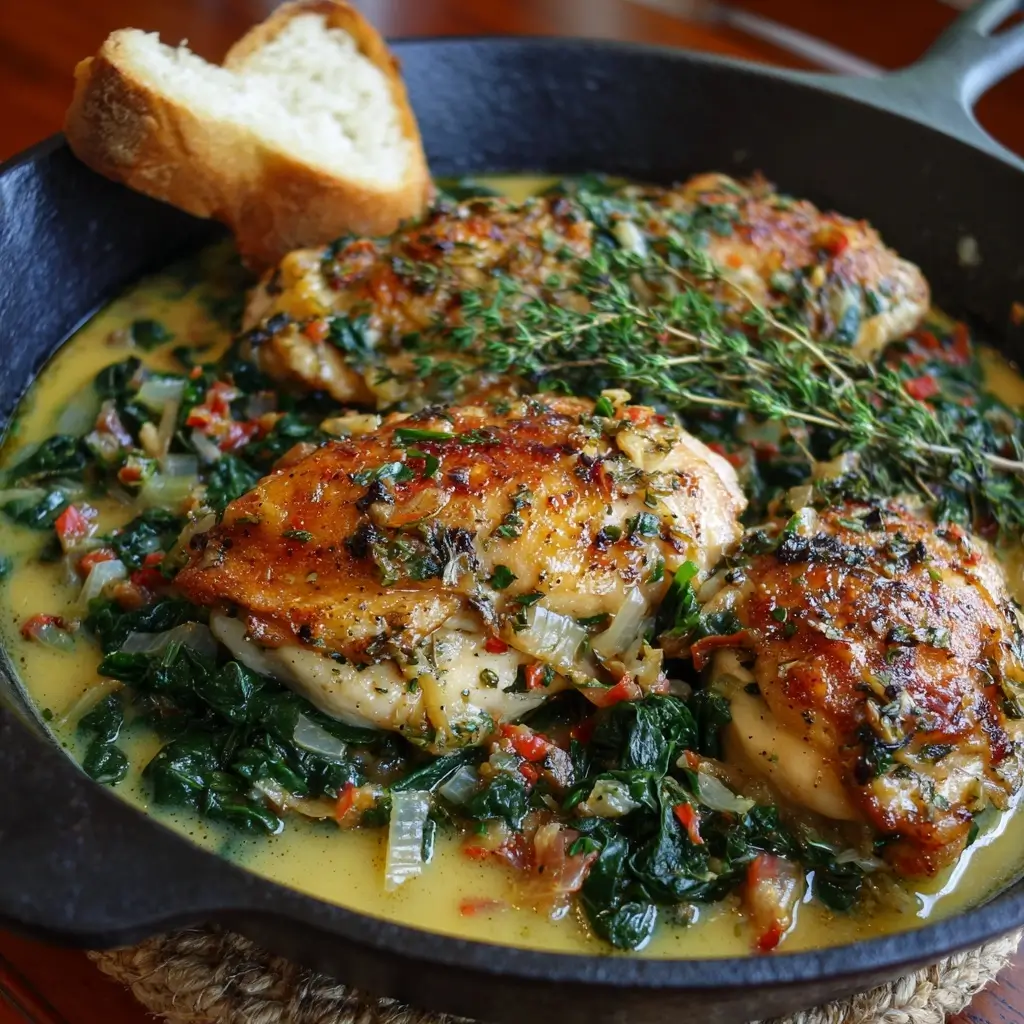
Garlic Butter Chicken with Swiss Chard is a harmonious, restaurant-quality dish that marries tender, golden-brown chicken breasts with the earthy sweetness and vibrant green nutrition of Swiss chard—all luxuriously bound together by a rich, aromatic garlic butter sauce. This recipe is more than just a weeknight dinner—it’s a celebration of simplicity, depth of flavor, and mindful cooking. Whether you’re seeking a nourishing family meal, an elegant yet approachable option for entertaining, or a nutrient-dense plate that satisfies both palate and wellness goals, this dish delivers on every front. With minimal prep time, pantry-friendly staples, and layers of savory-sweet-herbal complexity, Garlic Butter Chicken with Swiss Chard bridges the gap between rustic home cooking and refined culinary artistry.
The History
While there is no singular documented origin for “Garlic Butter Chicken with Swiss Chard,” the dish emerges organically from centuries-old culinary traditions across Europe and the Mediterranean—regions where garlic, butter, leafy greens, and poultry have long coexisted in seasonal, resource-conscious kitchens. Garlic butter itself traces back to medieval French cuisine, where *beurre composé* (compound butter) was used to elevate roasted meats and vegetables. Swiss chard—a member of the beet family (*Beta vulgaris subsp. cicla*)—has been cultivated since ancient Greece and Rome, prized not only for its resilience but also for its dual-use leaves and stems, often sautéed with olive oil and garlic in Italian *bietole* or Spanish *acelgas*. The modern American iteration of this dish likely evolved in the late 20th and early 21st centuries, influenced by farm-to-table movements, rising interest in vegetable-forward proteins, and the popularity of “sheet-pan” and “one-skillet” meals that emphasize efficiency without sacrificing elegance. Chefs and home cooks alike began pairing lean chicken breasts—marinated or seared in herb-infused butter—with hearty greens like chard to create balanced plates aligned with contemporary nutritional awareness and global flavor sensibilities.
Ingredients Breakdown
Every ingredient in this dish serves a distinct functional and sensory role—no component is arbitrary. Let’s explore them in detail:
- Chicken Breasts (boneless, skinless): The protein anchor—lean, versatile, and ideal for absorbing marinades and sauces. Opting for air-chilled, antibiotic-free, or pasture-raised chicken enhances both flavor and ethical sourcing.
- Swiss Chard: A nutritional powerhouse rich in vitamins K, A, C, magnesium, potassium, and dietary nitrates. Its slightly bitter, mineral-rich leaves mellow beautifully when cooked in butter and garlic; the colorful stems (ruby red, golden yellow, or white) add visual appeal and a subtle celery-like crunch when sliced and sautéed first.
- Unsalted Butter: Provides unctuous richness, mouth-coating texture, and a foundational base for emulsifying the sauce. Using unsalted butter gives precise control over sodium levels and allows the natural sweetness of browned butter to shine.
- Fresh Garlic: Not powdered or jarred—the volatile sulfur compounds in freshly minced or crushed garlic deliver pungent aroma, antimicrobial benefits, and complex depth that transforms when gently cooked in butter (avoiding burn for optimal mellowness).
- Dry White Wine (e.g., Sauvignon Blanc or Pinot Grigio): Adds bright acidity and fruit-forward nuance while deglazing the pan to lift caramelized fond—the concentrated, flavorful bits stuck to the bottom—creating the backbone of the sauce.
- Lemon Juice & Zest: Freshly squeezed juice provides a vital acidic counterpoint to the butter’s richness, while finely grated zest contributes bright, floral citrus oils that elevate the entire aromatic profile.
- Fresh Herbs (Thyme & Parsley): Thyme offers earthy, slightly minty-woody notes that complement both chicken and chard; flat-leaf parsley adds fresh, grassy brightness and visual pop as a finishing garnish.
- Extra-Virgin Olive Oil: Used for initial searing—it has a higher smoke point than butter alone and imparts fruity, peppery notes that enhance browning without compromising integrity.
- Sea Salt & Freshly Ground Black Pepper: Enhance natural flavors, balance bitterness in chard, and amplify umami in chicken. Kosher or flaky sea salt is preferred for even distribution and clean salinity.
- Optional Additions: A splash of heavy cream for silkiness; toasted pine nuts or slivered almonds for crunch and nuttiness; crumbled feta or shaved Parmesan for salty-umami contrast; a pinch of red pepper flakes for gentle heat.
Step-by-Step Recipe
- Prep the Chicken: Place two 6–8 oz boneless, skinless chicken breasts between sheets of parchment paper or plastic wrap. Gently pound with a meat mallet or rolling pin to an even ½-inch thickness—this ensures uniform cooking, tenderness, and faster sear time.
- Season Generously: Pat chicken completely dry with paper towels (critical for browning), then season both sides liberally with kosher salt and freshly ground black pepper. Let rest at room temperature for 10–15 minutes while prepping other ingredients.
- Prepare the Swiss Chard: Rinse thoroughly under cold water—chard often carries grit. Separate stems from leaves: chop stems into ½-inch pieces and stack, roll, then chiffonade the leaves into ribbons. Set aside separately.
- Heat the Skillet: In a large, heavy-bottomed stainless steel or cast-iron skillet, heat 1 tbsp extra-virgin olive oil and 1 tbsp unsalted butter over medium-high heat until shimmering but not smoking (~350°F).
- Sear the Chicken: Carefully place chicken in the hot skillet without crowding. Cook undisturbed for 4–5 minutes until deeply golden and easily releases from the pan. Flip and cook opposite side for 3–4 minutes more, until internal temperature reaches 160°F (it will carry over to 165°F). Transfer to a warm plate, tent loosely with foil, and rest for 5 minutes.
- Sauté the Stems: Reduce heat to medium. In the same skillet, add another ½ tbsp butter. Add chopped chard stems and a pinch of salt. Sauté 2–3 minutes until slightly softened but still crisp-tender.
- Add Garlic & Aromatics: Stir in 3–4 finely minced garlic cloves and 1 tsp fresh thyme leaves. Cook 45–60 seconds—just until fragrant and golden (do not brown garlic).
- Incorporate the Leaves: Add chard leaves in batches, stirring constantly as they wilt. Cook 2–3 minutes total until vibrant green and just tender—not mushy. Season with additional salt and pepper.
- Build the Sauce: Push chard to the edges of the skillet. Pour in ¼ cup dry white wine, scraping vigorously with a wooden spoon to release all browned bits. Simmer 1–2 minutes until reduced by half.
- Emulsify the Butter: Remove from heat. Whisk in remaining 3 tbsp cold, cubed unsalted butter, one piece at a time, until fully incorporated and glossy. Stir in 1 tbsp fresh lemon juice, 1 tsp lemon zest, and a final pinch of thyme.
- Finish & Serve: Return rested chicken to skillet, spooning sauce generously over each breast. Garnish with freshly chopped flat-leaf parsley, a crack of black pepper, and optional lemon wedges. Serve immediately.
Tips
- Don’t Skip the Pound: Even thickness prevents dry edges and raw centers—especially important with lean chicken breast.
- Dry Chicken = Golden Chicken: Moisture is the enemy of Maillard reaction. Patting dry ensures rapid surface evaporation and immediate browning.
- Control Garlic Heat: Garlic burns easily above 300°F. Always reduce heat before adding it—and stir constantly during the brief bloom phase.
- Chard Stem First, Leaves Last: Stems require more time to soften; adding leaves too early leads to overcooked, gray, slimy greens.
- Cold Butter for Emulsion: Adding cold, cubed butter off-heat creates a stable, velvety sauce—warm butter separates; melted butter won’t thicken properly.
- Rest the Chicken: Allows juices to redistribute—cutting too soon causes moisture loss and dryness.
- Wine Substitution Tip: If avoiding alcohol, use equal parts low-sodium chicken broth + 1 tsp apple cider vinegar for acidity and depth.
- Skillet Choice Matters: Stainless steel or cast iron retains heat best for searing; nonstick prevents sticking but won’t develop the same fond for deglazing.
- Taste As You Go: Adjust lemon, salt, and pepper at the end—flavors evolve as components meld.
- Double the Sauce: Make 1.5x the butter-wine mixture if serving over pasta, rice, or crusty bread for maximum sopping potential.
Variations and Customizations
This recipe is inherently adaptable—here are thoughtful, tested variations for diverse preferences and occasions:
- Herb-Infused Butter Version: Blend 4 tbsp softened butter with 2 tbsp minced parsley, 1 tbsp lemon zest, 1 tsp thyme, and 1 small clove garlic. Smear under chicken skin (if using thighs) or brush over seared breasts before resting.
- Thighs Over Breasts: Substitute bone-in, skin-on chicken thighs for richer flavor and forgiving texture. Roast at 400°F for 35–40 minutes instead of stovetop searing.
- Mediterranean Twist: Add ½ cup halved cherry tomatoes and ¼ cup kalamata olives with the chard leaves; finish with crumbled feta and oregano.
- Asian-Inspired Adaptation: Replace wine with 2 tbsp dry sherry; swap thyme for 1 tsp grated ginger and 1 scallion (green parts); finish with sesame oil and toasted sesame seeds.
- Vegan/Vegetarian Option: Use grilled extra-firm tofu or seitan cutlets; replace butter with high-quality vegan butter and chicken broth with mushroom or miso broth.
- Low-Carb/Keto-Friendly: Naturally compliant—just ensure wine is dry (under 2g sugar/L) and skip any starchy sides. Serve with cauliflower rice or zucchini noodles.
- Sheet-Pan Baked Version: Toss chicken and chard (stems and leaves together) with olive oil, garlic, herbs, salt, and pepper. Roast at 425°F for 20–22 minutes. Drizzle with lemon-butter sauce after baking.
- Meal-Prep Friendly: Cook chicken and chard separately; store chilled for up to 4 days. Reheat components individually, then combine with fresh lemon juice and warm butter sauce.
- Kid-Friendly Mild Version: Omit garlic (or use roasted garlic paste), reduce lemon juice by half, and stir in 1 tbsp cream cheese for creamy mildness.
- Spiced-Up Version: Add ½ tsp smoked paprika to chicken seasoning and ¼ tsp cayenne to the garlic step for warmth and complexity.
Health Considerations and Nutritional Value
A single serving (1 chicken breast + 1.5 cups cooked chard + sauce) provides approximately:
- Calories: ~420–470 kcal (depending on butter/oil amounts)
- Protein: 38–42 g (excellent complete protein source supporting muscle synthesis and satiety)
- Fat: 24–28 g (predominantly unsaturated from olive oil and butter; includes heart-healthy omega-3s from pasture-raised sources)
- Carbohydrates: 6–8 g (naturally low-carb; primarily from chard’s fiber and trace sugars)
- Fiber: 3.5–4 g (supports gut health, blood sugar regulation, and cholesterol management)
- Vitamin K: >600% DV (essential for blood clotting and bone mineralization)
- Vitamin A (as beta-carotene): ~220% DV (supports vision, immunity, and skin health)
- Vitamin C: ~55% DV (antioxidant, collagen synthesis, iron absorption enhancer)
- Magnesium & Potassium: High levels aid nerve function, muscle relaxation, and blood pressure regulation
- Nitrates: Chard’s dietary nitrates may improve endothelial function and exercise performance
Key Health Notes:
- Balancing Saturated Fat: While butter contributes saturated fat, current research shows moderate intake within a whole-foods diet does not increase cardiovascular risk—especially when paired with fiber-rich vegetables and lean protein.
- Oxalate Awareness: Swiss chard contains oxalates; those with calcium-oxalate kidney stones may benefit from rotating greens (e.g., spinach, beet greens) or boiling chard first to reduce oxalate content by ~30–50%.
- Sodium Control: Using unsalted butter and limiting added salt makes this naturally lower-sodium—ideal for hypertension management.
- Antioxidant Synergy: The combination of garlic (allicin), lemon (hesperidin, vitamin C), chard (beta-carotene, lutein), and olive oil (polyphenols) creates powerful antioxidant synergy that combats oxidative stress and chronic inflammation.
- Gluten-Free & Allergen-Conscious: Naturally free of gluten, nuts, soy, eggs, and dairy (if vegan butter is substituted)—easily adapted for most common dietary restrictions.
Ingredients
- 2 (6–8 oz) boneless, skinless chicken breasts, pounded to ½-inch thickness
- 1 large bunch Swiss chard (~10–12 oz), stems and leaves separated
- 5 tbsp unsalted butter, divided (1 tbsp + ½ tbsp + 3 tbsp)
- 1 tbsp extra-virgin olive oil
- 4–5 cloves garlic, finely minced
- ¼ cup dry white wine (e.g., Sauvignon Blanc)
- 1 tbsp fresh lemon juice (about ½ lemon)
- 1 tsp lemon zest
- 1 tsp fresh thyme leaves (plus extra for garnish)
- ¼ cup fresh flat-leaf parsley, finely chopped (plus extra for garnish)
- Kosher salt and freshly ground black pepper, to taste
Directions
- Pat chicken dry and season generously with salt and pepper. Let sit 10 minutes at room temperature.
- Rinse chard thoroughly. Chop stems into ½-inch pieces; stack and chiffonade leaves.
- Heat olive oil and 1 tbsp butter in a large skillet over medium-high heat until shimmering.
- Add chicken and sear 4–5 minutes per side until golden and internal temp reaches 160°F. Transfer to a plate; tent with foil.
- Reduce heat to medium. Add ½ tbsp butter and chard stems; sauté 2–3 minutes until tender-crisp.
- Add garlic and thyme; cook 45–60 seconds until fragrant.
- Add chard leaves in batches, stirring until wilted (2–3 minutes).
- Pour in wine, scraping pan to lift fond. Simmer 1–2 minutes until reduced by half.
- Remove from heat. Whisk in remaining 3 tbsp cold butter, one cube at a time, until smooth and glossy.
- Stir in lemon juice, lemon zest, and remaining thyme.
- Return chicken to skillet, spooning sauce over top. Garnish with parsley and black pepper.
- Serve immediately—ideal with crusty bread, quinoa, or roasted potatoes.
FAQ
- Can I use frozen Swiss chard?
- Yes—but thaw completely and squeeze out excess water to avoid diluting the sauce. Frozen chard tends to be softer, so reduce sauté time by 1 minute and add leaves directly with stems.
- What if I don’t have white wine?
- Substitute with equal parts low-sodium chicken broth + 1 tsp apple cider vinegar or white wine vinegar. For depth, add ¼ tsp Dijon mustard while deglazing.
- Why does my garlic butter sauce break or look greasy?
- Most commonly caused by overheating the butter during emulsification or adding butter that’s too warm. Always remove pan from heat before whisking in cold, cubed butter gradually.
- Can I make this ahead of time?
- Chicken and chard can be prepped and refrigerated separately up to 1 day ahead. However, the garlic butter sauce is best made fresh—its emulsion and brightness fade upon reheating.
- Is Swiss chard interchangeable with spinach or kale?
- Spinach wilts faster and has milder flavor—reduce cook time by half and omit stem-saute step. Kale is tougher—massage stems with oil/salt and sauté 1–2 minutes longer before adding leaves.
- How do I store leftovers?
- In an airtight container for up to 3 days. Reheat gently in a skillet over low heat with a splash of broth or water to refresh moisture. Avoid microwaving uncovered—it dries out chicken.
- Can I freeze this dish?
- Yes—but separate components: freeze cooked chicken (up to 3 months) and blanched chard (up to 6 months) separately. Thaw overnight in fridge and reassemble with fresh sauce.
- What wine pairs well with this dish?
- A crisp, high-acid white such as Albariño, Grüner Veltliner, or unoaked Chardonnay complements the garlic butter richness and cuts through the chard’s earthiness. For red lovers, try a light-bodied Pinot Noir.
- My chard tastes bitter—how can I reduce that?
- Bitterness is natural but manageable: use younger chard (more tender, less fibrous), add a pinch of sugar while sautéing stems, or finish with lemon juice—which balances bitterness via acidity and brightness.
- Can I cook this entirely in the oven?
- Absolutely! Sear chicken in skillet, transfer to a parchment-lined baking sheet with chard, drizzle with butter/wine/lemon mixture, and roast at 400°F for 15–18 minutes until chicken hits 165°F and chard is tender.
Summary
Garlic Butter Chicken with Swiss Chard is a masterclass in balance—where succulent, herb-kissed poultry meets mineral-rich, vibrantly colored greens in a silken, lemon-laced sauce that celebrates both simplicity and sophistication. It’s a nutritionally dense, deeply flavorful, and endlessly adaptable dish that honors seasonal produce, respects pantry staples, and rewards thoughtful technique with restaurant-worthy results.
Whether you’re nourishing your family, impressing guests, or simply reclaiming joy in everyday cooking, this recipe delivers comfort, elegance, and wellness—all in one stunning, soul-satisfying plate.