Introduction
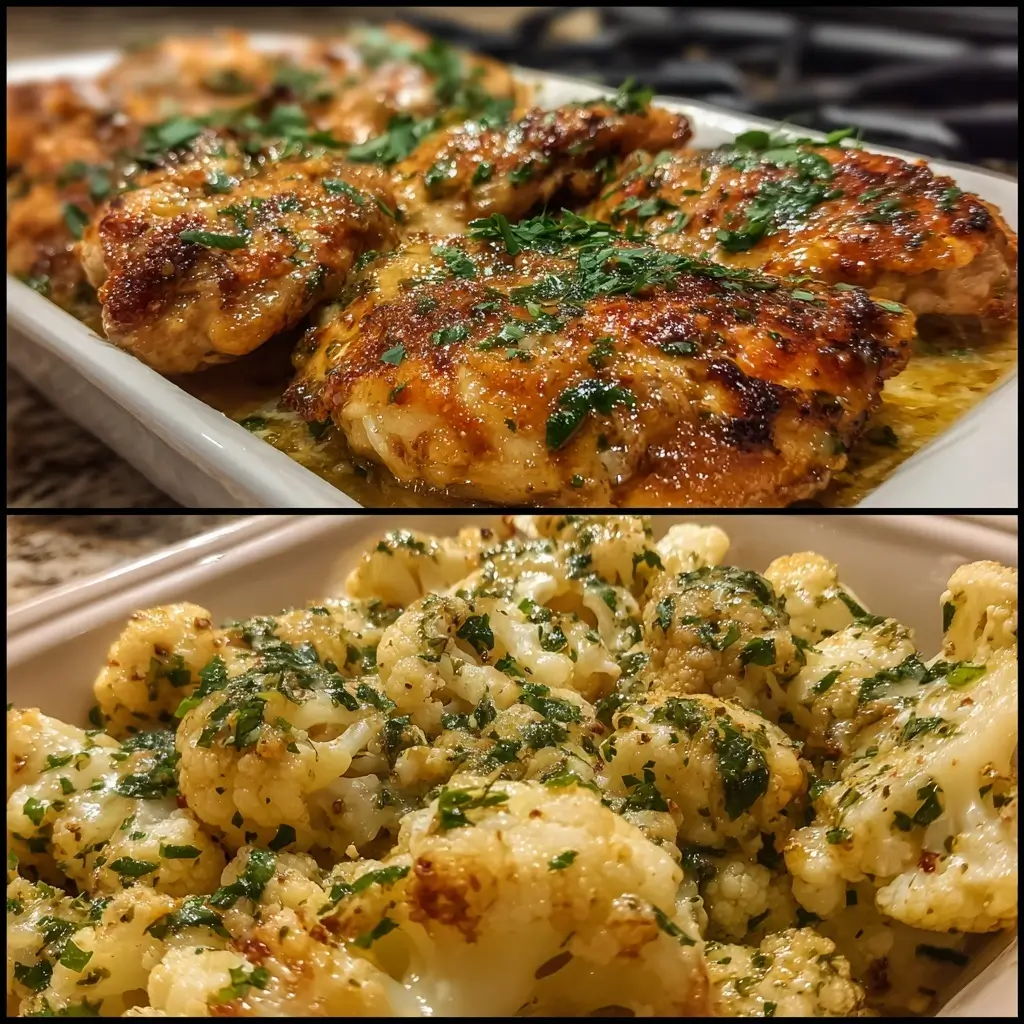
Garlic Butter Chicken and Cauliflower is a vibrant, restaurant-worthy dish that marries tender, herb-infused chicken with caramelized, golden cauliflower florets—all bathed in a rich, aromatic garlic butter sauce. This one-pan wonder is as nourishing as it is flavorful: deeply savory, subtly sweet from roasted cauliflower, and luxuriously creamy without any heavy cream. It’s a perfect weeknight dinner that feels indulgent yet aligns beautifully with clean-eating goals—naturally gluten-free, low-carb friendly, and easily adaptable for keto, paleo, or dairy-conscious diets. Whether you’re meal prepping for the week, hosting friends for a casual dinner, or simply craving comfort food with a healthy twist, this dish delivers bold taste, impressive texture contrast, and effortless elegance—all in under 45 minutes.
The History
While no single “inventor” claims Garlic Butter Chicken and Cauliflower, its roots are woven through centuries of culinary tradition. Garlic has been prized since ancient Egypt for both medicinal and culinary use—its pungent, umami-rich character became foundational across Mediterranean, Middle Eastern, and Asian cuisines. Butter-based sauces trace back to classical French techniques like *beurre blanc* and *beurre noir*, where emulsified butter elevates proteins and vegetables alike. The modern fusion of chicken and cauliflower reflects evolving dietary trends: in the early 2010s, cauliflower surged in popularity as a low-carb, nutrient-dense substitute for starchy sides—think “cauliflower rice” and “cauliflower crust.” Chefs and home cooks began roasting or sautéing whole florets not just as filler, but as star ingredients, pairing them intentionally with bold proteins. Garlic butter emerged as the ideal unifying element—simple, pantry-staple driven, and capable of transforming humble ingredients into something deeply satisfying. Today, Garlic Butter Chicken and Cauliflower stands as a hallmark of contemporary “healthy comfort cooking”: honoring time-honored techniques while embracing flexibility, whole-food integrity, and global flavor consciousness.
Ingredients Breakdown
Every ingredient in this recipe serves a distinct, intentional purpose—no filler, no afterthoughts. Let’s explore why each one matters:
- Chicken breasts or thighs (boneless, skinless): Lean, versatile, and quick-cooking. Breasts offer mild flavor and firm texture; thighs provide richer taste and forgiving moisture retention—ideal if you’re prone to overcooking. Both absorb the garlic butter beautifully.
- Fresh cauliflower: A cruciferous powerhouse rich in vitamin C, fiber, sulforaphane (a potent antioxidant), and glucosinolates linked to cellular health support. Roasting or pan-searing unlocks natural sweetness and creates irresistible crispy edges—far beyond bland steamed versions.
- Unsalted butter: The soul of the sauce. Provides luxurious mouthfeel, deep nutty notes when browned, and carries fat-soluble flavors (like garlic and herbs) more effectively than oil alone. Using unsalted butter gives full control over sodium levels.
- Fresh garlic (minced or pressed): Far superior to jarred or powdered—its enzymatic allicin content peaks upon crushing and delivers unmatched aroma and complexity. Sautéing gently prevents bitterness; a brief bloom in butter unlocks its full potential.
- Extra-virgin olive oil: Adds fruity depth and high-heat stability for initial searing. Its polyphenols synergize with garlic compounds for enhanced antioxidant activity.
- Lemon juice (freshly squeezed): Bright acidity cuts through richness, balances fat, enhances perception of salt, and brightens herbal notes—especially important in a butter-forward dish.
- Fresh parsley (flat-leaf): Not just garnish! Its chlorophyll-rich leaves add fresh, grassy top notes and visual vibrancy, plus vitamins A, C, and K.
- Dried oregano and thyme: Earthy, floral, and slightly minty—these Mediterranean herbs complement both poultry and crucifers without overpowering. Oregano adds subtle warmth; thyme contributes delicate floral nuance.
- Red pepper flakes (optional but recommended): A whisper of heat awakens all other flavors, stimulates digestion, and adds dimension—not spice for spice’s sake, but balance.
- Sea salt and freshly ground black pepper: Essential for seasoning at multiple stages—salting chicken before cooking draws out surface moisture for better browning; finishing salt enhances final layer of flavor.
Notably absent? Flour, cornstarch, heavy cream, processed broth, or pre-made sauces—this dish relies on reduction, emulsification, and careful temperature control for its velvety texture and concentrated flavor.
Step-by-Step Recipe
- Prep & Season: Pat chicken dry with paper towels—this is non-negotiable for golden sear. Cut into uniform 1.5-inch cubes (or leave whole-breast portions for presentation). Toss with ½ tsp sea salt, ¼ tsp black pepper, ½ tsp dried oregano, and ¼ tsp dried thyme. Let rest 10 minutes at room temperature.
- Prep Cauliflower: Remove green leaves and tough stem base. Cut head into even 1.5-inch florets—uniform size ensures even roasting. Rinse and thoroughly pat dry (wet cauliflower steams instead of roasts).
- Roast Cauliflower (First Stage): Preheat oven to 425°F (220°C). Line a large rimmed baking sheet with parchment. Toss cauliflower with 1 tbsp olive oil, ¼ tsp salt, and a pinch of red pepper flakes. Spread in single layer—no crowding! Roast 20–22 minutes, flipping halfway, until deeply golden, crisp-edged, and tender-crisp at core.
- Sear Chicken: While cauliflower roasts, heat 1 tbsp olive oil in a large, heavy-bottomed skillet (stainless steel or cast iron preferred) over medium-high heat. When shimmering, add chicken in single layer—do not crowd. Sear undisturbed 3–4 minutes per side until deeply golden and internal temp reaches 155°F (68°C). Transfer to a clean plate; tent loosely with foil.
- Build the Garlic Butter Sauce: Reduce heat to medium-low. In same skillet, melt 3 tbsp unsalted butter. Add 4–5 thinly sliced garlic cloves (or 1½ tbsp minced) and sauté gently 60–90 seconds—just until fragrant and softening, *not* browning. Stir in remaining ¼ tsp oregano, ⅛ tsp thyme, and optional ⅛ tsp red pepper flakes. Cook 30 seconds to bloom herbs.
- Emulsify & Finish: Whisk in 2 tbsp fresh lemon juice and 2 tbsp reserved cauliflower roasting liquid (or low-sodium chicken broth). Simmer gently 1 minute, scraping up browned bits. Return chicken and any accumulated juices to skillet. Gently fold in roasted cauliflower. Simmer 2–3 minutes, stirring occasionally, until sauce coats everything luxuriously and chicken reaches 165°F (74°C). Do not boil vigorously—this can break the emulsion.
- Final Touches: Remove from heat. Stir in 1 tbsp cold butter (optional “mounting” step for extra silkiness), then fold in 2 tbsp finely chopped fresh parsley. Taste and adjust: a pinch more salt? A squeeze more lemon? A crack of black pepper?
- Serve Immediately: Spoon into warm bowls. Garnish with extra parsley, lemon zest, and a drizzle of high-quality olive oil. For elegance, serve alongside lemon wedges and a small side of microgreens or arugula.
Tips
- Dry chicken thoroughly: Moisture is the enemy of browning. Use paper towels—not cloth—to avoid cross-contamination.
- Don’t skip the cauliflower roast: Roasting develops Maillard reaction and caramelization—far superior to boiling or steaming for depth and texture.
- Control garlic heat: Garlic burns fast. Keep heat at medium-low when blooming—it should sizzle softly, not pop or turn brown.
- Use cold butter for mounting: Adding chilled butter off-heat creates an instant, glossy emulsion and prevents greasiness.
- Reserve roasting liquid: Those golden drippings from the cauliflower pan are flavor gold—scrape them into your sauce for umami intensity.
- Rest chicken before cutting: If using whole breasts/thighs, let seared pieces rest 5 minutes before slicing—retains juiciness.
- Skillet choice matters: Avoid nonstick for searing—it won’t develop fond (those delicious browned bits). Stainless or cast iron = better fond = richer sauce.
- Acid timing is key: Add lemon juice *after* garlic is cooked—heat degrades its bright top notes. Finish with zest for aromatic lift.
- Double the batch smartly: Roast extra cauliflower—it keeps refrigerated 4 days or frozen 3 months. Re-roast 5 minutes before serving to restore crispness.
- Taste as you go: Season in layers: on chicken, in cauliflower, in sauce—and always finish with a final balance check.
Variations and Customizations
This recipe is a canvas—here’s how to make it uniquely yours:
- Protein Swaps: Try boneless turkey cutlets, shrimp (add in last 2 minutes), pan-seared tofu (pressed & marinated), or white fish fillets (cod, halibut—delicate, so reduce simmer time).
- Cauliflower Alternatives: Swap in broccoli, Brussels sprouts (halved), zucchini ribbons, asparagus tips, or diced sweet potato (roast longer, ~30 mins).
- Dairy-Free/Vegan: Replace butter with high-heat avocado oil or vegan butter (Miyoko’s or Forager). Add 1 tsp nutritional yeast + ½ tsp Dijon for “umami butter” depth.
- Keto/Low-Carb Boost: Stir in ¼ cup toasted slivered almonds or pine nuts at the end. Or top with crumbled feta or goat cheese.
- Mediterranean Twist: Add ¼ cup kalamata olives, 2 tbsp capers, and 1 tsp lemon zest. Finish with crumbled oregano.
- Asian-Inspired: Replace oregano/thyme with 1 tsp grated ginger + 1 tbsp tamari or coconut aminos + 1 tsp sesame oil (add at end) + scallions.
- Herb Garden Edition: Use 1 tbsp each fresh rosemary, thyme, and sage (finely chopped) instead of dried. Add 1 tsp honey for subtle glaze.
- Spicy Cajun: Rub chicken with 1 tsp Cajun seasoning before searing. Add ½ diced bell pepper and ¼ cup diced red onion with garlic.
- Creamy Version (still light): Whisk in 2 tbsp plain Greek yogurt or cashew cream at the very end—off heat, temper first.
- Sheet Pan All-in-One: Skip skillet steps: toss chicken and cauliflower together pre-roast with oil, spices, and half butter. Roast at 425°F for 25–28 mins. Melt remaining butter with garlic/lemon on stovetop and drizzle over hot sheet pan.
Health Considerations and Nutritional Value
A single generous serving (1.5 cups chicken + cauliflower + sauce) delivers approximately:
- Calories: 420–480 kcal (varies by chicken cut and butter amount)
- Protein: 38–42g (excellent complete protein supporting muscle maintenance and satiety)
- Fat: 24–28g (predominantly heart-healthy monounsaturated and saturated fats from olive oil and butter—both shown in studies to support HDL cholesterol when consumed in context of whole foods)
- Carbohydrates: 12–14g total (9–11g net carbs), with 3–4g dietary fiber (30% DV)—supports gut microbiome diversity and stable blood sugar
- Vitamins & Minerals: 200% DV Vitamin C (cauliflower + lemon), 45% DV Vitamin K (cauliflower + parsley), 35% DV Folate, plus significant selenium, potassium, and B6.
Why It’s Nutritionally Strategic:
- No refined sugars or flours: Naturally low-glycemic—ideal for insulin sensitivity and metabolic health.
- Phytonutrient synergy: Sulforaphane in cauliflower is activated by myrosinase enzymes—enhanced when paired with raw garlic (even if cooked, residual compounds remain bioactive). Lemon’s vitamin C further boosts iron absorption from plant compounds.
- Healthy fat profile: Butter contains butyrate (anti-inflammatory short-chain fatty acid) and conjugated linoleic acid (CLA); olive oil contributes oleocanthal (natural anti-inflammatory).
- Digestive support: Garlic acts as a prebiotic; fiber from cauliflower feeds beneficial gut bacteria; lemon stimulates bile production for fat digestion.
- Anti-inflammatory foundation: Combines turmeric-like compounds in garlic, antioxidants in parsley and lemon, and omega-9s from olive oil—creating a cumulative protective effect.
Note: For sodium-conscious eaters, omit added salt and rely on herbs, lemon, and garlic for flavor. For dairy-sensitive individuals, see dairy-free variation above—nutritional profile remains robust.
Ingredients
- 1.5 lbs boneless, skinless chicken breasts or thighs, cut into 1.5-inch cubes
- 1 large head cauliflower (about 2 lbs), cored and cut into 1.5-inch florets
- ¼ cup extra-virgin olive oil, divided (2 tbsp for cauliflower, 1 tbsp for chicken, 1 tbsp for sauce)
- 6 tbsp unsalted butter, divided (3 tbsp for sauce, 1 tbsp cold for finishing, 2 tbsp optional for roasting)
- 6 garlic cloves, thinly sliced or finely minced (about 1.5 tbsp)
- 3 tbsp fresh lemon juice (from 1–2 lemons)
- 2 tbsp finely chopped fresh flat-leaf parsley, plus extra for garnish
- 1 tsp dried oregano, divided
- ½ tsp dried thyme, divided
- ¼ tsp red pepper flakes (adjust to taste)
- 1 tsp sea salt, divided (½ tsp for chicken, ¼ tsp for cauliflower, ¼ tsp for sauce)
- ½ tsp freshly ground black pepper, divided
- Lemon zest and extra virgin olive oil for garnish (optional)
Directions
- Pat chicken completely dry with paper towels. Place in a bowl and toss with ½ tsp salt, ¼ tsp black pepper, ½ tsp dried oregano, and ¼ tsp dried thyme. Let sit at room temperature 10 minutes.
- Preheat oven to 425°F (220°C). Line a large rimmed baking sheet with parchment paper.
- In a large bowl, toss cauliflower florets with 2 tbsp olive oil, ¼ tsp salt, and a pinch of red pepper flakes. Spread in a single layer on prepared sheet. Roast 20–22 minutes, flipping halfway, until deeply golden and tender-crisp. Remove and set aside—reserve any golden drippings.
- Heat 1 tbsp olive oil in a large stainless steel or cast iron skillet over medium-high heat. When shimmering, add chicken in a single layer (work in batches if needed). Sear 3–4 minutes per side until deeply golden and internal temperature reaches 155°F. Transfer to a plate; tent with foil.
- Reduce heat to medium-low. In same skillet, melt 3 tbsp butter. Add garlic and sauté 60–90 seconds until fragrant and softened—but not browned.
- Add remaining ½ tsp oregano, ¼ tsp thyme, and remaining pinch of red pepper flakes. Cook 30 seconds.
- Whisk in lemon juice and 2 tbsp reserved cauliflower roasting liquid (or low-sodium broth). Simmer gently 1 minute, scraping up browned bits.
- Return chicken and any juices to skillet. Gently fold in roasted cauliflower. Simmer 2–3 minutes, stirring carefully, until sauce thickens slightly and chicken reaches 165°F.
- Remove from heat. Stir in 1 tbsp cold butter and 2 tbsp parsley. Taste and adjust seasoning with remaining salt, pepper, or lemon juice.
- Serve immediately in warm bowls, garnished with extra parsley, lemon zest, and a drizzle of olive oil.
FAQ
- Can I use frozen cauliflower?
- Yes—but thaw completely and *thoroughly pat dry* before roasting. Excess moisture prevents browning and yields steamed, soggy results. For best texture, fresh is strongly recommended.
- Why does my garlic butter sauce look greasy or separate?
- Two common causes: (1) Heat was too high when adding lemon/broth—rapid boiling breaks the emulsion. Always simmer gently. (2) Butter was added cold to hot liquid—always whisk cold butter in *off heat*. If separation occurs, remove from heat, let cool 30 seconds, then whisk vigorously—or blend with an immersion blender for 10 seconds.
- Can I make this ahead and reheat?
- Absolutely. Store chicken and cauliflower separately in airtight containers for up to 4 days. Reheat cauliflower in oven or air fryer (400°F for 5–7 mins) to restore crispness; gently warm chicken in skillet with 1 tsp broth or water. Combine and refresh sauce just before serving.
- Is this suitable for meal prep?
- Excellent for weekly prep! Portion into glass containers. Cauliflower holds texture well chilled. For optimal quality, freeze only *unsauced* chicken and cauliflower for up to 3 months. Thaw overnight, then prepare fresh garlic butter sauce.
- What wine pairs well?
- A crisp, mineral-driven white: Albariño, Grüner Veltliner, or unoaked Chardonnay. Their acidity mirrors the lemon, while subtle stone fruit complements roasted cauliflower. For red lovers, try a light Pinot Noir—low tannins won’t clash with garlic.
- Can I air fry the cauliflower?
- Yes! Toss with oil and seasonings. Air fry at 400°F (200°C) for 14–16 minutes, shaking basket every 5 minutes, until deeply golden and crisp. No preheating needed.
- My chicken turned out dry—what went wrong?
- Most often: (1) Overcooking—pull at 155°F; carryover heat brings it to 165°F. (2) Not patting dry—steam forms instead of sear. (3) Crowded pan—lowers temperature and steams instead of sears. (4) Skipping rest—juices escape upon cutting. Try thighs next time—they’re far more forgiving.
- Can I use ghee instead of butter?
- Yes—ghee adds nuttier depth and higher smoke point, making it ideal for browning garlic without burning. Use 1:1. Note: ghee is dairy-free (casein/whey removed), suitable for many lactose-intolerant individuals.
- How do I scale this for 6–8 people?
- Double all ingredients—but roast cauliflower on *two sheets* (don’t overcrowd). Use two skillets or a large Dutch oven for sauce. Sear chicken in batches. Total time increases by only 5–7 minutes.
- Any kid-friendly tweaks?
- Omit red pepper flakes. Add 1 tsp honey or maple syrup to sauce for gentle sweetness. Serve over mild cauliflower “rice” or quinoa. Let kids sprinkle their own parsley or lemon zest—increases acceptance!
Summary
Garlic Butter Chicken and Cauliflower is a masterclass in simple, soul-satisfying cooking—where golden, herb-kissed chicken meets caramelized, nutty cauliflower in a luscious, lemon-flecked garlic butter sauce that clings with intention and shines with freshness.
It’s nutritionally intelligent, endlessly customizable, deeply flavorful without reliance on processed ingredients, and effortlessly elegant enough for guests—yet grounded enough for Tuesday night, proving that wholesome eating never means compromising on joy, texture, or satisfaction.