Introduction
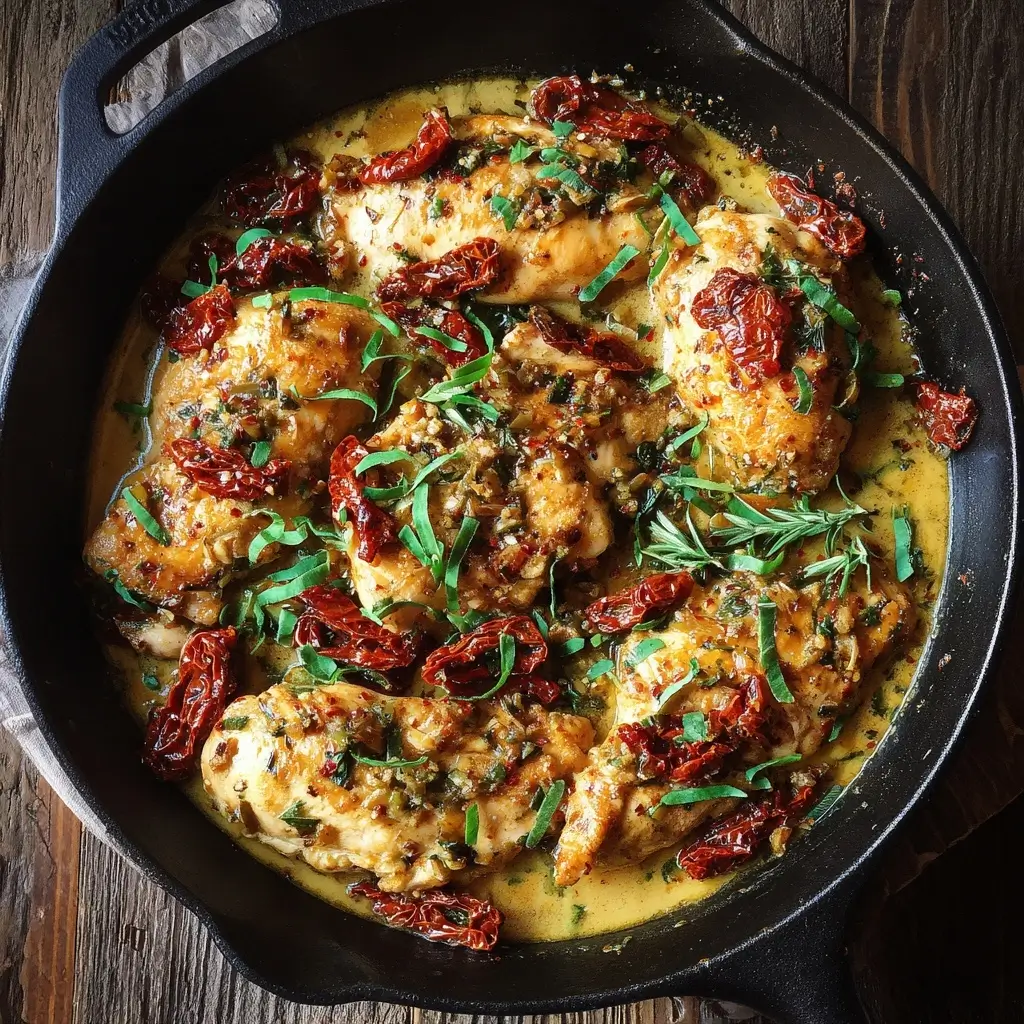
Garlic Butter Chicken with Sun-Dried Tomatoes is a restaurant-worthy dish that delivers bold, savory-sweet depth in every bite—elegant enough for date night yet approachable enough for weeknight cooking. This luscious pan-seared chicken recipe features tender, golden-brown chicken breasts or thighs enveloped in a rich, velvety sauce infused with aromatic garlic, fragrant fresh herbs, creamy butter, and the intense umami punch of oil-packed sun-dried tomatoes. The contrast between the juicy, herb-crusted protein and the glossy, tangy-sweet sauce creates an unforgettable harmony of textures and flavors. Whether you’re seeking a comforting family dinner, an impressive dish for guests, or a meal-prep favorite that reheats beautifully, this recipe strikes the perfect balance of simplicity and sophistication—without relying on heavy cream, excessive sodium, or complicated techniques.
The History
While no single documented origin story exists for Garlic Butter Chicken with Sun-Dried Tomatoes, its roots are deeply embedded in the culinary crossroads of Mediterranean and modern American bistro traditions. Sun-dried tomatoes—first preserved by ancient civilizations in the Levant and later popularized across Southern Europe—gained widespread appeal in the U.S. during the 1980s and ’90s as part of the “California cuisine” movement, championed by chefs like Alice Waters who emphasized seasonal, ingredient-driven dishes. Garlic butter, meanwhile, has centuries-old lineage—from French beurre composé to Italian aglio e olio—celebrating the transformative power of slow-cooked alliums and high-quality fat. The fusion of these two pillars emerged organically in upscale casual dining establishments: chefs began pairing pan-seared chicken (a lean, versatile canvas) with sun-dried tomatoes to add concentrated sweetness and chewy texture, then finishing with garlic-infused butter to round out acidity and lend luxurious mouthfeel. Over time, home cooks adapted the technique using accessible tools—stainless steel skillets, everyday pantry staples, and fresh herbs from windowsill pots—turning what was once a menu highlight into a beloved staple of modern home kitchens across North America, Australia, and the UK.
Ingredients Breakdown
Understanding each ingredient’s role unlocks consistency, flavor layering, and successful substitutions:
- Chicken Breasts or Thighs: Boneless, skinless chicken breasts offer lean elegance and quick cooking; boneless, skinless thighs provide superior moisture, richer flavor, and forgiving texture—especially valuable for beginners or meal prep. Uniform thickness (about ½–¾ inch) ensures even searing and prevents dryness.
- Sun-Dried Tomatoes (Oil-Packed): The soul of the dish. Oil-packed varieties deliver concentrated sweetness, deep umami, and plump, chewy texture. Their infused oil becomes part of the sauce base—enhancing richness and carrying flavor. Avoid dry-packed versions unless rehydrated thoroughly (they lack the essential oil component).
- Unsalted Butter: Used in two stages—first to sauté aromatics, then swirled in at the end (monter au beurre) for silkiness, gloss, and emulsified body. Unsalted butter gives precise sodium control.
- Fresh Garlic: Minced or finely grated—not powdered or jarred—for bright, pungent, complex notes that mellow beautifully when cooked in butter but retain aromatic integrity.
- Dry White Wine (e.g., Sauvignon Blanc or Pinot Grigio): Adds brightness, acidity, and depth; de-glazes the pan, lifting flavorful browned bits (fond). Alcohol cooks off, leaving only nuanced fruit and mineral notes. Substitute with low-sodium chicken broth + ½ tsp lemon juice if avoiding alcohol.
- Low-Sodium Chicken Broth: Forms the liquid base of the sauce, contributing savory depth without overpowering salt. Homemade or high-quality store-bought brands (like Swanson Low Sodium or Kitchen Basics) make a measurable difference.
- Fresh Herbs (Parsley & Basil): Flat-leaf parsley adds clean, grassy freshness and visual pop; fresh basil contributes sweet-anise complexity—especially complementary to sun-dried tomatoes. Dried herbs lack vibrancy and should only be used in emergencies (use ⅓ the amount).
- Lemon Juice (Freshly Squeezed): A critical finishing touch—brightens the entire dish, cuts through richness, balances sweetness, and lifts the umami. Bottled juice lacks volatile citrus oils and introduces off-flavors.
- Extra-Virgin Olive Oil: Used for initial searing—high smoke point varieties (like light olive oil or avocado oil) are ideal, but EVOO adds subtle fruitiness if kept below 375°F. Reserve premium EVOO for drizzling post-cooking.
- Seasonings (Kosher Salt, Black Pepper, Optional Red Pepper Flakes): Kosher salt ensures even seasoning; freshly cracked black pepper adds warmth; a pinch of red pepper flakes introduces gentle heat that enhances rather than dominates.
Step-by-Step Recipe
- Prep the Chicken: Pat chicken pieces *extremely* dry with paper towels—this is non-negotiable for achieving a golden crust. Season both sides generously with kosher salt and black pepper. Let sit at room temperature for 15–20 minutes for even cooking.
- Prepare Aromatics & Ingredients: Mince 4–5 garlic cloves (or use a microplane for ultra-fine paste). Roughly chop ¼ cup oil-packed sun-dried tomatoes (reserve 2 tbsp of their oil). Chop 2 tbsp fresh parsley and 1 tbsp fresh basil. Juice ½ lemon. Measure out ½ cup dry white wine and ¾ cup low-sodium chicken broth.
- Sear the Chicken: Heat 1 tbsp olive oil (or reserved sun-dried tomato oil) in a large stainless steel or cast-iron skillet over medium-high heat until shimmering. Place chicken in the pan without crowding—work in batches if needed. Cook undisturbed for 5–6 minutes until deeply golden and easily releases from the pan. Flip and cook 4–5 more minutes until internal temperature reaches 160°F (it will rise to 165°F while resting). Transfer to a clean plate, tent loosely with foil, and rest for 5 minutes.
- Build the Sauce Base: Reduce heat to medium-low. Add 2 tbsp unsalted butter to the same skillet. Once melted, add minced garlic and sauté 30–45 seconds—just until fragrant and lightly golden (do not brown!). Stir in chopped sun-dried tomatoes and cook 1 minute to bloom their flavor.
- De-glaze & Simmer: Pour in white wine, scraping vigorously with a wooden spoon to lift all browned bits. Simmer 2–3 minutes until reduced by half. Add chicken broth and simmer another 3–4 minutes until slightly thickened and reduced by ~¼ cup.
- Emulsify & Finish: Reduce heat to low. Whisk in remaining 2 tbsp cold butter, one tablespoon at a time, allowing each to melt fully before adding the next. This creates a stable, glossy emulsion. Stir in lemon juice, parsley, basil, and a pinch of red pepper flakes (if using). Taste and adjust: more salt? More lemon? A drizzle of reserved sun-dried tomato oil?
- Combine & Serve: Return rested chicken to the skillet, spooning sauce over each piece. Let warm gently for 1–2 minutes—do not boil, or the sauce may break. Garnish with extra herbs, lemon zest, and a final swirl of high-quality EVOO.
Tips
- Dry Chicken = Crisp Chicken: Moisture is the enemy of browning. Pat chicken dry *twice*: once before seasoning, again right before it hits the pan.
- Don’t Skip the Rest: Allowing chicken to rest redistributes juices inward—cutting too soon releases precious moisture, resulting in drier meat.
- Control Garlic Burn: Garlic burns fast. Keep heat at medium-low when sautéing and stir constantly. If it smells sharp or acrid, it’s overcooking.
- Butter Emulsion Secret: Cold butter + low heat + constant whisking = silky sauce. Adding butter too quickly or over high heat causes separation. If sauce breaks, remove from heat, whisk in 1 tsp cold water or broth, then slowly re-warm while whisking.
- Reserve That Oil: The oil from sun-dried tomatoes is liquid gold—use it for searing, vinaigrettes, or drizzling over finished dishes.
- Acid Is Your Friend: Lemon juice added *at the end* preserves brightness. Adding it early dulls flavor and can curdle dairy-based sauces (though this recipe is dairy-stable thanks to proper emulsification).
- Skillet Choice Matters: Stainless steel offers superior fond development; cast iron retains heat beautifully. Nonstick works—but won’t yield the same depth of caramelization.
- Batch Cooking Hack: Double the sauce ingredients (minus butter), simmer down, cool, and freeze in portions. Reheat gently, then whisk in fresh cold butter and herbs before serving over pre-cooked chicken.
Variations and Customizations
This recipe is inherently adaptable—here’s how to tailor it to dietary needs, pantry constraints, or adventurous cravings:
- Protein Swaps: Try boneless pork chops (sear 6 mins/side), firm white fish (cod or halibut—add delicate fillets in last 3 mins of sauce), or plant-based options like pressed, marinated tofu or seitan cutlets (pan-fry until crisp, then proceed).
- Dairy-Free/Vegan: Replace butter with high-heat vegan butter (Miyoko’s or Forager) or refined coconut oil. Use nutritional yeast (1 tsp) for subtle umami depth. Ensure broth is certified vegan.
- Gluten-Free: Naturally compliant—just verify broth and wine labels (most are GF, but some wines use gluten-containing fining agents).
- Low-Carb/Keto: Already under 5g net carbs per serving. Boost healthy fats by adding ¼ sliced avocado or 1 tbsp toasted pine nuts on top.
- Mediterranean Twist: Stir in 2 tbsp crumbled feta, 1 tsp dried oregano, and ¼ cup halved kalamata olives with the herbs.
- Creamy Version: After emulsifying butter, stir in 2–3 tbsp full-fat coconut milk or cashew cream (not dairy cream, which can split) for a lush, velvety finish.
- Spicy Arrabbiata Style: Sauté ½ finely diced shallot with garlic, add 1 tsp crushed Calabrian chiles or ½ tsp chili paste, then proceed.
- Herb Garden Edition: Swap parsley/basil for 1 tbsp each chopped fresh thyme, rosemary, and tarragon—add woody herbs early with garlic, delicate tarragon at the end.
- Pasta Integration: Cook 8 oz linguine or pappardelle; toss hot pasta directly into the finished sauce with chicken for a complete one-pan meal. Reserve ¼ cup pasta water to adjust consistency.
- Sheet Pan Roast: Toss chicken and halved cherry tomatoes with olive oil, garlic, herbs, and sun-dried tomatoes. Roast at 425°F for 20–25 mins. Whisk butter, lemon, and broth separately; pour over roasted chicken and broil 1 min to meld.
Health Considerations and Nutritional Value
A single 5-oz serving (chicken + ⅓ cup sauce) provides approximately:
- Calories: ~380–420 (varies by chicken cut and butter quantity)
- Protein: 34–38g (excellent source; supports muscle maintenance and satiety)
- Fat: 22–26g (predominantly heart-healthy monounsaturated fats from olive oil and sun-dried tomato oil; ~12g saturated from butter—moderate intake advised)
- Carbohydrates: 4–6g (naturally low; mostly from sun-dried tomatoes)
- Fiber: ~1g (enhance with sautéed spinach or zucchini ribbons)
- Sodium: ~420–580mg (controllable via low-sodium broth and minimal added salt—well within daily limits of 2,300mg)
- Vitamins & Minerals: Rich in selenium (immune support), B6 (metabolism), vitamin C (from lemon), lycopene (potent antioxidant in sun-dried tomatoes), and allicin precursors (from raw garlic, partially retained in gentle cooking).
Key Health Notes:
- Balanced Fat Profile: Combines anti-inflammatory MUFA (olive oil), short-chain fatty acids (butter), and lycopene-enhancing lipids (sun-dried tomato oil)—supporting nutrient absorption.
- No Refined Sugars: Natural sweetness comes solely from sun-dried tomatoes—no added sugars required.
- Low Glycemic Impact: Ideal for blood sugar management due to high protein/fat and negligible carbs.
- Considerations: Those managing cholesterol may opt for 1 tbsp butter + 1 tbsp olive oil; those with GERD may reduce garlic to 2 cloves and omit lemon juice, using a splash of apple cider vinegar instead.
Ingredients
- 2 (6-oz) boneless, skinless chicken breasts or thighs, pounded to ½-inch thickness
- 1 tsp kosher salt, plus more to taste
- ½ tsp freshly ground black pepper
- 1 tbsp extra-virgin olive oil or reserved oil from sun-dried tomatoes
- 4–5 garlic cloves, finely minced or grated
- ¼ cup oil-packed sun-dried tomatoes, roughly chopped (reserve 2 tbsp oil)
- 2 tbsp unsalted butter, cold and cubed (divided)
- ½ cup dry white wine (Sauvignon Blanc, Pinot Grigio, or unoaked Chardonnay)
- ¾ cup low-sodium chicken broth
- 1 tbsp fresh lemon juice (from ~½ lemon)
- 2 tbsp fresh flat-leaf parsley, finely chopped
- 1 tbsp fresh basil leaves, thinly sliced
- Pinch of red pepper flakes (optional)
- Extra-virgin olive oil, for finishing (optional)
- Lemon zest, for garnish (optional)
Directions
- Prep & Season: Pat chicken completely dry with paper towels. Place on a cutting board and season evenly with 1 tsp kosher salt and ½ tsp black pepper. Let sit at room temperature for 15 minutes.
- Heat Skillet: In a 12-inch stainless steel or cast-iron skillet, heat olive oil (or reserved sun-dried tomato oil) over medium-high heat until shimmering and thin wisps of smoke appear (~375°F).
- Sear Chicken: Carefully place chicken in hot skillet—do not crowd. Cook undisturbed for 5–6 minutes until deeply golden brown and releases easily. Flip and cook 4–5 minutes more until internal temperature reads 160°F on an instant-read thermometer. Transfer to a plate, tent with foil, and rest 5 minutes.
- Sauté Aromatics: Reduce heat to medium-low. Add 1 tbsp cold butter to skillet. Once melted, add minced garlic and sauté 30 seconds until fragrant. Add chopped sun-dried tomatoes and cook 1 minute, stirring constantly.
- De-glaze: Pour in white wine, scraping bottom vigorously with a wooden spoon to release all browned bits. Simmer 2–3 minutes until reduced by half.
- Simmer Broth: Add chicken broth and simmer gently 3–4 minutes until sauce reduces by ~¼ cup and coats the back of a spoon.
- Emulsify Butter: Reduce heat to low. Whisk in remaining 1 tbsp cold butter, one cube at a time, allowing each to melt fully before adding the next. Sauce should turn glossy and slightly thickened.
- Finish Sauce: Remove from heat. Stir in lemon juice, parsley, basil, red pepper flakes (if using), and a final pinch of salt if needed.
- Combine: Return rested chicken to skillet, spooning sauce over each piece. Gently warm 1–2 minutes—do not boil.
- Serve Immediately: Plate chicken, spoon generous sauce over top, and garnish with extra parsley, lemon zest, and a drizzle of premium EVOO.
FAQ
- Can I use dry-packed sun-dried tomatoes?
- Yes—but they must be rehydrated first: cover with hot water or broth for 15 minutes, drain well, and pat dry. Reserve soaking liquid to replace part of the broth. Note: They lack the rich oil infusion, so add 1 tsp extra olive oil to the sauce.
- Why does my sauce break or look greasy?
- Most often caused by overheating the butter emulsion or adding butter too quickly. Always use cold, cubed butter on low heat and whisk constantly. If broken, remove from heat, whisk in 1 tsp cold broth or water, then slowly re-warm while whisking.
- Can I make this ahead of time?
- Absolutely. Cook chicken and sauce separately. Store chicken chilled up to 4 days; sauce (without herbs/butter) up to 5 days. To reheat: Warm sauce gently in a skillet, whisk in cold butter and fresh herbs, then add chicken to warm through.
- Is there a way to make it lower in fat?
- Reduce butter to 1 tbsp total and supplement with 1 tbsp extra-virgin olive oil. Use chicken thighs (which stay moist with less added fat) and skip the finishing oil drizzle. Sauce remains flavorful and cohesive.
- What sides pair best with this dish?
- Classic pairings include garlic mashed potatoes, orzo pilaf, roasted asparagus, lemon-dressed arugula salad, crusty sourdough, or creamy polenta. For low-carb: zucchini noodles, cauliflower rice, or grilled broccolini.
- Can I freeze leftovers?
- Yes—freeze sauce (without herbs or lemon juice) and chicken separately in airtight containers for up to 3 months. Thaw overnight in fridge. Reheat sauce gently, then stir in fresh lemon, herbs, and cold butter before combining with chicken.
- My garlic tastes bitter—what went wrong?
- Burning. Garlic browns in seconds at medium-high heat. Always sauté at medium-low, stir constantly, and never walk away. If it turns pale yellow or golden, it’s perfect; if it’s brown or smells sharp, discard and start over.
- Can I use frozen chicken?
- For best results, thaw completely in the refrigerator overnight. If pressed for time, use the cold-water method (sealed bag, submerged 30–45 mins), then pat *extremely* dry before seasoning and searing.
- What wine should I cook with—and do I have to use wine?
- Choose a wine you’d drink: crisp, dry whites work best. No alcohol? Substitute with ¼ cup low-sodium broth + 1 tbsp apple cider vinegar + 1 tsp sugar to mimic balance.
- How do I prevent soggy chicken when reheating?
- Avoid microwaving. Instead, reheat gently in a skillet over low heat with 1 tsp broth or water, covered, just until warmed through—about 3–4 minutes. This steams gently without leaching moisture.
Summary
Garlic Butter Chicken with Sun-Dried Tomatoes is a masterclass in balanced, restaurant-caliber home cooking—uniting simple techniques, high-integrity ingredients, and layered Mediterranean flavors into a dish that’s consistently impressive, nutritionally thoughtful, and endlessly customizable.
From its sun-ripened Italian heritage to your weeknight skillet, this recipe proves that extraordinary flavor doesn’t require complexity—just respect for timing, temperature, and the transformative power of garlic, butter, and sun-dried tomatoes.