Introduction
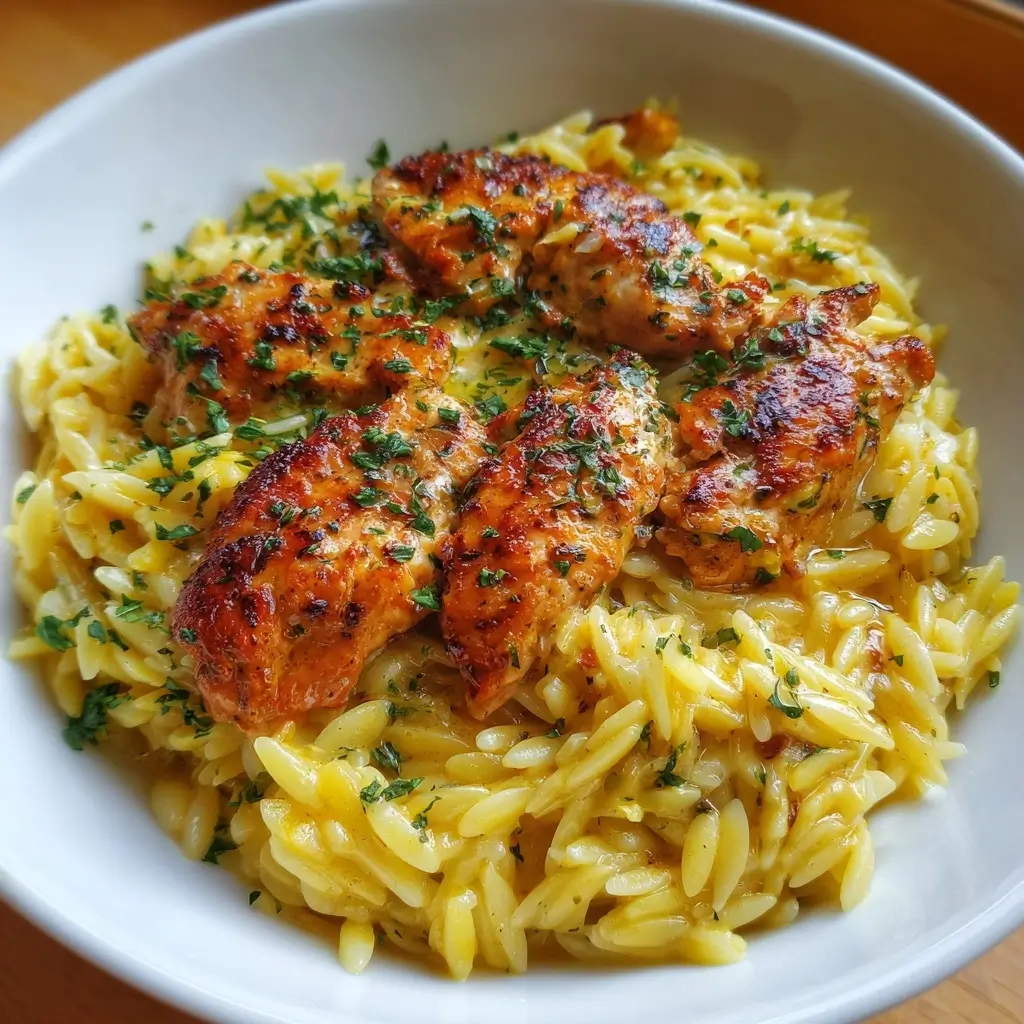
Garlic Butter Chicken Orzo is a beloved, restaurant-quality comfort dish that seamlessly marries tender pan-seared chicken, rich golden garlic butter sauce, and creamy, al dente orzo pasta—all in one skillet. It’s the kind of meal that feels indulgent yet approachable, elegant yet effortless—perfect for weeknight dinners, date nights, or impressing guests without spending hours in the kitchen. Unlike traditional pasta dishes that require separate cooking steps for protein and pasta, this recipe embraces the “one-pot” philosophy (with minimal pot-switching), maximizing flavor through layered browning, deglazing, and emulsification—resulting in a luxuriously cohesive, aromatic, and deeply savory plate where every bite delivers balanced richness, herbaceous brightness, and umami depth.
The History
While no single chef or region can claim sole authorship of Garlic Butter Chicken Orzo, its origins are firmly rooted in the broader evolution of American-Italian fusion and modern skillet cuisine. Orzo—a rice-shaped pasta with ancient Greek and Turkish roots (its name derives from the Greek word “órsos,” meaning barley)—has long been used in Mediterranean soups and pilafs. Its adoption into American home cooking surged in the late 20th century as imported pastas became more widely available in supermarkets. Meanwhile, garlic butter as a preparation technique traces back centuries across French (beurre à la bourguignonne), Italian (burro e aglio), and Middle Eastern kitchens—but gained mainstream U.S. popularity through mid-century steakhouse traditions and 1970s–80s “gourmet” frozen meals. The convergence of these elements—chicken breast (a lean, accessible protein), orzo (prized for its ability to absorb sauces like a tiny, starchy sponge), and a deeply reduced garlic-butter-wine-herb pan sauce—emerged organically in food blogs and test kitchens around 2012–2015, accelerated by Pinterest and Instagram’s visual appeal of golden orzo glistening under melted parsley-flecked butter. Today, it stands as a hallmark of contemporary “elevated weeknight cooking”: rustic enough for family dinner, refined enough for dinner parties, and endlessly adaptable to seasonal and dietary preferences.
Ingredients Breakdown
Every ingredient in Garlic Butter Chicken Orzo plays a purposeful, synergistic role—not just for flavor, but for texture, mouthfeel, chemistry, and balance:
- Chicken Breast (or Thighs): Boneless, skinless breasts provide lean tenderness; thighs offer richer flavor and forgiving moisture retention. Brining or dry-brining (even 15 minutes with salt) dramatically improves juiciness and seasoning penetration.
- Orzo Pasta: Not just “rice-shaped”—its high surface-area-to-volume ratio allows exceptional sauce adhesion. Authentic Greek orzo (made from hard durum wheat semolina) holds up better than generic imitations. Toasting it lightly in butter before boiling adds nuttiness and prevents clumping.
- Unsalted Butter: Used twice—first for searing (high smoke point clarified portion), then finished raw for aromatic freshness and velvety mouth-coating richness. European-style (82–84% fat) yields superior flavor and emulsion stability.
- Fresh Garlic: Minced—not powdered or jarred—for volatile sulfur compounds (allicin) that bloom under gentle heat, delivering pungent sweetness without bitterness. Crushing cloves first enhances enzymatic release.
- Dry White Wine (e.g., Sauvignon Blanc or Pinot Grigio): Adds acidity, fruitiness, and complexity while de-glazing the fond. Alcohol cooks off, leaving only nuanced esters and tartaric acid to brighten the butter’s richness.
- Low-Sodium Chicken Broth: Provides deep savory backbone (via natural glutamates) without oversalting. Homemade or high-quality low-sodium versions prevent sauce from turning briny or flat.
- Lemon Juice & Zest: Juice adds finishing acidity to cut through fat; zest contributes fragrant citrus oils that lift the entire aroma profile—added *off-heat* to preserve volatility.
- Fresh Herbs (Parsley & Optional Thyme or Oregano): Flat-leaf parsley brings grassy, clean bitterness; thyme contributes earthy, floral notes ideal for pairing with garlic and poultry. Always added at the end to retain vibrancy.
- Grated Parmesan (Parmigiano-Reggiano): Not just “cheese”—it’s umami amplification. Aged 24+ months delivers nutty, crystalline depth and natural thickening via casein and calcium lactate.
- Red Pepper Flakes (Optional): A whisper—not a shout—adds capsaicin warmth that enhances garlic’s perception without heat dominance.
- High-Heat Oil (Avocado or Light Olive Oil): Essential for achieving a proper Maillard crust on chicken without burning butter.
Step-by-Step Recipe
- Prep & Season: Pat chicken breasts *extremely dry* with paper towels. Slice evenly into ½-inch thick cutlets (or pound gently between parchment to ¼-inch thickness for faster, even cooking). Season both sides generously with kosher salt and freshly ground black pepper. Let rest 10 minutes at room temperature.
- Toast the Orzo: In a large, heavy-bottomed skillet (12-inch stainless or enameled cast iron preferred), melt 1 tbsp butter over medium heat. Add orzo and stir constantly 3–4 minutes until golden and fragrant—like toasted rice. Transfer to a bowl; set aside.
- Sear the Chicken: Heat 1 tbsp high-heat oil in the same skillet over medium-high until shimmering. Add chicken in a single layer—do not crowd. Cook undisturbed 3–4 minutes until deeply golden brown and easily releases. Flip and cook 2–3 minutes more until just cooked through (160°F internal). Transfer to a clean plate, tent loosely with foil.
- Build the Aromatic Base: Reduce heat to medium. Add remaining 3 tbsp butter. Once foaming subsides, add minced garlic and red pepper flakes (if using). Stir constantly 45–60 seconds—just until garlic becomes fragrant and pale gold (*not brown*, or it turns bitter).
- Deglaze & Simmer: Pour in white wine, scraping vigorously with a wooden spoon to lift all browned bits (fond). Simmer 1–2 minutes until reduced by half. Add chicken broth, lemon zest, and thyme (if using). Bring to a gentle simmer.
- Cook the Orzo: Stir in toasted orzo, ensuring fully submerged. Reduce heat to low-medium, cover tightly, and simmer 12–14 minutes—stirring once halfway—until liquid is absorbed and orzo is tender but still al dente (slight bite remains).
- Finish & Emulsify: Remove from heat. Nestle chicken pieces (and any accumulated juices) into orzo. Add lemon juice, remaining parsley, and grated Parmesan. Gently fold with a silicone spatula—don’t overmix. Let rest 3 minutes: residual heat finishes cooking chicken and allows sauce to thicken into a glossy, cohesive coating.
- Final Garnish & Serve: Taste and adjust: a pinch more salt? A drop more lemon? A final knob of cold butter swirled in for extra silk? Spoon into warmed shallow bowls. Garnish with extra parsley, lemon wedges, flaky sea salt, and a dusting of Parmesan.
Tips
- Dry Chicken = Golden Crust: Moisture is the enemy of browning. Pat chicken *twice*: once before seasoning, again right before hitting the pan.
- Don’t Skip Toasting Orzo: This step develops maillard-driven nuttiness and seals starch granules, preventing mushiness during simmering.
- Control Garlic Heat Meticulously: Garlic burns in seconds. Keep heat at medium, stir constantly, and remove from heat if it starts sizzling aggressively.
- Use a Tight-Fitting Lid: Traps steam for even orzo cooking. If lid gaps, cover with parchment + lid to seal completely.
- Resist Over-Stirring Post-Finish: Folding too vigorously breaks down orzo and releases excess starch, leading to gluey texture. Fold just until combined.
- Rest Before Serving: That 3-minute rest lets proteins reabsorb juices and allows the sauce to settle into the orzo’s nooks—transforming texture from loose to luscious.
- Acid Last, Always: Adding lemon juice while hot volatilizes delicate top notes. Off-heat addition preserves brightness and balance.
- Invest in a Good Thermometer: Chicken is perfectly cooked at 160°F—not 165°F. Carryover cooking will raise it to safe 165°F while preserving maximum juiciness.
- Skillet Choice Matters: Stainless steel gives best fond for deglazing; enameled cast iron retains heat evenly for gentle simmering; nonstick prevents sticking but sacrifices fond development.
- Taste Your Broth First: If store-bought broth tastes overly salty or metallic, dilute 1:1 with water—or better yet, use homemade.
Variations and Customizations
This recipe is a vibrant canvas—adaptable across seasons, cuisines, and dietary frameworks:
- Mediterranean Twist: Add ½ cup chopped sun-dried tomatoes (oil-packed, drained), ¼ cup kalamata olives, and 2 tbsp crumbled feta in the final fold. Swap parsley for fresh oregano.
- Spring Vegetable Edition: Sauté 1 cup diced asparagus, ½ cup shelled peas, and 2 thinly sliced scallions with the garlic. Fold in with lemon juice.
- Creamy Dill Version: Stir in ⅓ cup full-fat Greek yogurt and 1 tbsp fresh dill at the end—creates a cool, tangy counterpoint to garlic butter.
- Spicy Arrabbiata Style: Replace white wine with ½ cup crushed San Marzano tomatoes. Add 1 tsp smoked paprika and double the red pepper flakes. Finish with basil.
- Herb-Forward “Pesto Swirl”: Reserve 2 tbsp basil pesto (homemade or high-quality). Swirl into finished dish just before serving for vibrant green ribbons and pine-nut richness.
- Seafood Upgrade: Replace chicken with 12 oz wild-caught shrimp (peeled, deveined) or scallops. Sear 1–2 minutes per side. Deglaze with dry vermouth instead of wine.
- Vegetarian Orzo Risotto: Omit chicken. Use roasted mushrooms (cremini or oyster) and white beans (cannellini) for heartiness. Boost umami with 1 tsp white miso stirred in at the end.
- Gluten-Free Adaptation: Substitute orzo with gluten-free short-grain rice pasta (like Tinkyada or Jovial) or quinoa. Toast carefully—it browns faster. Simmer time may vary by 2–3 minutes.
- Keto/Low-Carb Option: Replace orzo with cauliflower “orzo” (pulse florets finely, sauté 5–7 mins until tender-crisp). Add 1 tbsp cream cheese at the end for body and richness.
- Meal Prep Friendly: Cook chicken and orzo separately. Store in airtight containers for up to 4 days. Reheat orzo with 1–2 tbsp broth to refresh moisture; warm chicken separately and combine just before serving.
Health Considerations and Nutritional Value
A single 1¾-cup serving (approx. 480g) of Garlic Butter Chicken Orzo—prepared as written with whole ingredients—offers a well-rounded nutritional profile grounded in quality macros and functional nutrients:
- Calories & Macros: ~620 kcal | 42g protein (chicken + Parmesan) | 48g complex carbs (orzo provides resistant starch when cooled slightly) | 28g total fat (17g unsaturated from olive oil/butter, 7g saturated—within AHA guidelines for heart health when balanced with fiber and activity).
- Vitamins & Minerals: Excellent source of B6 and B12 (chicken), selenium (immune support), vitamin A (from butterfat), and bioavailable calcium + phosphorus (Parmesan). Garlic contributes allicin (anti-inflammatory, cardiovascular support), while lemon zest offers limonene (antioxidant) and flavonoids.
- Dietary Notes: Naturally low in sugar (<1g/serving); contains no artificial preservatives or additives when made from scratch. Lactose content is minimal due to aging of Parmesan and small butter quantity—often tolerated by mild lactose sensitivity.
- Balancing Considerations: Sodium can be moderated by using low-sodium broth and omitting added salt in favor of finishing sea salt. For lower saturated fat, substitute half the butter with extra-virgin olive oil—but don’t eliminate all butter, as its milk solids contribute critical flavor and emulsification.
- Gut Health Friendly: Orzo’s starch feeds beneficial gut bacteria when consumed as part of a diverse, fiber-rich diet. Pairing with lemon and garlic further supports microbial diversity and digestive enzyme stimulation.
- Not Just Comfort Food—Functional Food: The synergy of lean protein, monounsaturated fats, antioxidants, and bioactive sulfur compounds makes this dish nutritionally intelligent—not merely satisfying. It sustains energy, supports satiety hormones (CCK, GLP-1), and avoids blood-sugar spikes thanks to moderate glycemic load and high protein/fat content.
Ingredients
- 2 (6–8 oz) boneless, skinless chicken breasts, pounded to ¼-inch thickness
- 1 tsp kosher salt, plus more to taste
- ½ tsp freshly ground black pepper
- 1 tbsp avocado oil or light olive oil
- 4 tbsp unsalted butter, divided
- 1 cup (6 oz) dried orzo pasta
- 4 cloves garlic, finely minced (about 1 tbsp)
- ¼ tsp red pepper flakes (optional)
- ½ cup dry white wine (Sauvignon Blanc, Pinot Grigio, or Unoaked Chardonnay)
- 1 ½ cups low-sodium chicken broth
- 1 tbsp lemon zest (from 1 large lemon)
- 1 tsp fresh thyme leaves (optional)
- 1 tbsp fresh lemon juice (from same lemon)
- ⅓ cup finely grated Parmigiano-Reggiano cheese
- ¼ cup fresh flat-leaf parsley, finely chopped
- Lemon wedges and flaky sea salt, for serving
Directions
- Pat chicken breasts extremely dry with paper towels. Place between two sheets of parchment paper and gently pound to an even ¼-inch thickness using a meat mallet or heavy skillet. Season both sides with 1 tsp kosher salt and ½ tsp black pepper. Let sit at room temperature for 10 minutes.
- In a large, heavy-bottomed 12-inch skillet, melt 1 tbsp butter over medium heat. Add orzo and toast, stirring constantly, for 3–4 minutes until golden brown and nutty-smelling. Transfer to a small bowl and set aside.
- In the same skillet, heat avocado oil over medium-high heat until shimmering. Add chicken in a single layer—do not crowd. Cook undisturbed for 3–4 minutes until deeply golden and easily releases from pan. Flip and cook 2–3 minutes more until just cooked through (160°F). Transfer to a plate, tent loosely with foil.
- Reduce heat to medium. Add remaining 3 tbsp butter to skillet. Once foam subsides, add minced garlic and red pepper flakes. Stir constantly for 45–60 seconds until fragrant and pale gold—do not brown.
- Pour in white wine, scraping bottom vigorously to lift all browned bits. Simmer 1–2 minutes until reduced by half. Stir in chicken broth, lemon zest, and thyme (if using). Bring to a gentle simmer.
- Stir in toasted orzo, ensuring it’s fully submerged. Reduce heat to low-medium, cover tightly, and simmer for 12–14 minutes, stirring once halfway, until liquid is absorbed and orzo is tender but still al dente.
- Remove from heat. Nestle chicken (and any juices) into orzo. Add lemon juice, parsley, and Parmesan. Gently fold with a silicone spatula until just combined.
- Let rest, covered, for 3 minutes. Taste and adjust seasoning—add a pinch more salt or lemon if desired. Serve immediately in warmed shallow bowls, garnished with extra parsley, lemon wedges, flaky sea salt, and additional Parmesan.
FAQ
- Can I use chicken thighs instead of breasts?
- Absolutely—and many chefs prefer them! Boneless, skinless thighs yield richer flavor and stay juicier during cooking. Adjust sear time: 4–5 minutes per side, until internal temp reaches 175°F (they’re more forgiving). Thighs also add subtle gelatin that enhances sauce silkiness.
- Why does my orzo turn mushy?
- Mushiness usually stems from overcooking, insufficient toasting, or using low-quality orzo with excess surface starch. Ensure you toast thoroughly, use exact liquid ratios, and check doneness at 12 minutes. Rinsing orzo *before* toasting is unnecessary—and actually harmful, as it washes away starch needed for sauce cling.
- Can I make this dairy-free?
- Yes—with smart swaps: replace butter with high-quality vegan butter (Miyoko’s or Forager) for searing and finishing; use nutritional yeast (3 tbsp) + 1 tsp white miso for Parmesan’s umami depth; ensure broth is certified dairy-free. Note: texture and richness will differ, but flavor remains robust.
- Is there a way to reduce the garlic intensity?
- Yes—two effective methods: (1) Blanch minced garlic in boiling water for 10 seconds, then drain and pat dry before adding; this tames pungency while retaining aroma. (2) Use roasted garlic paste (3–4 cloves) instead of raw—adds sweet, mellow depth without sharpness.
- Can I prepare this ahead of time?
- You can fully prep components up to 24 hours ahead: pound and season chicken (store covered in fridge); toast orzo (cool, store airtight); mince garlic and herbs (store separately with damp paper towel). Assemble and cook within 30 minutes of serving for optimal texture and aroma.
- What wine should I use if I don’t cook with alcohol?
- Substitute with equal parts low-sodium broth + 1 tsp apple cider vinegar (for acidity) + 1 tsp white grape juice (for fruitiness). Or use non-alcoholic white wine (Fre, Ariel)—designed to mimic varietal character without ethanol.
- Can I freeze leftovers?
- Yes—but with caveats. Freeze *without* fresh herbs, lemon juice, or Parmesan (add those fresh upon reheating). Portion into airtight containers with 1 tbsp broth per cup to prevent drying. Thaw overnight in fridge; reheat gently on stove with extra broth to revive creaminess. Best consumed within 2 months.
- Why do some recipes add cream or heavy cream?
- Cream adds immediate richness and visual luxury—but it’s not traditional or necessary. Real garlic butter sauce achieves silkiness through proper emulsification (butter + starch + broth) and reduction. Cream can mute garlic’s brightness and create a cloying mouthfeel. Reserve it for decadent variations—not the classic.
- My sauce looks broken or oily—what went wrong?
- A broken sauce means emulsion failed—usually from overheating after adding cold butter or aggressive stirring. Fix it: remove from heat, whisk in 1 tsp cold broth or lemon juice, then slowly drizzle in 1 tsp cold butter while whisking vigorously. Or blend 2 tbsp sauce + 1 tsp cold butter in a mini-chopper for instant re-emulsification.
- What sides pair well with Garlic Butter Chicken Orzo?
- This dish is intentionally complete—but excellent complements include: a crisp arugula salad with lemon vinaigrette, roasted asparagus with lemon zest, garlicky sautéed spinach, or a chilled cucumber-dill yogurt soup (tzatziki-style). Avoid heavy starches—this orzo *is* the starch.
Summary
Garlic Butter Chicken Orzo is a masterclass in simple techniques yielding extraordinary flavor: golden-seared chicken, nutty toasted orzo, and a glossy, herb-flecked pan sauce built on the timeless alchemy of garlic, butter, wine, and lemon—all harmonized with aged Parmesan and fresh parsley.
It’s nourishing, adaptable, deeply satisfying, and effortlessly elegant—proof that extraordinary meals don’t demand complexity, but rather intention, quality ingredients, and respect for foundational cooking science.