Introduction
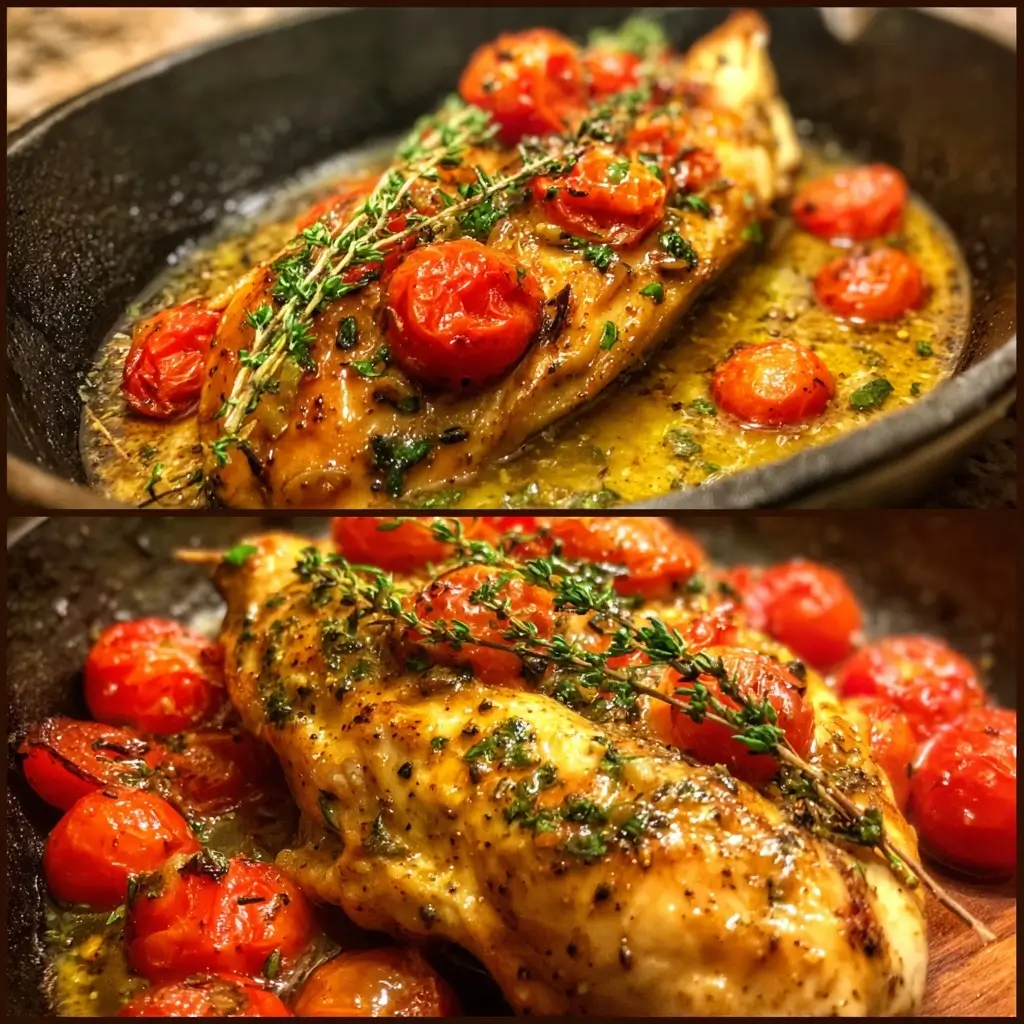
Garlic Butter Chicken with Cherry Tomatoes is a vibrant, restaurant-worthy dish that marries the rich umami depth of seared chicken breast or thigh with the bright acidity and natural sweetness of roasted cherry tomatoes—all bound together by a luxuriously aromatic garlic butter sauce. This dish strikes the perfect balance between rustic simplicity and refined flavor: it’s approachable enough for weeknight cooking yet elegant enough to serve at dinner parties. The visual appeal—glossy golden-brown chicken nestled among jewel-toned, blistered tomatoes—is matched only by its irresistible aroma: toasted garlic, melted butter, fresh herbs, and the subtle tang of vine-ripened tomatoes. Whether you’re seeking a comforting one-pan meal, a protein-packed lunch prep option, or a crowd-pleasing centerpiece for date night, this recipe delivers bold taste, minimal cleanup, and maximum satisfaction.
The History
While there is no single documented origin for Garlic Butter Chicken with Cherry Tomatoes, the dish is a modern evolution rooted in centuries-old culinary traditions across multiple continents. Garlic and butter have long been foundational in European cuisines—especially in French beurre blanc-inspired preparations and Italian aglio e olio techniques—where garlic is gently infused into fat to build deep, savory bases without bitterness. Meanwhile, the use of small, sweet tomatoes traces back to the Mediterranean and Middle East, where heirloom varieties like cherry and grape tomatoes were cultivated for their concentrated flavor and resilience. In the late 20th and early 21st centuries, as artisanal cherry tomatoes became widely available year-round in North America and Europe—and home cooks embraced sheet-pan and skillet-to-table cooking—the fusion of these elements gained traction. Food bloggers, celebrity chefs (including Ina Garten’s “chicken with tomatoes and basil” and Gordon Ramsay’s pan-seared variations), and wellness-focused influencers helped popularize versions that emphasized freshness, minimal processing, and vibrant color. Today, Garlic Butter Chicken with Cherry Tomatoes stands as a hallmark of contemporary “elevated comfort food”—a global palate unifier that honors tradition while celebrating seasonal, accessible ingredients.
Ingredients Breakdown
Every element in this dish plays a purposeful role—not just in flavor, but in texture, chemistry, and balance:
- Chicken Breast or Thighs: Boneless, skinless chicken breasts offer lean protein and a clean canvas; thighs provide richer flavor, higher moisture retention, and forgiving cook times—ideal for beginners or meal preppers. Brining or dry-brining (with salt 30–60 minutes ahead) enhances juiciness and seasoning penetration.
- Cherry Tomatoes: Choose firm, deeply colored, plump tomatoes—Sun Gold, Sweet 100, or Midnight Snack varieties deliver exceptional sweetness and low acidity. Their thin skins blister beautifully under high heat, releasing juices that deglaze the pan and form the base of the sauce. Avoid overripe or soft tomatoes, which can turn mushy and overly watery.
- Unsalted Butter: Essential for richness, mouthfeel, and emulsification. Unsalted allows precise sodium control. European-style butter (82–86% fat) adds superior browning and nutty complexity when browned.
- Fresh Garlic: Minced or thinly sliced—not powdered or jarred—for bright, pungent, floral notes that mellow into sweetness during cooking. Too much raw garlic can overwhelm; too little leaves the dish flat. A balanced 4–6 cloves (depending on size and preference) ensures aromatic depth without harshness.
- Extra-Virgin Olive Oil: Used alongside butter for higher smoke point and added fruitiness. It prevents butter from burning and contributes polyphenols and antioxidants.
- Dry White Wine (optional but recommended): Sauvignon Blanc, Pinot Grigio, or unoaked Chardonnay add brightness and lift via acidity and alcohol-based deglazing. Non-alcoholic substitute: 2 tbsp lemon juice + ¼ cup low-sodium chicken broth.
- Fresh Herbs: Basil, thyme, and parsley are classic. Basil adds sweet anise-like perfume; thyme contributes earthy, floral notes that complement garlic and tomato; parsley lends fresh, grassy finish and visual pop. Always add delicate herbs like basil and parsley at the end to preserve volatile oils.
- Lemon Juice & Zest: A splash of fresh lemon juice brightens the sauce and cuts through fat, while finely grated zest imparts intense citrus aroma without acidity overload.
- High-Quality Salt & Freshly Ground Black Pepper: Kosher salt ensures even distribution; freshly cracked black pepper adds warmth and subtle spice. Sea salt flakes (like Maldon) make an excellent finishing touch.
- Optional Enhancements: A pinch of red pepper flakes for gentle heat; a drizzle of aged balsamic glaze for caramelized sweetness; crumbled feta or goat cheese for creamy tang; toasted pine nuts or slivered almonds for crunch.
Step-by-Step Recipe
- Prep & Season: Pat chicken pieces *very* dry with paper towels—this is critical for achieving a golden sear, not steam. Season generously on both sides with kosher salt and freshly ground black pepper. Let sit at room temperature for 15 minutes.
- Preheat & Sear: Heat a large, heavy-bottomed stainless steel or cast-iron skillet over medium-high heat. Add 1 tbsp olive oil. Once shimmering (but not smoking), place chicken in a single layer without crowding. Sear undisturbed for 5–6 minutes until deeply golden and easily releases from pan. Flip and cook 4–5 minutes more for breasts (until internal temp reaches 160°F/71°C); thighs may need 6–7 minutes per side (target 165°F/74°C). Transfer to a clean plate, tent loosely with foil, and rest 5 minutes—this allows juices to redistribute.
- Roast Tomatoes: Reduce heat to medium. In the same skillet (with residual fond and fat), add cherry tomatoes in a single layer. Sprinkle lightly with salt and optional red pepper flakes. Cook 6–8 minutes, shaking pan occasionally, until tomatoes blister, soften, and begin to burst—releasing vivid red juices. Avoid stirring excessively to encourage caramelization.
- Infuse Garlic: Push tomatoes to one side. Add minced garlic and remaining 1 tbsp olive oil to the empty space. Sauté 45–60 seconds—just until fragrant and lightly golden (do not brown or burn!). Stir garlic into tomatoes.
- Build the Sauce: Pour in white wine (or lemon-broth mix) and scrape vigorously with a wooden spoon to lift all browned bits (fond) from the pan bottom—this is flavor gold. Simmer 2–3 minutes until liquid reduces by half and becomes syrupy.
- Emulsify with Butter: Reduce heat to low. Whisk in cold butter, 1 tbsp at a time, allowing each addition to melt and incorporate fully before adding the next. Continue whisking constantly until sauce is glossy, velvety, and coats the back of a spoon (~2–3 minutes). Overheating will cause separation—keep it gentle.
- Finish & Serve: Return rested chicken (and any accumulated juices) to the skillet. Spoon sauce and tomatoes over chicken. Simmer gently 1–2 minutes to reheat. Remove from heat. Stir in lemon zest, lemon juice, and most of the fresh herbs (reserve some for garnish). Taste and adjust seasoning—more salt? A touch more acid? A whisper of honey if tomatoes are very tart?
Tips
- Dry chicken thoroughly—moisture is the enemy of browning. Use paper towels and press firmly.
- Don’t skip the resting step. Cutting into hot chicken forces out juices, resulting in dry meat.
- Use cold butter, cut into cubes, for best emulsification. Warm or melted butter won’t thicken properly.
- Control garlic burn: Garlic cooks faster than tomatoes—add it after tomatoes blister, and stir immediately.
- For extra depth, add ½ tsp tomato paste with the garlic and cook 30 seconds before deglazing.
- Serve immediately. Garlic butter sauce thickens and separates as it cools—timing matters.
- Skillet choice matters: Stainless steel offers superior fond development; nonstick makes cleanup easy but yields less sear and fond.
- Batch-friendly tip: Double the recipe—but sear chicken in two batches to avoid steaming. Keep first batch warm in a 200°F oven while finishing second.
- Make-ahead advantage: Marinate chicken in olive oil, garlic, lemon, and herbs up to 24 hours ahead. Drain well before cooking.
- Resist over-stirring the sauce once butter is added—gentle whisking preserves the emulsion.
Variations and Customizations
This recipe is endlessly adaptable to dietary needs, pantry constraints, and global inspirations:
- Low-Carb/Keto: Naturally compliant—skip starchy sides. Serve over cauliflower rice, zucchini noodles, or sautéed spinach. Boost fat with extra butter or a spoonful of ghee.
- Gluten-Free: Entirely GF as written—just verify broth/wine labels if using substitutes.
- Dairy-Free/Vegan Option: Replace butter with high-quality vegan butter (Miyoko’s or Forager) and use olive oil exclusively. Swap chicken for pan-seared tempeh or king oyster mushrooms (marinated in tamari, garlic, and maple). Add nutritional yeast for umami depth.
- Mediterranean Twist: Stir in ¼ cup chopped Kalamata olives, 2 tbsp capers, and 1 tsp dried oregano with the tomatoes. Finish with crumbled feta and lemon zest.
- Asian-Inspired: Replace wine with dry sherry; swap garlic for 1 tbsp grated ginger and 2 green onions (white parts only); finish with 1 tsp soy sauce, ½ tsp sesame oil, and toasted sesame seeds.
- Herbaceous Garden Style: Use a mix of 2 tbsp each chopped chives, dill, tarragon, and parsley. Add 1 tsp fresh thyme leaves. Omit lemon zest; use lime instead for brightness.
- Spicy Arrabbiata Version: Sauté 1 finely diced shallot before tomatoes; add 1 tsp crushed Calabrian chiles or ½ tsp chipotle powder with garlic.
- Creamy Version: After emulsifying butter, stir in 2–3 tbsp full-fat coconut milk or crème fraîche for lush, velvety texture.
- Sheet-Pan Baked: Toss tomatoes and seasoned chicken on a parchment-lined sheet pan. Roast at 425°F for 20–25 minutes until chicken is cooked and tomatoes burst. Whisk butter, garlic, herbs, and lemon into pan juices post-roasting.
- Meal Prep Friendly: Cook components separately—sear chicken, roast tomatoes, make sauce base (without butter)—then combine and reheat gently with cold butter stirred in last.
Health Considerations and Nutritional Value
Per serving (1 chicken breast + ¾ cup tomatoes + sauce), this dish delivers approximately 420–480 calories, with 38–42g protein, 28–32g total fat (16–19g saturated, primarily from butter), 12–15g carbohydrates, and 3–4g dietary fiber. It is naturally rich in several key nutrients:
- Vitamin C: From cherry tomatoes (1 cup = ~25mg, nearly 30% DV) and lemon—supports immunity and iron absorption.
- Lycopene: A powerful antioxidant concentrated in cooked tomatoes; bioavailability increases significantly when paired with healthy fats like olive oil and butter.
- Selenium & B Vitamins: Chicken is an excellent source of selenium (supports thyroid and DNA repair) and B6/B12 (nerve function and energy metabolism).
- Allicin Precursors: Raw garlic contains alliin, converted to allicin upon chopping/crushing—linked to cardiovascular and anti-inflammatory benefits. Gentle cooking preserves many compounds, though high heat degrades some.
- Healthy Fats: Monounsaturated fats (olive oil) and short-chain fatty acids (butter) contribute to satiety and nutrient absorption—especially of fat-soluble vitamins A, D, E, and K found in tomatoes and herbs.
Dietary Notes: While butter contributes saturated fat, recent research suggests moderate intake within a balanced diet does not inherently increase heart disease risk for most people. To reduce saturated fat, substitute half the butter with extra-virgin olive oil or avocado oil. For lower sodium, omit added salt during cooking and rely on herb-forward seasoning and lemon. Those managing cholesterol may opt for skinless chicken breast and limit butter to 1½ tbsp per serving. Always consult a registered dietitian for personalized guidance.
Ingredients
- 2 boneless, skinless chicken breasts (about 1 lb / 450g) or 4 boneless, skinless chicken thighs (about 1.25 lbs / 570g)
- 1 pint (about 2 cups / 300g) cherry tomatoes, stems removed
- 4 tbsp unsalted butter, cold and cubed
- 3 tbsp extra-virgin olive oil, divided
- 5–6 garlic cloves, finely minced (about 1½ tbsp)
- ¼ cup dry white wine (e.g., Sauvignon Blanc or Pinot Grigio) — optional but recommended
- 2 tbsp fresh lemon juice (from ~1 lemon)
- 1 tsp finely grated lemon zest
- 1 tsp kosher salt, plus more to taste
- 1 tsp freshly ground black pepper, plus more to taste
- ¼ tsp red pepper flakes (optional)
- ¼ cup fresh basil leaves, torn (plus extra for garnish)
- 2 tbsp fresh flat-leaf parsley, finely chopped
- 1 tbsp fresh thyme leaves (or 1 tsp dried)
- Optional: 2 tbsp crumbled feta or goat cheese, 1 tbsp toasted pine nuts, or 1 tsp aged balsamic glaze
Directions
- Prepare chicken: Pat chicken completely dry with paper towels. Season both sides generously with 1 tsp kosher salt and ½ tsp black pepper. Let sit at room temperature for 15 minutes.
- Sear chicken: Heat 2 tbsp olive oil in a large heavy-bottomed skillet (12-inch preferred) over medium-high heat. When oil shimmers, add chicken in a single layer without crowding. Cook undisturbed for 5–6 minutes until deeply golden and releases easily. Flip and cook 4–5 minutes more (breasts) or 6–7 minutes (thighs) until internal temperature reaches 160°F (breasts) or 165°F (thighs). Transfer to a plate, tent with foil, and rest 5 minutes.
- Roast tomatoes: Reduce heat to medium. Add remaining 1 tbsp olive oil and cherry tomatoes to same skillet. Sprinkle with remaining ½ tsp salt, ½ tsp black pepper, and red pepper flakes (if using). Cook 6–8 minutes, shaking pan occasionally, until tomatoes blister, soften, and burst.
- Sauté garlic: Push tomatoes to one side. Add minced garlic to empty space and sauté 45–60 seconds until fragrant and pale gold. Stir into tomatoes.
- Deglaze: Pour in white wine (or lemon-broth mixture). Scrape pan vigorously with a wooden spoon to lift all browned bits. Simmer 2–3 minutes until reduced by half and slightly syrupy.
- Emulsify sauce: Reduce heat to low. Whisk in cold butter, 1 tbsp at a time, letting each fully incorporate before adding next. Continue whisking 2–3 minutes until sauce is glossy and coats the back of a spoon.
- Combine & finish: Return rested chicken (and juices) to skillet. Spoon sauce and tomatoes over chicken. Simmer gently 1–2 minutes to reheat. Remove from heat. Stir in lemon juice, lemon zest, basil, parsley, and thyme. Taste and adjust seasoning.
- Serve immediately: Garnish with extra herbs, flaky sea salt, and optional cheese or nuts. Best enjoyed hot, with crusty bread, quinoa, or a simple arugula salad.
FAQ
- Can I use frozen chicken?
- Yes—but thaw completely in the refrigerator overnight. Pat *extremely* dry before seasoning and searing. Frozen chicken releases excess water, inhibiting browning and diluting sauce.
- Why did my sauce break or look greasy?
- Most commonly due to overheating during butter incorporation or adding butter that’s too warm. Keep heat low, whisk constantly, and use cold, cubed butter. If broken, remove from heat, let cool slightly, then whisk in 1 tsp cold water or lemon juice to re-emulsify.
- Can I make this ahead of time?
- You can prep components up to 2 days ahead: marinate chicken, wash and dry tomatoes, mince garlic, and portion herbs. Cooked dish reheats well—gently warm in skillet over low heat, adding a splash of broth or lemon juice to refresh sauce. Do *not* store fully assembled with butter sauce for >2 days—it may separate or develop off-notes.
- What’s the best wine to use?
- Choose a dry, high-acid white you’d enjoy drinking—Sauvignon Blanc, Pinot Grigio, Albariño, or unoaked Chardonnay. Avoid “cooking wine”—it’s loaded with salt and preservatives. No wine? Use 2 tbsp lemon juice + ¼ cup low-sodium chicken broth.
- Can I air-fry the chicken and tomatoes?
- Absolutely! Toss chicken and tomatoes with 2 tbsp olive oil, salt, pepper, and garlic. Air-fry at 400°F for 12–15 minutes, flipping halfway, until chicken hits target temp and tomatoes blister. Then make sauce separately in a skillet and combine.
- How do I prevent garlic from burning?
- Always add garlic *after* tomatoes blister and release juices—those liquids moderate the pan temperature. Sauté garlic just until fragrant (45–60 sec), stirring constantly. If pan seems too hot, briefly remove from heat while stirring.
- Is this dish spicy?
- Not inherently—garlic and tomatoes are mild. Red pepper flakes add gentle warmth, but they’re optional. Omit entirely for zero heat, or increase to ½ tsp for noticeable kick.
- Can I use other tomatoes?
- Cherry tomatoes are ideal for sweetness, texture, and quick roasting. Grape tomatoes work similarly. Campari or on-the-vine tomatoes can substitute—halve them first. Avoid large beefsteak or Roma—they lack sweetness and require longer roasting, potentially overcooking chicken.
- What sides pair best?
- Crusty artisan bread (for sauce-dipping), lemon-herb quinoa, farro pilaf, roasted asparagus, garlic mashed potatoes, or a crisp mixed green salad with lemon vinaigrette. For low-carb: zucchini ribbons, cauliflower rice, or sautéed Swiss chard.
- How long does leftovers last?
- Store in an airtight container in the refrigerator for up to 3 days. Reheat gently in a skillet over low heat, stirring in 1–2 tsp broth or water to revive sauce. Not recommended for freezing—the sauce may separate and tomatoes become mushy.
Summary
Garlic Butter Chicken with Cherry Tomatoes is a harmonious, visually stunning, and deeply flavorful one-pan dish that celebrates simplicity, seasonality, and technique—transforming humble pantry staples into something extraordinary through smart searing, controlled roasting, and masterful emulsification. With its tender, juicy chicken, sweet-tart blistered tomatoes, and luxuriously aromatic garlic butter sauce flecked with fresh herbs, it delivers gourmet satisfaction without gourmet effort—making it a timeless favorite for home cooks who value both taste and ease.
Nutritionally balanced and endlessly customizable, this recipe supports diverse diets—from keto and gluten-free to dairy-free adaptations—while offering meaningful antioxidants, high-quality protein, and heart-healthy fats, proving that indulgence and wellness need never be mutually exclusive.