Introduction
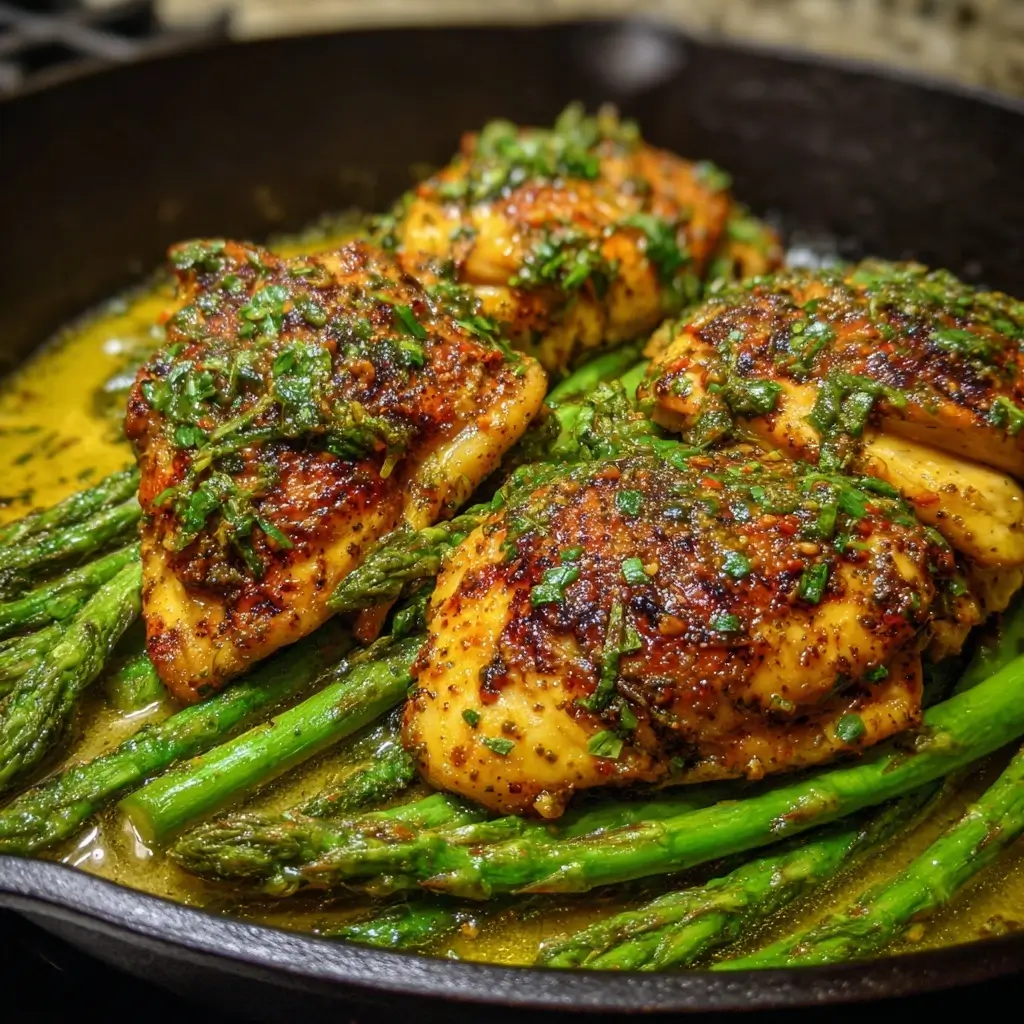
Garlic Butter Chicken with Asparagus is a quintessential weeknight gourmet meal—elegant enough for dinner parties yet simple enough for busy evenings. This dish marries tender, pan-seared chicken breasts with crisp-tender asparagus, all enveloped in a luxuriously aromatic garlic butter sauce infused with fresh herbs, lemon zest, and subtle umami depth. Its appeal lies not only in its rich, savory-sweet flavor profile but also in its visual charm: golden-brown chicken glistening under a glossy herb-flecked sauce, nestled beside vibrant green spears that retain their natural crunch and grassy sweetness. Whether you’re a novice cook seeking confidence-building recipes or an experienced home chef craving reliable, restaurant-quality results, this dish delivers on taste, texture, nutrition, and ease—all in under 30 minutes.
The History
While no single documented origin exists for “Garlic Butter Chicken with Asparagus,” the dish is a modern American-French fusion rooted in centuries-old culinary traditions. Garlic butter—a cornerstone of French cuisine known as *beurre à la bourguignonne* or *beurre composé*—has been used since at least the 17th century to enrich sauces, finish steaks, and elevate vegetables. Asparagus, prized since ancient Egyptian and Roman times for its delicacy and seasonal rarity, became widely accessible in North America in the late 19th century via improved rail transport and greenhouse cultivation. The pairing of chicken and asparagus gained popularity in mid-20th-century American home cooking, especially during the postwar era when lean proteins and fresh produce were promoted for health-conscious families. The rise of food media—from Julia Child’s televised demonstrations of pan sauces to today’s viral TikTok recipes—cemented garlic butter as the go-to flavor bridge between humble ingredients. What began as a practical combination evolved into a beloved staple, appearing in Martha Stewart Living spreads, Bon Appétit test kitchens, and countless family recipe boxes across generations.
Ingredients Breakdown
Every element in this recipe serves a distinct functional and sensory purpose—no ingredient is arbitrary. Let’s explore them in detail:
- Chicken Breasts (boneless, skinless): Opt for air-chilled, organic, or pasture-raised chicken when possible. Air-chilling preserves texture better than water-chilling; organic/pasture-raised options often yield richer flavor and more tender meat due to slower growth and natural diet. Pounding to even thickness (½ inch) ensures uniform cooking and prevents dryness.
- Asparagus: Choose medium-thick spears (¼–⅜ inch diameter) for optimal balance of tenderness and bite. Thin spears cook too quickly and turn mushy; very thick ones can be fibrous unless peeled. Look for tightly closed, compact tips, firm stalks with moist cut ends, and a vibrant green hue—even hints of purple indicate peak freshness and higher anthocyanin content.
- Unsalted Butter: Essential for richness, mouthfeel, and emulsification. Unsalted allows precise sodium control. European-style butter (82–86% fat) yields a deeper nuttiness when browned and superior sauce cohesion.
- Fresh Garlic: Always use freshly minced or pressed cloves—not jarred or powdered. Allicin, the compound responsible for garlic’s pungent aroma and health benefits, degrades rapidly in processed forms. Mincing releases enzymes that create complex sulfur compounds when heated.
- Dry White Wine (e.g., Sauvignon Blanc or Pinot Grigio): Adds acidity, depth, and subtle fruit notes while deglazing the pan to lift flavorful browned bits (*fond*). Alcohol cooks off, leaving only aromatic esters. Substitute with low-sodium chicken broth + ½ tsp white wine vinegar if avoiding alcohol.
- Lemon Juice & Zest: Freshly squeezed juice provides bright acidity to cut through butter’s richness; zest contributes volatile citrus oils for aromatic lift without added liquid.
- Fresh Herbs (Parsley & Thyme): Flat-leaf parsley adds clean, slightly peppery freshness and visual contrast; thyme contributes earthy, floral complexity that complements both chicken and asparagus. Dried thyme may be substituted (use ⅓ the amount), but fresh parsley is irreplaceable for finishing.
- High-Heat Oil (Avocado, Grapeseed, or Light Olive Oil): Needed for initial searing—butter alone burns at high temps. These oils have smoke points above 400°F, ensuring a perfect golden crust without acrid smoke.
- Sea Salt & Freshly Cracked Black Pepper: Kosher salt (like Diamond Crystal) adheres evenly and seasons deeply; coarse black pepper adds warm, floral heat that blooms when cracked just before use.
Step-by-Step Recipe
- Prep Work (10 minutes): Pat chicken breasts *extremely dry* with paper towels—this is critical for browning. Place between two sheets of parchment and gently pound to ½-inch uniform thickness using a meat mallet or heavy skillet. Season both sides generously with salt and pepper. Snap or peel tough ends from asparagus (hold spear at both ends and bend near base—it will naturally snap where woody stem begins); rinse and pat dry. Mince 4 garlic cloves; zest and juice 1 lemon; chop ¼ cup fresh parsley; strip 1 tsp fresh thyme leaves from stems.
- Sear the Chicken (6–7 minutes): Heat 1 tbsp high-heat oil in a large stainless steel or cast-iron skillet over medium-high heat until shimmering (a drop of water sizzles instantly). Add chicken, smooth-side down, without crowding (work in batches if needed). Press lightly with spatula for full contact. Cook undisturbed for 5–6 minutes until deeply golden brown and easily releases from pan. Flip and cook 1–2 minutes more until internal temperature reaches 155°F (it will rise to 165°F while resting). Transfer to a plate, tent loosely with foil, and rest 5 minutes.
- Blanch & Sauté Asparagus (4 minutes): In same skillet (reduce heat to medium), add 1 tbsp butter and 1 tsp thyme. Once butter foams, add asparagus in single layer. Sauté 2 minutes, rolling spears to coat. Add 2 tbsp water, cover, and steam 1–1.5 minutes until bright green and crisp-tender (test with fork—it should pierce with slight resistance). Uncover, increase heat to medium-high, and cook 30 seconds more to evaporate excess moisture. Remove asparagus to a bowl; keep warm.
- Build the Garlic Butter Sauce (3–4 minutes): Reduce heat to medium-low. Add remaining 3 tbsp butter to skillet. Once melted, add minced garlic and sauté 30–45 seconds until fragrant *but not brown* (garlic burns easily). Pour in wine (or broth/vinegar mixture), scraping vigorously with wooden spoon to release all browned bits. Simmer 1–2 minutes until reduced by half. Whisk in lemon juice, zest, and any accumulated chicken juices. Remove from heat.
- Finish & Serve (1 minute): Return chicken and asparagus to skillet, spooning sauce over both. Gently toss to coat. Sprinkle with parsley and extra black pepper. Optional: Dot with tiny pieces of cold butter for extra gloss (mounting). Serve immediately.
Tips
- Dry Chicken = Golden Crust: Moisture is the enemy of browning. If chicken steams instead of sears, it won’t develop fond—and your sauce will lack depth.
- Don’t Crowd the Pan: Overloading drops temperature, causing chicken to sweat rather than sear. Use two skillets or cook in batches.
- Rest Chicken Before Cutting: Resting allows juices to redistribute. Cutting too soon releases up to 20% of moisture, resulting in drier meat.
- Control Garlic Burn: Garlic cooks 3x faster than onions. Add it last in the sauce step and stir constantly. If it smells sharp or bitter, it’s overcooked.
- Perfect Asparagus Texture: Blanching in the pan (with steam) preserves color and crunch better than boiling. For thicker spears, peel lower 2 inches with a vegetable peeler first.
- Sauce Consistency Hack: If sauce seems thin, simmer 30 seconds longer off direct heat while whisking. If too thick, add 1 tsp warm broth or lemon juice.
- Make-Ahead Friendly: Prep chicken and asparagus up to 1 day ahead; store separately in airtight containers. Mince garlic and zest lemon up to 12 hours ahead (store garlic in oil in fridge, zest in freezer).
- Leftover Magic: Shred leftover chicken for sandwiches, grain bowls, or omelets. Toss chilled asparagus with olive oil, lemon, and feta for a refreshing salad.
Variations and Customizations
This recipe is beautifully adaptable—here are inspired twists, each tested for balance and ease:
- Creamy Dijon Version: After deglazing, stir in 1 tbsp whole-grain Dijon mustard and 2 tbsp heavy cream. Simmer 1 minute until silky. Garnish with chives.
- Herb-Crusted Chicken: Before searing, press chicken into a mix of 2 tbsp panko, 1 tbsp chopped rosemary, 1 tsp lemon zest, and 1 tsp grated Parmesan.
- Spicy Calabrian Chili: Add 1 tsp finely chopped Calabrian chilies (or ½ tsp red pepper flakes) with garlic. Finish with basil ribbons.
- Mediterranean Style: Replace thyme with oregano; add ¼ cup halved cherry tomatoes and 2 tbsp kalamata olives in final toss.
- Low-Carb/Keto: Double the asparagus and add sautéed zucchini ribbons. Use ghee instead of butter for dairy sensitivity.
- Paleo/Whole30: Skip butter—use 2 tbsp avocado oil + 1 tbsp coconut aminos in sauce; finish with extra lemon and herbs.
- Sheet-Pan Roasted Version: Toss chicken and asparagus with oil, salt, pepper, and garlic powder. Roast at 425°F for 18–20 minutes. Whisk together melted ghee, lemon, garlic, and herbs; drizzle over hot pan.
- Meal-Prep Batch: Double the recipe and portion into 4 glass containers. Sauce separates slightly when chilled—reheat gently in skillet with splash of broth to re-emulsify.
Health Considerations and Nutritional Value
Per serving (1 chicken breast + ½ cup asparagus + sauce), this dish delivers impressive nutrition without compromise:
- Macronutrient Profile (approx.): 420 kcal | 38g protein | 26g fat (14g sat.) | 8g carbs (4g fiber, 3g natural sugar) | 420mg sodium (adjustable with low-salt broth and minimal added salt)
- Protein Powerhouse: Chicken breast provides all 9 essential amino acids, supporting muscle repair and satiety. Pairing with asparagus’ plant-based protein creates complementary amino acid profiles.
- Asparagus Superfood Benefits: Rich in folate (67% DV per cup), vitamin K (70% DV), and prebiotic inulin—feeding beneficial gut bacteria. Contains glutathione, a master antioxidant linked to detox support and reduced oxidative stress.
- Garlic’s Bioactive Compounds: Allicin (activated upon crushing) exhibits antimicrobial, anti-inflammatory, and cardiovascular-supportive properties—including mild blood pressure and LDL cholesterol modulation in clinical studies.
- Butter Wisdom: While high in saturated fat, grass-fed butter contains butyrate (anti-inflammatory short-chain fatty acid), conjugated linoleic acid (CLA), and fat-soluble vitamins A, D, E, and K2—especially when consumed as part of a whole-foods diet.
- Lemon’s Synergy: Vitamin C enhances non-heme iron absorption from asparagus and boosts bioavailability of garlic’s antioxidants.
- Dietary Accommodations: Naturally gluten-free and nut-free. Easily made dairy-free (substitute vegan butter or refined coconut oil). Low-FODMAP option: reduce garlic to 1 clove (or use garlic-infused oil) and limit asparagus to 4 spears (½ cup cooked).
Ingredients
- 2 (6–7 oz) boneless, skinless chicken breasts, pounded to ½-inch thickness
- 1 bunch (about 1 lb) fresh asparagus, tough ends removed
- 4 tbsp unsalted butter, divided (2 tbsp + 2 tbsp)
- 4 large garlic cloves, finely minced
- ¼ cup dry white wine (e.g., Sauvignon Blanc) — or substitute ¼ cup low-sodium chicken broth + ½ tsp white wine vinegar
- Zest and juice of 1 medium lemon (about 1 tbsp juice)
- ¼ cup fresh flat-leaf parsley, finely chopped
- 1 tsp fresh thyme leaves (or ¼ tsp dried)
- 2 tbsp high-heat cooking oil (avocado, grapeseed, or light olive oil)
- Kosher salt and freshly ground black pepper, to taste
Directions
- Prep Ingredients: Pat chicken completely dry. Season both sides generously with salt and pepper. Trim and wash asparagus; pat dry. Mince garlic, zest and juice lemon, chop parsley, strip thyme leaves.
- Sear Chicken: Heat oil in large skillet over medium-high heat. Add chicken; cook 5–6 min per side until golden and internal temp reaches 155°F. Transfer to plate; tent with foil. Rest 5 min.
- Cook Asparagus: Reduce heat to medium. Add 1 tbsp butter and thyme to same skillet. Add asparagus; sauté 2 min. Add 2 tbsp water, cover, steam 1–1.5 min until bright green and crisp-tender. Uncover; cook 30 sec to dry. Remove to bowl.
- Make Sauce: Reduce heat to medium-low. Add remaining 3 tbsp butter. Once melted, add garlic; cook 30–45 sec until fragrant. Pour in wine, scrape fond, simmer 1–2 min until reduced by half. Whisk in lemon juice, zest, and chicken resting juices.
- Combine & Serve: Return chicken and asparagus to skillet. Spoon sauce over top. Gently toss. Sprinkle with parsley and extra black pepper. Serve immediately.
FAQ
- Can I use chicken thighs instead of breasts?
- Absolutely! Boneless, skinless thighs add richness and forgive minor overcooking. Adjust time: sear 6–7 min per side; target internal temp 175°F. They’ll be juicier and more forgiving.
- Why does my garlic butter sauce break or look greasy?
- Sauces separate when butter is added too quickly or at wrong temperature. Always remove pan from heat before whisking in cold butter—or melt butter gradually over low heat while whisking constantly. Adding a splash of lemon juice or broth helps re-emulsify.
- Can I make this ahead and reheat?
- Yes—but best reheated in a skillet over low heat with 1 tsp broth or water to revive the sauce. Microwaving may cause butter to separate and chicken to toughen.
- Is there a way to make this dairy-free without losing flavor?
- Use refined coconut oil (neutral flavor) or high-quality vegan butter (like Miyoko’s) for searing and sauce. Add 1 tsp nutritional yeast for umami depth. Coconut oil lends subtle sweetness that pairs surprisingly well with lemon and garlic.
- What sides pair well with this dish?
- Its elegance shines alongside simple starches: creamy mashed potatoes, lemon-herb orzo, farro pilaf, or crusty sourdough for soaking up sauce. For low-carb: cauliflower rice or roasted radishes.
- How do I store leftovers?
- Cool completely, then store in airtight container for up to 3 days refrigerated. Freeze (without sauce) for up to 2 months. Reheat gently—sauce is best made fresh.
- Can I grill the chicken and asparagus instead of pan-searing?
- Yes! Marinate chicken in 1 tbsp olive oil, 1 minced garlic clove, lemon zest, salt, and pepper for 20–30 min. Grill over medium-high heat 5–6 min per side. Toss asparagus in oil, salt, and pepper; grill 3–4 min turning once. Finish with fresh garlic butter sauce.
- Why use white wine instead of just broth?
- Wine contributes tartaric and malic acids plus ester compounds that add layered fruitiness and brightness impossible to replicate with broth alone. It balances fat and deepens savory notes via Maillard reaction enhancement.
Summary
Garlic Butter Chicken with Asparagus is a masterclass in simplicity meeting sophistication—delivering restaurant-worthy flavor, vibrant nutrition, and foolproof technique in under 30 minutes. With its golden-seared chicken, crisp-tender asparagus, and velvety herb-infused sauce, it satisfies cravings while aligning with wellness goals and real-life time constraints.
Whether adapted for dietary needs, scaled for meal prep, or elevated for entertaining, this dish proves that extraordinary meals begin with thoughtful ingredient choices, mindful technique, and the joyful ritual of cooking with intention.