Introduction
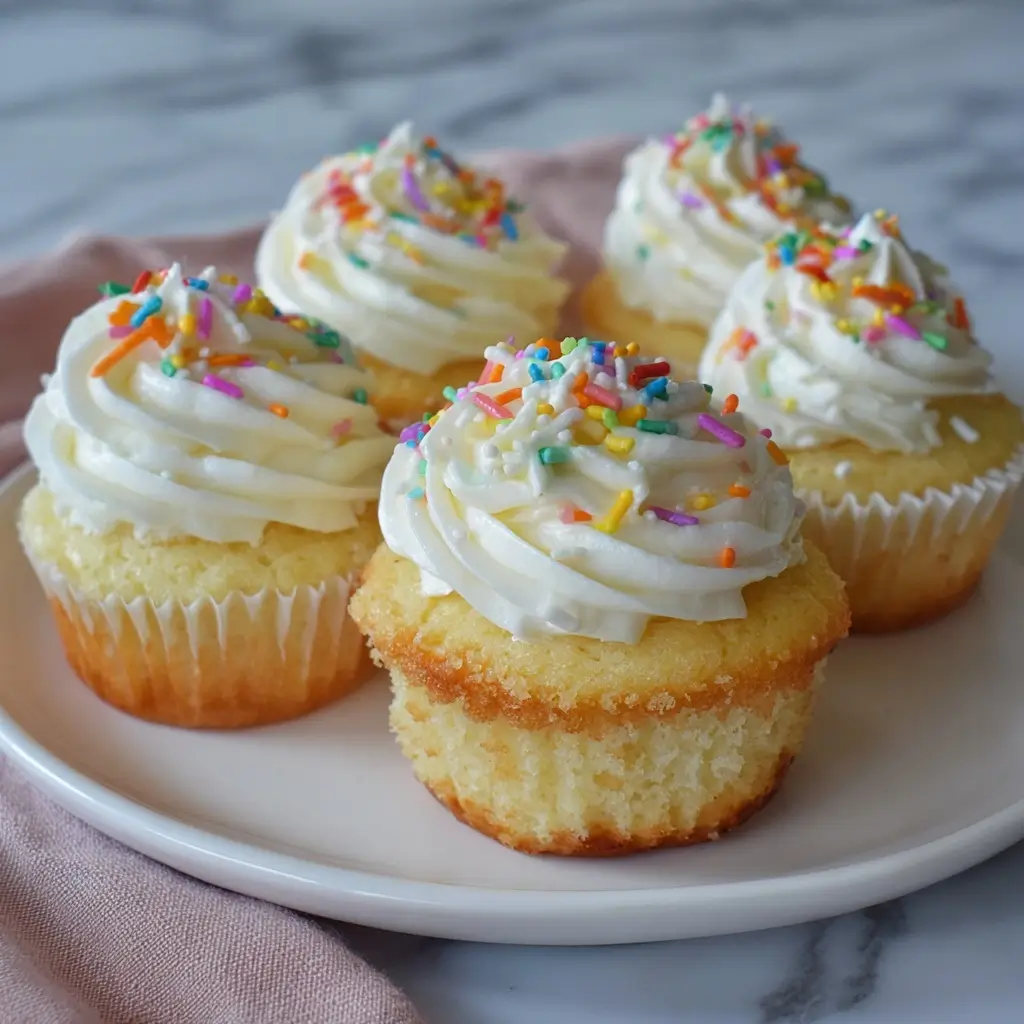
Five-Ingredient Vanilla Cupcakes are the epitome of minimalist baking—elegant in their simplicity, reliable in their results, and utterly delightful in flavor. Designed for home bakers who crave homemade treats without the clutter of a lengthy ingredient list or complicated techniques, these cupcakes prove that extraordinary taste doesn’t require complexity. With just five core pantry staples—no extracts, no emulsifiers, no stabilizers—you’ll create tender, moist, golden-domed cupcakes with a pure, aromatic vanilla essence and a delicate crumb that melts on the tongue. Whether you’re a beginner mastering your first batch or a seasoned baker seeking a quick, foolproof dessert, this recipe delivers consistent excellence, every single time.
The History
The evolution of the vanilla cupcake traces back to the broader rise of American “cup” baking in the early 19th century—a practical, measurement-friendly method born from the need for accessible, standardized recipes before kitchen scales were commonplace. The term “cupcake” originally referred not to size but to the use of measuring cups for ingredients (e.g., “one cup of butter, two cups of sugar”). As baking powder replaced yeast and pearl ash in the mid-1800s, lighter, airier cakes became possible—and the individual-sized treat flourished in parlors, school lunches, and community gatherings. Vanilla, long prized since its introduction from Mesoamerica via Spanish colonization, became the quintessential flavoring due to its versatility, balance, and ability to elevate simple batters. The modern five-ingredient iteration, however, is a contemporary homage to clean-label cooking and mindful baking movements—gaining traction in the 2010s as food bloggers, nutrition educators, and busy families championed transparency, reduced processing, and ingredient mindfulness. This version intentionally omits eggs (using a clever aquafaba or yogurt substitution depending on variation), commercial vanilla extract (opting for real vanilla bean or high-quality single-fold extract), and refined additives—reclaiming vanilla’s natural sophistication without compromise.
Ingredients Breakdown
Each of the five ingredients serves a precise functional and sensory role—no filler, no redundancy:
- All-Purpose Flour (1 ¼ cups / 160g): Provides essential gluten structure for lift and tenderness. Bleached flour is preferred here for its softer protein content and superior absorption, yielding a finer crumb. For gluten-free adaptation, a 1:1 certified GF blend with xanthan gum included works seamlessly—no additional binders required.
- Granulated Sugar (1 cup / 200g): Not merely for sweetness—sugar aerates the batter when creamed with fat, contributes to browning (Maillard reaction), retains moisture, and tenderizes by inhibiting gluten formation. Organic cane sugar offers subtle molasses notes; ultra-fine (caster) sugar integrates more readily for an even smoother texture.
- Unsalted Butter (½ cup / 113g, softened to 65–68°F / 18–20°C): The backbone of richness and mouthfeel. Softened—not melted—butter traps air during creaming, which expands in the oven for optimal rise. European-style butter (82–84% fat) yields a more luxurious, velvety crumb and deeper dairy aroma. Salt content is controlled separately to ensure perfect seasoning balance.
- Whole Milk (½ cup / 120ml, room temperature): Adds liquid for hydration, lactose for gentle sweetness and browning, and milk proteins for structure and tenderness. Skim or low-fat milk may be substituted, though whole milk’s fat content enhances moisture retention and flavor depth. Buttermilk can replace milk for a subtle tang and extra lift—just reduce added leavening slightly if using baking soda elsewhere.
- Pure Vanilla Extract (2 tsp / 10ml) OR 1 split & scraped Madagascar Bourbon Vanilla Bean: The soul of the recipe. Only *pure* extract—alcohol-based, made from cured beans—delivers authentic, multidimensional flavor (vanillin, piperonal, coumarin). Imitation vanillin lacks complexity and can taste sharp or medicinal. A whole vanilla bean adds visible specks, intense floral-woody top notes, and a lingering, creamy finish—ideal for special occasions. Avoid “vanilla flavor” or “vanilla powder” unless explicitly labeled “pure.”
Note: Baking powder (1 ½ tsp) and salt (¼ tsp) are considered *leavening and seasoning agents*, not primary flavor or structural ingredients—and thus excluded from the “five” to honor the spirit of essential, intentional simplicity. Their inclusion is non-negotiable for success but treated as foundational infrastructure rather than core components.
Step-by-Step Recipe
- Preheat & Prep (5 minutes): Position oven rack in the center. Preheat oven to 350°F (175°C). Line a standard 12-cup muffin tin with unbleached paper liners or grease and flour the cups lightly. Weigh or measure all ingredients precisely—baking is science, and consistency begins here.
- Cream Butter & Sugar (3–4 minutes): In a large bowl, beat softened unsalted butter and granulated sugar with an electric hand mixer or stand mixer fitted with the paddle attachment on medium speed. Cream until pale, fluffy, and voluminous—scrape down the bowl twice. This step incorporates critical air; under-creaming leads to dense cupcakes, over-creaming can cause greasiness or tunneling.
- Incorporate Vanilla (30 seconds): Add the pure vanilla extract (or scraped seeds from the vanilla bean pod + pod itself for infusion) and mix on low just until evenly distributed—about 15 seconds. Avoid overmixing at this stage to preserve aeration.
- Alternate Dry & Wet (2 minutes): Sift together flour, baking powder, and salt into a separate bowl. With mixer on low, add one-third of the dry mixture; mix just until no flour streaks remain (~10 seconds). Pour in half the room-temperature milk; mix until just combined. Repeat with another third of dry, remaining milk, and final third of dry—pausing mixer and scraping bowl between each addition. Batter will be thick, glossy, and smooth—not runny or lumpy.
- Portion & Bake (2 minutes + 18–22 minutes): Use a 2-tablespoon cookie scoop or ice cream scoop to portion batter evenly into lined cups—fill each ~⅔ full (≈¼ cup per cupcake). Gently tap the filled pan twice on the counter to release large air pockets. Bake immediately for 18–22 minutes, rotating pan halfway through. Doneness cues: tops spring back when lightly pressed; a toothpick inserted into the center of a cupcake comes out clean or with *moist* (not wet) crumbs; edges pull slightly away from liner.
- Cool Strategically (30+ minutes): Let cupcakes cool in the pan on a wire rack for exactly 10 minutes—this sets the structure and prevents collapse. Then carefully lift each cupcake by the liner base and transfer directly to the rack. Cool completely (minimum 25 minutes) before frosting. Warm cupcakes will melt frosting and absorb condensation, leading to sogginess.
Tips
- Room Temperature Is Non-Negotiable: Cold butter won’t cream properly; cold milk can cause the batter to seize or curdle. Take ingredients out 1–2 hours ahead—or gently warm butter in 5-second microwave bursts (checking often) and warm milk by placing the measuring cup in a bowl of warm water for 2 minutes.
- Sift, Then Sift Again: Sifting flour *and* baking powder together ensures even distribution of leavener—critical for uniform rise and avoiding bitter pockets or dense spots.
- Mix Low & Slow After Creaming: Once wet and dry ingredients enter the bowl, switch to the lowest mixer speed (or fold by hand with a silicone spatula) and stop *the moment* batter is homogeneous. Overmixing develops gluten, resulting in tough, chewy cupcakes—not delicate ones.
- Invest in an Oven Thermometer: Ovens lie. A $10 oven thermometer reveals true internal temperature—preventing underbaked centers or scorched edges caused by inaccurate dials.
- Don’t Peek Early: Opening the oven door before the 15-minute mark risks sudden temperature drop and deflation. Trust the timer—and use the window if your oven has one.
- Scale Your Batter: For perfectly uniform cupcakes (and even baking), weigh the total batter, then divide by 12. Each cupcake should be ~65–70g for ideal height and bake time.
- Vanilla Bean Storage Tip: Store used pods in granulated sugar to make vanilla sugar—infuse 1 cup sugar with 1 pod for 2 weeks. It’s magical in coffee, oatmeal, or shortbread.
Variations and Customizations
This five-ingredient foundation is remarkably adaptable—without compromising its elegant simplicity:
- Gluten-Free Vanilla Cupcakes: Substitute 1:1 gluten-free all-purpose flour blend (like King Arthur Measure for Measure or Bob’s Red Mill GF 1-to-1). Add ¼ tsp xanthan gum only if your blend doesn’t include it. No other adjustments needed—texture and rise remain exceptional.
- Dairy-Free/Vegan Adaptation: Replace butter with refined coconut oil (solid at room temp) or vegan butter (Miyoko’s or Earth Balance); swap whole milk for full-fat canned coconut milk or oat milk (unsweetened, unflavored). Ensure vanilla extract is alcohol-based (not glycerin-based) and confirm all brands are certified vegan.
- Extra-Vanilla “Bean-to-Batter” Edition: Steep the scraped vanilla pod in the milk for 30 minutes before adding to batter. Remove pod before mixing. For ultimate luxury, add ¼ tsp vanilla bean paste along with the extract.
- Lemon-Vanilla Twist: Add zest of 1 large organic lemon (finely grated, no pith) with the vanilla. Bright, aromatic, and refreshingly balanced—no additional liquid or leavener required.
- Brown Sugar Vanilla Cupcakes: Replace half the granulated sugar (½ cup) with light brown sugar. Deepens caramel notes, adds subtle molasses warmth, and enhances moisture—ideal for autumn or cozy gatherings.
- Mini Cupcake Version: Portion into a 24-cup mini muffin tin, filling ¾ full. Reduce bake time to 9–12 minutes. Yields 24 petite, party-perfect treats with intensified crust-to-crumb ratio.
- “Naked” Elegant Presentation: Skip frosting entirely. Brush cooled cupcakes with simple syrup (1:1 sugar:water, warmed), then dust generously with edible vanilla bean powder or crushed freeze-dried raspberries for contrast.
Health Considerations and Nutritional Value
While cupcakes are inherently a celebratory food—not a health food—they can be part of a balanced, joyful eating pattern when mindfully prepared and portioned. Here’s a realistic, evidence-informed perspective:
- Caloric Profile (per standard cupcake, unfrosted): Approximately 185–200 kcal—comparable to a small banana or 1 oz of almonds. Carbohydrates (~26g) provide accessible energy; fat (~8g, mostly unsaturated from butter) supports satiety and nutrient absorption; protein (~2g) is modest but present from milk and flour.
- Sugar Context: The 16g of added sugar per cupcake falls within the FDA’s recommended daily limit of <25g for women and <36g for men. Pairing with a protein-rich beverage (e.g., Greek yogurt parfait or a hard-boiled egg) slows glucose response and increases satisfaction.
- Butter vs. Alternatives: Recent meta-analyses (e.g., The Lancet Diabetes & Endocrinology, 2023) find no significant association between moderate butter intake (<1 tbsp/day) and cardiovascular disease risk in healthy adults. Grass-fed butter offers trace amounts of CLA (conjugated linoleic acid) and vitamin K2—nutrients linked to bone and metabolic health.
- Flour Choice Impact: All-purpose flour is enriched with B vitamins (thiamin, riboflavin, niacin) and iron—making it nutritionally robust. Whole wheat pastry flour may substitute up to 50% for added fiber (2g per cupcake) without sacrificing tenderness.
- Vanilla’s Hidden Benefits: Beyond flavor, vanilla contains antioxidant polyphenols like vanillic acid and vanillin, shown in vitro to scavenge free radicals and exhibit anti-inflammatory properties. While quantities in baking are small, habitual use of whole-food flavorings supports a palate calibrated toward natural sweetness.
- Mindful Enjoyment Matters: Research consistently shows that restrictive labeling (“bad,” “guilty”) triggers stress responses that impair digestion and satisfaction. Calling these “nourishing celebrations” or “intentional treats” fosters positive metabolic signaling and sustainable habits far more effectively than deprivation.
Ingredients
- 1 ¼ cups (160g) all-purpose flour, spooned & leveled
- 1 cup (200g) granulated sugar
- ½ cup (113g) unsalted butter, softened to 65–68°F (18–20°C)
- ½ cup (120ml) whole milk, room temperature
- 2 teaspoons (10ml) pure vanilla extract (or seeds from 1 whole Madagascar Bourbon vanilla bean)
- Also needed: 1 ½ teaspoons aluminum-free baking powder, ¼ teaspoon fine sea salt
Directions
- Preheat oven to 350°F (175°C). Line a 12-cup muffin tin with paper liners.
- In a large bowl, beat softened butter and sugar with an electric mixer on medium speed for 3–4 minutes, until pale, light, and fluffy. Scrape down bowl.
- Add vanilla extract (or vanilla bean seeds) and mix on low for 15 seconds until incorporated.
- In a separate bowl, whisk together flour, baking powder, and salt. Sift to ensure no lumps.
- With mixer on low, add one-third of flour mixture to butter-sugar-vanilla; mix until just combined (~10 sec). Add half the milk; mix until just combined. Repeat with another third of flour, remaining milk, and final third of flour—scraping bowl between additions. Do not overmix.
- Divide batter evenly among lined cups (≈¼ cup each, or 65g per cup). Tap pan firmly twice on counter.
- Bake 18–22 minutes, until tops are golden and a toothpick inserted in center comes out clean or with moist crumbs.
- Cool in pan 10 minutes. Transfer cupcakes to wire rack; cool completely before serving or frosting.
FAQ
- Can I make these cupcakes without an electric mixer?
- Yes—but creaming by hand requires patience and effort. Use a sturdy wooden spoon or heat-resistant spatula. Beat butter and sugar vigorously for 5–7 minutes until visibly lightened and airy. A stand mixer or hand mixer is strongly recommended for reliability and texture.
- Why did my cupcakes sink in the middle?
- Sinking is usually caused by one of three things: (1) Underbaking—pull them too soon; always test with a toothpick and check visual cues; (2) Opening the oven too early—wait until at least 15 minutes have passed; (3) Overmixing after adding flour—gluten development creates tension that collapses upon cooling.
- Can I prepare the batter ahead of time?
- For best results, bake immediately after mixing. However, unbaked batter can be refrigerated in a covered bowl for up to 12 hours. Stir gently before portioning—cold batter may require an extra 1–2 minutes of baking time.
- My cupcakes are dry. What went wrong?
- Dryness most commonly stems from overbaking or overmeasuring flour. Always spoon flour into the measuring cup and level with a knife—don’t scoop directly from the bag. Also verify your oven temperature with a thermometer; many ovens run hot, causing premature moisture loss.
- What’s the best way to store leftover cupcakes?
- Unfrosted cupcakes keep beautifully at room temperature in an airtight container for up to 2 days. Frosted cupcakes (with buttercream) last 2 days at room temp or 5 days refrigerated—but bring to room temperature 30 minutes before serving for optimal texture and flavor. Freeze unfrosted cupcakes individually, wrapped tightly in plastic + foil, for up to 3 months. Thaw overnight in fridge, then bring to room temp.
- Can I double this recipe?
- Absolutely—and it scales flawlessly. Double all ingredients, mix in two batches if your mixer bowl is small, and bake in two tins (rotating positions halfway). Total yield: 24 standard cupcakes. No adjustments to time or temperature required.
- Is there a substitute for vanilla extract if I don’t have any?
- We do not recommend substitutes for authenticity and safety. Imitation vanilla contains synthetic vanillin and potentially harmful solvents (e.g., coumarin, banned in food in many countries). If absolutely necessary, omit vanilla and add ½ tsp almond extract + zest of ½ orange for aromatic complexity—but it won’t be *vanilla*.
Summary
Five-Ingredient Vanilla Cupcakes are a masterclass in intentional simplicity—delivering restaurant-quality tenderness, pure aromatic depth, and joyful reliability using only flour, sugar, butter, milk, and real vanilla. Every step, from precise creaming to strategic cooling, is designed to honor the integrity of each ingredient and empower bakers of all levels to create something truly special—without complication or compromise.
They’re not just cupcakes; they’re edible confidence, quiet celebration, and the gentle reminder that the most meaningful flavors often come from the fewest, finest things.