Introduction
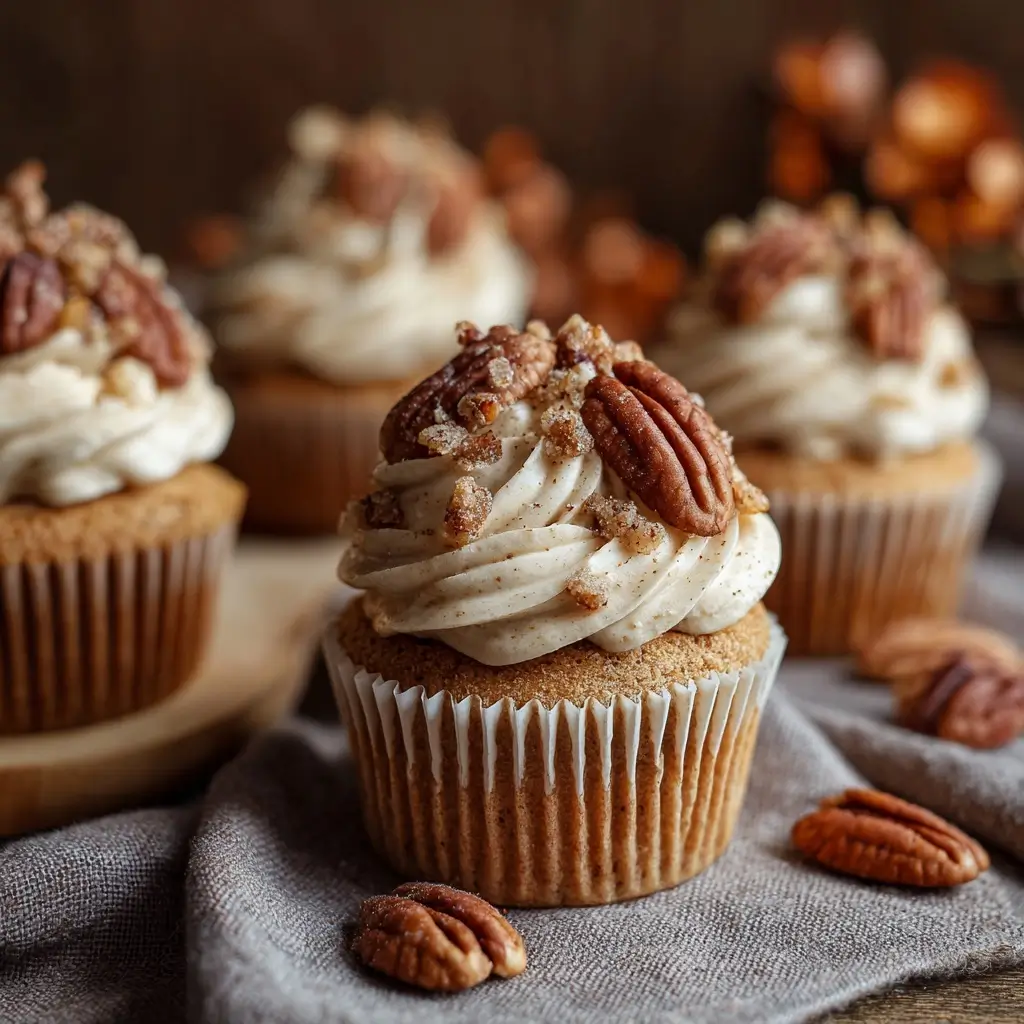
Maple Pecan Cupcakes are a decadent, autumnal celebration in miniature form—moist, spiced, warmly aromatic, and crowned with a glossy, rich maple glaze studded with crunchy toasted pecans. Blending the deep, caramel-like sweetness of pure maple syrup with the earthy nuttiness of toasted pecans, these cupcakes strike the perfect balance between rustic charm and refined dessert elegance. Whether served at a cozy Sunday brunch, a harvest-themed gathering, or as an elevated treat for maple season, they evoke nostalgia while delivering unmistakable sophistication. Their versatility shines across occasions—from casual coffee pairings to elegant dessert tables—making them more than just a baked good, but a sensory experience rooted in tradition, craftsmanship, and seasonal abundance.
The History
The origins of Maple Pecan Cupcakes are not tied to a single documented moment but rather emerge organically from centuries-old North American culinary traditions. Maple syrup, harvested by Indigenous peoples of the Northeastern Woodlands—including the Anishinaabe, Haudenosaunee, and Wabanaki nations—for over 10,000 years, was traditionally boiled down in clay pots or birch bark containers using hot stones. European settlers adopted and adapted these techniques, eventually integrating maple into colonial baking—from maple-sweetened cornbread to early “maple cakes” referenced in 18th-century New England diaries. Pecans, native to the southern and central United States and Mexico, were similarly cherished by Native tribes like the Choctaw and Caddo and later became staples in Southern confections such as pralines and pecan pie (first formally published in a 1886 New Orleans cookbook). The fusion of maple and pecan gained momentum in the mid-20th century as regional pride in local ingredients surged—especially in Vermont, New York, Ontario, and the Midwest—where artisanal maple producers began collaborating with bakeries to develop signature desserts. Cupcake culture exploded in the 2000s, and bakers seized the opportunity to elevate classic flavor pairings; thus, Maple Pecan Cupcakes evolved—not as a novelty, but as a thoughtful homage to terroir, sustainability, and intergenerational foodways. Today, they symbolize slow food values: small-batch syrup, heritage-grown pecans, and mindful baking practices that honor both land and legacy.
Ingredients Breakdown
Every ingredient in Maple Pecan Cupcakes serves a precise functional and flavorful purpose—no component is arbitrary. Let’s explore them in detail:
- All-Purpose Flour (2 ½ cups): Provides essential gluten structure for tender crumb integrity without toughness. For optimal results, spoon-and-level (never scoop) to avoid compaction; consider blending ¼ cup with whole wheat pastry flour for subtle nuttiness and added fiber—without compromising rise.
- Baking Powder (2 tsp) & Baking Soda (½ tsp): A dual-leavening system ensures lift and tenderness. Baking powder delivers consistent carbon dioxide during mixing and oven spring, while baking soda neutralizes acidity from brown sugar and buttermilk—enhancing browning, flavor depth, and crumb softness.
- Unsalted Butter (¾ cup, room temperature): Adds richness, moisture, and flakiness to the crumb. Room temperature (65–68°F) allows ideal emulsification with sugar—trapping air for volume. European-style butter (82–84% fat) yields even more luxurious mouthfeel.
- Pure Maple Syrup (¾ cup Grade A Amber or Dark Robust): Not pancake syrup! Authentic maple syrup contributes complex notes—vanillin, caramel, woodsmoke, and roasted nuts—alongside natural invert sugars that retain moisture and inhibit crystallization. Darker grades offer stronger flavor and deeper color; Amber provides balanced sweetness ideal for cupcakes.
- Brown Sugar (¾ cup, packed light or dark): Molasses content adds acidity, moisture retention, and warm, toffee-like notes that harmonize with maple. Dark brown sugar intensifies richness; light offers subtlety.
- Eggs (3 large, room temperature): Act as emulsifiers, binders, and leaveners. Yolks contribute fat and richness; whites add structure. Cold eggs risk breaking the emulsion—always bring to room temp (15–20 min out of fridge).
- Buttermilk (1 cup, full-fat, well-shaken): Its lactic acid activates baking soda, tenderizes gluten, and imparts subtle tang—cutting through sweetness. Substitute with DIY buttermilk (1 tbsp lemon juice or white vinegar + enough whole milk to equal 1 cup, rested 5 min), though cultured buttermilk yields superior tang and consistency.
- Pure Vanilla Extract (2 tsp) & Pure Maple Extract (1 tsp, optional but highly recommended): Vanilla rounds out warmth and enhances perception of sweetness; maple extract (alcohol-based, not imitation) amplifies maple aroma without thinning batter—critical for layered fragrance.
- Ground Cinnamon (1 ½ tsp), Ground Ginger (½ tsp), Ground Nutmeg (¼ tsp), and Ground Cloves (⅛ tsp): This warm spice quartet echoes classic fall baking but is calibrated precisely—not overpowering, but accentuating maple’s inherent complexity. Toast whole spices and grind fresh for maximum volatile oil release.
- Salted Pecans (1 ½ cups total): Use raw, unsalted pecan halves for control over seasoning. Toast at 350°F for 8–10 minutes until fragrant and golden—cool completely before chopping. Reserve ½ cup finely chopped for batter; 1 cup coarsely chopped for topping. A pinch of flaky sea salt (like Maldon) tossed with warm pecans post-toasting deepens savoriness.
- Maple Glaze Ingredients: Pure maple syrup (½ cup), powdered sugar (2 ½ cups, sifted), unsalted butter (2 tbsp, melted and cooled), heavy cream (1–2 tbsp), pure vanilla (½ tsp), pinch of salt. Optional: ¼ tsp maple extract, 2 tbsp finely chopped toasted pecans for garnish.
Step-by-Step Recipe
- Prep & Preheat: Line two standard 12-cup muffin tins with high-quality parchment liners (not paper—maple glaze is sticky!). Position racks in upper and lower thirds of oven. Preheat to 350°F (177°C). Toast pecans on a rimmed baking sheet for 8–10 minutes, stirring once, until deeply aromatic and lightly golden. Cool completely on wire rack—then chop: ½ cup fine (for batter), 1 cup coarse (for topping). Set aside.
- Mix Dry Ingredients: In a medium bowl, whisk together flour, baking powder, baking soda, salt (½ tsp fine sea salt), cinnamon, ginger, nutmeg, and cloves until fully homogenous. Sift twice for aeration and to eliminate clumps—critical for even rise and delicate crumb.
- Cream Butter & Sugars: In a large stand mixer fitted with paddle attachment, beat softened butter, brown sugar, and maple syrup on medium speed for 4–5 minutes—until pale, fluffy, and ribbon-like. Scrape bowl thoroughly with silicone spatula halfway through. This step incorporates vital air for lift and texture.
- Incorporate Eggs: Add eggs one at a time, beating on medium-low for 30 seconds after each addition until fully emulsified (no streaks or separation). Add vanilla and maple extract; mix 15 seconds. Overmixing at this stage risks dense cupcakes—stop as soon as combined.
- Alternate Wet & Dry: On low speed, add one-third of dry ingredients—mix until just incorporated (5–7 seconds). Add half the buttermilk—mix 5 seconds. Repeat: dry, buttermilk, dry—pausing to scrape bowl each time. Batter will be thick, glossy, and slightly rippled—not runny. Overmixing develops gluten and causes tunnels or peaked domes.
- Fold in Pecans: Using spatula, gently fold in finely chopped pecans just until evenly dispersed—about 12–15 folds. Do not overfold.
- Portion & Bake: Use 2-tbsp cookie scoop for uniform 3-oz portions (fills liners ⅔ full). Tap pans sharply twice on counter to release air bubbles. Bake 18–22 minutes—rotating pans top-to-bottom and front-to-back at 12-minute mark. Cupcakes are done when tops spring back to gentle touch, edges pull slightly from liners, and toothpick inserted in center emerges with moist crumbs (not wet batter). Avoid overbaking—maple’s sugars caramelize quickly and cause dryness.
- Cool Strategically: Let cupcakes cool in pans on wire racks for 12 minutes—this sets structure and prevents collapse. Then carefully transfer to racks to cool completely (60+ minutes) before glazing. Warm cupcakes will melt glaze; cold ensures clean set and shine.
- Prepare Maple Glaze: Whisk sifted powdered sugar, melted-cooled butter, maple syrup, vanilla, salt, and 1 tbsp cream in medium bowl until smooth. Add second tbsp cream only if needed for drizzling consistency (should coat back of spoon and hold ribbon for 3 seconds). Stir in 2 tbsp reserved coarse pecans. Let glaze rest 5 minutes to thicken slightly.
- Glaze & Garnish: Using small offset spatula or back of spoon, generously swirl glaze over cooled cupcakes, allowing excess to drip down sides. Immediately press remaining coarse pecans onto glaze for grip and visual appeal. Let glaze set 30–45 minutes at room temperature before serving.
Tips
- Maple Syrup Quality Is Non-Negotiable: Only use 100% pure maple syrup labeled “Grade A Amber Color/Robust Flavor” or “Grade A Dark Color/Robust Flavor.” “Maple-flavored” syrups contain corn syrup, artificial colors, and preservatives that mute flavor, destabilize glaze, and yield greasy texture.
- Room Temperature Discipline: Butter, eggs, and buttermilk must all be truly room temp—not just “out of fridge.” Cold dairy causes butter to seize, leading to curdled batter and uneven crumb. Test butter: it should yield gently under thumb pressure but not feel oily.
- Don’t Skip the Toast: Raw pecans taste bland and can turn bitter when baked. Toasting unlocks Maillard reactions—creating nutty, toasty, almost chocolatey notes that define the cupcake’s character. Never skip cooling—warm nuts steam batter and create soggy pockets.
- Measure Flour Accurately: Too much flour = dry, dense cupcakes. Use the spoon-and-level method: fluff flour in bag, spoon into measuring cup until heaping, then level with straight edge. Better yet—weigh it: 2 ½ cups = 312g (all-purpose, King Arthur).
- Rotate & Monitor Oven Temp: Home ovens often run hot or have hot spots. Use an independent oven thermometer. Rotating pans ensures even browning—especially crucial for maple’s caramelization.
- Glaze Timing Matters: Glaze only when cupcakes are *completely* cool. Even slight warmth melts glaze into absorption instead of setting—resulting in dull finish and loss of pecan adherence. If glaze thickens too much while waiting, stir in ½ tsp warm cream.
- Make Ahead Smart: Bake cupcakes up to 2 days ahead; store uncovered at room temp in single layer (covered loosely with cake dome or inverted bowl to prevent lint). Glaze day-of. Alternatively, freeze unfrosted, cooled cupcakes for up to 3 months—wrap individually in plastic + foil, thaw overnight on rack before glazing.
- Prevent Sticking Liners: Spray parchment liners lightly with non-stick spray *before* filling—especially important for maple’s stickiness. Or use greaseproof tulip liners for extra support and elegant presentation.
- Consistency Control for Glaze: Too thin? Chill 5–10 minutes or add 1 tbsp sifted powdered sugar. Too thick? Add cream ½ tsp at a time. Ideal glaze has body to cling, but fluidity to cascade.
- Flavor Layering: For ultra-professional depth, infuse buttermilk: warm ¼ cup buttermilk with 2 tsp toasted, crushed pecan pieces and ¼ tsp cinnamon for 10 minutes off heat. Strain, cool, and use in recipe. Adds subtle toasted nuance throughout.
Variations and Customizations
Maple Pecan Cupcakes serve as a masterful canvas—adaptable for dietary needs, seasonal shifts, and creative expression—without sacrificing integrity or flavor:
- Gluten-Free: Substitute 1:1 gluten-free all-purpose blend (like Bob’s Red Mill or King Arthur) + ½ tsp xanthan gum (if not included). Add 1 extra tbsp buttermilk to compensate for GF flour’s absorbency. Ensure certified GF oats if adding oat crumble topping.
- Vegan: Replace butter with vegan butter (Miyoko’s or Earth Balance); eggs with flax eggs (3 tbsp ground flax + 9 tbsp water, rested 10 min); buttermilk with almond milk + 1 tbsp apple cider vinegar; use maple-sweetened vegan powdered sugar. Glaze: swap butter for coconut oil (refined for neutrality) and use coconut cream instead of heavy cream.
- Reduced-Sugar: Cut brown sugar to ½ cup and maple syrup to ⅓ cup; boost flavor with 1 tsp maple extract and extra ¼ tsp cinnamon. Use monk fruit–erythritol blend (1:1 ratio) for remaining sweetness in glaze—but note texture may be slightly less glossy.
- Maple Pecan Streusel Crumb Top: Before baking, sprinkle each cupcake with 1 tsp streusel: combine ¼ cup flour, 2 tbsp brown sugar, 2 tbsp cold butter, 2 tbsp chopped pecans, ¼ tsp cinnamon, pinch salt—rub with fingers until pea-sized crumbs form.
- Bourbon-Maple Glaze: Add 1 tbsp high-quality bourbon to glaze—reduces sharp alcohol, leaves warm oak and vanilla notes. Let glaze rest 10 minutes before applying to allow alcohol to mellow.
- Maple Pecan Cupcake Sandwiches: Slice cooled cupcakes horizontally; fill with maple buttercream or bourbon-maple mascarpone. Press gently and roll cut edges in crushed candied pecans.
- Mini Maple Pecan Cupcakes: Bake in mini muffin tins for 10–12 minutes. Yield: ~48. Perfect for weddings, buffets, or portion-controlled treats. Glaze with piping bag fitted with #3 round tip.
- Maple Pecan Whoopie Pies: Bake as 3-inch rounds (2 per standard liner); cool completely. Fill with maple marshmallow fluff or maple cream cheese frosting. Roll edges in toasted pecan dust.
- Spiced Maple Pecan Loaf: Pour batter into greased 9×5 loaf pan. Bake 55–65 minutes. Cool 20 min in pan, then invert. Drizzle with glaze and pecans. Serve sliced with maple butter.
- Maple Pecan Ice Cream Topping: Chop leftover cupcakes, toss with extra maple glaze and toasted pecans—layer into jars with vanilla bean ice cream for decadent parfaits.
Health Considerations and Nutritional Value
While Maple Pecan Cupcakes are undeniably indulgent, understanding their nutritional composition empowers intentional enjoyment—and reveals surprising benefits when crafted mindfully:
- Maple Syrup: More Than Just Sugar – Unlike refined white sugar, pure maple syrup contains over 24 bioactive compounds, including polyphenols (e.g., quebecol), manganese (22% DV per tbsp), zinc (7% DV), calcium, potassium, and prebiotic oligosaccharides shown in studies to support gut microbiome diversity. Its lower glycemic index (~54 vs. 65 for table sugar) means slower glucose release—especially when paired with fiber-rich pecans and fat from butter.
- Pecans: A Nutritional Powerhouse – One ounce (19 halves) delivers 196 calories, 20g heart-healthy monounsaturated fats, 2.7g plant-based protein, 2.7g fiber, plus vitamin E (12% DV), magnesium (8% DV), and antioxidants like beta-sitosterol (linked to cholesterol management). Their high oleic acid content supports arterial flexibility and inflammation reduction.
- Whole Grain Option Benefits – Substituting ¼ cup of all-purpose flour with white whole wheat flour adds 1g fiber per cupcake—supporting satiety and digestive regularity—without altering texture significantly.
- Portion Awareness & Balance – At ~320–360 calories per standard cupcake (glazed), they fit comfortably within a balanced diet when enjoyed intentionally—not daily, but meaningfully. Pair with Greek yogurt, green tea, or a small handful of berries to slow sugar absorption and enhance nutrient synergy.
- Considerations for Specific Diets – Naturally nut-free versions aren’t possible without compromising identity—but sunflower seed “pecans” (toasted, seasoned) offer a safe alternative for schools or events. For low-FODMAP diets, reduce maple syrup to ¼ cup and use certified low-FODMAP powdered sugar (some brands contain inulin). Always verify gluten-free certification for celiac safety.
- Food Safety Note – Due to dairy and egg content, refrigerate glazed cupcakes if storing beyond 2 days. Unfrosted cupcakes keep best at room temp—refrigeration dries them out. Freeze for longer shelf life without quality loss.
Ingredients
Makes 24 standard cupcakes
For the Cupcakes:
- 2 ½ cups (312g) all-purpose flour, spooned & leveled
- 2 tsp aluminum-free baking powder
- ½ tsp baking soda
- ½ tsp fine sea salt
- 1 ½ tsp ground cinnamon
- ½ tsp ground ginger
- ¼ tsp freshly grated nutmeg
- ⅛ tsp ground cloves
- ¾ cup (170g) unsalted butter, softened to 65°F
- ¾ cup (150g) packed light brown sugar
- ¾ cup (180ml) pure maple syrup (Grade A Amber or Dark Robust)
- 3 large eggs, room temperature
- 2 tsp pure vanilla extract
- 1 tsp pure maple extract (optional but recommended)
- 1 cup (240ml) full-fat buttermilk, well-shaken, room temperature
- 1 ½ cups raw pecan halves, toasted, cooled, and chopped (½ cup fine, 1 cup coarse)
For the Maple Glaze:
- ½ cup (120ml) pure maple syrup
- 2 ½ cups (300g) powdered sugar, sifted
- 2 tbsp (28g) unsalted butter, melted and cooled to room temperature
- 1–2 tbsp (15–30ml) heavy cream or full-fat coconut cream (vegan option)
- ½ tsp pure vanilla extract
- Pinch of fine sea salt
- 2 tbsp finely chopped toasted pecans (for garnish)
Directions
- Preheat oven to 350°F (177°C). Line two 12-cup muffin tins with parchment cupcake liners. Lightly spray liners with non-stick cooking spray. Arrange racks in upper and lower thirds of oven.
- Toast pecans: Spread pecan halves on a rimmed baking sheet. Bake 8–10 minutes, stirring once at 5 minutes, until fragrant and golden-brown. Transfer to wire rack; cool completely (15–20 min). Chop ½ cup very fine (rice-grain size) and 1 cup coarse (¼-inch pieces). Set aside separately.
- In medium bowl, whisk together flour, baking powder, baking soda, salt, cinnamon, ginger, nutmeg, and cloves. Sift twice. Set aside.
- In large bowl of stand mixer fitted with paddle attachment, beat butter, brown sugar, and maple syrup on medium speed 4–5 minutes until pale, fluffy, and doubled in volume. Scrape bowl thoroughly.
- Add eggs one at a time, beating 30 seconds after each until fully incorporated. Add vanilla and maple extract; mix 15 seconds.
- Reduce mixer to low. Add one-third dry ingredients; mix 5 seconds. Add half buttermilk; mix 5 seconds. Repeat sequence: dry, buttermilk, dry—scraping bowl after each addition. Batter will be thick and glossy. Do not overmix.
- Fold in finely chopped pecans with silicone spatula—12–15 strokes—just until evenly distributed.
- Divide batter evenly among lined cups (≈3 oz / ⅔ full). Tap pans firmly twice on counter.
- Bake 18–22 minutes, rotating pans top-to-bottom and front-to-back at 12 minutes. Cupcakes are done when tops spring back and toothpick reveals moist crumbs. Do not overbake.
- Cool in pans on wire racks 12 minutes. Gently remove cupcakes; cool completely on racks (60+ minutes).
- Make glaze: In medium bowl, whisk maple syrup, powdered sugar, melted butter, vanilla, salt, and 1 tbsp cream until smooth. Add second tbsp cream only if too thick. Stir in 2 tbsp coarse pecans. Let rest 5 minutes.
- Glaze cooled cupcakes generously. Immediately press remaining coarse pecans onto wet glaze. Let set 30–45 minutes before serving.
FAQ
- Can I use maple extract instead of real maple syrup?
- No—maple extract is purely aromatic and contains no sugars or viscosity. It cannot replace maple syrup’s structural, sweetening, and moisture-retaining roles. Use extract only as a flavor enhancer *in addition to* real syrup.
- Why did my cupcakes sink in the middle?
- Common causes: undermixed batter (insufficient air incorporation), opening oven too early (temperature shock), underbaked centers (toothpick test too hasty), or expired leaveners. Always test with toothpick *and* finger spring-back.
- Can I make these dairy-free?
- Yes—with substitutions: vegan butter, full-fat canned coconut milk + 1 tsp vinegar (for buttermilk), and coconut cream in glaze. Note texture may be slightly denser; add 1 tsp apple cider vinegar to batter to boost lift.
- My glaze is runny—how do I fix it?
- Chill glaze 5–10 minutes, then whisk vigorously. If still thin, whisk in 1 tbsp sifted powdered sugar at a time until desired thickness. Avoid adding more maple syrup—it worsens runniness.
- How do I store leftover cupcakes?
- Unfrosted: room temp, uncovered, up to 2 days. Frosted: room temp, under cake dome, up to 2 days. For longer storage, freeze unfrosted cupcakes (double-wrapped) up to 3 months. Thaw overnight before glazing.
- Can I use dark corn syrup instead of maple syrup?
- Not recommended. Corn syrup lacks maple’s nuanced flavor, acidity, and mineral content—yielding one-dimensional sweetness and poor browning. It also increases risk of overly chewy texture.
- What’s the best way to toast pecans without burning them?
- Use a light-colored baking sheet for visibility. Toast at 350°F—not higher—and set timer for 7 minutes. Check at 7, then every 60 seconds—nuts continue cooking on hot sheet after removal. Shake sheet, not stir, to prevent breakage.
- Can I bake these in a jumbo muffin tin?
- Absolutely. Use 6 jumbo liners (holds ~6 oz each). Increase bake time to 25–30 minutes—test with toothpick at 25. Cool in pan 15 minutes before removing.
- Is there a way to make these egg-free without tofu or flax?
- Commercial egg replacers (like Bob’s Red Mill) work well—follow package instructions for 3 eggs. Aquafaba (3 tbsp whipped) yields lighter crumb but requires careful folding to maintain air.
- Why does my glaze look dull or matte instead of shiny?
- Dullness indicates either too much cream (dilutes sugar concentration) or insufficient whisking (air not incorporated). Whisk glaze vigorously for 1 full minute after combining—this creates micro-bubbles for luminous sheen. Letting it rest 5 minutes also helps surface tension settle for gloss.
Summary
Maple Pecan Cupcakes are a masterclass in balance—melding the ancient art of maple sugaring with the rich legacy of Southern nut cultivation, elevated